Immersive Brand Experiences: Strategy, Tech, and Production
Immersive brand experiences have already moved beyond novelty, but the commercial opportunity isn't “more spectacle”. UK evidence points to a mature creative economy, familiar audience behaviours, and a growing need to connect experiences with retail, sampling, event flow, and measurable action. The production question is no longer whether a brand can build an impressive XR installation. It's whether the chosen format gives people a reason to participate, makes that participation easy, and gives the business a useful next step.
Why Immersive Brand Experiences Now Matter More Than Ever
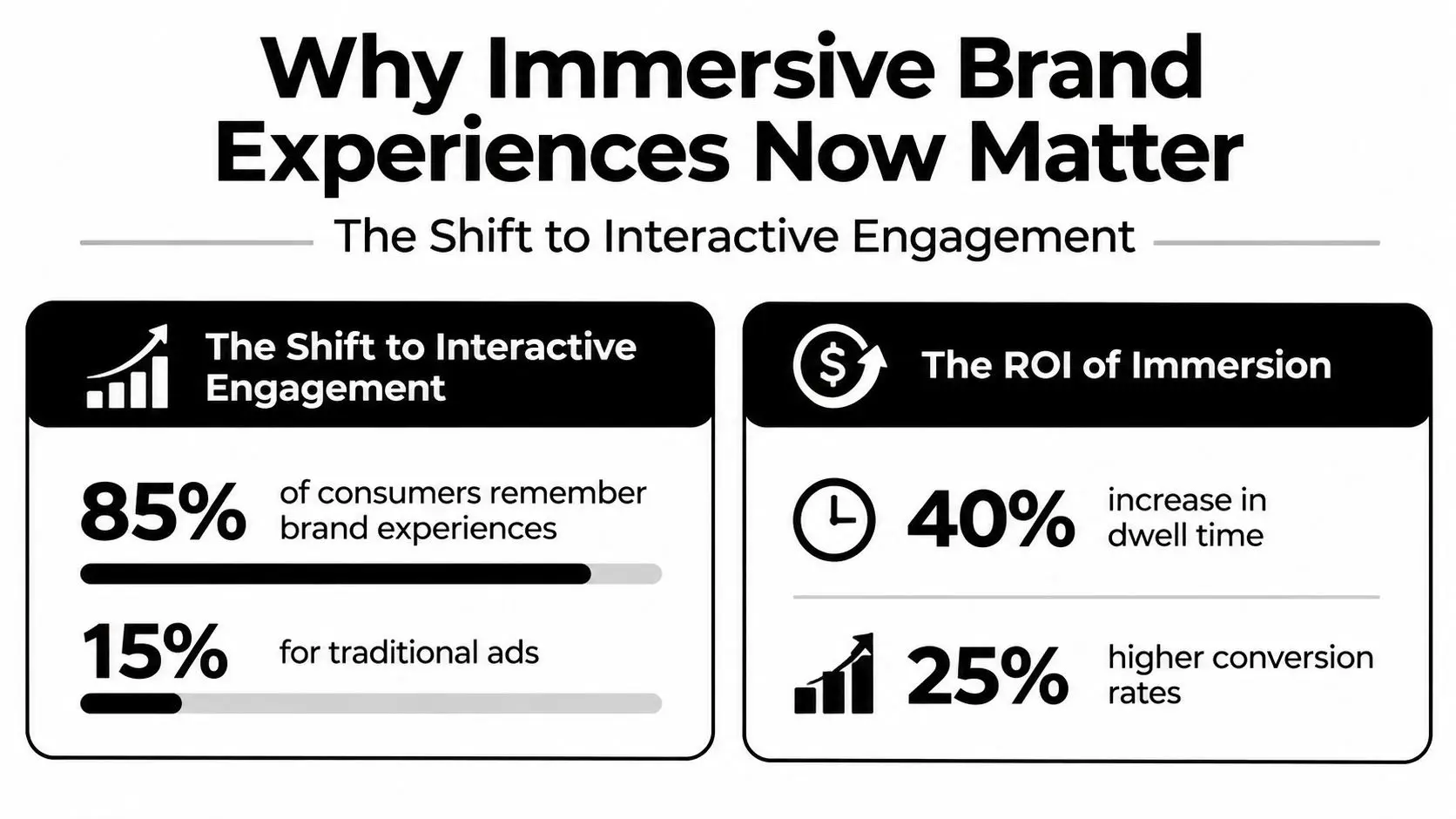
The UK immersive economy was substantial before today's XR campaigns became mainstream. Nesta estimated that the country had about 1,000 immersive specialist companies, employing around 4,500 people and generating £660 million in sales, with the UK potentially holding as much as 9% of the global immersive market. The analysis covered location-based experiences, interactive installations, and digital storytelling technologies, so the market was never limited to headsets or virtual worlds. This UK overview of immersive industry statistics places current brand activity in a longer commercial context. That scale matters to commissioners. A mature supplier base understands exhibition logistics, content production, technical testing, physical installation, and the compromises between creative ambition and deployment reality. It also means immersive brand experiences can be commissioned as repeatable campaigns rather than isolated experiments.
Familiar formats, not fringe behaviour
Recent UK audience research reinforces that point. A 2024 survey of 2,000 people who had attended an immersive experience during the previous 12 months found that 65% had done an escape room, 38% had attended immersive or experiential art, 38% had visited themed attractions, 37% had experienced immersive or interactive theatre, 33% had gone to scare attractions, and 28% had tried location-based VR or AR. The figures come from the IEN Audience Report 2024. The typical attendee was described as a well-educated adult aged 25, 44, often based in London, the Southeast, the Northwest, or the West Midlands. That profile gives planners a useful starting point for venue selection, media targeting, staffing, and accessibility decisions. It doesn't mean every activation should target the same audience, but it does challenge the assumption that immersive content needs to educate the public from scratch.
From spectacle to activation
The stronger commercial question is what happens after participation. UK experiential booking data indicates that sampling accounted for nearly 49% of bookings in 2025, up 6% year on year, while beauty and cosmetics bookings more than doubled from the first half to the second half of that year. Those figures are reported in Field Marketing's analysis of experiential space trends. The practical lesson is straightforward. A product demo, trial, retail incentive, or qualified lead capture should be designed into the journey, not added after the creative has been approved. Teams planning immersive activations can also use this guide to planning immersive events for brands when they need to connect the experience with wider event operations. For examples of how experience design can support brand behaviour, see Studio Liddell's experience marketing examples.
The Four Formats of Immersive Brand Experiences
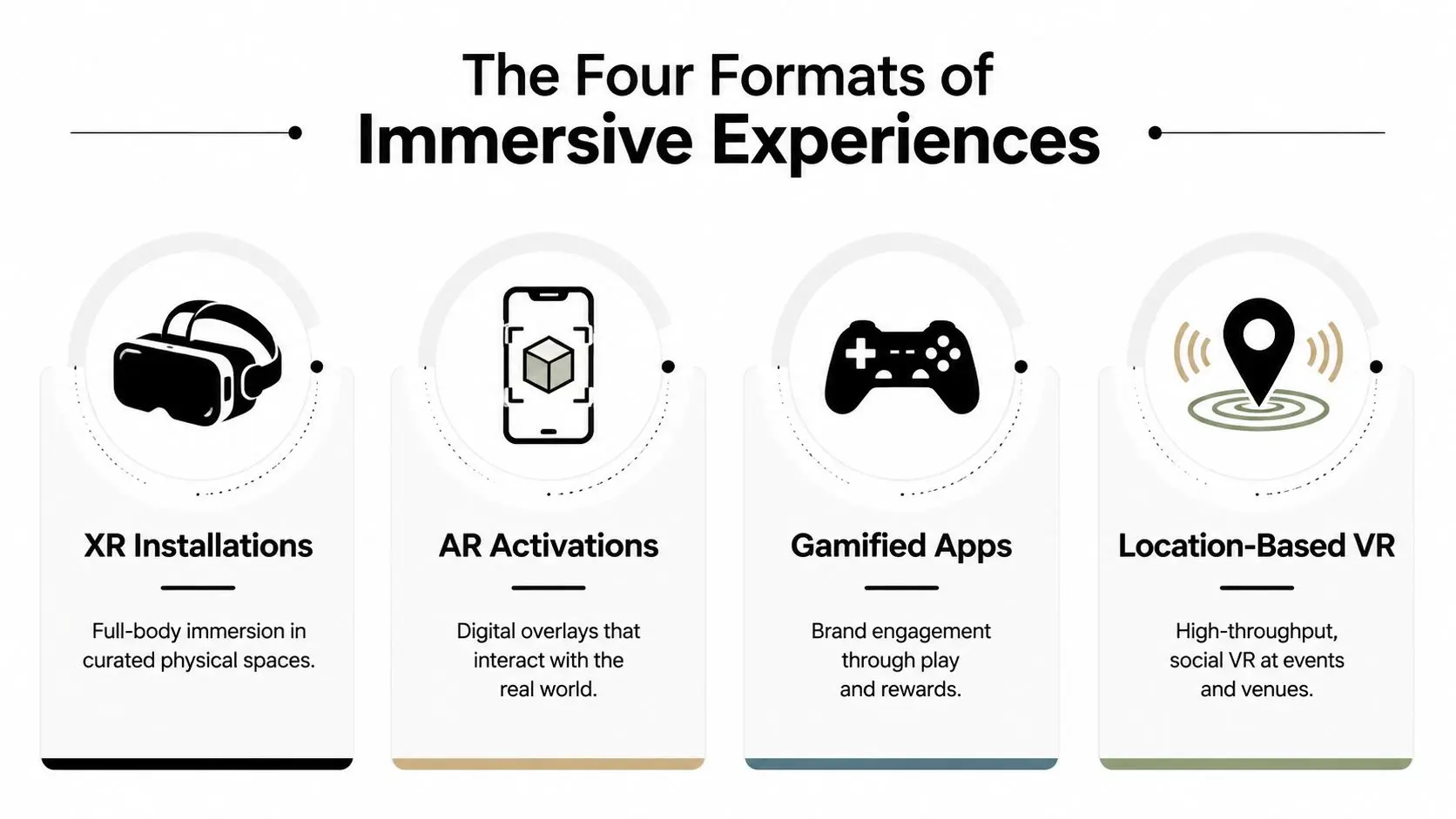
The word “immersive” hides important production differences. A phone-based AR layer, a fully dressed XR installation, a gamified application, and a location-based VR attraction have different audience flows, technical risks, staffing requirements, and measurement opportunities. Choosing between them should begin with the behaviour the brand needs, not with the most fashionable technology.
Match the format to the job
XR installations work when the physical environment is part of the story. They can combine projection, LED, tracked objects, spatial sound, interactive surfaces, and head-mounted displays. Their strength is controlled atmosphere and high perceived value. Their weakness is operational complexity, especially when the venue has limited power, restricted rigging, poor connectivity, or a tight build window. AR activations are more suitable when the audience needs to stay connected to a real product, stand, package, room, or retail environment. A product configurator can help someone compare finishes or features without removing the physical item from view. AR usually reduces hardware barriers, but tracking, lighting, device compatibility, and user permissions still need careful handling. Gamified apps suit longer engagement and repeatable participation. They can support rewards, challenges, branded utility, and social sharing, but the download or onboarding step creates friction. If the game mechanic isn't enjoyable without the logo, the campaign will feel like an advert wearing a game costume. Location-based VR is designed around venue throughput. It can deliver a memorable shared experience at an event, attraction, or branded space, but queue management, headset hygiene, reset time, supervision, and safety are as important as the virtual world.
| Format | Best For | Typical Deployment | Production Complexity | ROI Timeline |
|---|---|---|---|---|
| XR installations | Atmosphere, storytelling, premium launches | Brand spaces, cultural venues, exhibitions | High, because physical and digital systems must work together | Campaign or event cycle |
| AR activations | Product exploration and contextual demonstrations | Retail, exhibitions, packaging, outdoor activity | Medium to high, depending on tracking and content depth | Immediate interaction, with follow-up measurement |
| Gamified apps | Repeat engagement, rewards, and community activity | Campaigns, loyalty ecosystems, owned channels | Medium to high, with ongoing content and platform support | Longer-term, depending on retention |
| Location-based VR | Social entertainment and event participation | Venues, expos, festivals, attractions | High, because throughput and operations shape the design | Event or venue cycle |
A useful decision rule is to ask whether the audience should enter a world, enhance the world, return to a branded system, or share a timed activity with other people. The answer usually narrows the technology choice quickly.
A Strategic Framework for Planning Immersive Activations
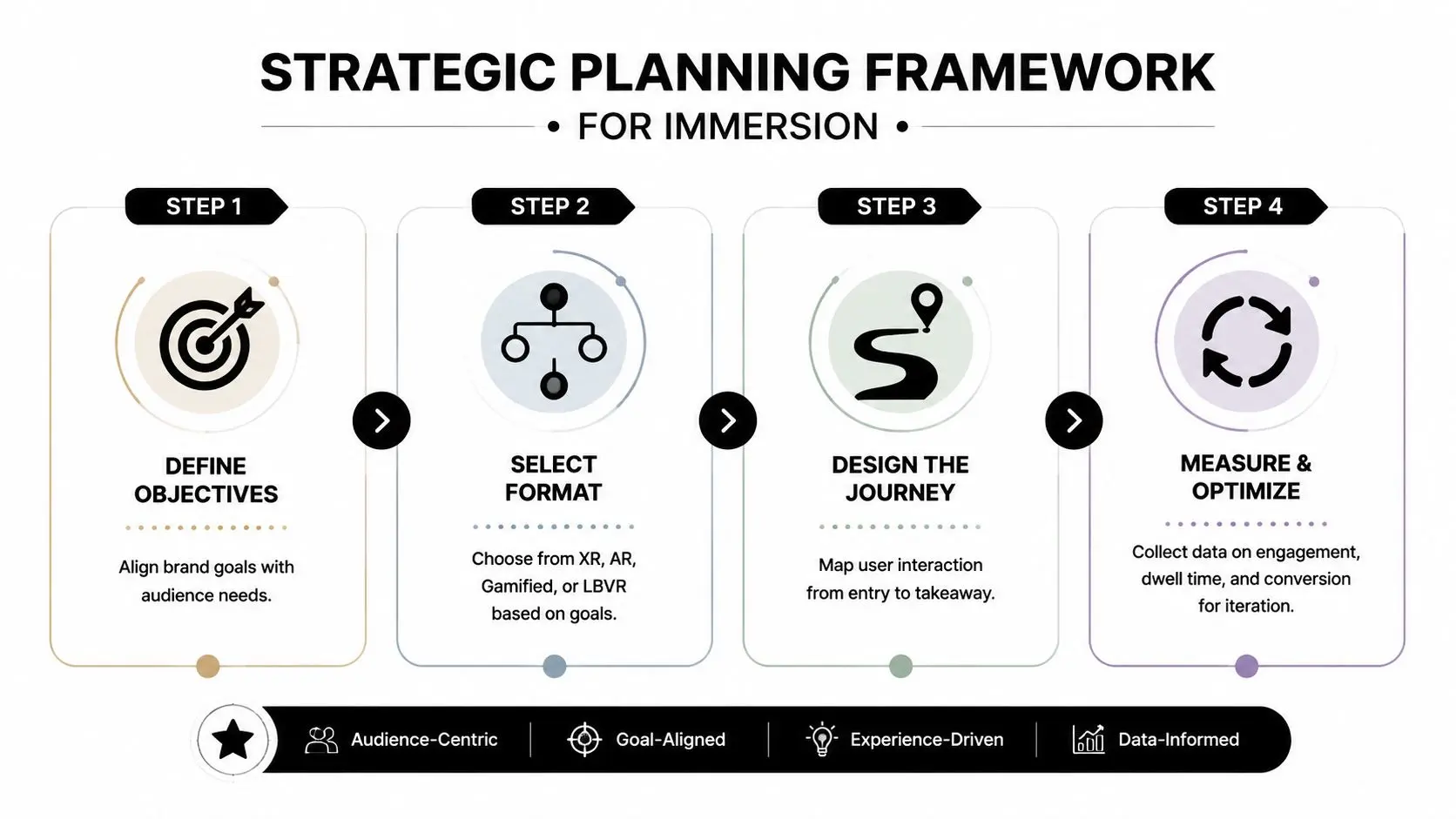
Immersive brand experiences succeed when production starts with a measurable behaviour, not a visual reference. “Make it futuristic” gives a team nothing to scope. “Help visitors understand the product, try it, and choose a retail follow-up” defines the interaction, operational requirements, and evidence of success.
Four decisions before production
Define the objective. Pair the commercial action with the audience need. A sampling campaign may prioritise qualified trials and retail directions. A B2B exhibition experience may focus on product comprehension, booked conversations, or stakeholder confidence. Awareness can support the brief, but it should not be the only instruction. Select the format. Choose XR, AR, a gamified app, or location-based VR according to the audience journey and delivery conditions. A short dwell window may favour a compact AR interaction over a longer headset experience. A venue with controlled queues and trained staff may support the stronger social proposition of LBVR. Design the journey. Map entry, orientation, interaction, payoff, and takeaway. Add the production details concept decks often omit: consent, accessibility, queue communication, device handover, tracking recovery, and the action expected after the experience. These decisions affect scripting, interface design, staffing, and test coverage. Measure and optimise. Define instrumentation before development. Useful measures may include completed sessions, dwell behaviour, interaction choices, sampling, lead quality, retail follow-up, and qualitative feedback. Collect each data point for a decision, such as changing the opening interaction, adjusting throughput, or qualifying leads.
Scope the physical environment
Bring venue, audience, brand, production, technical, and measurement stakeholders into the creative workshop. Confirm where visitors stand, how they enter, what staff say, how the experience resets, and what happens when the network fails. Set dressing, furniture, lighting, and visitor flow also shape digital perception. When evaluating those choices, teams can reference guidance on affordable event decor rental in Cape Town to understand how physical styling affects the visitor's reading of the content.
Practical rule: If the activation cannot be explained as a clear sequence of audience actions, the team is not ready to estimate it.
Prototype the riskiest assumption first. It may involve hand tracking, spatial mapping, device comfort, the game loop, or the time a staff member needs to reset the experience. Early tests expose operational friction before asset production and venue commitments make changes expensive. A working prototype also gives commissioners a better basis for approving scope than polished concept art alone.
Production Pipelines and Technology Stacks
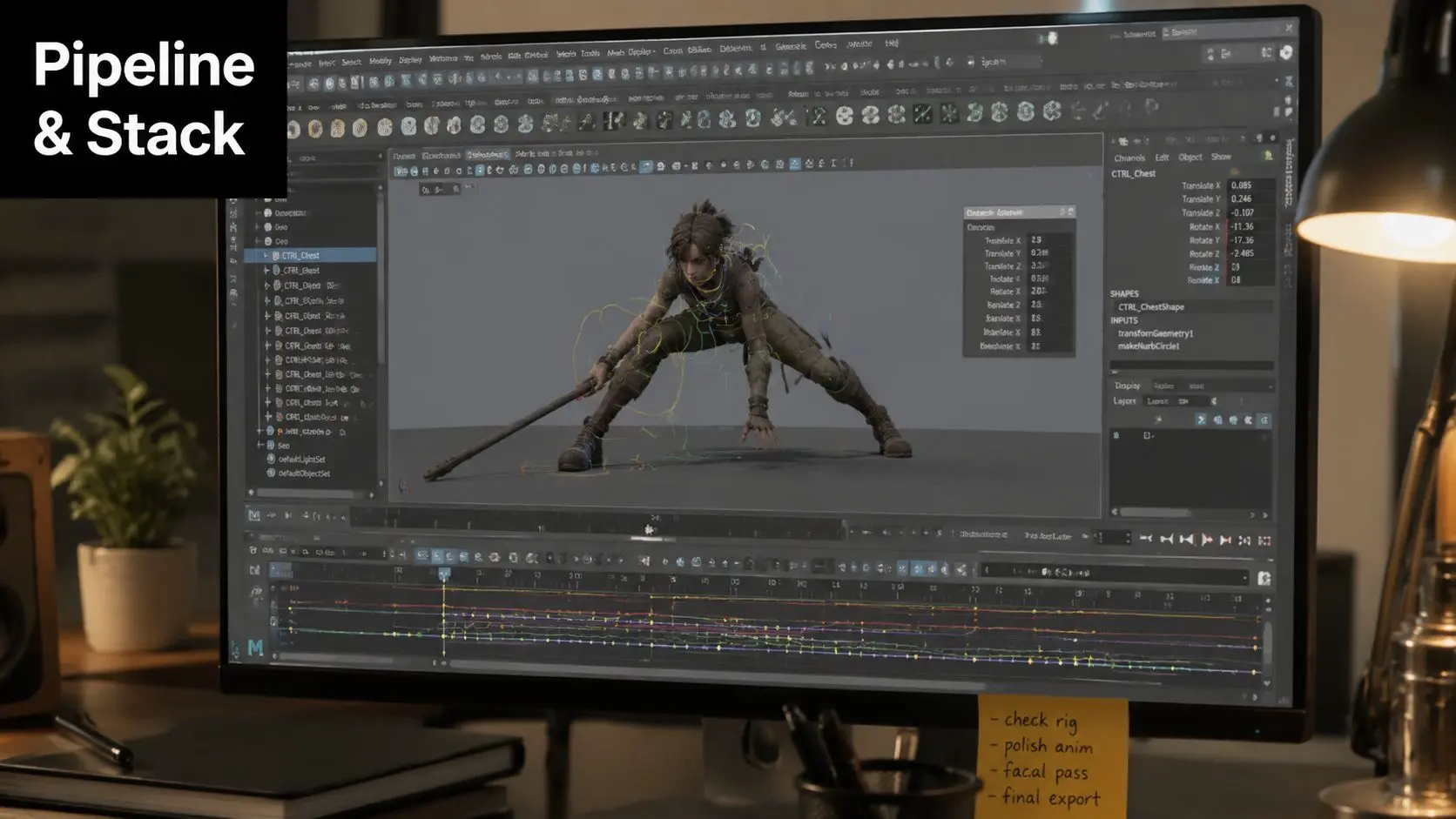
Immersive production is a chain of dependencies. A late change to the interaction model can affect 3D assets, animation, lighting, UI, sound, optimisation, testing, and venue operations. Producers who treat those areas as separate workstreams usually discover the integration problem at the end, when the schedule has the least flexibility. The pipeline normally begins with audience and interaction design, followed by script, storyboards, wireframes, previz, asset creation, rigging, animation, real-time implementation, sound, device testing, and deployment preparation. AI-assisted tools can help with ideation, rotoscoping, asset variations, transcription, and repetitive production tasks, but they don't remove the need for art direction, rights checks, technical review, or human performance decisions.
Choosing between Unity and Unreal
Unity can be a practical fit for applications that need broad device deployment, established interaction systems, mobile integration, or a team experienced in rapid product-style iteration. Unreal Engine is often attractive when high-end rendering, cinematic lighting, digital humans, or real-time virtual production are central to the brief. The decision depends on target hardware, existing code, asset requirements, team skills, licensing, and the amount of content that needs to change after launch. For Quest deployment, optimisation isn't a final polish pass. Polygon density, shader complexity, texture memory, draw calls, lighting strategy, interaction comfort, and frame stability all influence the experience. A scene that looks excellent on a workstation can become uncomfortable or unreliable on a standalone headset if the team hasn't designed within its limits.
Integration is where quality is won
Motion capture can accelerate physical performance, but recorded movement still needs cleanup, retiming, and adaptation to the character or interaction. Keyframe animation gives precise control over stylised timing and branded gestures. Spatial sound should be planned alongside camera, movement, and interaction, because sound cues often guide users when visual attention is divided. Real-time production also benefits from a disciplined versioning process. Teams need named builds, device matrices, known-issue logs, fallback states, and a clear approval route. This overview of virtual production equipment for creative studios is useful background for understanding how capture, display, tracking, and rendering choices affect a wider production system.
Real-World Case Studies in Immersive Brand Activation
A mixed-reality event game is judged differently from a VR short film. One must keep people moving through a shared experience without creating queues or confusion. The other needs performance, pacing, visual direction, and sound to work inside a headset. B2B technical animation has another standard altogether. The viewer must understand a complicated subject and trust the explanation.
Dance! Dance! Dance!
Studio Liddell's Dance! Dance! Dance! provides a useful reference for high-throughput mixed reality game design. The central production challenge was to combine accessible play with an art direction strong enough to feel like a branded event, while keeping the interaction legible for people who hadn't been trained beforehand. That requires more than a compelling mechanic. Producers need to test onboarding, scoring feedback, reset behaviour, player spacing, staff instructions, and the physical relationship between screens, sensors, and participants. In an event environment, a technically rich game that takes too long to explain may underperform a simpler loop that people understand immediately.
Aurora
Aurora shows a different side of immersive production, a VR short film built from script and direction through performance capture, post-production, optimisation, and spatial sound. The creative team has to direct attention without relying on a traditional frame, which changes blocking, edit rhythm, sound placement, and the way visual detail is prioritised. Performance capture can preserve natural movement, but the recorded data still needs to serve the story and the target hardware. Spatial sound becomes part of the narrative grammar, not a finishing effect. The final optimisation pass protects comfort and stability without flattening the atmosphere that made the concept worth producing.
GeoEnergy NI
GeoEnergy NI demonstrates how visual storytelling can clarify complex technical communication. The production problem isn't to make technical content “look exciting” at any cost. It's to establish a visual strategy that helps stakeholders understand systems, processes, and implications, then refine the explanation through review. That kind of work benefits from structured iteration. Subject-matter experts check accuracy, creative teams protect comprehension, and stakeholders test whether the visual narrative supports the decision they need to make. The same discipline applies to immersive brand experiences in industrial, medical, energy, and engineering settings. A beautiful interface can't compensate for a muddled explanation.
Your Commissioning Checklist for Working with Immersive Studios
A strong commission protects the creative idea by making the constraints visible early. The studio should know the audience, venue, devices, content rights, brand rules, deployment dates, staffing model, data requirements, and approval structure before it presents a confident production estimate.
Put these items in the brief
- •Audience behaviour: Explain what visitors know already, what they need to do, and what might stop them participating.
- •Business action: Define the intended outcome, whether that's product trial, retail direction, lead capture, education, or repeat engagement.
- •Environment: Supply floor plans, access restrictions, power information, connectivity assumptions, lighting conditions, sound limits, and installation windows.
- •Content assets: List existing models, characters, footage, music, voice, brand guidelines, and rights restrictions. Missing source assets can change both approach and schedule.
- •Technical delivery: Specify platforms, headset models, screen outputs, aspect ratios, offline requirements, analytics, accessibility, languages, and fallback behaviour.
- •Operations: Describe queueing, staffing, cleaning, supervision, reset, support, and incident escalation.
Ask the studio to separate concept, prototype, production, integration, testing, deployment, and support. A single undifferentiated fee makes it difficult to understand where risk sits or what changes will cost. A phased proposal gives stakeholders a controlled decision point before full production.
Test the proposal, not just the reel
Red flags include beautiful work with no explanation of the team that delivered it, estimates that ignore venue operations, unpriced platform assumptions, no plan for device testing, and promises of unlimited revisions. Ask who owns the source files, how third-party licences are handled, what happens when the network fails, and whether the studio has supported the experience in the field. For physical builds, the digital team also needs to coordinate with the stand contractor, AV supplier, venue, and event agency. A practical exhibit builder resource from UCON Exhibitions can help commissioners understand the wider exhibition-build context. For studio due diligence, choosing virtual production companies offers a useful lens on capability, equipment, workflow, and fit.
A reel proves taste. A production plan proves readiness.
Use a written change-control process, scheduled approvals, named decision-makers, and acceptance criteria. Prototyping and previz should answer the highest-risk questions before the team commits to final assets. That approach doesn't eliminate uncertainty, but it stops avoidable surprises from arriving during install week.
The Future of Immersive Brand Experiences and Next Steps
The next phase of immersive brand experiences will be defined by quality of interaction, not by hardware novelty. In a February 2025 survey of UK metaverse users, around half valued realistic visuals and exceptional graphics most highly, 42% prioritised a smooth user experience, and 36% valued social interaction. The findings are reported in Statista's UK metaverse feature data. The same research found that 21% of UK adults said media and entertainment brands would most tempt them to try the metaverse, ahead of travel and art at 17% each. That suggests demand is segmented. Brands shouldn't assume every audience wants a persistent virtual world. They should identify whether realism, ease, social play, utility, or narrative is the persuasive feature for their category. UK suppliers also have international experience to draw on. A UK immersive economy report states that 70% of specialist firms were exporting immersive products and services, a practical indication that many studios already design for delivery beyond a single local market. UK Business Connect's report summary provides that context. Start with an ideation sprint, test the riskiest interaction, and build the measurement plan before the production estimate is final. If the idea survives those checks, move into previz, prototype deployment, and a phased delivery plan rather than commissioning spectacle in isolation. --- Studio Liddell develops animation, XR, AR, VR, games, and AI-enhanced digital production for brands, agencies, and entertainment teams. Visit Studio Liddell to discuss an immersive concept, review a technical brief, or book a production scoping call.