8 2D Animation Examples and Strategic Uses
2D animation isn't one visual category. Hand-drawn performance, vector tweening, anime-influenced limited animation, stop-motion, rotoscoping, kinetic typography, procedural systems and illustration-led storytelling all create different audience responses, production demands and revision risks. British animation has been developing across these traditions since at least 1899, when Arthur Melbourne-Cooper's Matches Appeal became one of the earliest UK animation projects cited in industry histories, followed by milestones such as Animal Farm and the expansion of television animation through The Wombles, Paddington and Postman Pat.British animation history The most useful way to assess 2D animation examples isn't to ask which one looks best. Ask what each style does to performance, production method, audience fit, delivery format and cost control. The eight examples below use that lens, with practical adaptation advice for brands, education, entertainment and digital products. Studio Liddell is a full-service creative digital production company working across 2D and 3D animation, television, advertising, games, AI-assisted production and XR. Its production work includes animation for TV series, commercials, explainers and digital experiences, making it a relevant partner when a visual idea needs to move from early design through to final delivery.
1. Classic Disney Animation and the Gold Standard of 2D Character Movement
Classic Disney animation remains a useful reference because it treats movement as acting, not decoration. Snow White and the Seven Dwarfs, Beauty and the Beast and The Lion King show how carefully shaped poses, expressive silhouettes and controlled timing can make an animated character feel emotionally present. The same principles remain relevant when a modern studio creates a children's series, a digital short or a character-led brand film. The visual character comes from squash and stretch, anticipation, follow-through, overlapping action and exaggerated timing. A character does not just walk from one point to another. Their weight shifts, their anticipation reveals intention, and their face or hands reinforces the line of dialogue. That level of performance gives hand-drawn animation strong emotional range, but it also creates more demanding review and clean-up work than a basic symbol-based rig.
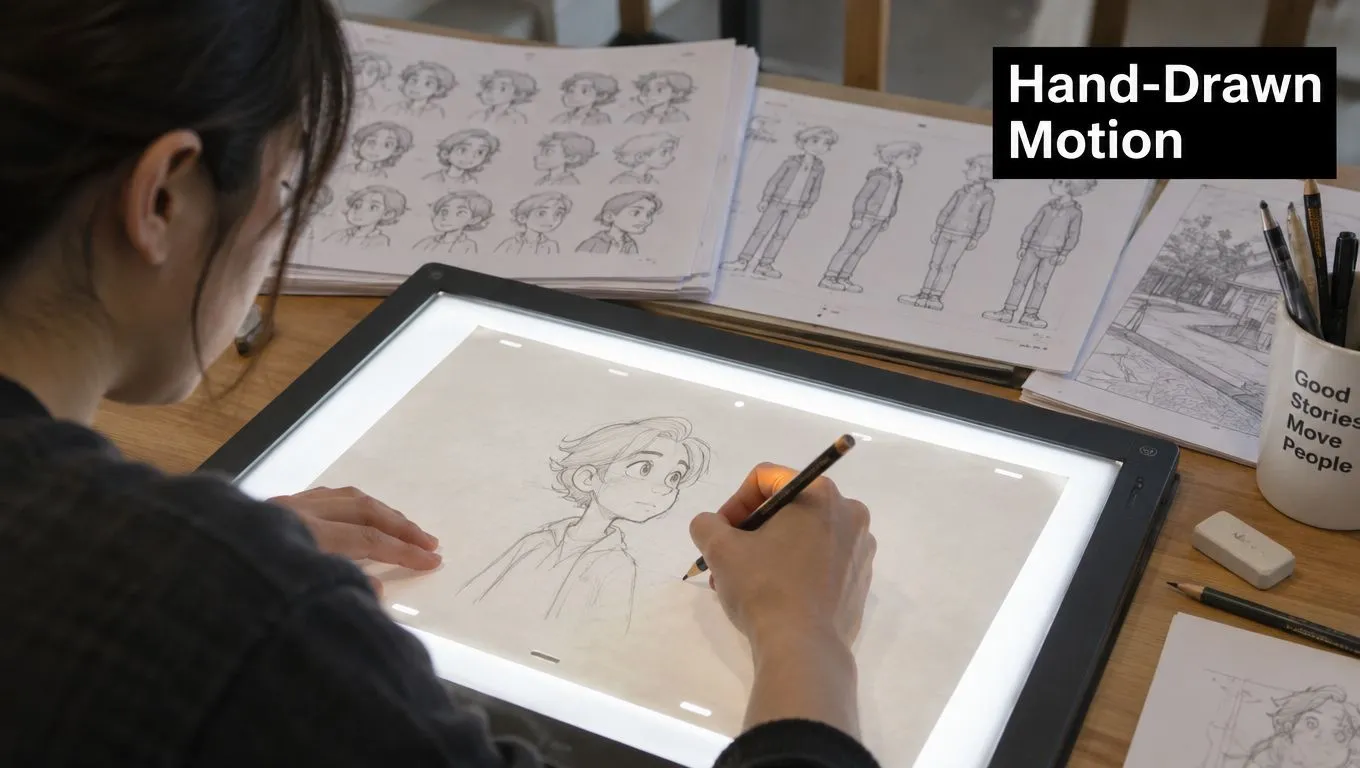
Where this approach earns its production effort
Choose this style for expressive IP, comedy, emotional storytelling and performance-driven advertising. It works particularly well when the character is the product, rather than a visual device supporting a product message. Studio Liddell's work with Sky Kids' BooSnoo demonstrates the relevance of character animation for series and digital content. A production team can protect the style by separating creative decisions from expensive finishing work:
- •Lock the animatic first: Timing, shot length and performance intent should be clear before full animation begins.
- •Use modular assets where appropriate: Reusable rigs and props can support consistency without forcing every shot into mechanical movement.
- •Review in stages: Rough animation, spline or intermediate movement and final clean-up each reveal different problems.
- •Use movement reference: Live-action reference can ground an exaggerated performance in believable weight and rhythm.
Practical rule: Spend the most review time on acting choices and timing. A beautifully cleaned-up shot with weak performance is still a weak shot.
2. Flash and Tweening Animation for Fast-Turnaround Digital Production
Vector-based tweening changed how studios approached short-form animation for websites, adverts and broadcast graphics. Instead of drawing every frame, animators build clean vector assets and define key poses or property changes. Software then calculates the transition, while the animator shapes the result with easing, offsets and carefully chosen holds. The method is effective for brand characters, product explainers, social cut-downs, idents and interface animation. Google Doodles, MailChimp's brand animations, Adult Swim bumpers and BBC Children's idents demonstrate the broad range of work that can use graphic, modular movement. The style can feel playful or polished, but it becomes flat when every object moves at the same speed and along the same mechanical path. For a practical overview of current software choices, see this guide to 2D animation software for production teams. The tool matters less than the design system around it. A good production library contains approved symbols, colour rules, typography, transitions and naming conventions, so a second animator can extend the work without breaking the visual language.
The strongest use case is adaptable content
Tweening is a good fit when a campaign needs multiple versions. A team might produce a master film, then adapt the same character parts and graphic elements for a product page, social post or internal presentation. It also works when the message is more important than subtle acting. The trade-off is clear. Tweening reduces repetitive drawing, but it doesn't remove the need for animation judgement. Linear movement, poorly designed silhouettes and excessive auto-generated transitions make a piece look cheap. Strong easing curves, delayed body parts and deliberate pauses create weight and appeal. Test the smallest intended viewing size early. Thin strokes and intricate facial details that look fine on a large monitor may disappear on a mobile screen. For delivery, agree whether the client needs a finished video, a transparent asset, an interactive SVG or a reusable motion template before animation starts.
3. Stop-Motion and Puppet Animation for Tangible Charm
Stop-motion earns attention through physical evidence. Audiences can sense the texture of a puppet, the imperfection of a handmade prop and the distinctive light falling across a miniature set. Aardman's Wallace & Gromit, Laika's Coraline and Kubo and the Two Strings, PES's Fresh Guacamole and Henry Selick's The Nightmare Before Christmas all show how a tactile method can become part of the story's identity. The production process is entirely different from digital 2D animation. A team designs puppets, builds sets, positions armatures, controls lighting and photographs movement frame by frame. Replacement mouths, replacement hands, rigs and physical texture give the animator precise control, but every physical choice has consequences. A puppet can wear, a material can deform and a set can become difficult to reset.
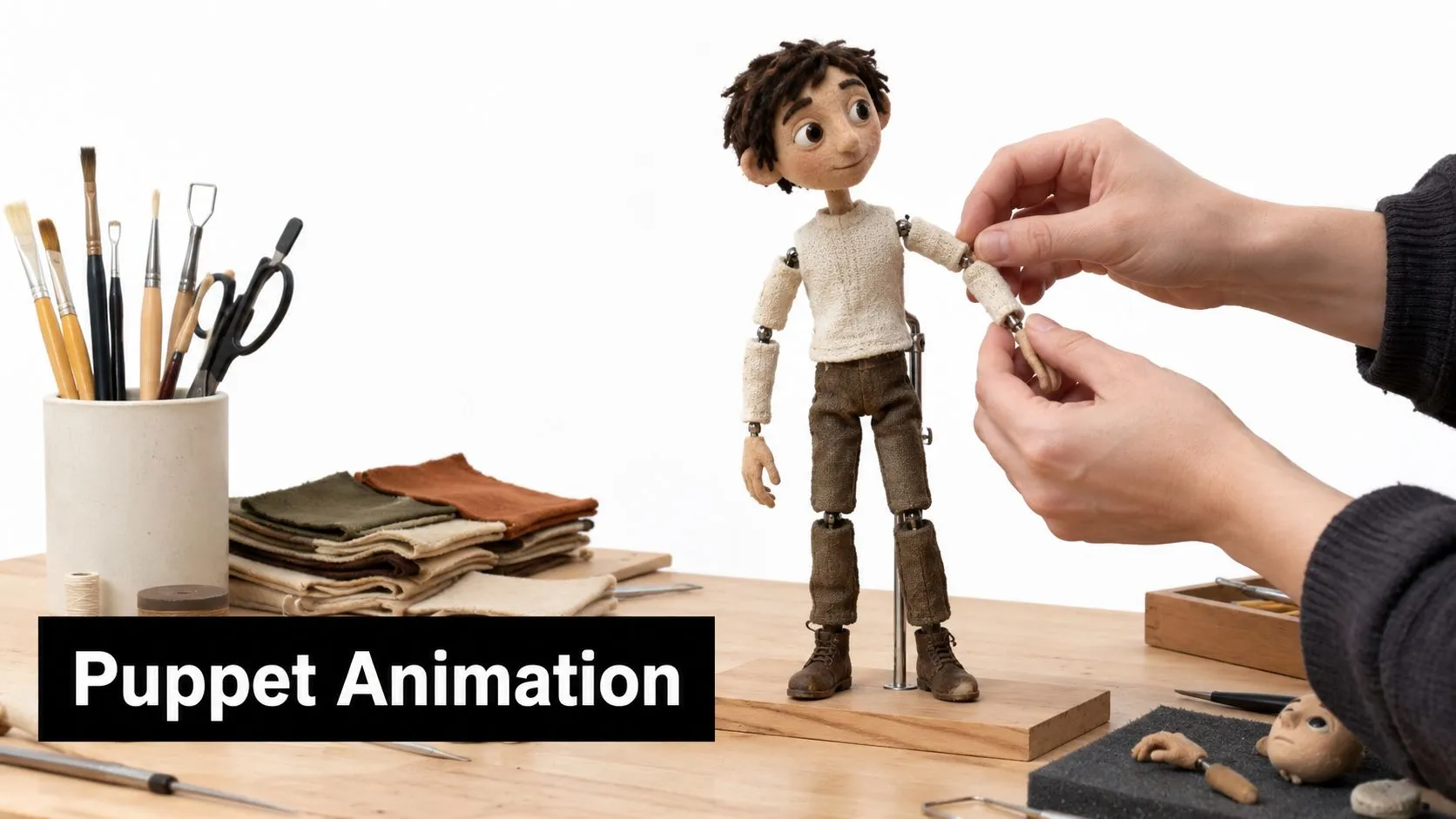
Control the risk before the shoot
The most important stop-motion work happens before the camera rolls. Storyboards, animatics, character tests and set tests expose problems while they remain affordable to fix. A production should also define how the camera moves, how lighting stays consistent and how the team will preserve continuity across a long shoot. Stop-motion is rarely the right answer for a rapid campaign with a changing script. It becomes a strong choice when the physical craft is part of the proposition, such as a premium commercial, a distinctive children's property or a behind-the-scenes-led campaign. Useful adaptations include:
- •Hybrid sets: Use physical hero objects with digital backgrounds when a full miniature environment would consume too much time.
- •Motion control: Repeatable camera movement reduces manual parallax errors and makes pickups easier.
- •Durable puppet design: Build replacement parts and repair plans into the asset specification.
- •Process capture: Photographing and filming the making process can create valuable promotional material alongside the final film.
The visual warmth is the advantage. Physical resets, material breakdown and equipment limitations are the price of achieving it.
4. Anime and Manga-Influenced 2D for Global Appeal
Anime-influenced animation often creates impact through selective movement rather than constant movement. A held pose, a strong camera composition or a sharply designed key frame can carry a scene, while fluid animation is reserved for an action beat, transformation or emotional peak. Spirited Away, Howl's Moving Castle, Attack on Titan, Demon Slayer, My Hero Academia, Cyberpunk: Edgerunners and Arcane offer different interpretations of stylised, serialised storytelling. This approach suits youth entertainment, action-led content and stories designed to extend across streaming, games and merchandise. It can also help a production focus resources where the audience will feel them most. Dialogue scenes may use held poses and selective facial movement, while a fight or reveal receives more detailed key animation and compositing.
Design the production around contrast
The mistake is to copy surface features without understanding the underlying discipline. Large eyes, sharp hair shapes and saturated colour won't create an anime-influenced style on their own. The work needs a clear character designer, a model supervisor, a storyboard process and a visual hierarchy that distinguishes a key moment from a connective one. A practical pipeline may separate action animation, dialogue animation, background design and compositing, while keeping one consistent model reference across departments. Colour scripts help establish mood before detailed shots absorb production time. On-model checks at the key, rough and final stages reduce drift in character proportions and costume details. Outsourcing some inbetweening can be useful for a series, but it creates a management obligation. The lead team must provide unambiguous model sheets, timing notes, naming conventions and review criteria. A cheaper handoff becomes expensive when corrections arrive late or when different episodes develop inconsistent movement. For a brand or educational project, borrow the method rather than the entire look. Use stillness to make a message land, reserve fluid motion for the important idea and let the storyboard determine where detail earns its place.
5. Motion Graphics and Kinetic Typography for Brand Communication
Kinetic typography turns language into visual rhythm. Words can expand, split, stack, slide or disappear in response to narration and sound, while graphic shapes make relationships easier to follow. Apple product launches, TED-Ed explainers, Google's Material Design motion language, Skillshare intros and broadcast title sequences all demonstrate how typography can carry identity as well as information. The method is especially useful for explainers, financial and technology communication, logo reveals, title sequences, social campaigns and data-led storytelling. It doesn't require a character to hold attention. A carefully timed phrase, diagram or transition can direct the viewer through a complex message without adding visual noise. For UK brands, this motion graphics guide covers the broader production language behind animated brand assets. Studio Liddell applies motion graphics across brand content, broadcast work, explainers and social adaptations.
Build one message hierarchy, not a moving poster
Start by identifying the single idea the viewer must remember. Supporting figures, labels and qualifications should reinforce that idea rather than compete with it. A grid, design system and restrained colour palette help the animation feel intentional, especially when different editors or designers will adapt the source files. Sound design matters because typography often lands through rhythm. A reveal that ignores the voiceover or music can feel late even when the animation is technically smooth. Captioning and readable contrast also matter for accessibility, particularly when viewers watch without sound. For further music discovery, production teams can explore LesFM artists when a suitable track or composer reference is needed. Plan deliverables before animation begins. A campaign may need widescreen, square and vertical compositions, but those versions shouldn't be treated as simple crops. Text hierarchy, safe areas and reading time change between formats. Modular text elements can make copy updates easier, although substantial wording changes may still require retiming.
A useful test: Pause the film at any point. If the frame shows no clear information hierarchy, movement isn't solving the communication problem.
6. Rotoscope and Traced Animation for Live-Action Hybrids
Rotoscoping begins with real movement and transforms it. Artists trace, simplify or stylise live-action footage frame by frame, creating a result that can feel photorealistic, dreamlike, graphic or deliberately unstable. Richard Linklater's Waking Life and A Scanner Darkly show the technique's capacity for psychological and surreal storytelling, while Spider-Man: Into the Spider-Verse demonstrates how traced movement can sit within a broader hand-drawn and digital visual language. The method works well for music videos, dream sequences, premium commercials and live-action films that need animated overlays. It gives a character believable weight because the source performance already contains movement information. It also creates a distinctive tension between a recognisable human gesture and an altered surface.
Shoot for the animation you intend to make
Rotoscope problems often begin on set. Inconsistent lighting, reflective backgrounds, fast occlusion and crowded frames increase the amount of manual correction. A production team should define the target treatment before filming. Is the result meant to preserve a silhouette, expose an outline, resemble watercolour or break the movement into graphic shapes? Automated tracking and rotoscope tools can provide a useful starting point, but they don't understand every artistic decision. Hair, hands, transparent objects, motion blur and overlapping bodies usually need human judgement. Clean plates, well-planned camera angles and isolated performances make the later compositing process more manageable. A good workflow separates the actor from the new environment when possible. The team can refine the subject, add a stylised background and control shadows or colour independently. Version control becomes essential because a change to the live-action source can affect every traced layer. Rotoscoping is a poor fit when a client expects frequent script changes late in production. It becomes much more practical when the live-action performance is approved first and the animation treatment is stable.
7. Procedural and Generative Animation for Scalable Production
Procedural animation uses rules, systems and reusable behaviours to create motion that would be slow to produce by hand. It can drive background activity, crowd movement, terrain, environmental effects, digital humans or real-time interactions. Examples associated with this production space include Mixamo motion assets, Unreal MetaHuman, NVIDIA NeRF research, Unity Sentis and procedural environments in games such as No Man's Sky. The appeal is scale. A team can create a controllable system rather than animate every repeated event individually. That makes procedural methods relevant to live-service games, real-time broadcast, interactive installations, XR and large scenes with recurring movement. It also supports rapid iteration when the client needs to change camera positions, lighting or player interactions. For a practical discussion of how AI is entering animation workflows, see AI animation software and production workflows. AI-assisted tools can accelerate reference handling, rough motion, clean-up or asset preparation, but they don't remove the need for art direction, performance review and legal accountability. Teams researching broader automation can also review AI content marketing use cases, while keeping marketing automation separate from final animation approval.
Keep a human fallback for important moments
Procedural output can look repetitive, unstable or aesthetically inconsistent if the rules aren't designed carefully. A generated walk cycle may suit background characters but fail for a hero performance. A generated face may meet a technical target but miss the character's emotional intention. Use procedural systems for repeatable complexity, then hand-animate the moments that carry story or brand meaning. Document the tools, inputs, approvals and limitations so the client understands how the work was created. Maintain an approved keyframe library for critical sequences and test the output against the project's visual standards before building the rest of the scene. The right question isn't whether a system can create motion. It's whether the system gives the team more useful control than manual animation would.
8. Narrative Illustration and Graphic Novel Animation
Illustration-led animation preserves the authority of a drawn image while adding movement, sound and time. The source may be a picture book, graphic novel, author-led concept or educational story. Puffin Rock, Beatrix Potter adaptations and other storybook-inspired productions show how texture, colour and composition can create a calm, intimate viewing experience. A graphic novel treatment can take the opposite route, using high contrast, dramatic framing and controlled camera movement. This style works particularly well for children's content, literary adaptations, educational narratives and projects where the illustrator's hand is part of the appeal. It also offers a useful middle ground between a static illustrated film and fully animated character production. Backgrounds can hold while eyes, mouths, hands, props or camera layers provide carefully chosen movement.
Protect the artwork before adding motion
Commission or approve the illustration language first. Animators should build from the intended visual identity rather than redesigning the art to suit a convenient rig. Scanned textures, painted overlays and layered Photoshop or TVPaint files can preserve the irregularity that makes the style distinctive. Voiceover and sound design can carry pacing, which reduces the need to animate every gesture. A narrator may hold a composition while a small change in expression or a moving foreground element keeps the frame alive. That restraint can be valuable in education, where the viewer needs time to process a concept rather than follow constant visual activity. Plan for different outputs from the beginning. A broadcast film, an e-book illustration, a classroom presentation and a social teaser may use the same artwork but need different crops, reading times and levels of motion. Test early with the intended audience, especially when parents, children, teachers or institutional buyers will judge the work differently.
The adaptation principle: Animate the meaning of the illustration, not every mark on the page.
8-Style 2D Animation Comparison
| Style | 🔄 Implementation Complexity | 💡 Resource Requirements | ⚡ Speed / Efficiency | ⭐📊 Outcomes & Key Advantages | Ideal Use Cases |
|---|---|---|---|---|---|
| Classic Disney Animation: The Gold Standard of 2D Character Movement | Very high, full frame-by-frame workflow with multi-stage clean-up and long pipelines | Specialist animators, long timelines; budget ~£50k, £150k per finished minute; 6, 12 months per half‑hour episode | Slow, months of production per episode/minute | Broadcast-quality, timeless appeal; strong emotional performance and IP value ⭐📊 | Premium children's/family series, theatrical releases, high‑value IP |
| Flash/Tweening Animation: Fast-Turnaround Digital Production | Low, medium, vector rigs, tweening and symbol-based pipelines | Small teams; budget ~£8k, £25k per finished minute; iterative asset libraries | Fast ⚡, days, weeks; 3, 5× quicker than frame-by-frame | Cost‑efficient, scalable assets ideal for campaigns; cleaner but less organic motion ⭐📊 | TV ads, explainers, social cuts, title sequences |
| Stop-Motion & Puppet Animation: Tangible Charm and Award Recognition | Extremely high, handcrafted puppets, physical sets, meticulous frame capture | Craftspeople, studio space, puppet workshops; budget £200k, £500k+ per minute; long shoots | Very slow, ~1, 2 seconds of finished footage per day | Distinctive tactile aesthetic, premium positioning and award potential ⭐📊 | Prestige commercials, theatrical shorts/features, collectible IP |
| Anime & Manga-Influenced 2D: Global Appeal and Serialization Efficiency | Medium, limited animation techniques with precise model sheets and strong storyboarding | Multi‑tier teams; budget ~£15k, £40k per minute; episodic production model | Fast ⚡, 4, 6 weeks per half‑hour episode (efficient serialization) | High serialization efficiency, strong youth appeal and transmedia potential ⭐📊 | Serialized streaming series, youth/YA content, merchandising-driven IP |
| Motion Graphics & Kinetic Typography: Brand Communication and Data Visualization | Low, design-led, templateable, pipeline-friendly | Small design/motion teams; budget £3k, £15k per deliverable; short timelines | Very fast ⚡, days to weeks; easy A/B and multi-format exports | Measurable brand impact, multi-format delivery, high conversion potential ⭐📊 | Brand spots, explainers, idents, social campaigns |
| Rotoscope & Traced Animation: Photorealism and Live-Action Hybrid | High, frame-by-frame tracing of live-action; AI assists but requires manual cleanup | Live‑action shoot + skilled compositors; budget ~£50k, £150k+/min; strong VFX support | Moderate, AI speeds help but manual refinement remains time‑consuming | Authentic movement with stylized visuals; distinctive, premium look ⭐📊 | Music videos, premium commercials, dream sequences, hybrid narratives |
| Procedural & Generative Animation: AI-Enhanced Production and Real-Time Rendering | Medium, technical pipelines, AI models and real‑time engines; needs skilled oversight | Engineers, licences (Unreal/NVIDIA/Adobe); variable budgets; reduces some manual roles | Very fast ⚡, 50, 70% faster in rigging/asset generation; real‑time iteration | Scalable, consistent assets; real‑time interactivity and crowd/background generation ⭐📊 | Games, real‑time broadcast/XR, large‑scale background/crowd work |
| Narrative Illustration & Graphic Novel Animation: Storybook Charm and Literary Adaptation | Medium, illustration-first workflow with limited purposeful animation | Illustrators + moderate animation team; budget ~£25k, £60k per minute | Moderate ⚡, significantly faster than full character animation (60, 70% less drawing) | Preserves artistic voice; intimate storytelling and strong appeal for literary adaptations ⭐📊 | Book/graphic‑novel adaptations, educational kids' content, author‑led projects |
Turn Inspiration Into a Production Direction
These 2D animation examples become more useful when translated into production decisions. Hand-drawn character animation is the natural choice when expressive acting, emotional IP and character recognition carry the project. It offers nuance, but the team needs stronger performance direction, more detailed review and a clear plan for consistency across sequences. Choose tweening or motion graphics when speed, modularity and format adaptation matter most. A brand campaign may need a master film alongside social versions, presentation assets and product-page snippets. Vector artwork and reusable motion systems can make those adaptations practical, provided the design remains clear at small sizes and the team doesn't confuse automated movement with finished animation. Use stop-motion when tactile craft is part of the audience promise. Its physical surfaces can give a premium commercial or children's property a distinctive presence, but the production needs thorough pre-production, durable puppets, controlled lighting and a realistic approach to changes. Late script revisions can be particularly disruptive. Anime-influenced methods suit serialised youth content and action-led stories that benefit from contrast between held poses and highly detailed key moments. The style depends on strong character design, model supervision and storyboards that identify where full animation will have the greatest effect. It shouldn't be reduced to a set of surface motifs. Select rotoscope for live-action hybrids, altered realism and music-led work where the original performance matters. It can produce a distinctive result, but the shoot, tracking and refinement process must be designed together. Procedural and generative methods are strongest when a project needs scalable backgrounds, repeated behaviours, interactive responses or real-time variation. Keep human control over hero acting, brand-defining moments and final approval. For educational or literary storytelling, illustration-led animation often provides the best balance between artistic identity and controlled movement. It can preserve a recognisable artwork style while using narration, sound and selective animation to guide attention. Before choosing a method, define:
- •Audience: Who needs to care, understand or act?
- •Message: Is the work selling, explaining, entertaining or training?
- •Formats: Will it run on television, a website, mobile feeds, an app, an event screen or an XR device?
- •Revision tolerance: Which decisions must be locked early, and which can remain flexible?
- •Production constraints: What artwork, performance, technical integration and delivery requirements will shape the pipeline?
A reliable adaptation process starts with a visual reference board, followed by a short style test that answers the most expensive creative questions. Build an animatic before committing to detailed animation. Plan crops, captions, audio variants and accessibility requirements alongside the master composition. Set review gates for script, design, storyboard, animatic, animation and final delivery, with one decision-maker responsible for consolidating feedback. Studio Liddell can support projects across 2D and 3D animation, character work, motion graphics, television, advertising, games and XR. The right brief doesn't need to arrive with the final style already chosen. It needs a clear audience, a useful message and enough production context for the studio to test the visual direction. --- Studio Liddell develops character animation, motion graphics, CGI, TV content, advertising, explainer films and AI-assisted production workflows. If you're comparing 2D animation approaches for a brand, educational project or entertainment property, visit Studio Liddell to discuss the brief and find a production direction that fits the audience, format and pipeline.