7 Creative Direction Courses for 2026: Levels and Fees
A senior designer has just been asked to lead a client pitch. The work is strong, but the job now involves deciding which idea leads, briefing the team, defending the concept and choosing what the client sees. That shift from making to directing is where creative direction courses can help. The options vary sharply. Some are focused short courses built around live briefs. Others require postgraduate-level commitment and produce a broader portfolio across film, digital, fashion, immersive media or spatial design. This guide compares seven routes by career stage, format and time commitment, so you can choose the course that fits the role you're moving into, rather than just the institution with the strongest name. The practical test is simple. Identify the gap between your current work and your next role, then choose the course that gives you repeated practice in that gap.
1. UAL Central Saint Martins Creative Direction Short Course
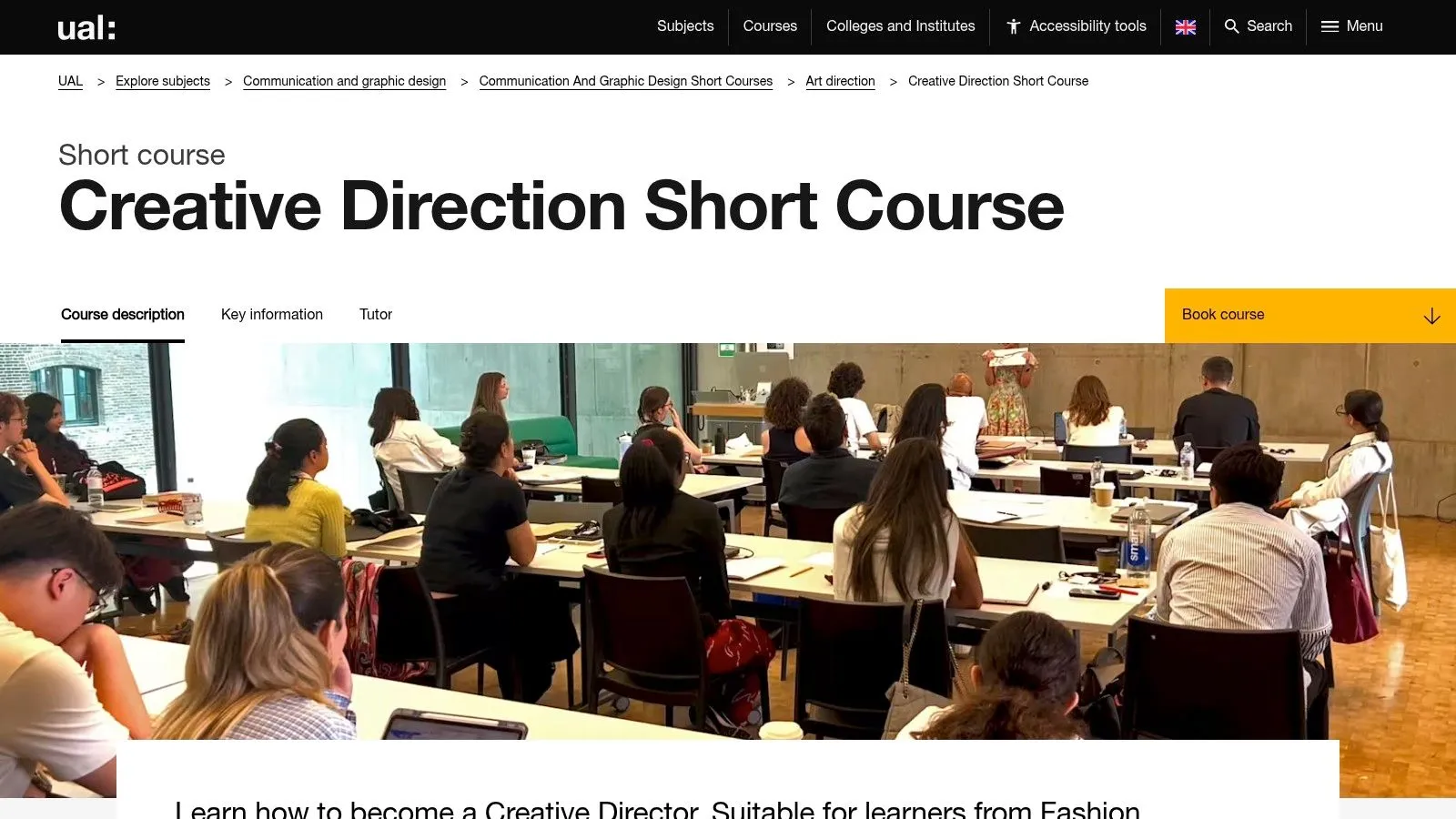
This is the most direct option for a designer or art director who already understands production but needs to lead ideas and people more confidently. The UAL Central Saint Martins Creative Direction short course is project-led, with live briefs, pitching practice and integrated campaign work rather than a long academic research commitment.
Best fit for a first leadership step
The useful distinction here is between strategy and idea. Strong individual contributors often know how to make a good visual. Creative directors must decide which idea deserves development, explain why it answers the brief and keep a team aligned when alternatives appear. The course addresses that transition through live briefs and pitching. It also deals with managing creative teams and presenting a portfolio, which makes it relevant to someone preparing for senior designer, art director or junior creative director responsibilities. Teaching from a practising Creative Director with editorial and advertising experience should keep the work close to agency and client conditions.
Practical rule: Choose a short course when your problem is decision-making under pressure, not a lack of basic craft.
Its main advantage is speed. You can gain a focused skills upgrade without taking on a full degree, and the Central Saint Martins network may matter when you're building relationships with other working creatives. The trade-off is depth. An intensive course can sharpen your process, but it won't replace years of managing complex teams, budgets or long production cycles. Dates and fees vary, and cohorts can fill quickly. Check the current course page before planning around a specific intake. This is a strong choice for a mid-career creative who needs a concentrated push into leadership and can bring substantial existing experience to the room.
2. UAL London College of Communication Creative Direction for Digital Media
Digital creative direction requires a different emphasis from traditional campaign art direction. A useful director must shape online identity, understand content systems, judge platform-native storytelling and connect creative output with audience response. The UAL London College of Communication online short course is built around that environment.
Best fit for content and campaign leads
The online format suits creatives working alongside active projects. Exercises cover online identity, engagement, content creation and performance measurement, with individual feedback in small classes. That combination is particularly relevant if you're directing animation, interactive launches, social campaigns or branded content that must work across several digital touchpoints. The course's strength is practical application. You can take a current client challenge into the learning environment and test how a content idea behaves across formats. The limitation is that platform and content direction aren't the same as full production leadership. If you need extensive practice managing crews, budgets, technical pipelines or multidisciplinary approvals, you'll need to build that experience elsewhere. The course is led by a creative director and stylist with work for global brands and cultural institutions, which should help connect exercises with real commissioning contexts. It also pairs naturally with Studio Liddell's explanation of creative digital media production, especially for readers moving between content strategy and production.
A remote course works best when you treat every exercise as a live campaign decision, not as homework to complete and forget.
This is a sensible route for a designer, content producer or social lead who wants to direct digital output without leaving work for a long period. It's less suitable if your next role depends mainly on brand systems, physical production or film direction.
3. D&AD Masterclasses in Art Direction and Creative Leadership
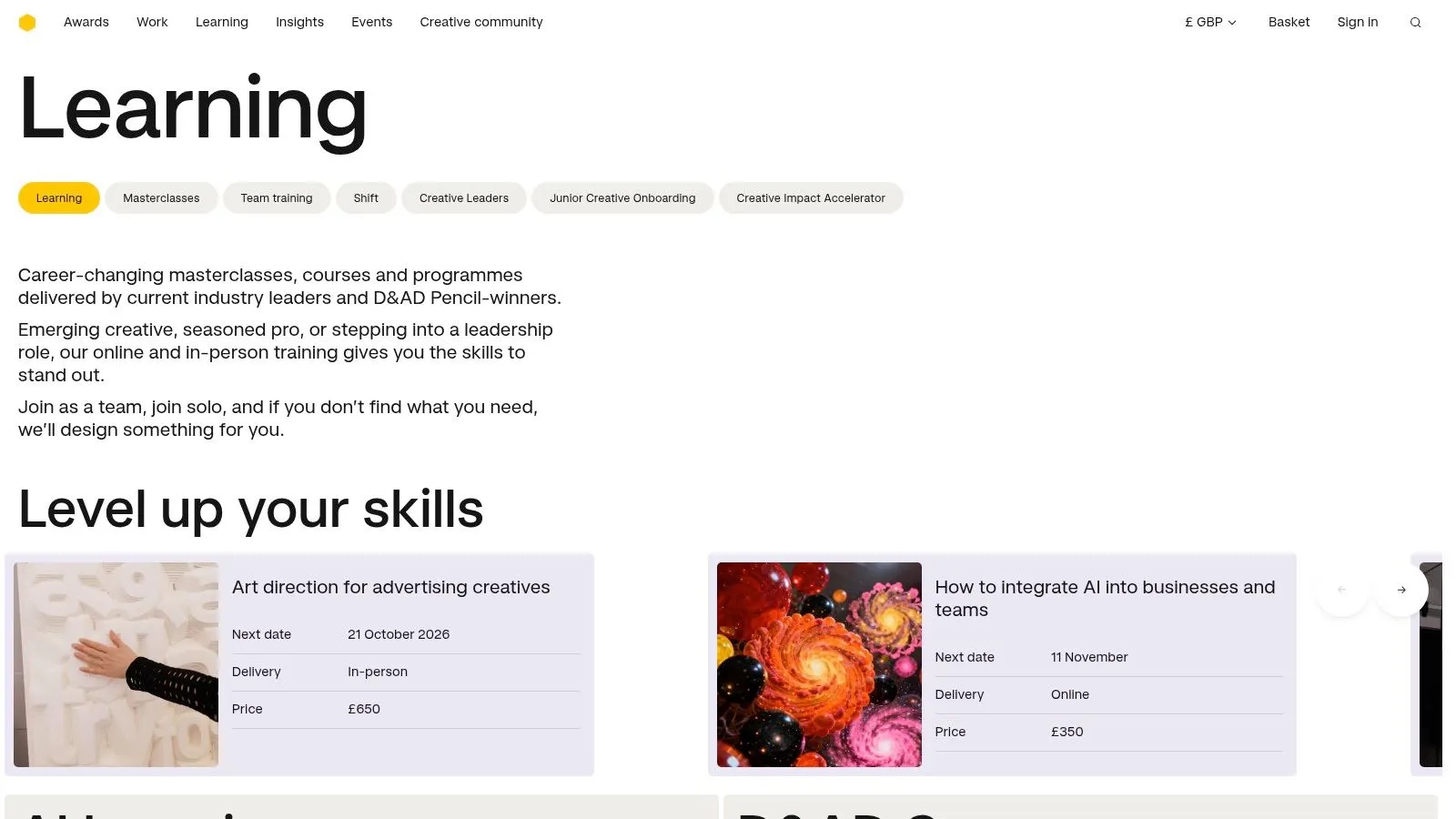
A creative team has a pitch tomorrow, its critique sessions lack direction, or a new Creative Director needs practical leadership tools. A qualification may be the wrong response. D&AD Learning offers short masterclasses focused on areas such as art direction for advertising creatives and leadership for emerging Creative Directors.
Best fit for working agency teams
D&AD's strength is its connection to current agency practice. Award-winning Executive Creative Directors and Creative Directors teach through contemporary briefs, case studies and practical tools. Sessions may be delivered in person or online, making the format suitable for individual enrolment and team training. That format works well when a creative department needs a shared approach to critique, presentation or leadership. A team can apply the methods to a pitch process or campaign review soon after the session. The peer group adds useful comparison, especially for creatives assessing how other agencies develop ideas, give feedback and handle client pressure. The trade-off is limited depth. A single-day or short masterclass can expose weak habits and introduce a useful framework, but it cannot provide the sustained development of a postgraduate programme. Results depend on application after the session. Someone who tests the tools on live work may gain significant value. A certificate alone will not change a creative process.
- •Choose it for speed: You need a focused intervention instead of a long qualification.
- •Choose it for team alignment: Several colleagues need to improve critique, pitching or leadership together.
- •Avoid it as a complete transition: You need extended portfolio development or a formal academic route.
Registration may be required for dates and booking details, and popular sessions can fill quickly. Check the current D&AD masterclass programme before committing. For experienced creatives, this is a focused route to improving work without leaving agency practice for an extended period.
4. UAL London College of Communication MA Design for Art Direction
The UAL London College of Communication MA Design for Art Direction is a more substantial route for creatives who need to deepen both practice and thinking. It treats art direction as a concept-to-delivery discipline across brand, editorial, experiential, motion and spatial media.
Best fit for portfolio depth
The programme is suited to someone who wants time to investigate ideas, test them across media and produce work with professional production values. Research-driven briefs and collaboration with other UAL programmes can broaden your understanding of how a visual system behaves in print, motion, digital and experiential settings. That range matters for creative direction. A director may approve a campaign identity in the morning, review an animated film in the afternoon and discuss a spatial activation the next day. The course can help you see those outputs as parts of one system rather than isolated pieces. It also supports a stronger portfolio than a short course can usually provide. The work should demonstrate not just taste but development, rationale and execution. That's useful when applying for senior designer, art director or creative direction roles where employers want evidence of how you arrive at decisions. For readers working with brand and production teams, Studio Liddell's perspective on design and branding services that build modern brands provides a useful comparison point between academic exploration and commercial delivery. The cost is commitment. A postgraduate course demands time, tuition and competitive admission, while its cohort may cover a wider art-direction field than pure advertising. It's not the fastest route into a title change. It is a stronger choice when your portfolio lacks range, your process needs critical development or you want a structured period to move from execution into authorship.
5. Royal College of Art MA Digital Direction
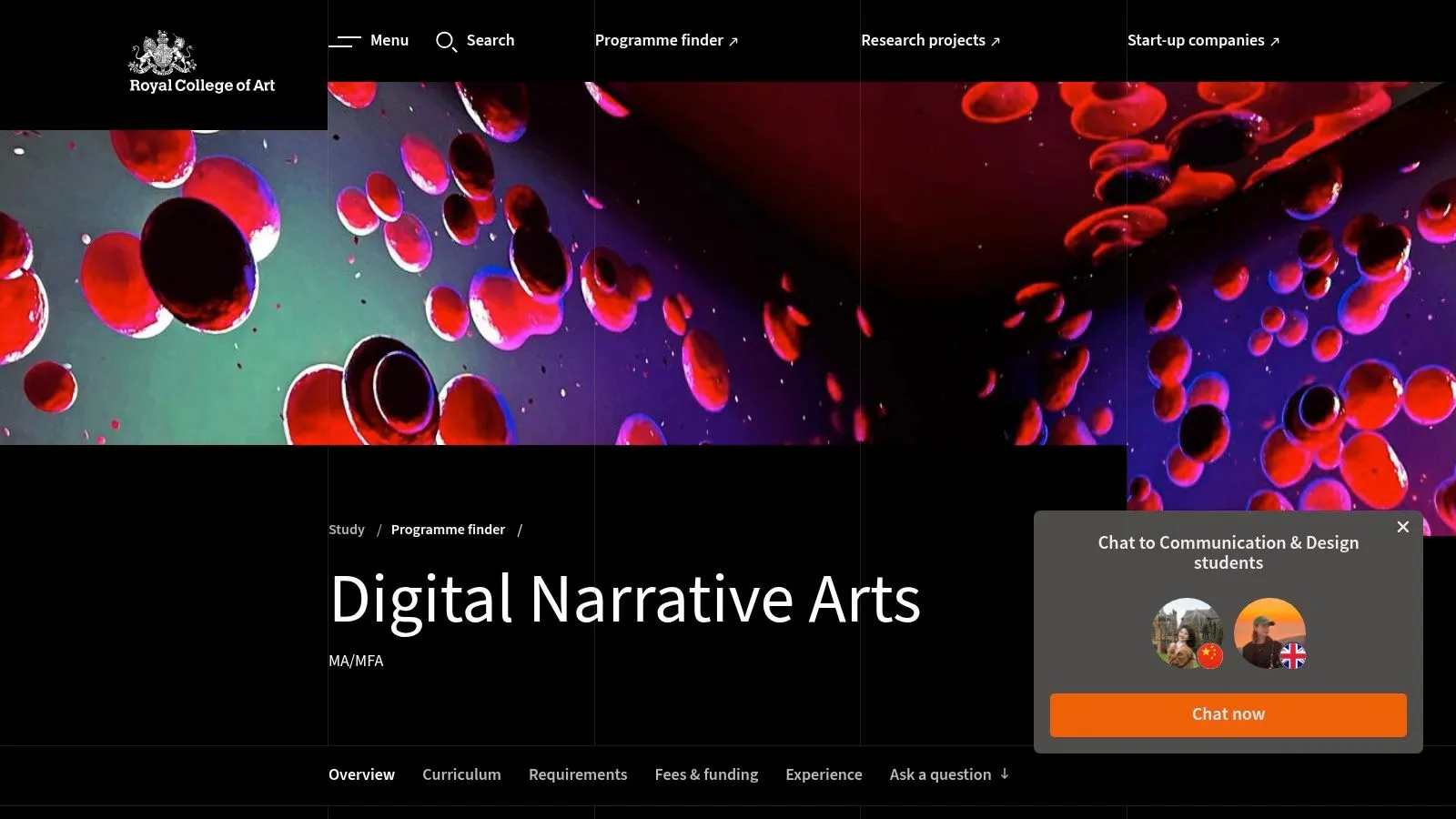
Creative direction is increasingly spread across screens, installations, performance, games, sound and immersive experiences. The Royal College of Art MA Digital Direction is aimed at that intersection rather than a single advertising or editorial channel.
Best fit for technology-led creative leaders
The programme is a 15-month MA, with studio-based experiments across screen, immersive and performative media. That format suits a creative who wants to direct multidisciplinary work involving XR, interactive narratives, installation, sound or AI-assisted production rather than remain within conventional campaign formats. Its emphasis on direction, production, content development and digital media design is important. Technology alone doesn't make a project coherent. Someone must decide what the audience experiences, how the story unfolds and which medium carries each part of the idea. RCA's cross-school facilities and visiting practitioners can support that broader practice. Industry-facing collaboration and showcases, including work connected with Outernet London, add a useful bridge between studio experiments and public presentation. The portfolio outcome is likely to matter more than a narrow software skill. Employers hiring for digital media leadership need people who can frame a concept, coordinate specialists and defend creative decisions across an unfamiliar production pipeline.
The right question isn't “Which tool will I learn?” It's “Can I direct a coherent experience when several tools, disciplines and audiences collide?”
The trade-offs are significant. Entry is competitive, the studio workload is time-intensive and London living costs add pressure. Tuition also varies by Home or International status, so applicants should confirm current figures directly with RCA. This is the strongest fit of the seven for someone moving towards digital direction across interactive, immersive and experimental media. It's less efficient for a designer who only wants faster advertising craft or a conventional brand-management promotion.
6. Condé Nast College of Fashion and Design MA Creative Direction for Fashion Media
Fashion creative direction depends on more than styling a shoot. It involves building a recognisable visual world across editorial, digital, print and experiential media, while coordinating image-makers, producers, editors and brand stakeholders. The Condé Nast College of Fashion and Design offers a specialist MA for that environment.
Best fit for editorial and luxury careers
The course benefits from its relationship with Condé Nast's London base and its access to industry editors, producers and image-makers. Project-based learning and collaboration with other Fashion Media MA programmes should mirror the way fashion stories develop across disciplines. That makes the route attractive to a creative who wants to direct editorial narratives, luxury campaigns or image-led brand worlds. The portfolio should be shaped around fashion media workflows, where commissioning, casting, styling, production and publishing all affect the final idea. The specialism is also the central limitation. A fashion-focused course won't automatically prepare you to lead an animation pipeline, design a learning app or manage an XR production. Those skills may overlap at the level of visual judgement and collaboration, but the commercial contexts differ.
- •Strong match: Editorial direction, luxury branding, fashion image-making and publishing.
- •Useful advantage: Direct exposure to commissioning and production relationships in fashion media.
- •Weak match: Generalist technology, games, animation or broad B2B creative direction.
Premium fees and limited scholarships mean applicants should confirm current rates before applying. The brand affiliation may carry real value in fashion and luxury, but it shouldn't be treated as a universal advantage. Choose this course because the sector is your target, not because the name sounds prestigious.
7. National Film and Television School Directing Commercials Diploma
If your next role involves directing shoots, working with production companies or translating agency ideas into moving-image work, the NFTS Directing Commercials Diploma is the most production-focused option here. Co-delivered with D&AD, it centres on commercial development, shoots and leadership of multidisciplinary crews.
Best fit for directing and production leadership
The course's value comes from doing the work. Real-world briefs and shoots force students to make decisions under practical constraints, communicate with crews and take responsibility for the result. That's different from presenting a polished concept without confronting schedules, locations, performance, camera, post-production or client revisions. Visiting Creative Directors and Executive Producers add an industry perspective, while the portfolio of commercial work gives graduates material to show. NFTS industry showcases and its alumni network can also support the move into directing commercials or production leadership. Studio Liddell's guide to TV commercial production is a useful companion for anyone comparing creative direction with the demands of a real commercial pipeline. The part-time structure makes the diploma more compatible with employment than a full-time postgraduate programme, but it isn't a light commitment. Competitive entry and substantial production work still require reliable time and energy. It also leans towards directing and production leadership, not brand-side design systems or long-term identity governance.
A portfolio shot under real production conditions tells a client more than a beautiful concept that has never survived a schedule, crew or revision.
Choose NFTS if you want to direct moving image and lead crews. Choose another option if your target role is primarily brand strategy, editorial systems or digital content planning. This is the practical route for creatives who need proof that they can carry an idea from pitch through production.
Creative Direction Courses, 7-Program Comparison
| Program | Implementation Complexity 🔄 | Resource Requirements ⚡ | Expected Outcomes 📊 | Ideal Use Cases 💡 | Key Advantages ⭐ |
|---|---|---|---|---|---|
| UAL Central Saint Martins, Creative Direction (Short Course) | Moderate, intensive, project‑led short format 🔄 | Low, medium; part‑time, on‑campus or online; experienced entrants preferred ⚡ | Pitching practice, integrated campaign work, portfolio upgrades 📊 | Mid‑career creatives transitioning into creative leadership 💡 | Rapid upskill and CSM brand network ⭐⭐ |
| UAL London College of Communication, Creative Direction for Digital Media (Online Short Course) | Moderate, hands‑on online workshops, small cohorts 🔄 | Flexible remote setup; requires digital tools and active projects ⚡ | Content systems, social strategy and measurable campaign outputs 📊 | Creatives leading social/content campaigns and remote learners 💡 | Practical, platform‑focused training with individual feedback ⭐⭐ |
| D&AD Masterclasses, Art Direction & Creative Leadership | Low, short, high‑impact sessions or single days 🔄 | Low time per session; premium fees; booking required ⚡ | Immediate, agency‑applicable tools and case‑study learnings 📊 | Agency creatives or teams needing fast upskilling 💡 | Taught by award‑winning practitioners; strong networking ⭐⭐⭐ |
| UAL London College of Communication, MA Design for Art Direction | High, degree‑level, research and studio practice 🔄 | High time and tuition; studio facilities and collaborative projects ⚡ | Deep craft training, conceptual rigour and multi‑media portfolio 📊 | Candidates aiming for senior art director / creative director roles 💡 | Comprehensive training and strong UAL industry network ⭐⭐⭐ |
| Royal College of Art, MA Digital Direction | High, 15‑month studio experiments across media 🔄 | High tuition; intensive studio workload and technical facilities ⚡ | Portfolio for immersive/digital leadership and cross‑media direction 📊 | Directors working in XR, interactive, film and immersive media 💡 | RCA reputation and industry collaborations ⭐⭐⭐ |
| Condé Nast College of Fashion & Design, MA Creative Direction for Fashion Media | High, specialised MA with industry‑led projects 🔄 | High fees; fashion‑industry placements and editorial resources ⚡ | Editorial/luxury fashion portfolios and commissioning experience 📊 | Aspiring creative directors in fashion, editorial or luxury brands 💡 | Direct Condé Nast access and fashion commissioning exposure ⭐⭐ |
| National Film & Television School (NFTS), Directing Commercials Diploma | Moderate‑High, practical shoots and production leadership 🔄 | Part‑time but resource‑intensive: shoots, crews, production budgets ⚡ | Commercial directing reel and production leadership experience 📊 | Directors seeking careers in commercials and production leadership 💡 | Applied production training with NFTS/D&AD industry links ⭐⭐⭐ |
Choosing Your Route Before You Enrol
Start with the format that fits your available time and budget. Then decide whether leadership skills, production experience or portfolio depth is the larger gap. A short course is usually the sensible choice when you're already working and need a concentrated improvement. Central Saint Martins suits a designer moving into creative direction, while LCC's online digital-media route is better for content systems and platform-led campaigns. D&AD masterclasses work when the need is immediate, specific and close to agency practice. Postgraduate study makes more sense when your portfolio lacks range or your practice needs sustained development. LCC's MA offers broad art-direction craft across media. RCA's MA Digital Direction is a better fit for immersive, interactive and technology-led work. Condé Nast College is the specialist choice for fashion and luxury media, where the sector connection matters as much as the general creative training. NFTS occupies a different position. It's not the broadest creative-direction qualification, but it offers practical experience in directing commercials, leading crews and responding to production realities. That makes it valuable for people whose next role depends on moving image rather than mainly on brand systems or editorial direction. The UK has a long history of connecting design education with commercial and industrial needs. The Government School of Design was founded in London in 1837, and the National Council for Diplomas in Art and Design was established in 1960 to oversee most degree-equivalent art and design courses. That tradition helps explain why today's routes combine concept development, communication, systems and applied production rather than treating creativity as fine-art practice alone. The history of UK art schools gives useful context. Before applying, check current fees, dates and entry requirements on each provider's website, since details change between cohorts. Shortlist two courses, request the syllabus and compare which one produces work you can show a client within the first month. Also check whether the teaching reflects the work you'll direct, including digital content, animation, games, XR, AI-assisted production or live-action commercials. The best course won't necessarily be the most prestigious. It'll be the one that closes the gap between your current responsibilities and the decisions your next role will demand. --- Studio Liddell combines 3D and 2D animation, XR design and development, apps, games, television production and AI-enhanced workflows for brands, entertainment companies and educational teams. Visit Studio Liddell to discuss a production brief, interactive concept or cross-platform creative direction project with a studio that can take the idea from strategy through delivery.