10 Stunning 3D Animation Examples from Film, XR & Ads
Those seeking 3D animation examples aren't short of inspiration. They're short of useful context. A glossy render looks impressive in a reel, but that doesn't tell you whether the job needed CAD accuracy, game-engine optimisation, broadcast-safe character rigs, or a social-first lightweight pipeline. That gap matters because 3D animation now sits across far more than film. After Pixar's Toy Story (1995) helped establish fully computer-generated feature production as a viable model, 3D moved from a specialist effects technique into a standard production approach across entertainment, games, advertising, and branded content. That long shift is reflected in the scale of the sector. The global 3D animation market was valued at USD 22.67 billion in 2023 and is projected to reach USD 51.03 billion by 2030, with a CAGR of 12.3%, while media and entertainment accounted for 34.53% of revenue in 2023 according to Grand View Research's 3D animation market analysis. For buyers, producers, and creative leads in the UK, the practical question isn't whether 3D works. It's which type of 3D works for your brief. A product launch needs different decisions from a children's series. A museum installation needs different compromises from a high-end automotive spot. The strongest 3D animation examples aren't just visually polished. They're built around a clear production logic. Below are ten formats that consistently deliver when the strategy, pipeline, and expectations line up.
1. Photorealistic CGI for Commercial Advertising
Photoreal CGI works when live action is limiting the idea. That might mean the product doesn't exist yet, the environment is impossible to shoot, or the client needs endless versioning across formats without rebuilding a set. In those cases, 3D stops being a visual flourish and becomes the production method. Studios use this approach for premium product films, pharmaceutical visualisations, stadium imagery, luxury goods, and automotive launches. Merck-style product visualisations need surface clarity and controlled camera language. Manchester United-style asset renders need environment scale and brand consistency. Sky Kids premium content promos often need stylised realism rather than strict photographic realism, which is a different discipline entirely.
What makes it convincing
Photorealism is usually won before rendering starts. Reference photography, measured material response, lens choice, and lighting logic do more work than last-minute polish.
- •Start with physical reference: Shoot metals, plastics, fabrics, glass, and labels in controlled light. Artists need something grounded to match.
- •Choose render tools for the brief: Arnold, RenderMan, and V-Ray remain reliable when clients need predictable shading and robust lighting control.
- •Build reusable assets: Product families, packaging variants, and modular set pieces save time when campaign cut-downs start multiplying.
A useful technical primer on that side of the craft is Studio Liddell's piece on photorealism in games and lifelike rendering techniques.
Practical rule: If the client wants “photoreal” but can't provide accurate references, expect longer look-development and more subjective feedback rounds.
What doesn't work is trying to fake premium realism with weak surfacing and rushed lighting. Audiences may not know why a render feels off, but they spot it immediately.
2. Real-Time Interactive XR and VR Experiences
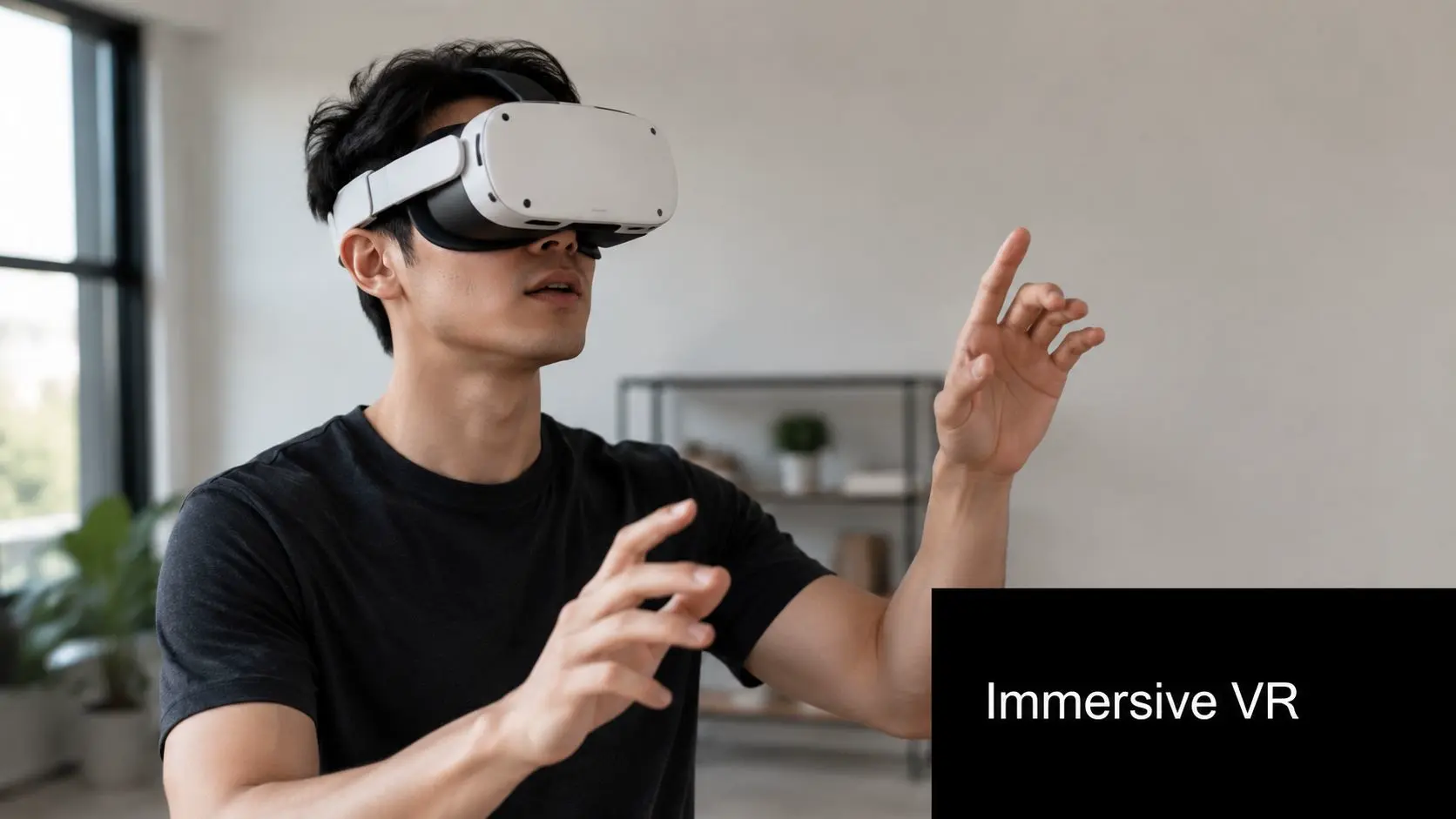
Real-time XR is where 3D has to perform, not just impress. You're not rendering a fixed shot. You're building an environment that has to respond instantly to head movement, controller input, and spatial interaction without making people uncomfortable. That's why heritage tours, training simulations, exhibition experiences, and architectural walkthroughs live or die on optimisation. Historic Scotland and English Heritage-style projects often need atmosphere, but comfort and clarity come first.
Where producers make the difference
In VR, the strongest creative idea can still fail if the scene is too heavy, the controls are vague, or the camera logic ignores comfort. Teams working in Unity or Unreal need to design for target hardware from day one, not after the art pass. Studio teams building immersive work often rely on Unity VR development for immersive high-performance experiences because the engine gives strong control over interaction, optimisation, and deployment. For a broader external perspective, these Unity VR development strategies are useful context.
- •Aggressive LOD planning: Models need clean fallbacks before the scene gets crowded.
- •Baked lighting where possible: It reduces runtime cost and stabilises the look.
- •Comfort settings: Snap turns, teleport options, and readable UI aren't optional extras.
In VR, users forgive a slightly simpler model far faster than they forgive dropped frames or confusing movement.
What doesn't work is importing a cinematic mindset unchanged. A beautiful scene with poor interaction design is still a bad XR experience.
3. Character-Driven Animated Series
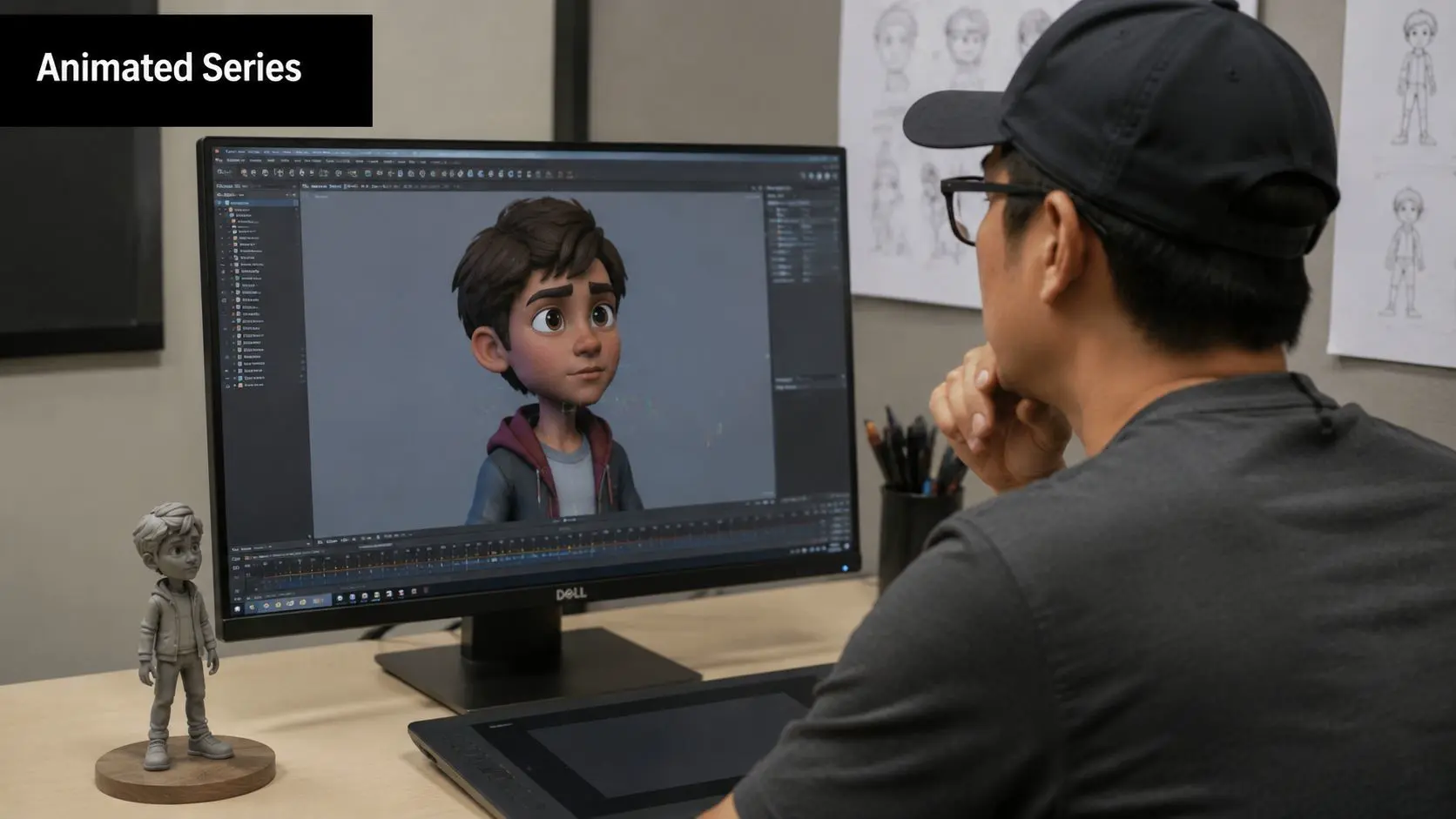
Series animation is where pipeline discipline matters more than isolated shots. A strong pilot look is only useful if the team can reproduce it over multiple episodes, directors, animators, and delivery deadlines. That's why character-driven TV work depends on planning as much as artistry. Broadcaster-facing series for outlets such as BBC, Nelvana, Corus, and Sky Kids need consistency in rigs, staging, surfacing, lighting, and editorial rhythm. A charming character design means very little if the face rig breaks under schedule pressure or if every new episode needs bespoke fixes.
The hidden work behind “effortless” character animation
Multi-episode CGI succeeds when the team standardises early. Style guides, naming conventions, rig rules, shot tracking, and review etiquette save more pain than any miracle tool later on. A good series pipeline usually includes:
- •Modular rigs: Shared controls and repeatable facial systems keep performance direction consistent.
- •Asset governance: Characters, props, and sets need version control or the production drifts.
- •Clear handoff points: Layout, animation, lighting, comp, and edit all need agreed approval gates.
The commercial side matters too. Businesses increasingly want examples that show output discipline as well as craft because creative industries in the UK employed 2.4 million people and generated £124.6 billion gross value added in 2022, according to a UK-focused summary citing the Creative Industries Council figures. Buyers don't just want nice frames. They want confidence that the pipeline can scale. What doesn't work is treating a series like a string of short films. That burns time, budget, and team energy very quickly.
4. Architectural Visualisation and Real Estate
Architectural visualisation sits in a very specific space between design communication and marketing. The image has to persuade, but it also has to remain faithful to the scheme. If the geometry, finishes, or sightlines are wrong, the animation may still look attractive while becoming useless to the people who need to sign off the build. That's why the best archviz projects start with document discipline. Plans, elevations, BIM exports, finish schedules, landscaping references, and camera routes should be aligned before the team starts polishing hero shots. Stadium redevelopment visuals, mixed-use developments, luxury residential promos, and urban flythroughs all benefit from that restraint.
What clients usually underestimate
They often focus on the final cinematic sweep and underweight the revision logic. In reality, architecture jobs tend to evolve. Materials change. Signage changes. A floorplate shifts. If the 3D scene is built cleanly, those updates are manageable. If it's built as a one-off showpiece, every change becomes expensive.
- •Coordinate with the architect early: Accuracy problems almost always begin with mismatched source files.
- •Design multiple lighting states: Day, dusk, and interior-lit variants answer different stakeholder questions.
- •Plan camera moves around information: A smooth flythrough is only useful if it reveals circulation, scale, and intent.
The strongest property animations don't just sell mood. They remove uncertainty.
What doesn't work is oversaturating the piece with impossible sun angles, exaggerated depth of field, and furniture-led glamour while the core design remains unclear. Clients may enjoy the style frame, but planning teams, investors, and buyers still need to understand the building.
5. Motion Graphics and Data Visualisation
Not every 3D job needs physical realism. Sometimes the better answer is abstracted space, designed movement, and selective dimensionality. That's where motion graphics and data visualisation earn their place. Broadcasters, documentary teams, healthcare brands, and corporate comms departments use 3D motion graphics when they need to explain process, show scale, or guide attention through layered information. A BBC documentary explainer and a medical visualisation may look very different, but they rely on the same principle. Animation should simplify thinking, not decorate it.
Where 3D helps the message
3D becomes valuable when it clarifies relationships that would feel flat in 2D. Rotating structures, exploded views, camera travel through systems, and controlled depth cues can make technical or scientific ideas much easier to follow. A business-focused explanation of 3D animation notes that it's especially useful for product demos, UI walkthroughs, and explainer videos, and cites a common project budget range of £3,900 to £5,600 for real-world 3D animation work, depending on style, length, and timeline. The same source also says 3D animations can increase conversion rates by up to 20%, which helps explain why brands keep investing in explainers when the subject matter is hard to communicate.
- •Build hierarchy first: If everything moves, nothing reads.
- •Keep typography legible: Type is part of the animation system, not an afterthought.
- •Score timing carefully: Audio and pacing often decide whether a sequence feels elegant or overwhelming.
What doesn't work is adding 3D depth to weak information design. Fancy transitions can't rescue muddled messaging.
6. Game Development and Interactive Environments
Game production demands a different kind of 3D maturity. The environment can't just look finished in a still or a trailer. It has to support mechanics, camera behaviour, progression, interaction, and performance. Every artistic choice collides with gameplay sooner or later. That's why collaborations with teams like TT Games, 10:10 Games, educational game partners, and VR game developers usually revolve around systems. Modular level design, collision setup, gameplay readability, shader budgets, and interaction feedback all matter as much as mood.
What separates game-ready work from promo-ready work
A beautiful environment can still be wrong for play. Dense dressing may confuse navigation. Dramatic contrast may hide interactables. Oversized assets may break scale perception or cover combat lines. Good game environment pipelines usually prioritise:
- •Rapid greyboxing: Test movement, sightlines, and interaction before final art.
- •Modular assembly: Reusable walls, props, trims, and set pieces keep scope under control.
- •Accessibility-aware design: Readable contrast, clear feedback, and control flexibility make the experience stronger for everyone.
The common mistake is building environments as if they're cinematic backdrops. Games punish that quickly. If the player can't read space or predict outcomes, visual ambition starts working against the experience.
7. Creature and Character Design with Advanced Rigging
Creature work is where many 3D animation examples either come alive or fall apart. A well-modelled character can still feel dead if the rig fights the animator. Conversely, a modest design can feel rich and memorable if the controls support expression, weight, and clean posing. Studios working with character brands, mascot systems, children's IP, or fantasy creatures need rigs that match the intended performance style. MacKinnon & Saunders collaborations, BBC children's character work, and creature-led projects for stylised worlds all ask different things from the skeleton, deformation setup, and facial system.
Rigging choices shape the final performance
Stylised comedy wants speed, silhouette, and broad readability. More grounded creature work needs believable weight transfer, spine flexibility, contact handling, and layered secondary motion. The rig can't do all the acting, but it absolutely decides how hard acting becomes.
- •Use movement reference: Real animals, dancers, performers, and body mechanics all help.
- •Test early with animation shots: A rig that survives turntables may still fail in production.
- •Document conventions: Hand controls, face GUI logic, space switching, and naming need consistency across the team.
If a rigger and animator aren't talking during development, the production is storing up expensive fixes.
What doesn't work is overengineering every control. Rigs should be powerful, but they also need to be fast to use. Animators don't want a cockpit. They want a character that responds clearly.
8. AI-Enhanced Animation Production
AI is changing parts of the 3D pipeline, but not in the simplistic way many gallery-style posts suggest. The useful conversation isn't “AI or artists”. It's which parts of production benefit from automation and which still need experienced human judgement. That matters because adoption has moved quickly. The Office for National Statistics reported that 38% of UK businesses had adopted at least one AI technology in 2024, up from 15% in 2023, in a UK-focused discussion of hybrid workflows that also notes ongoing guidance from the ICO on generative AI in creative work via this referenced overview on AI adoption and creative practice. For producers, that raises immediate questions about rights, review stages, quality control, and brand safety.
Where AI actually helps
In practical 3D production, AI is most useful when it accelerates repetitive tasks. That can mean interpolation support, lip-sync assistance, rotoscoping, organisational help, rough ideation, or procedural cleanup. It's less useful when clients need tightly authored design language or exact emotional nuance. The strongest hybrid pipelines usually follow a simple pattern:
- •Automate low-risk repetition: Keep artists focused on decisions that affect quality.
- •Retain human approval gates: No AI output should bypass review just because it was fast.
- •Set rights and provenance rules early: Clients need clarity on how assets were generated or modified.
What doesn't work is dropping AI into an existing workflow without ownership. Someone still has to define standards, validate outputs, and decide what “finished” means.
9. AR Filters and Social Media Animation
AR filters are among the most misunderstood 3D animation examples because they look lightweight from the outside. In practice, they require ruthless simplification. Mobile hardware, front-facing cameras, platform rules, and short attention spans force the creative to be immediate. Brand lenses, game-linked filters, event activations, and creator collaborations all benefit from 3D when the interaction is obvious within seconds. If users need instructions to enjoy the effect, the idea is probably too complex.
What wins on mobile
The best AR social work usually does one thing well. It frames the face cleanly, places an object convincingly, or adds a playful interaction that's easy to repeat and share. Visual cleverness matters, but friction matters more. For UK-facing brand work, Studio Liddell's guide to designing Snapchat filters for UK brands is a useful reference point. From a commercial angle, social-first content also overlaps with broader production debates around how agencies produce broadcast-ready commercials for small businesses, especially when one campaign has to stretch across TV, paid social, and creator channels.
- •Keep the interaction instant: A user should understand the effect at first glance.
- •Optimise aggressively: Heavy assets kill usability on ordinary phones.
- •Design for shareability: The effect should look good in imperfect real-world conditions.
What doesn't work is shrinking a desktop-grade 3D idea onto a phone and hoping the platform will carry it. It won't.
10. Immersive Brand Experiences and Experiential Marketing
Experiential 3D sits at the junction of spatial design, storytelling, and live operations. Museum interactives, retail activations, heritage installations, event pieces, and branded environments all ask the audience to move through a space rather than just watch a screen. That changes the production logic completely. A heritage installation for Historic Scotland or an exhibition-led activation has to account for queueing, sightlines, supervision, reset times, accessibility, and venue constraints. The 3D content may be central, but the experience succeeds or fails through choreography.
The commercial case for immersive work
This is also where 3D shifts from “content” into business infrastructure. UK-focused technical animation benchmarks indicate that high-accuracy 3D animation can reduce sales cycles by 40 to 60%, improve proposal-to-close rates by 25 to 40%, cut training time by 30 to 50%, and generate £30,000 to £75,000 in annual demo-logistics savings, with a 35% increase in qualified international inquiries when the work is built around dimensional accuracy and engineering-grade behaviour according to Animated Technologies' ROI guide for technical 3D animation. While those figures come from a technical B2B context, the underlying lesson applies broadly. Immersive work performs best when it removes friction for the audience and the sales team. A nearby discipline is physical exhibition booth design, where the structure and the media need to support each other rather than compete.
Good experiential animation respects the room. It doesn't assume the room will adapt to the animation.
What doesn't work is building a dazzling content loop with no thought for throughput, maintenance, or how visitors enter and leave the interaction.
10-Point Comparison of 3D Animation Use Cases
| Title | Implementation complexity 🔄 | Resource requirements ⚡ | Expected outcomes 📊 | Ideal use cases 💡 | Key advantages ⭐ |
|---|---|---|---|---|---|
| Photorealistic CGI for Commercial Advertising | 🔄🔄🔄🔄, Advanced lighting, shading, compositing | ⚡⚡⚡⚡, Render farms, senior modellers, textures | 📊 High visual fidelity; broadcast-quality persuasion | 💡 Premium brand campaigns, product launches, luxury goods | ⭐ Cost-effective vs live action; full creative control |
| Real-Time Interactive XR/VR Experiences | 🔄🔄🔄🔄, Real-time optimisation + interaction design | ⚡⚡⚡, Engine specialists, VR hardware, QA | 📊 Immersive engagement; measurable experiential ROI | 💡 Heritage tours, training sims, architectural walkthroughs | ⭐ Deep immersion; real-time user feedback |
| Character-Driven Animated Series (Multi-Episode CGI) | 🔄🔄🔄🔄🔄, Episodic pipeline, consistency demands | ⚡⚡⚡⚡, Large teams, rigging, long render infrastructure | 📊 Strong audience retention; IP and merchandising potential | 💡 TV/streaming series, children's programming, IP development | ⭐ Scalable after setup; sustained brand presence |
| Architectural Visualisation and Real Estate | 🔄🔄🔄, Detail-oriented but repeatable workflows | ⚡⚡⚡, Accurate assets, coordination with architects | 📊 Enables decisions, pre-sales and investor confidence | 💡 Real estate marketing, design review, planning approvals | ⭐ Reduces iteration cost; realistic project previews |
| Motion Graphics and Data Visualisation | 🔄🔄, Design and timing focused, low rigging needs | ⚡⚡, Small design teams, data sources, motion tools | 📊 High clarity and engagement for complex topics | 💡 Educational explainers, corporate comms, documentaries | ⭐ Fast turnaround; versatile across platforms |
| Game Development and Interactive Environments | 🔄🔄🔄🔄🔄, Gameplay systems, networking, optimisation | ⚡⚡⚡⚡, Cross-disciplinary teams, long dev cycles | 📊 High engagement and monetisation potential | 💡 Games, educational interactive apps, multiplayer titles | ⭐ Real-time interactivity; strong replay value |
| Creature & Character Design with Advanced Rigging | 🔄🔄🔄🔄, Specialized rigging, facial and motion systems | ⚡⚡⚡, Senior riggers, mocap, large asset storage | 📊 Strong emotional connection; reusable character IP | 💡 Feature films, series, mascot and creature design | ⭐ Creates believable characters; high reusability |
| AI-Enhanced Animation Production | 🔄🔄🔄, Integration complexity; automates routine tasks | ⚡⚡⚡, Compute, ML expertise, training datasets | 📊 Faster throughput; improved consistency, lower routine cost | 💡 High-volume series, preprocessing, motion cleanup | ⭐ Accelerates production; reduces repetitive labour |
| AR Filter and Social Media Animation | 🔄🔄, Platform constraints, rapid iteration needs | ⚡⚡, Small teams, device testing, platform SDKs | 📊 High reach and virality; quick performance metrics | 💡 Social campaigns, youth-focused brands, viral marketing | ⭐ Low-cost production; strong shareability |
| Immersive Brand Experiences & Experiential Marketing | 🔄🔄🔄🔄, Physical integration, venue-specific customisation | ⚡⚡⚡⚡, Venue costs, installation tech, multi-sensory systems | 📊 Memorable brand impact; measurable footfall/engagement | 💡 Museum exhibits, brand activations, events, theme parks | ⭐ Unforgettable experiences; high social amplification |
Your Next Dimension Bringing Your Vision to Life
The most useful 3D animation examples do more than look polished. They solve a production problem. Sometimes that problem is visual. A product doesn't exist yet, but the campaign deadline does. Sometimes it's educational. A medical device, training process, or data-heavy service needs to make sense to people who don't live inside the subject every day. Sometimes it's experiential. A visitor needs to understand something by moving through it, not by reading about it. That's why choosing a style by reference image alone usually leads to the wrong brief. Photoreal CGI, broadcast character animation, real-time XR, rigged creatures, social AR, and immersive installations all sit inside the same broad category of 3D, but they demand different pipelines, different approval habits, and different definitions of success. One job needs render quality above all else. Another needs low-latency interaction. Another needs scalable episodic asset management. If you miss that distinction, production gets harder than it needs to be. The commercial side matters just as much as the creative side. Buyers increasingly want proof that an approach can support a business outcome, whether that's clearer product communication, smoother stakeholder sign-off, faster sales enablement, or reusable campaign assets across channels. That's one reason so many clients now ask better questions at the start. They want to know what can be reused, what must be bespoke, what the review process looks like, and where the budget is doing the most work. From a producer's perspective, the strongest briefs usually share a few traits. The objective is specific. The audience is named. The delivery context is understood early. The client knows whether they need realism, clarity, charm, speed, or interaction, and they're willing to prioritise one of those when trade-offs appear. That makes every downstream decision sharper, from storyboards and previz through to rigging, rendering, engine optimisation, and final delivery. If you're planning a project now, collect references, but don't stop there. Define where the piece will live, who has to approve it, how long it needs to stay useful, and what it must achieve once it's out in the world. Those answers usually point to the right kind of 3D faster than any moodboard can. Studio Liddell is one option for teams that need animation, series production, games, or XR work under one roof. If you've got a brief that needs a practical production approach rather than just a style reference, the next step is usually a scoping conversation.
If you're weighing options for a campaign, series, explainer, or immersive build, speak to Studio Liddell about the brief, the pipeline, and what kind of 3D approach fits the job.