Your Guide to a Lighting Artist Job
A lighting artist quite literally sculpts with light and shadow. Their job is to create mood, guide the viewer’s eye, and breathe life into digital worlds. Think of them as a digital cinematographer, translating a director’s vision into a tangible atmosphere, whether that’s the warm glow of a fantasy tavern or the sterile corridors of a sci-fi spaceship. The role is a fascinating blend of raw artistry and deep technical skill, making it absolutely vital across animation, gaming, and immersive experiences.
What Does a Lighting Artist Actually Do?

At its heart, a lighting artist’s job is to use light to tell a story without saying a word. They start with a fully modelled and textured 3D scene, which often looks surprisingly flat and lifeless on its own, and infuse it with emotion, depth, and realism. Their work is often the final artistic touch that makes a digital environment feel truly believable and immersive. This isn't just about placing digital lightbulbs. It's a careful balancing act that demands a solid grasp of how light behaves in the real world and the technical know-how to replicate it digitally. A lighting artist's expertise is also valuable beyond entertainment, playing a crucial role in fields like 3D product visualization for e-commerce, where realistic lighting is the key to making products look appealing.
Day-to-Day Responsibilities and Impact
A lighting artist's daily routine is a mix of creative problem-solving and focused technical execution. It’s certainly not a solo gig; collaboration is a massive part of the job. Key activities often include:
- •Interpreting the Art Direction: They work closely with directors and art directors to understand the intended mood for a scene. Is it meant to feel tense, joyful, or mysterious? Lighting is the primary tool to achieve this.
- •Setting Up Key, Fill, and Rim Lights: Just like a cinematographer on a film set, they place primary light sources (key), soften shadows (fill), and create highlights to separate characters from the background (rim).
- •Character and Environment Integration: They ensure characters look like they truly belong in their environment, with lighting and shadows interacting correctly. This might mean adding the subtle bounced light from a neon sign onto a character's face.
- •Scene Optimisation: A huge technical part of the role is making sure scenes can be rendered efficiently. They have to create stunning visuals without crippling the render farm or, in games, causing the frame rate to plummet.
The most impactful lighting often feels invisible. It doesn’t scream for attention but works subconsciously to guide your focus and make you feel a certain way about the story unfolding on screen.
The Growing Demand for Lighting Talent in the UK
The appetite for skilled lighting artists has never been higher, particularly within the UK's booming creative industries. Employment in related multimedia arts and animation roles grew by an incredible 29% between 2011 and 2021, far outpacing the national average job growth of just 11%. This boom is largely fuelled by the explosive expansion of the VFX and animation industry, which contributed a staggering £1.65 billion to the UK economy in 2024 alone. What's more, a 2025 analysis shows that lighting specialists typically made up about 8-10% of production teams in mid-to-large studios, cementing their importance in the pipeline. Broader international trends, like those tracked by the U.S. Bureau of Labor Statistics, also point to a healthy, growing field.
The Skills That Define a Modern Lighting Artist

To land a great lighting artist job, you need a specific blend of creative instinct and serious technical skill. Studios aren't just hunting for someone who knows their way around the software; they’re looking for an artist who tells stories with light and shadow. It’s about mastering both the 'why' behind an artistic choice and the 'how' of pulling it off technically. This role is so much more than just making a scene visible. It's about creating focus, setting the mood, and building a world that feels completely real. Think of it this way: the lighting artist adds the final, critical touch that turns a pile of digital assets into a cohesive, emotive experience for the audience.
The Artistic Eye
Before you even think about opening a piece of software, you need a solid artistic foundation. This is what separates a button-pusher from a true artist, and it's completely non-negotiable in the professional world.
- •Colour Theory: You have to know how colours work together to create harmony or tension. This knowledge is the difference between a scene feeling warm and inviting or cold and dangerous.
- •Composition & Cinematography: Lighting artists must think like directors of photography. You’ll use light to guide the viewer’s eye, frame the most important action, and establish a clear visual hierarchy in every shot.
- •Visual Storytelling: Every single lighting choice has to support the narrative. A subtle change in light can reveal a character’s thoughts or hint at something just around the corner.
- •Real-World Observation: The best digital lighting is always grounded in reality. The secret to believable CG is studying how light actually behaves, the way it filters through a misty forest or reflects off a wet city street.
A strong portfolio doesn’t just show what you can do. It explains why you made each choice. It’s the proof that you can take a director’s vision and turn it into a mood the audience can truly feel.
The Technical Toolkit
Of course, that artistic vision needs a powerful technical skill set to bring it to life. Being comfortable with industry-standard tools isn't a bonus; it's the baseline. Modern pipelines in film, games, and animation demand efficiency and adaptability. At a minimum, studios will expect to see experience in:
- •Core 3D Software: You'll need to be proficient in a major 3D package like Maya or Houdini. This is your main workspace for setting up, tweaking, and managing lighting rigs.
- •Industry-Standard Renderers: For film and high-end animation, expertise in offline render engines is essential. Think Arnold, V-Ray, or Redshift. These are the powerhouses that calculate your final, photorealistic images.
- •Real-Time Engines: Knowledge of Unreal Engine and Unity has gone from a niche skill to a core requirement. This is especially true in games and XR, but it's becoming more common everywhere. Here at Studio Liddell, our real-time pipelines are a massive part of our workflow. If you're curious, we have a great guide on setting up MegaLights in Unreal Engine.
- •Compositing Software: A solid grasp of tools like Nuke or After Effects is often needed. This is where you'll integrate your lighting passes and make those crucial final tweaks.
- •Scripting: While not always mandatory for a first job, knowing some basic Python gives you a huge leg up. It lets you automate repetitive work and build custom tools, making you a faster, more valuable artist.
To get a clearer picture of how these skills fit together, we’ve put together a matrix breaking down the most important competencies.
Core Skills Matrix for Aspiring Lighting Artists
| Skill Category | Specific Skill | Why It's Critical | Practical Application Example |
|---|---|---|---|
| Artistic | Colour & Light | Sets the mood and emotional tone of a scene. | Using warm, low-key lighting for an intimate fireside chat versus harsh, cool top-down light for an interrogation scene. |
| Artistic | Composition | Guides the viewer's eye and creates focus. | Placing a key light to draw attention to a character's face while using rim lights to separate them from the background. |
| Technical | 3D Software | The primary environment for creating and placing lights. | Building a complex lighting rig in Maya with key, fill, bounce, and practical lights for a character-driven shot. |
| Technical | Rendering | Generates the final, high-quality image by simulating how light behaves. | Optimising render settings in Arnold to reduce noise and render times for an animated feature film sequence. |
| Technical | Real-Time Engines | Essential for interactive media like games and XR. | Setting up dynamic global illumination and baked lighting with Lumen in Unreal Engine 5 for a playable game level. |
| Hybrid | Scripting (Python) | Automates tasks and streamlines workflows, saving time and effort. | Writing a Python script to automatically rename and organise hundreds of lights in a complex scene according to studio conventions. |
This matrix highlights the dual nature of the role. You can’t be a successful lighting artist by only focusing on one side of the equation; you need to cultivate both your artistic eye and your technical mastery to truly excel.
Building a Demo Reel That Gets You Hired
Your demo reel is everything when you're hunting for a lighting artist job. Think of it as your visual handshake, it’s the one thing that will make a recruiter or lead artist pause and pay attention. A killer reel gets you in the door; a weak one gets you archived. The biggest slip-up we see from new artists is cramming too much into their reel. A long, rambling showreel with a few good shots buried among average ones just doesn't work. You’re far better off with a tight, polished reel that’s under 90 seconds and packed only with your best work.
What Recruiters Want to See
When a hiring manager watches your reel, they're looking past the pretty pictures. They’re trying to gauge your artistic eye, your technical chops, and your ability to tell a story with light. Can you take a flat, unlit scene and make it sing? A standout reel needs to show both variety and depth. It should be a carefully curated gallery of your abilities, proving you can tackle whatever challenges a production throws at you. Make sure your reel includes a good mix of the following:
- •Character Lighting: Shots that use light to shape a character's personality or emotional state. Can you use light and shadow to make someone look heroic, frightened, or untrustworthy?
- •Environment and Mood: Pieces that scream atmosphere. Show you can create a sun-drenched, hopeful landscape just as well as a grim, moody back alley.
- •Storytelling Shots: Scenes where your lighting choices guide the viewer's eye and support the narrative. Show how you use light to build tension, create focus, or reveal a key moment.
“Don't just light objects; light the story. A great demo reel shows a thought process. It proves you understand that every shadow and highlight has a purpose, which is to serve the narrative and evoke a specific feeling in the audience.”
Presenting Your Work Professionally
How you package your work is almost as important as the work itself. A clean, professional presentation shows you’re organised and have an eye for detail, two traits every studio values in a lighting artist. Always open with your absolute strongest shot. You have just a few seconds to make an impact, so make it count. Then, bookend your reel by placing your second-best shot at the very end to leave a lasting impression. If you’re looking to push your visuals even further, our guide on mastering photorealism in games covers advanced techniques for creating incredibly realistic scenes. One of the most effective things you can include is a breakdown. This is where you peel back the curtain and show your process, revealing how a scene goes from a simple grey-shaded model to the fully rendered final shot. Showing the different lighting passes and compositing layers gives recruiters a direct window into your technical workflow. It proves you didn't just get lucky with a pretty image; you built it with skill and intention.
Lighting Artist Salary and Career Paths
Becoming a lighting artist is more than just a creative passion; it's a solid career choice with some serious growth potential. The pay reflects that unique mix of artistic talent and technical know-how, and you'll see your earnings climb as you build up your experience. Let's talk numbers. In the UK, the median salary for a lighting artist hit £52,500 in early 2026, but this can shift depending on your experience, where you're based, and your specialism. In a creative hub like Manchester, for example, a mid-career artist with five to nine years under their belt can pull in anywhere from £55,000 to £70,000. And it's not just about the base salary; a 2025 forecast showed that 68% of UK animation studios offer bonuses, which average out to around £4,200. For a deeper dive into salary data, you can check out insights from global job market analyses.
Salary Expectations by Experience Level
As you'd expect, your earning potential grows right alongside your skills. The path from a junior artist to a senior leader comes with some clear financial steps up.
- •Junior Lighting Artist (0-2 years): When you're just starting out, expect a salary in the range of £28,000 to £35,000. Your main job is to learn the studio's pipeline, support the senior artists, and get the fundamentals down pat.
- •Mid-Level Lighting Artist (3-6 years): Once you've got some solid experience, you’ll see a nice jump to between £38,000 and £55,000. You'll be taking on more complex shots on your own and having more creative input.
- •Senior/Lead Lighting Artist (7+ years): At this level, you're a vital part of the team. Your pay can range from £55,000 to £80,000+, with leads often earning at the top end of that scale. You'll also be mentoring junior artists, managing entire sequences, and helping shape the final look of a project.
Your demo reel is the single most important tool for climbing that ladder. This is what hiring managers are really looking for.
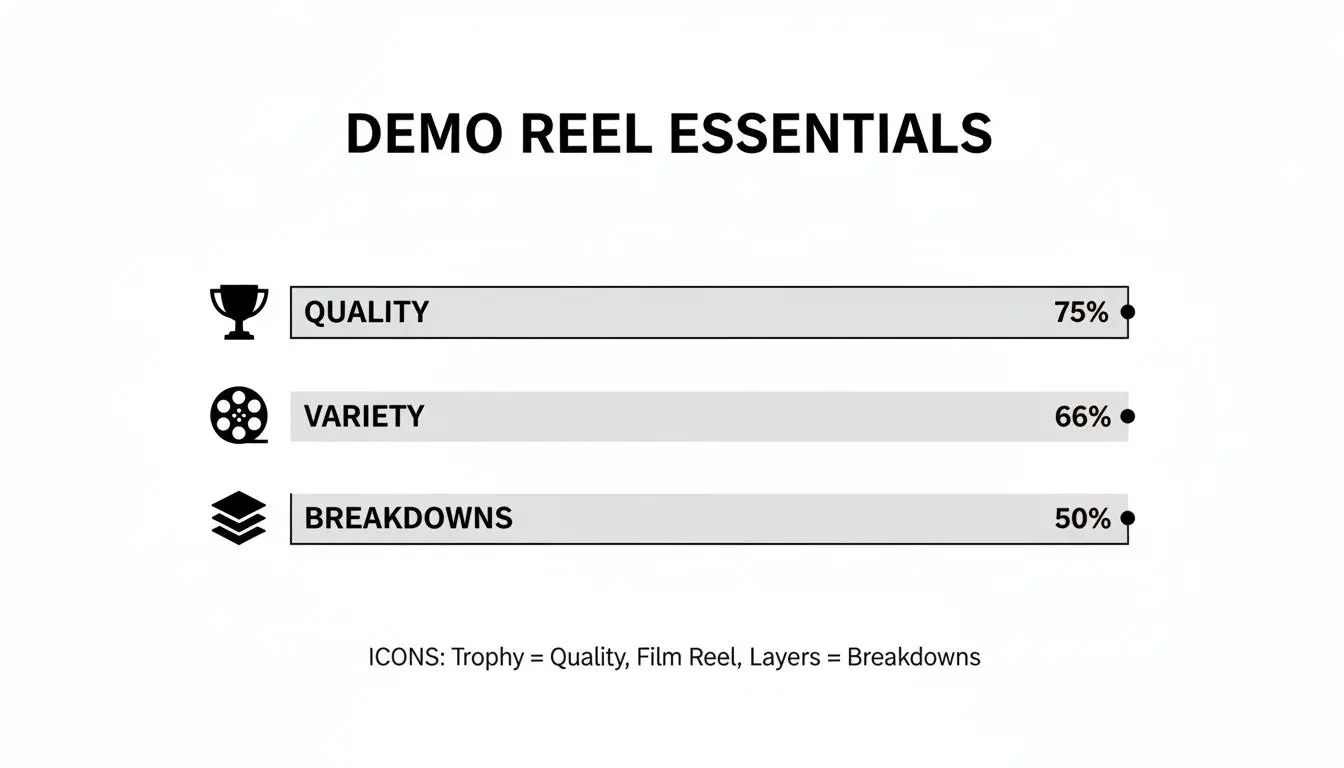
While top-tier quality is obviously number one, this data shows just how much recruiters value seeing a range of work and, crucially, breakdowns that show them how you achieved your results.
A Typical Career Trajectory
There isn't one single, straight line for a lighting artist's career. Once you've proven your skills, a bunch of different doors open up, letting you specialise in what you're truly passionate about.
The most successful artists are those who never stop learning. Whether it's mastering a new renderer, diving into real-time engines, or refining your understanding of cinematography, continuous improvement is what drives both your craft and your career forward.
From a senior role, many artists move into leadership positions where they're in charge of whole teams or departments. Some of the most common advanced roles include:
- •CG Supervisor: A top-level role managing all 3D technical and artistic aspects of a project.
- •VFX Supervisor: A leadership role focused specifically on managing the visual effects team and pipeline.
- •Art Director: If you have a powerful artistic eye, this role lets you define the entire visual style of a film, game, or series.
The Freelance Lighting Artist Job Market
Freelancing is another popular path, offering its own mix of freedom and challenges. Around 22% of the industry's workforce operates on a freelance basis, giving them more control over their schedules and the projects they take on. In the UK, day rates for a freelance lighting artist typically fall between £350 and £500. If you have a highly sought-after specialism, you could command up to £650 per day during crunch time on a big production. While the autonomy is great, remember that freelancing means you're also running a business, you'll need to be sharp with managing contracts, clients, and your own finances.
How to Navigate the Hiring Process

You’ve polished your reel and your portfolio is looking sharp. You’re all set to land that dream lighting artist job. But getting an interview is only the first part of the puzzle. Getting through the hiring process takes solid preparation and a real understanding of what studios are looking for beyond your best shots. Think of it as a series of tests. They want to see your artistic eye, sure, but they’re also testing your technical problem-solving and how well you’ll slot into their team. Every step, from the moment they see your CV to the final chat, is a chance to show them you’re the right person for the job.
Finding Opportunities and Crafting Your CV
Start your job hunt on industry-specific boards, the careers pages of studios you admire, and professional networking sites. Don't just throw your CV at the big, generic job sites; go where the studios actually hang out. A professional online presence is non-negotiable, and it’s worth learning about using LinkedIn for your job search to connect with recruiters and find hidden gems. Your CV needs to be a clean, one-page summary of who you are and what you can do. Most importantly, it needs to be a gateway to your work. Keep these points in mind:
- •Lead with your portfolio link. It should be right at the top, impossible to miss.
- •List your tech skills clearly. Name the software and renderers you’re comfortable with, like Maya, Unreal Engine, Arnold, or Nuke.
- •Tailor it for every studio. Look at the job description and tweak your CV to highlight the specific skills and projects they’ll care about most.
Acing the Interview and Art Test
The interview for a lighting artist isn’t just a simple Q&A. It's a conversation designed to probe your creative process and technical know-how. The recruiter doesn’t just want to see what you can do, they want to understand how you think.
The best interviews happen when you can confidently talk about the 'why' behind your creative choices. Explain your thinking, describe the mood you were aiming for, and back it up with references to cinematography or real-world lighting.
Be ready for questions that span the whole spectrum:
- •Creative Prompts: "How would you light this scene to make it feel hopeful, but with a subtle sense of dread underneath?"
- •Technical Challenges: "Your render times for a complex scene are getting too long. What are the first three things you’d check to optimise it without killing the quality?"
- •Portfolio Deep Dive: "Talk me through this shot on your reel. What was the biggest hurdle, and how did you get past it?"
Many studios will also give you an art test. This is usually a small project with a tight deadline, where you’re handed a scene to light. They’re not just looking for a pretty picture; they want to see how you handle pressure, follow a brief, and keep your files organised. Be strategic, focus on nailing the core requirements, and don’t get lost in the weeds. If you want to get a better feel for positioning yourself for success, you can explore our guide on building a career in animation. The UK’s animation scene is a great place to build a career, with strong potential for growth. A 2025 study found that 58% of lighting artists move up from a junior to a mid-level role within just three years. This is reflected in salaries, which can start around £28,000 and climb past £80,000 for senior and lead artists, representing a potential earnings growth of over 180% over a decade.
Answering Your Questions About This Career
Thinking about a career as a lighting artist? It’s completely normal to have questions about the practical side of things, beyond just building a portfolio. You’re probably wondering about the day-to-day realities, what qualifications you really need, and how the industry is changing. We get it. So, let's tackle some of the most common questions we hear from artists looking to break into the field. Here are the straightforward answers you need to help map out your future.
Do I Need a University Degree to Get a Lighting Artist Job?
Honestly? No, a university degree isn't a hard-and-fast rule. Studios care far more about your showreel than your degree certificate. A stunning portfolio that proves you have a great eye for colour, mood, and composition will always open more doors than a piece of paper on its own. That said, a good university programme in Fine Art, Computer Animation, or VFX can give you a fantastic, structured environment to learn. You get access to expensive software, mentorship, and a network of peers and tutors, which is tough to build from scratch. Don't forget about other routes, either. Specialised online courses, intensive bootcamps, and even studio apprenticeships are becoming more and more common ways into the industry. Ultimately, your skill and portfolio are your primary currency. The goal is to show you can do the job to a professional standard, no matter how you got there.
How Is AI Changing the Role of a Lighting Artist?
AI isn't coming for your job, it's here to be your most powerful assistant. Think of it as just another tool in your kit, one that handles the tedious, repetitive tasks so you can focus on the creative decisions that really matter. For example, AI-powered tools are already being used to:
- •Generate initial lighting passes: An AI can look at a scene and create a solid baseline lighting setup based on a reference, giving you a brilliant starting point.
- •Denoise renders: AI denoisers are a game-changer. They clean up noisy, grainy renders in a tiny fraction of the time traditional methods take, which means faster iterations.
- •Optimise light placement: Algorithms can figure out the most efficient way to light a scene, helping you hit that perfect look while staying within your performance budget.
This shift means artists spend less time on manual, technical grunt work and more time on creative refinement. The modern lighting artist needs to be adaptable and ready to embrace new tools. It’s all about working smarter and faster to push the creative boundaries even further.
What Is the Work-Life Balance Like for a Lighting Artist?
The work-life balance can be a mixed bag and often depends on the studio culture and where a project is in its production cycle. Let's be real: "crunch" is still a thing in many creative industries, especially as deadlines get closer. However, the industry as a whole is starting to recognise that constant crunch is unsustainable. A 2025 UK Screen Alliance report found that while a 9% burnout rate from crunch still exists, 62% of studios were actively trialling or adopting more flexible working arrangements, like four-day weeks, to foster a healthier balance. Your contract type makes a difference, too. A permanent, salaried role usually offers more predictable hours. As a freelancer, you get more control over your schedule but also have the pressure of lining up your next gig.
What Is the Difference Between Lighting for Games and Film?
While the core artistic principles are the same, using light to create mood, guide the eye, and tell a story, the technical side of lighting for games versus film is worlds apart. It all comes down to one core difference: real-time versus pre-rendered. In film and pre-rendered animation, you have the luxury of time. Each frame is rendered offline, which can take minutes or even hours. This allows lighting artists to throw massive amounts of computational power at a scene to achieve flawless photorealism or a perfect stylised look without worrying about immediate performance. In games, lighting has to be calculated and drawn on-screen instantly, at 30, 60, or even 120 frames per second. This means performance optimisation is absolutely everything. A game lighting artist has to be a master of efficiency, using clever tricks and techniques like:
- •Baked Lighting: Pre-calculating all the static lighting and shadows and 'baking' them into textures called lightmaps. This massively reduces the processing load on the player's machine.
- •Performance Budgets: Working within very strict limits for everything, the number of dynamic lights, shadow casters, and visual effects, to keep the game running smoothly.
- •Engine-Specific Workflows: Mastering the powerful real-time lighting systems inside engines like Unreal Engine and Unity, such as Lumen or baked global illumination.
The job becomes a thrilling balancing act between making something look breathtaking and ensuring it doesn't bring the frame rate to a grinding halt.
Ready to bring your creative vision to life with a team that has been delivering world-class digital content since 1996? Studio Liddell combines artistic passion with technical excellence to create animations, games, and immersive experiences that captivate audiences. Explore our full range of services and start your project today.