UK Mobile Application Development Service
When you search for a “mobile application development service,” you're not just looking for a vendor to code an app. You're seeking a strategic partner to guide your concept from a rough sketch to a polished, high-performing product that users love. This end-to-end partnership, covering strategy, design, development, testing, and post-launch support, is what turns a digital vision into reality. It provides a level of quality, security, and cohesion that's impossible to achieve by juggling a handful of separate freelancers, especially in today's competitive landscape.
What is a Mobile Application Development Service?
Think of a mobile application development service as the master architect and builder for your digital project. This isn't just about hiring someone to lay digital bricks; it’s about engaging a partner to steer your concept from a napkin sketch to a thriving app in the hands of thousands, or even millions, of users. This end-to-end approach is vital in a market that has become a genuine powerhouse. The UK mobile app development industry is now worth an incredible £28.3 billion and employs over 73,000 people across more than 14,500 businesses. This explosive growth signals a massive demand for high-quality, professional app creation. You can dive deeper into the data on this booming sector in the full industry report from IBISWorld.
From Idea to App Store: The Studio Model
To understand how it works, it helps to think of the process like producing a film. A full-service studio is involved at every stage, ensuring every element works in harmony to create a stellar final product.
- •Strategy & Discovery (Pre-production): This is where we define the core concept. Your development partner will conduct market research, define the target audience, and solidify the app's main goals and features. It's about building a rock-solid foundation for success.
- •UX/UI Design (Set Design & Art Direction): Next, the focus shifts to creating the visual blueprint. This stage involves wireframes, mockups, and interactive prototypes that map out the user experience (UX) and user interface (UI), ensuring the app isn't just beautiful but also completely intuitive.
- •Development & Coding (Production): Once the blueprint is approved, developers write the code. This is the main construction phase where the app’s features are meticulously built and brought to life.
- •QA Testing (Post-Production): Before the premiere, a dedicated quality assurance (QA) team rigorously tests the app. They hunt for and fix bugs, ensuring a smooth, crash-free experience for your users.
- •Launch & Deployment (Distribution): Finally, your partner handles the complex submission process for the Apple App Store and Google Play Store, managing the official launch from start to finish.
Core Technology Choices
A crucial part of any mobile application development service is helping you select the right technology. Your main options fall into three key categories:
- •Native Apps: Built specifically for one platform (iOS or Android) using its native language. The benefit? Unmatched performance and a seamless user experience.
- •Cross-Platform Apps: A single codebase is used to develop an app that runs on both iOS and Android. This approach saves significant time and budget.
- •XR/Immersive Apps: For truly standout experiences, game engines like Unity and Unreal Engine are used to create rich, interactive worlds in augmented or virtual reality.
This integrated approach, combining expert project management with deep technical knowledge and long-term support, delivers far more value and peace of mind than attempting to manage everything on your own.
The 6 Phases of Mobile App Development
Bringing a brilliant app idea to life isn’t a mad dash to the finish line; it’s a structured journey. A professional mobile application development service breaks down this complex process into six distinct phases. This methodical approach ensures nothing is left to chance, giving you a clear, transparent view of the project at every single stage. Thinking about the process this way helps take the mystery out of development. It stops feeling like a tangled technical web and starts looking like a well-managed project with clear goals and milestones. This diagram shows the high-level path, from a raw idea to a polished, market-ready application.
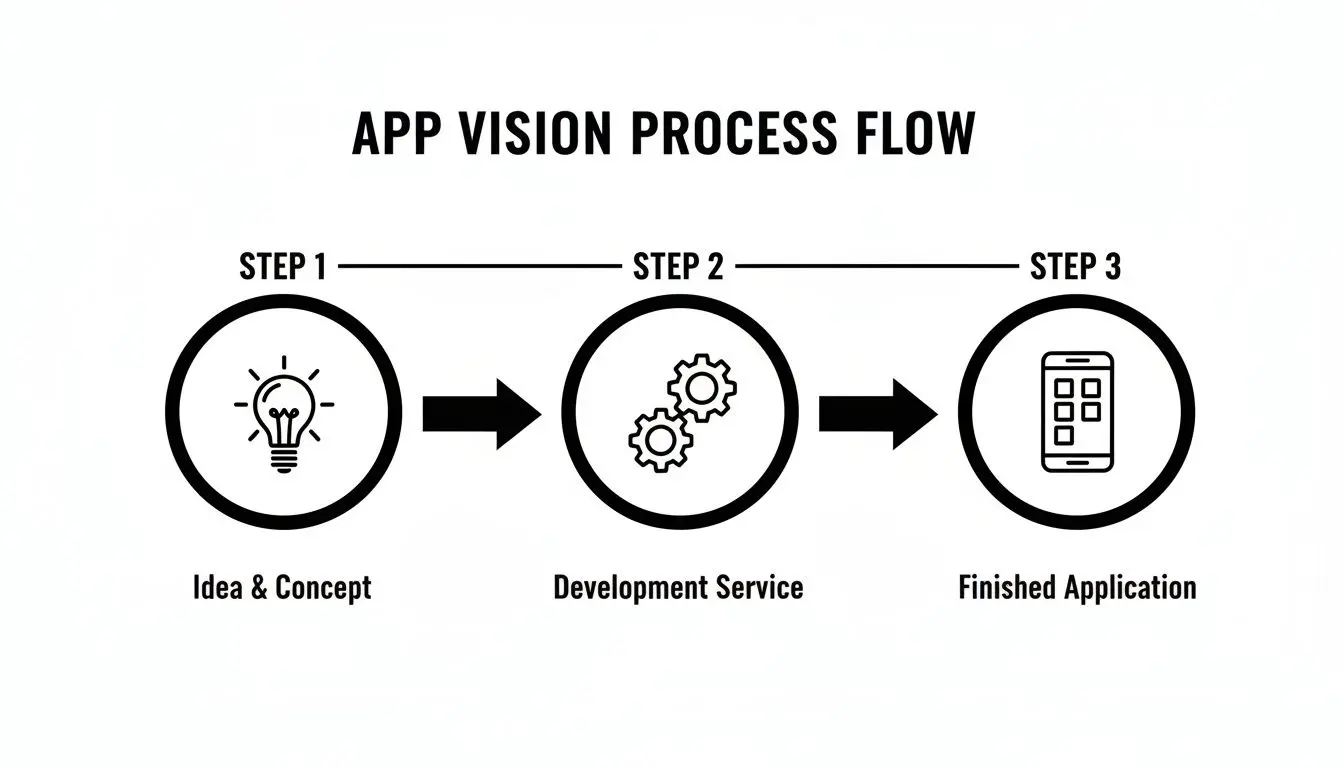
Ultimately, a structured process acts as a roadmap. It guarantees your original vision isn't just preserved but actively improved through smart strategy and expert execution.
Phase 1: Discovery and Strategy
This first step is all about getting to the 'why' of your app. Before anyone writes a single line of code, your development partner needs to dig deep, validate your concept, and build a rock-solid strategic foundation. Key activities you'll see here include:
- •Market and Competitor Analysis: We'll figure out what similar apps are doing right, where they’re failing, and how your app can stand out from the crowd.
- •Defining User Personas: This means creating detailed profiles of your ideal users. Understanding their needs and frustrations is crucial to building an app they'll actually want to use.
- •Feature Prioritisation: Together, we’ll decide what features are absolutely essential for a Minimum Viable Product (MVP) and what can be added later. This is key to managing your budget and getting to market faster.
The main takeaway from this phase is a detailed project roadmap and a product requirements document that becomes the guide for everything that follows.
Phase 2: UX and UI Design
With a clear strategy locked in, we shift focus to how the app will look, feel, and work. The User Experience (UX) and User Interface (UI) design phase is where your app’s personality is born.
This stage is about so much more than pretty colours. It’s about crafting an intuitive, engaging journey for your user. A well-designed app just feels right, guiding people naturally and keeping them coming back.
The process involves creating wireframes (the basic skeletal layout), mockups (static visual designs), and finally, interactive prototypes. These prototypes let you click through the app and get a real feel for its flow before development even starts.
Phase 3: Development and Coding
This is where the magic happens and your blueprint becomes a real, working product. It’s useful to understand modern approaches like Agile and Scrum methodologies here, as they make the process incredibly efficient. Developers work in short, focused cycles called “sprints” to build out features one by one. This iterative way of working allows for constant feedback and flexibility, making sure the project never strays off course. During this phase, the team will build both the front-end (what the user sees and interacts with) and the back-end (the server, databases, and logic that make it all work).
Phase 4: QA and Testing
With the core development done, the journey continues. A dedicated Quality Assurance (QA) team now puts the app through its paces. They test it relentlessly on different devices and operating systems. Their job is to hunt down bugs, check for performance lags, and make absolutely sure the user experience is smooth, stable, and crash-free.
Phase 5: Deployment and Launch
It’s time to go live. Your development partner will handle the tricky process of submitting the app to the Apple App Store and Google Play Store. This involves much more than just hitting 'upload'. It means preparing the store listings, creating promotional materials, and managing the release to ensure a successful, high-impact launch.
Phase 6: Post-Launch Support and Maintenance
The digital world never stands still, and neither should your app. The final phase is all about ongoing support. This includes releasing updates to work with new operating systems, patching security weak points, and fixing any bugs that real users discover. More importantly, it’s about listening to feedback and market trends to add new features that keep your app relevant and valuable. Ongoing maintenance is absolutely essential for an app's long-term success.
App Development Lifecycle at a Glance
The table below breaks down each phase, outlining its main objective and what you can expect to receive at the end of it. It’s a handy reference for understanding the flow from one stage to the next.
| Phase | Primary Goal | Key Deliverables |
|---|---|---|
| 1. Discovery & Strategy | Validate the idea and define a clear plan. | Market analysis, user personas, project roadmap, feature list. |
| 2. UX/UI Design | Define the app's look, feel, and user flow. | Wireframes, mockups, interactive prototypes, style guide. |
| 3. Development | Build the functional front-end and back-end. | Working app builds (alpha/beta versions), source code. |
| 4. QA & Testing | Ensure the app is bug-free and stable. | Test cases, bug reports, performance metrics. |
| 5. Deployment | Launch the app successfully to the public. | Live app on the App Store/Google Play, store listing assets. |
| 6. Post-Launch | Maintain, update, and improve the app. | App updates, bug fixes, security patches, performance monitoring. |
By following this proven path, you can be confident that your investment is being channelled effectively, turning your initial concept into a polished and successful application.
Choosing Your App's Technology Stack
Deciding on your app's technology stack is one of the most critical decisions you'll make. This isn't just a technical detail; it's a strategic choice that will directly shape your project's performance, budget, and time-to-market. Think of it as choosing the architectural style for a building, the materials you pick determine what’s possible. The tech stack is the combination of programming languages, frameworks, and software used to build your app. A good mobile application development service will walk you through the options, but understanding the basics helps you have a more meaningful conversation about what's right for your project.
Native Development: The Performance Specialists
When performance and a seamless user experience are non-negotiable, native development is the gold standard. Native apps are built specifically for one operating system, using the platform's own language and tools, Swift or Objective-C for iOS, and Kotlin or Java for Android. The best way to think about it is like speaking the local language fluently. A native app doesn't need a translator; it communicates directly with the device's hardware. This means you get:
- •Peak Performance: Apps feel incredibly responsive and smooth because they have direct, unfettered access to the phone's camera, GPS, and other hardware.
- •The Best User Experience: They naturally follow the specific design cues of iOS or Android, so the app feels instantly familiar and intuitive to anyone using that device.
- •Instant Access to New Features: Whenever Apple or Google rolls out a new software feature, native apps can use it immediately.
The downside is that you are building and maintaining two separate apps, which increases upfront cost and ongoing effort.
Cross-Platform Development: The Efficient All-Rounders
What if you could build your app once and have it run on both iPhones and Android devices? That's the promise of cross-platform development. Frameworks like React Native and Flutter let developers write one set of code that works across both platforms. This approach is all about efficiency. It's a game-changer for many businesses because it delivers:
- •Faster Timelines and Lower Costs: Building one app is always going to be quicker and more budget-friendly than building two. It’s an ideal route for getting a Minimum Viable Product (MVP) out the door.
- •Brand Consistency: Your app will look, feel, and behave identically on every device, which is great for reinforcing your brand identity.
- •Streamlined Maintenance: Bug fixes, new features, and updates only need to be done once, saving a huge amount of time and effort long-term.
The trade-off used to be a noticeable drop in performance, but modern frameworks have closed that gap significantly. As you weigh your options, remember that tracking your app's performance is vital. There are many great solutions out there, including some of the best analytics tools for mobile apps, to give you the data you need.
XR and Game Engines: The Immersive Powerhouses
Once the exclusive domain of video games, powerful real-time engines like Unity and Unreal Engine have become go-to tools for creating deeply engaging and visually rich mobile apps. They are the perfect choice for experiences that go beyond standard buttons and lists, particularly for complex 3D visualisations, augmented reality (AR), and virtual reality (VR).
For projects that demand high-fidelity graphics, real-time interaction, or spatial computing, game engines are no longer a niche choice, they are the leading solution. This is a core strength for creative-tech studios like Studio Liddell, blending storytelling with deep technical expertise.
These engines unlock possibilities that are simply out of reach for traditional development, making them perfect for:
- •Interactive 3D Product Configurators: Letting customers see and customise products from every angle.
- •AR-Powered Retail: Allowing shoppers to see how a new sofa would look in their living room.
- •Immersive Training and Simulations: Creating realistic scenarios for complex corporate or industrial training.
While these tools have a steeper learning curve, they enable a level of immersion that can truly set your app apart. Of course, these aren't the only options available. To get a broader view, have a look at our comparison of Progressive Web Apps vs Native solutions. The right mobile application development service partner will have the expertise to guide you down the technical path your project truly needs.
Technology Stack Comparison
Deciding between Native, Cross-Platform, and XR/Game engine development depends entirely on your project's specific goals, from budget and timeline to the kind of user experience you want to create. This table breaks down the main factors to consider.
| Factor | Native (iOS/Android) | Cross-Platform (React Native/Flutter) | XR/Games (Unity/Unreal) |
|---|---|---|---|
| Performance | Highest possible; direct hardware access. | Very good, but can have slight overhead. | Optimised for high-end graphics and physics. |
| User Experience | Seamlessly matches platform conventions. | Consistent across platforms; can mimic native. | Fully custom and highly immersive. |
| Cost | Highest (two separate codebases). | Lower (single codebase for both platforms). | Can be high due to specialised skills needed. |
| Time-to-Market | Slowest (separate development cycles). | Fastest (build once, deploy everywhere). | Varies; complex scenes take longer. |
| Best For | Performance-critical apps, complex UIs. | MVPs, business apps, content delivery. | 3D, AR/VR, simulations, interactive marketing. |
| Maintenance | Higher effort (two codebases to update). | Simpler (one codebase to update). | Can be complex, depends on project scale. |
Ultimately, there's no single "best" stack. A high-performance banking app has very different needs from an AR furniture visualiser or a rapid-prototype MVP. The key is to match the technology to the ambition of your project.
Estimating Your App Development Costs and Timelines
Alright, let's get to the two questions on every client's mind: "How much is this going to cost?" and "When will it be ready?" While a final, precise quote only comes after a detailed discovery phase, we can provide a solid idea of what to expect based on project complexity. The final cost and timeline for any mobile application development service depend on a few key factors. The biggest driver is feature complexity, a simple app with core essentials will naturally be quicker and less expensive to build than a complex one with custom algorithms or third-party integrations. The UI/UX design, technology stack (native vs. cross-platform), and necessary security measures also shape the final budget.
UK Project Tiers and Estimated Ranges for 2025
To help you budget, UK projects typically fall into three general brackets. These are ballpark figures for 2025 and can vary based on the specific scope and agency partner.
- •Simple App / MVP: An entry-point project focused on building the core feature set to test the market with a Minimum Viable Product.
- •Estimated Cost:£25,000 , £60,000
- •Estimated Timeline:3, 5 months
- •Mid-Complexity App: An app with more sophisticated features, such as social media logins, in-app purchases, or custom user dashboards.
- •Estimated Cost:£60,000 , £150,000
- •Estimated Timeline:5, 9 months
- •High-Complexity App: An ambitious project involving cutting-edge tech like AI, machine learning, AR/VR, or deep integrations with enterprise-level systems.
- •Estimated Cost: £150,000+
- •Estimated Timeline:9, 12+ months
If you want to really dig into what makes up these numbers, our complete guide on how much an app development costs in the UK breaks it all down for you. It’s a great resource for understanding exactly where the money goes.
Key Factors Influencing Your Budget
Understanding what drives costs up or down helps you make smarter decisions from the start. Primary Cost Drivers:
- •Feature Set: This is the big one. A simple login screen is worlds away from building a real-time video chat feature. More features, and more complex ones, mean more development time.
- •Platform Choice: Building two separate, native apps for iOS and Android costs more upfront but gives you the absolute best performance and user experience. A single cross-platform build can save money but might have limitations.
- •Design and Animation: A slick, custom-designed user interface with beautiful animations takes more design and coding hours than using a more standard, template-based approach.
- •Backend Infrastructure: Every app needs an engine. The complexity of the server, database, and APIs that power your app's features can have a major impact on the final cost.
It's so important to see this as an investment, not just a cost. A thoughtfully planned and well-built app can deliver a huge return by delighting your users, making your business more efficient, or opening up brand-new ways to make money. The trick is to find that sweet spot between your ambition and a budget that makes sense.
The Role of Modern Production Pipelines
Today’s top studios aren’t just coding; they’re optimising how everything gets done. We’re seeing a big shift towards using modern workflows, including AI-driven tools, right inside the production pipeline. These tools can automate tedious coding and testing tasks, help analyse user data to make better design choices, and generally keep the project running smoothly. This doesn't always mean the price tag gets slashed, but it absolutely means you get more for your money. By making our work more efficient, a mobile application development service can deliver a much more polished and reliable app within the timeline and budget. It’s all about making sure your investment hits the mark and delivers real impact, without cutting corners on quality.
Why App Security and Compliance Are Non-Negotiable
In a world where one data breach can destroy user trust and inflict lasting brand damage, app security is more than just a feature, it is the foundation of your project. One of the biggest mistakes a business can make is treating security as an afterthought. It must be woven into every single stage of the mobile application development service. Think of it as building a bank vault. You wouldn't just slap a single padlock on the door and call it a day. Real security is a multi-layered system, meticulously constructed from the ground up. This means adopting a 'defence-in-depth' strategy that shields your users and your business from all angles, a proactive plan, not a reactive fix.
Building Your Digital Fortress
A truly secure app depends on several core pillars working together. Each one tackles a different potential weak spot, forming a robust shield against the most common threats. Any development partner worth their salt will prioritise these elements from the get-go. Key security layers should always include:
- •Secure Data Storage and Encryption: Any sensitive data, whether it lives on the device or a server, must be encrypted. This simple step makes the information unreadable to anyone without the right key.
- •Protected APIs: The Application Programming Interfaces (APIs) connecting your app to its back-end are a prime target for attackers. Locking down these pathways with proper authentication and authorisation protocols is absolutely critical.
- •Secure User Authentication: This goes far beyond a simple username and password. Adding multi-factor authentication (MFA) and biometric logins creates powerful extra layers of defence against account takeovers.
By layering these measures, you build a digital fortress that actively protects user information and upholds your app's integrity. You can dive deeper into this subject by reading our guide to essential security for apps.
Navigating UK Compliance Requirements
Beyond technical defences, your app must also comply with data protection laws. For any business operating in the UK or serving its citizens, understanding this legislation isn't optional. Getting it wrong can result in hefty fines and serious reputational harm.
Compliance isn't just about dodging fines; it's about showing respect for your users' privacy. Getting it right builds trust, which is the most valuable currency your app can have.
Two of the most important regulations you need on your radar are:
- General Data Protection Regulation (GDPR): This regulation dictates how you collect, handle, and store the personal data of individuals in the EU and UK. It mandates clear user consent and gives people rights over their own data.
- The Data Protection Act 2018: This is the UK's specific implementation of GDPR. It lays out the data protection framework for the UK and must be followed to the letter.
How to Choose the Right App Development Partner
Picking the right partner for your mobile application development is the most critical decision you'll make. This choice directly shapes your app's final quality, budget, and timeline. You aren't just hiring coders; you're seeking a strategic co-pilot. It’s about more than a flashy portfolio. You need a studio whose process, communication, and long-term vision align with yours. The goal is to find a partner that will elevate your idea, not just execute on it.In-House vs. Agency: The First Big Decision
Your first choice is whether to build an in-house team or hire an external agency. An in-house team offers total control and becomes part of your company culture, but it comes with the high overheads of recruitment, salaries, and management. Hiring a full-service studio gives you immediate access to a skilled, multi-disciplinary team of strategists, designers, developers, and testers from day one, usually for a more predictable cost. A good agency also brings a wealth of experience from other projects, helping you sidestep common mistakes.What to Look For Beyond the Portfolio
A strong portfolio is a great start, but it's not the whole story. You need to dig into _how_ a studio actually works. The best partners are transparent, collaborative, and can clearly articulate their plan for bringing your vision to life. Look for these key qualities:- •A Clear Development Process: Do they use a structured approach like Agile? A proven process is a sign of an organised, efficient team that knows how to handle complex projects.
- •Strong Communication: How will they keep you updated? Clear and regular communication is the lifeblood of any successful project, especially when challenges arise.
- •Technical and Creative Fit: Does their tech stack match your project's needs (e.g., native, cross-platform, XR)? Do their creative skills align with your brand's style?
- •Long-Term Support: What happens after the app goes live? A dependable partner will offer maintenance and support plans to keep your app secure, up-to-date, and performing well.
A partner's unique DNA can be a significant advantage. For instance, a studio with a broadcast production heritage like Studio Liddell brings a different calibre of storytelling, visual quality, and project management discipline to app development, which can be a powerful differentiator.
Red Flags to Watch Out For
Knowing what to avoid is just as important as knowing what to look for. Certain signs can point to a partnership that's likely to run into trouble. Stay alert for these red flags during your search. Catching these issues early can save you a huge amount of time, money, and stress later on.
- •Vague Proposals: A proposal that's light on detail about deliverables, timelines, or costs is a major warning. A professional quote should be detailed and transparent.
- •A "One-Size-Fits-All" Approach: Your project is unique. If a studio pushes one specific technology without really understanding your goals, they aren't a true strategic partner.
- •Poor Communication: Slow replies, vague answers, or a general lack of clarity in your first few conversations are often a preview of what you can expect down the line.
- •Reluctance to Discuss Challenges: Experienced teams aren't afraid to talk about potential risks. A studio promising a completely smooth, problem-free project isn't being realistic.
Ultimately, choosing the right mobile application development service is about finding a team you trust. Your goal should be to equip yourself with the knowledge to write a strong brief, ask insightful questions, and select a partner with total confidence.
Your App Development Questions, Answered
Stepping into the world of app development for the first time? It's natural to have questions. We find that business leaders often ask the same things as they get started, so we’ve answered the most common ones right here to give you a clearer picture.
What Is An MVP and Do I Really Need One?
An MVP, or Minimum Viable Product, is the most essential, stripped-back version of your app. It has just enough features to solve a core problem for your first users. Think of it as the foundational pilot episode of a series, not the full box set. We almost always recommend starting this way. It’s the smartest route to test your core idea with real people and gather honest feedback before you commit to building out every single feature you’ve dreamed up. It massively reduces risk and helps ensure you’re building something people will actually use.
How Long Does It Really Take To Build an App?
This is the big question, and the honest answer is: it completely depends on what you're trying to build. There’s no one-size-fits-all timeline.
- •A simple MVP can often be designed, built, and in the app stores within 3, 4 months.
- •A more complex application with user profiles, custom logic, and multiple integrations will naturally take longer, typically in the range of 9, 12 months or more.
Getting the Discovery & Strategy phase right is the key to mapping out a realistic timeline for your specific project.
Launching an app is not the end of the journey; it's the beginning. The most successful apps are those that evolve based on user feedback, adapt to new technologies, and consistently provide value long after their initial release.
Can I Update My App After It's Launched?
Absolutely. In fact, you should be planning for it from day one. The best apps are never truly "finished." Post-launch support and ongoing maintenance are what separate a flash-in-the-pan from a long-term success story. A great development partner will offer clear, ongoing support plans. This is how you’ll release updates, roll out new features your users are asking for, patch security weak spots, and make sure your app works flawlessly on the latest operating systems.
How Much Does Post-Launch Maintenance Typically Cost?
Factoring in ongoing costs is a non-negotiable part of your app's business plan. As a solid rule of thumb, you should budget around 15-20% of the initial development cost per year for maintenance. This budget keeps the lights on, covering essentials like server hosting, bug fixes, performance monitoring, and vital updates. It's a critical investment to protect the value of your initial build and give your app a long and successful life. Ready to turn your app idea into a reality with a team that blends creative storytelling with deep technical expertise?
Studio Liddell has been working with global brands like Sky Kids, BBC, and Manchester United. Let's discuss how our unique heritage in high-quality animation and immersive experiences can make your app stand out. Book a production scoping call