The 7 Best FPS Games to Play
Most lists of the 7 best FPS games still judge them on reflexes alone. That misses the true reason certain shooters last while others flare up and vanish. The genre has had commercial roots for decades. Wikipedia's overview of the first-person shooter genre traces an early mass-market foundation to Battlezone, with a home-computer version released in 1983. That long history matters because great FPS design has never been just about aiming. It's about readable spaces, strong gamefeel, systems that reward mastery, and worlds players want to stay inside. In 2026, the category is still culturally central. Gamesight's live leaderboard shows Counter-Strike: Global Offensive leading recent FPS viewership with 31,786,299 viewer hours, 1,939,040 streams, and 720,897 streamers over the last 7 days. Even with the usual caveat that streaming data is global, the signal is obvious. FPS games still command attention at a scale most genres would envy. That's why this guide looks at the 7 best FPS games through two lenses at once. First, do they play well, hold communities, and justify your time? Second, do they show the kind of art direction, technical coherence, and franchise thinking that matters to studios building games, trailers, XR experiences, or transmedia worlds?
1. Counter-Strike 2
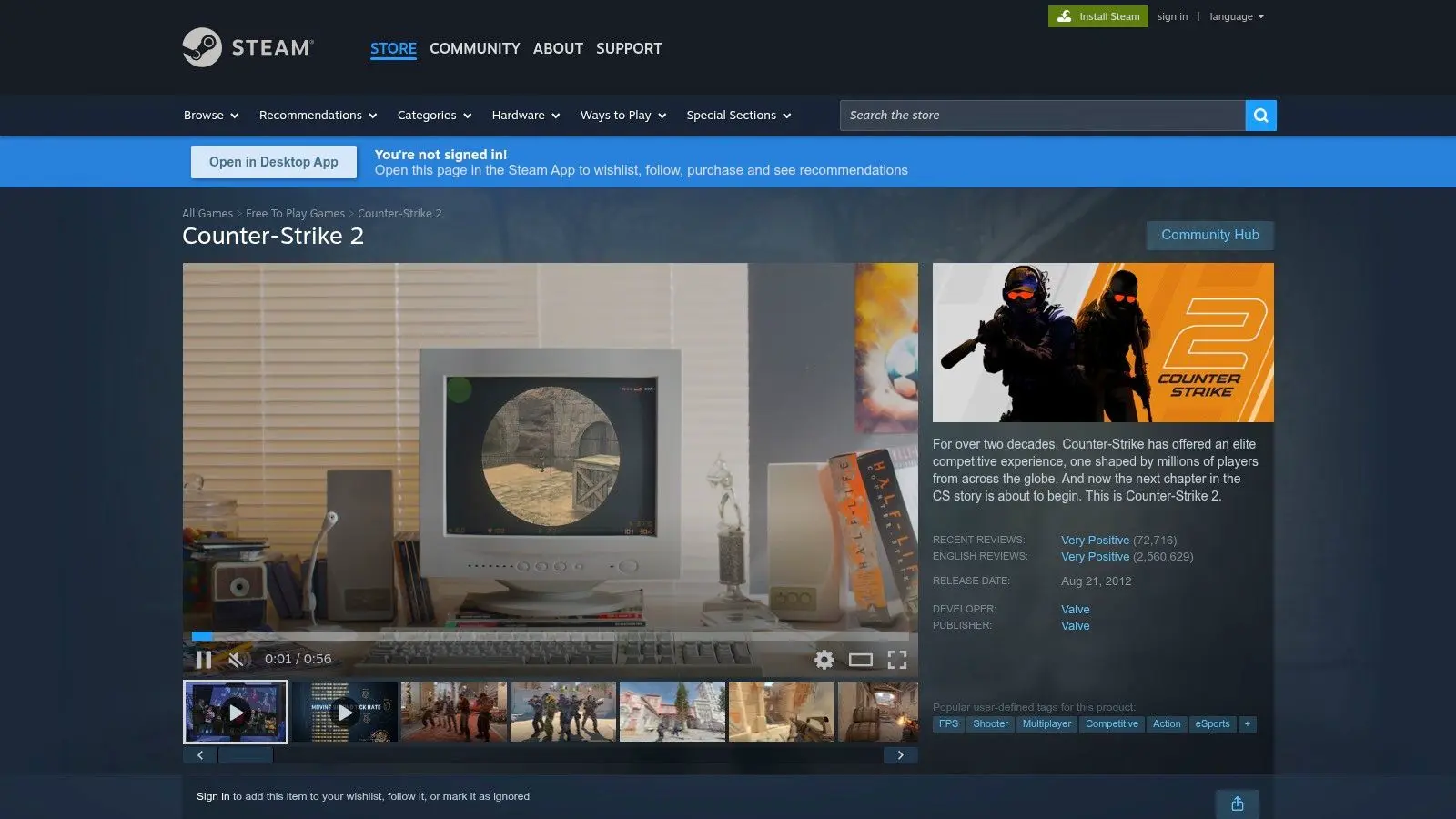
Counter-Strike 2 on Steam remains the cleanest expression of competitive FPS design. Strip away lore cinematics, hero kits, and progression layers, and you're left with spacing, recoil control, utility timing, economy management, and nerve. Few games expose player mistakes this clearly. That's also why it's hard for newcomers. Counter-Strike doesn't flatter you. If your crosshair placement is poor, if your grenade timing is late, if your team wastes money in the wrong round, the match tells you immediately. For experienced players, that honesty is the draw.
Why it still sets the standard
The 5v5 bomb-defusal structure is simple enough to understand quickly and deep enough to study for years. Every smoke, flash, and angle has production-grade readability. Valve's Source 2 rebuild sharpens that further. Surfaces, lighting, and map clarity support decision-making instead of muddying it. From a studio perspective, Counter-Strike is a lesson in restraint. It proves that a long-running FPS doesn't need constant fiction overload if the mechanical identity is watertight. That's especially relevant when planning trailers or gameplay-first marketing. This producer's guide to animations in games is useful context because Counter-Strike shows how animation in a competitive title has to serve timing, feedback, and silhouette before spectacle.
Practical rule: If an FPS wants to be taken seriously in competitive play, every visual flourish has to earn its place against readability.
A few trade-offs are unavoidable.
- •Best for pure skill expression: Movement, peeking, spray control, and utility usage all reward repetition.
- •Best with committed friends: Solo queue is viable, but coordinated teams reveal the game's full depth.
- •Worst for casual drop-in play: If you want a forgiving onboarding curve, this isn't it.
Prime Status complicates the pitch a bit. The base game is free-to-play, but some players will feel the Prime layer is the practical route if they want the fuller matchmaking experience and item drops. Even so, as one of the 7 best FPS games, Counter-Strike 2 earns its place by doing less, better.
2. Valorant
Riot's Valorant download page for UK players takes the Counter-Strike template and adds authored roles. That sounds simple. In practice, it changes the emotional texture of a match. You're not just learning sightlines and economy. You're learning team composition, utility chains, denial tools, entry timing, and when an Agent's signature ability reshapes the round. What works well is the clarity of intention. Each Agent creates a readable tactical promise. Duelists force space. Sentinels anchor. Initiators gather or disrupt. Controllers reshape map flow. When a team understands those jobs, rounds become less about random hero chaos and more about layered planning.
The strongest part of the design
Valorant's biggest win is accessibility without losing tactical integrity. It runs on a broad range of PCs, the gunplay remains exacting, and the ability set usually complements the firefight rather than replacing it. That balance is difficult. Many hero shooters drift into effect clutter. Valorant usually keeps the centre of gravity on precision shooting. For developers and creative teams, it's also a good case study in modular IP building. The roster gives Riot room for character drops, shorts, lore beats, cosmetics, and map-linked narrative framing without breaking the competitive shell. Teams exploring stylised shooters or arena-based XR concepts can pull useful lessons from this producer's guide to game development with Unreal Engine, particularly around how toolchains support repeatable environment production and visual consistency.
Valorant succeeds because the abilities don't excuse weak aim. They create richer situations for strong aim.
The caveats are real. Vanguard's kernel-level anti-cheat won't suit everyone, and the PC-only footprint narrows who can join your squad compared with broader cross-platform shooters.
- •What it does better than many rivals: Gives each player a tactical identity without turning gunfights into noise.
- •What doesn't always work: Ability learning can intimidate players who just want to click heads and keep things simple.
Among the 7 best FPS games, Valorant is the one I'd point to when discussing how modern shooter design can blend esport discipline with character-led worldbuilding.
3. Call of Duty Modern Warfare III + Warzone
If Counter-Strike is distilled competition, Call of Duty's official hub is FPS as a full entertainment stack. You've got premium multiplayer, campaign framing, seasonal refreshes, and Warzone feeding the free-to-play side. Few series are better at making sure there's always something to do, acquire, or queue for. That convenience matters. Call of Duty remains one of the safest recommendations for players who want immediate action with minimal ceremony. Match flow is fast, weapon handling is familiar, and progression systems give even shorter sessions a sense of momentum. For UK players on mixed platforms, that breadth is a practical strength, not just a marketing bullet point.
Where it wins and where it overreaches
Modern Warfare III and Warzone work because they understand cadence. Spawns are quick, audiovisual feedback is punchy, and loadout progression keeps players moving. You don't need a dedicated team night to get value from it. You can play a couple of rounds, dip into a larger mode, then leave feeling you've progressed something. The downside is bloat. Large installs, frequent updates, layered monetisation, and battle pass pressure can make the ecosystem feel like it demands permanent shelf space on both your drive and your attention. That's the trade. Call of Duty is generous with activity, but it asks for commitment in return. For creative studios, this franchise is a reminder that polish isn't just rendering quality. It's service design. Menus, progression prompts, mode surfacing, and event framing all help package the fantasy. It's also one of the clearest examples of FPS as a transmedia-ready brand machine, with military iconography, operator identity, and cinematic framing all built to travel into trailers, promo assets, and licensed experiences.
The smartest thing Call of Duty does is remove friction. The most frustrating thing it does is replace that friction with system sprawl.
If your ideal shooter is quick, loud, social, and easy to revisit, it belongs on any serious 7 best FPS games shortlist.
4. Apex Legends

Respawn's Apex Legends FAQ and game overview still stands out because movement is part of the fantasy, not just the transport layer between fights. Sliding downhill into a flank, snapping onto a zipline escape, or repositioning with a Legend ability gives Apex a rhythm many battle royales never quite match. Its ping system also deserves more credit than it usually gets. Apex made non-verbal squad communication feel elegant. That matters for random matchmaking, mixed-skill groups, and cross-platform play, where not every squad wants to live on voice chat.
A shooter with strong performance language
Apex is one of the most animation-aware FPS games on this list. Character silhouettes, traversal states, tactical tells, and first-person handling all support performance readability. You can feel Respawn's design discipline in how movement, hit feedback, and ability timing interlock. That has clear relevance for game production and adjacent media. A roster-based shooter only works if each character carries a distinct gameplay silhouette and a distinct marketing silhouette. Apex understands both. Its Legends aren't just kits. They're branded personas built for cinematics, key art, event tie-ins, and fan attachment. Still, the onboarding can be rough. New players aren't only learning a shooter. They're learning squad tempo, map rotations, loot judgement, revival windows, and hero-specific interactions. Add battle royale pressure and the skill floor rises quickly.
- •Best at movement expression: It gives advanced players room to improvise routes and recoveries.
- •Best at squad readability: The communication tools reduce friction for strangers.
- •Least friendly for low-pressure solo learners: Battle royale punishment can make early matches feel unforgiving.
For anyone discussing the 7 best FPS games through a design lens, Apex is essential because it proves mobility can be a core identity pillar, not just a feature.
5. Tom Clancy's Rainbow Six Siege
Rainbow Six Siege on Ubisoft's UK site is the most architecture-driven shooter on this list. Walls, floors, sightlines, breach points, gadget placement, and sound cues all matter as much as raw aim. In Siege, a room is never just a room. It's a problem to shape, expose, or defend. That's where the game becomes special. Destructibility in many shooters is decorative. In Siege, it's strategic grammar. You create new attack lines, deny cover, fake pressure, or expose defenders through surfaces that other FPS games would treat as static set dressing.
Why designers still study it
Siege rewards information warfare. Drones, cameras, sound, traps, verticality, and map knowledge often decide the round before the final gunfight happens. That makes it brilliant for coordinated teams and intimidating for almost everyone else. From a creative industry angle, Siege is a sharp example of systems-led drama. It doesn't need a huge cinematic layer to generate memorable stories. The map itself becomes the storyteller because players rewrite it every round. For studios interested in immersive simulation, interactive environments, or tactical XR concepts, that's a valuable lesson. Spatial design can carry as much narrative energy as character dialogue.
Field note: If your shooter uses destruction, players need to understand exactly what changed and why it matters within seconds.
Siege's trade-offs are substantial.
- •What works: Deep operator interactions and environmental manipulation create rounds with real tension.
- •What doesn't: Solo queue can feel punishing, especially when teammates don't communicate or know site setups.
Among the 7 best FPS games, Siege is the pick for players who want decision density. It asks more of you than most shooters, but it gives more back once your map knowledge catches up.
6. Overwatch 2
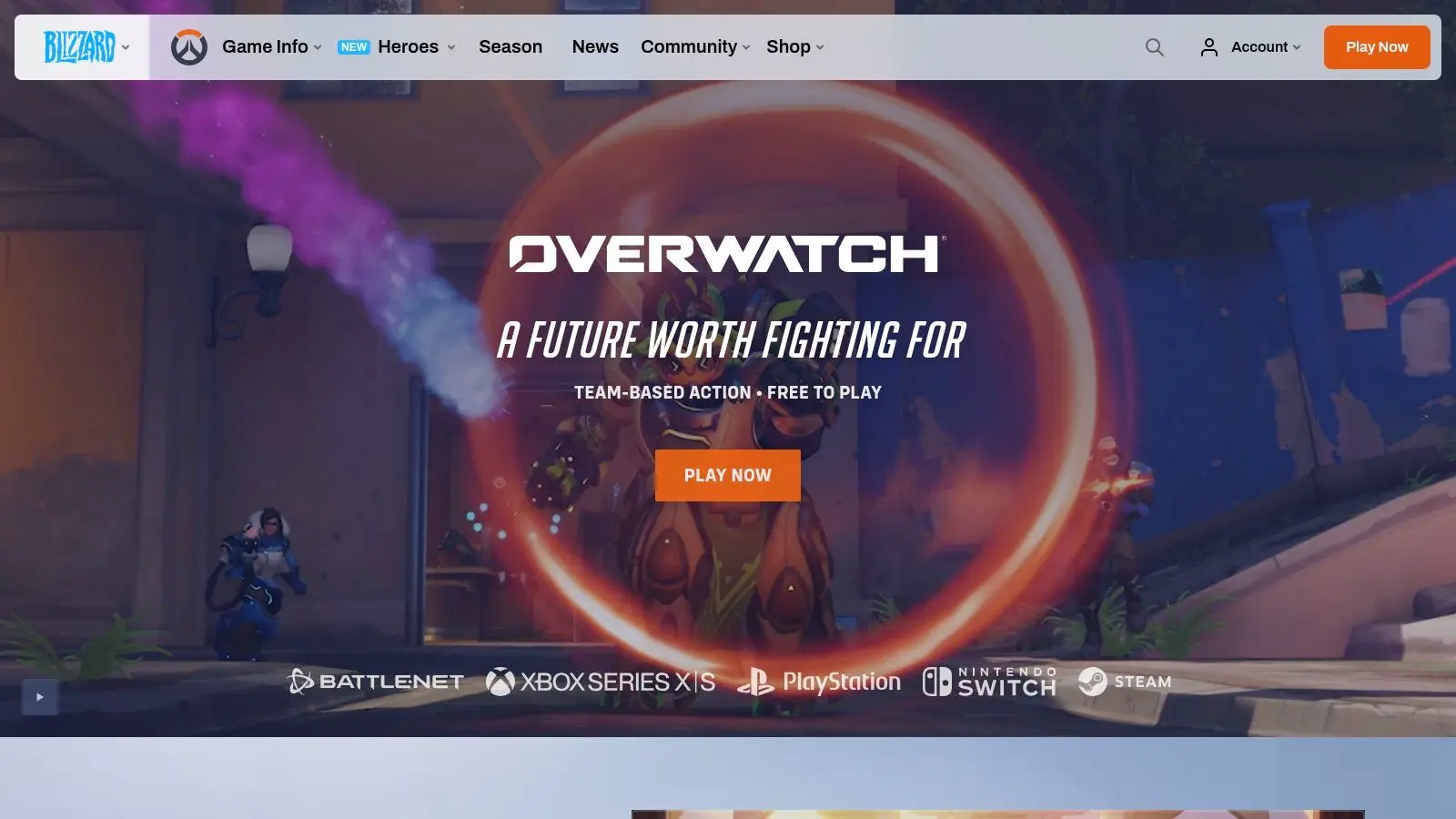
Blizzard's Overwatch 2 UK homepage remains one of the best examples of readability in a crowded team shooter. Even when a fight becomes chaotic, the game usually communicates role, threat, and intent clearly. Tanks feel like tanks. Supports advertise utility through both sound and visual language. Damage heroes tend to sell a straightforward combat promise. That's not accidental. Overwatch has always been strongest when viewed as a character animation and encounter-design success first, shooter second. Every hero has a distinct motion vocabulary. That's why players can often read a threat before they consciously name it.
The game most studios can learn from
For mixed-skill groups, Overwatch 2 is one of the easiest recommendations here. Shooting is approachable, match pacing is brisk, and role structure helps teams understand their jobs quickly. If you're playing with friends who don't all share the same FPS background, it often creates fewer hard skill bottlenecks than a stricter tactical shooter. Its weakness is volatility. Hero balance changes can shift the meta sharply, and cosmetics-focused players may tire of the live-service cadence. Even so, the core strengths remain. Overwatch understands silhouette, anticipation, impact, and personality at a very high level. That has obvious transmedia value. If you're building a franchise with ambitions beyond the game itself, hero readability is gold. Distinct shapes, clean colour logic, and recognisable ability signatures all translate well into trailers, shorts, merchandise, and XR activations.
- •Best for broad group play: Different roles let different player types contribute.
- •Best for character-led appeal: Hero identity is still one of Blizzard's strongest skills.
- •Less ideal for rigid tactical purists: If you want low-ability, high-discipline round play, other games fit better.
Overwatch 2 deserves a spot in the 7 best FPS games because it proves accessible design doesn't have to mean shallow design.
7. Destiny 2
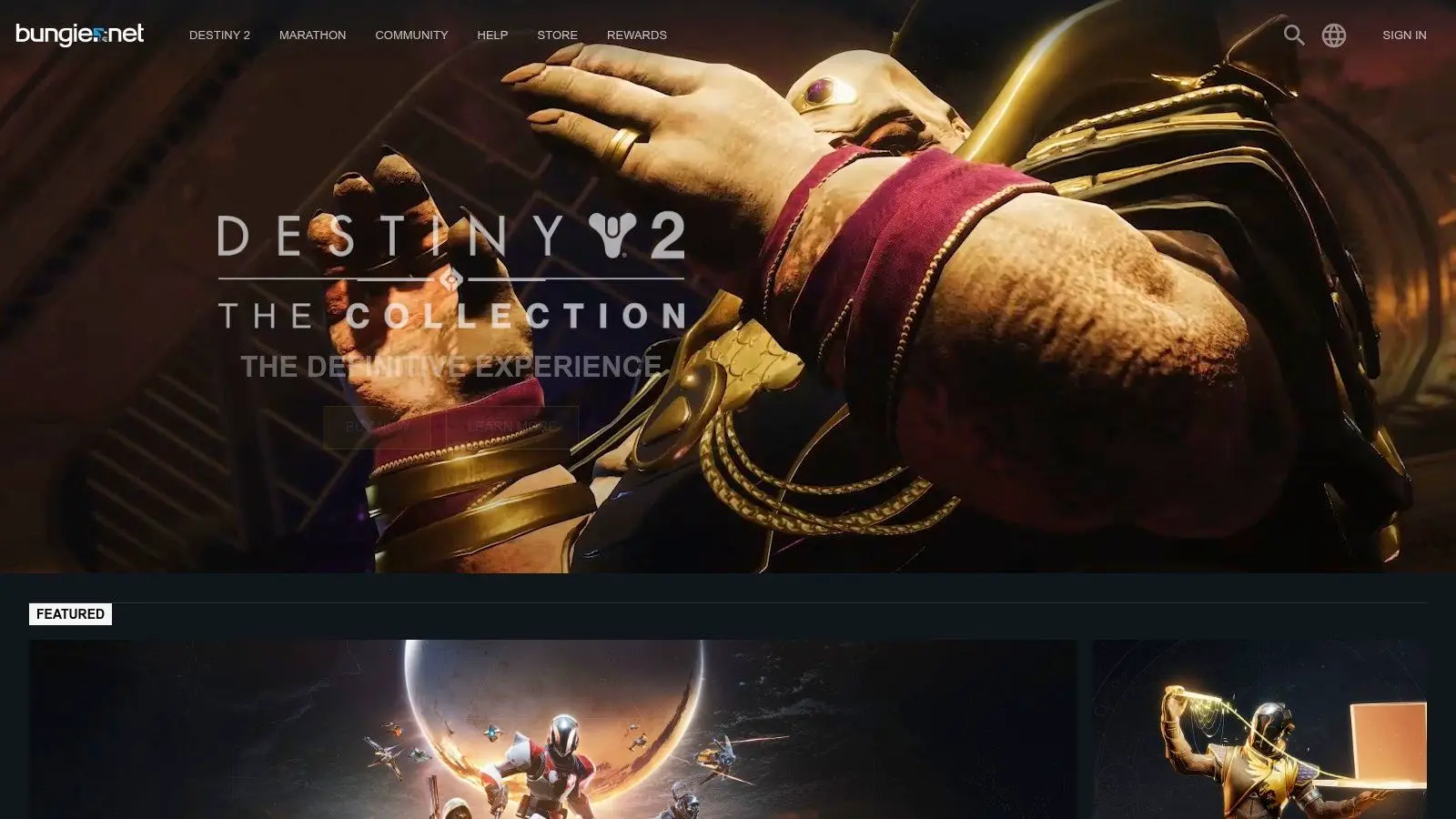
Destiny 2 on Bungie.net sits slightly outside the usual FPS ranking formula because it isn't trying to be only a shooter. It's a live-service action world with MMO-lite habits, raid logic, loadout culture, clan behaviour, and long-form progression. Yet when you strip all that away, the gunplay still lands with a weight and snap that many rivals envy. That tactile confidence is why players stay. Bungie understands how a weapon should sound, recoil, connect, and animate in first person. Even routine firefights often feel heightened because the handling sells the fantasy so well.
More than a gunplay showcase
Destiny 2 is at its best when combat, buildcraft, and world fiction reinforce each other. Raids and dungeons turn mechanical execution into shared story moments. Seasonal content keeps changing the texture of play. Cross-save and social systems make it easier to maintain a multi-platform hobby around it. For studios thinking about franchise expansion, Destiny is a strong model. It treats environment art, lore, encounter staging, UI, and sound as parts of one authored universe. That's exactly the kind of thinking that supports cinematic spin-offs, experiential marketing, and immersive adaptation. If you're evaluating how shooter worlds can extend into immersive formats, this producer's guide to virtual reality game development is a sensible companion read because Destiny's strength comes from presence, ritual, and environmental storytelling as much as mechanics.
Destiny 2 shows that one of the 7 best FPS games can also be a place. Not just a ruleset.
The friction points are familiar. The full experience is tied to paid expansions, and newer players can find the systems dense, especially when older content and layered progression muddy the path forward. Still, if you want shooting with world scale, this is the one.
Top 7 FPS Games Comparison
| Title | 🔄 Implementation Complexity | ⚡ Resource Requirements | 📊 Expected Outcomes | 💡 Ideal Use Cases | ⭐ Key Advantages |
|---|---|---|---|---|---|
| Counter-Strike 2 (Valve) | High, steep learning curve; precision mechanics demand practice | Low, Medium, optimized for wide PC range | Competitive depth, reliable matchmaking, esports pathing | Skill-focused 5v5 competitive play and ranked progression | Industry-standard aim/movement; massive player base & moddable economy |
| Valorant (Riot Games) | Medium, gunplay plus Agent ability layer | Low, accessible on modest PCs (PC-only) | Role-driven team strategies and stable ranked ecosystem | Tactical 5v5 play with defined roles and seasonal ranked play | Clear role/utility design; strong anti-cheat and esports support |
| Call of Duty: MWIII + Warzone (Activision) | Low, Medium, familiar FPS loop across many modes | High, large installs; benefits from higher-end hardware | Broad engagement, fast matchmaking, frequent live updates | Casual drop-in matches, large-scale modes, cross-platform play | Massive player pool; flexible free-to-play & premium options |
| Apex Legends (EA / Respawn) | Medium, battle‑royale pacing with hero abilities | Medium, cross-play across consoles/PC; moderate specs | Dynamic squad BR matches, seasonal retention | Squad-based BR focused on mobility and communication | Excellent movement and ping system; strong cross-play support |
| Rainbow Six Siege (Ubisoft) | High, tactical depth, destructible environments, operator mastery | Medium, modest hardware but high time/coordination cost | High-skill, coordinated play and long-term strategic depth | Tactical team play, coordinated competitive matches and esports | Very high skill ceiling; diverse gadgets and destructibility |
| Overwatch 2 (Blizzard) | Medium, role-driven hero systems with approachable onboarding | Low, Medium, cross-platform, broadly accessible | Fast-paced team fights suited to mixed-skill groups | Pick-up-and-play hero shooter, casual and competitive queues | Strong readability; quick onboarding and large player base |
| Destiny 2 (Bungie) | Medium, High, MMO-lite systems, raids, and seasonal meta | Medium, cross-save supported; expansions add storage/load cost | Long-term engagement via PvE endgames and seasonal content | Cooperative PvE (raids/dungeons) and mixed PvP/PvE progression | Best-in-class gunplay with deep loadouts and seasonal refreshes |
From Gameplay to Gameworld The Creative Studio Opportunity
The best FPS games don't win on weapon feel alone. They win because every layer supports the core fantasy. Mechanics, map design, sound, animation, character silhouette, and lore all point in the same direction. That's why the strongest entries on this list feel bigger than their match rules. They operate as universes. That matters far beyond players choosing what to install next. The UK gaming market was valued at around £7.8 billion in 2023 according to market reporting on the shooting games sector, which is a useful reminder that shooter-adjacent ideas aren't niche creative exercises. They sit inside a large commercial ecosystem where production quality, franchise identity, and audience fit all matter. The same applies to audience access. Ofcom reporting highlighted in this UK gaming accessibility discussion notes that 88% of UK adults play games, with play spread across phones and mixed devices, not only high-end setups. That's a useful check on creative assumptions. Not every FPS-inspired experience needs to target hardcore PC players. For developers, animators, and XR teams, the takeaway is practical. Counter-Strike 2 shows the value of mechanical purity. Valorant and Overwatch 2 show how character design and role readability can carry a franchise. Apex Legends and Siege show how movement language and space manipulation create identity. Destiny 2 shows how fiction, ritual, and social structures can turn a shooter into a durable world. There's also a production lesson in player expectation. Best-selling FPS brands such as Call of Duty and Counter-Strike are strong proxies for broad awareness and familiarity, as reflected in global first-person shooter sales tracking. In practice, that means UK audiences already understand fast time-to-kill, precise input, and competitive loops. Any studio building a shooter prototype, branded activation, trailer package, or immersive tie-in has to meet that baseline of responsiveness and visual clarity. For storytelling teams, great shooters present compelling opportunities. Great shooters already contain the bones of transmedia expansion. They have factions, visual languages, hero archetypes, conflict loops, and environments built for memory. A smart narrative framework helps turn those ingredients into campaigns, shorts, and interactive extensions. This guide to story structures for videos is a useful starting point for shaping that material.
If you're developing a game world, a cinematic trailer, or an XR extension for an existing IP, Studio Liddell can help turn strong mechanics into a stronger franchise. Their team works across animation, games, immersive production, and digital storytelling, which makes them well placed to support everything from concept development to polished audience-facing content.