How Apps Make Money: An Essential Guide To Monetization
Ever wondered how a free app can snowball into a billion-dollar company? The secret isn't a single magic trick but a smart, strategic choice of monetization models. At its heart, understanding how apps make money comes down to three main avenues: users paying you directly, users buying things inside your app, or other businesses paying to reach your users.
The Blueprint For App Monetization
The journey from a brilliant idea to a profitable app absolutely hinges on a well-thought-out monetization plan. Without one, even the most innovative app is just an expensive hobby. Think of your monetization strategy as the commercial engine of your app; it’s what keeps the lights on, fuels growth, and ultimately delivers a return on your hard work. This guide is for business leaders, brand managers, and creators who need to get a grip on these options without getting tangled up in technical jargon. We'll explore the core models that power the app economy, not as an afterthought, but as a critical piece of the app's design from day one.
Understanding The Core Monetization Pillars
At a high level, all app revenue strategies can be sorted into a few key categories. Each one serves a different purpose and is a better fit for certain types of apps, from immersive XR experiences to educational tools for kids.
- •Direct User Payments: This is the most straightforward model. It includes pay-to-download apps and recurring subscriptions. Users pay upfront for access to the app itself or its premium content.
- •Transactional Revenue: This model is all about in-app purchases (IAPs). Users buy digital goodies, special currency, or extra features inside a free-to-download app, a cornerstone of the mobile gaming world.
- •Indirect Revenue: This approach involves a third party paying for access to your audience. The most common examples you'll see are in-app advertising and brand sponsorships.
- •B2B and Enterprise Models: For more specialised apps, the money often comes from licensing the technology to other businesses, selling high-value training simulations, or offering data analytics services.
The real difference between a profitable free app and an unprofitable one isn't just the price tag. It's how clearly the free value and the premium value are separated. Successful apps give you something great for free, then offer a compelling reason to pay for even more.
Picking the right path demands a real understanding of your app's core value and how your target audience behaves. A one-off adventure game, for example, might be a perfect fit for a paid download. An evolving learning platform, however, is much better suited to a monthly subscription, while an AR retail app could earn its keep through affiliate links or brand partnerships. This guide will give you the clarity needed to navigate these choices, making sure your app is built on a solid commercial foundation from the get-go. By breaking down each model with practical, real-world examples, we'll help you build not just a great product, but a sustainable business.
Exploring Direct Revenue: Paid Apps And Subscriptions
The simplest way to understand how apps make money is to look at models where users pay you directly for your product. It’s a straightforward value exchange: you provide a great solution or experience, and the user pays for it. This approach cuts out any third parties, like advertisers, creating a clear and direct relationship between you and your audience. We can break these direct revenue models down into three main types, each with its own pros and cons. Choosing the right one really depends on what your app does, the value it offers over time, and what your target user actually expects.
The Classic Pay-To-Download Model
This is the original app store strategy, and it’s as simple as it sounds. Users pay a one-time fee upfront to download and own your app. It’s a fantastic way to guarantee revenue for every single download, giving you immediate cash flow and a very clear return on your marketing efforts. Right from the start, it positions your app as a premium product worth paying for. Of course, this model also creates the biggest barrier to entry. In a market flooded with free apps, asking for cash before someone has even tried your product is a tough sell. This approach works best for apps that already have a strong reputation, serve a high-value niche (like specialised creative tools), or offer a complete, self-contained experience like a premium game.
The Powerful Freemium Strategy
Freemium has become a massively popular hybrid model, cleverly blending free access with paid premium features. You let users download and use the core of your app for free, which smashes the entry barrier and helps you build a huge user base quickly. The money comes from persuading a small slice of those users to upgrade for advanced features, remove ads, or unlock exclusive content. Think of an animated storybook app. The first chapter is free, getting kids and parents hooked. But to unlock the rest of the story, they’ll need to make a one-time purchase or upgrade to the premium version. This model is incredibly flexible. It gives users a chance to fall in love with your app's value before they have to open their wallets.
The real art of a successful freemium app is striking a perfect balance. Your free version needs to be good enough to keep people coming back, but just limited enough to make the premium upgrade feel like a no-brainer.
If you get this balance wrong, you’re in trouble. Give away too much, and no one will ever pay. Give away too little, and users won’t stick around long enough to even consider upgrading.
Subscriptions And Recurring Revenue
The subscription model has taken over the app economy, and for good reason. It shifts the focus from a single sale to building an ongoing relationship. Here, users pay a recurring fee, usually monthly or annually, for continuous access to your app's content or services. It’s the perfect fit for apps that deliver ongoing value, like a VR fitness platform adding new workouts each week or an educational app with a constantly growing library. The biggest win here is predictable, recurring revenue. It brings financial stability and makes it much easier to plan for the future. It also perfectly aligns your goals with your users' satisfaction; if you want them to keep paying, you have to keep making the app better. But this model comes with high user expectations. You're committing to regular updates, fresh content, and solid customer support to prevent churn, the rate at which customers cancel. A great subscription app isn't just a product; it’s a service that requires a long-term commitment to your community.
Unlocking Revenue With In-App Purchases
In-app purchases (IAPs) are the powerhouse behind many of the most successful apps on the market today. Instead of asking for money upfront, this model lets you welcome users into a free experience and then offer them optional digital goods or extra features for sale. It effectively transforms your free app into its own thriving marketplace. The magic of this model is really all in the psychology. The best IAPs feel like a natural upgrade to the user's experience, not a jarring interruption. When someone _wants_ to buy something because it genuinely adds value, like a slick new tool in a design app or an exclusive cosmetic item in a game, monetisation just becomes part of the fun.
The Core Types Of In-App Purchases
To really understand how apps make money with IAPs, you first need to get to grips with the different kinds of digital items you can sell. Each type plays a specific role and clicks with different user motivations, giving you a flexible and surprisingly powerful way to generate revenue. Most in-app purchases fit into one of three main buckets:
- •Consumables: These are things users can buy, use up, and then buy again. Think in-game currency, special power-ups, or a few extra lives. For a creative app, this might be a pack of single-use 3D textures or some extra render credits.
- •Non-Consumables: These are permanent, one-and-done purchases that unlock features for good. Common examples include removing ads, upgrading to a "pro" version, or buying a new character pack. In an AR design app, this could be a perpetual licence for an advanced lighting toolkit.
- •Subscriptions: While they are a whole revenue model on their own, subscriptions are often managed as a type of IAP. They give users access to content or services for a set time, like a monthly pass for an episodic VR series or yearly access to a library of animated assets.
This strategic mix is incredibly effective. Data shows that 39% of the top 100 grossing non-gaming apps monetize through in-app purchases, with subscriptions being the most common type. In the gaming world, 89% of top-grossing titles rely on IAPs. This model is a proven powerhouse, especially in the UK market where consumer spending on mobile apps is robust and growing.
Designing IAPs That Users Actually Want
The secret to a knockout IAP strategy is simple: make things people genuinely want to buy. For a gaming IP, this could mean highly sought-after character skins, exclusive story add-ons, or time-saving boosts that help players get ahead. If you’re building an AR app for creative professionals, valuable IAPs might look more like bespoke 3D assets, advanced editing filters, or even tickets to an exclusive virtual workshop hosted right inside the app. The aim is to weave these purchases into the experience so seamlessly that they feel like a core feature.
The most profitable in-app purchases don't just ask for money; they offer a shortcut to more fun, greater convenience, or a deeper level of self-expression within the app's world.
To get this right, you have to strike a careful balance between your free and paid offerings. The free version needs to be good enough on its own to keep people coming back, while the paid items should offer clear, desirable benefits that feel like a worthwhile investment. Exploring features like implementing gamified quests can be a brilliant way to drive engagement and naturally introduce opportunities for valuable purchases. By always putting user value first, IAPs can become a sustainable and incredibly profitable way to monetise your app.
Making Advertising and Sponsorships Work for You
For loads of free apps out there, advertising isn't just one way to make money, it's the _only_ way. But getting it right is a delicate dance. If you just slap intrusive ads all over your app, you're going to annoy your users and watch your retention rates plummet. The real trick is to weave ads into the experience so they feel natural and, sometimes, even helpful. This means thinking beyond those clunky, low-effort banner ads that everyone hates. They might be easy to implement, but their poor engagement and negative impact on the user experience make them a terrible long-term bet. Instead, the smartest ad-supported apps use formats that feel like part of the furniture. While we're talking about ads, it's worth remembering they often exist alongside in-app purchases in a hybrid model. The flowchart below shows the different types of in-app purchases you can offer to diversify your income.
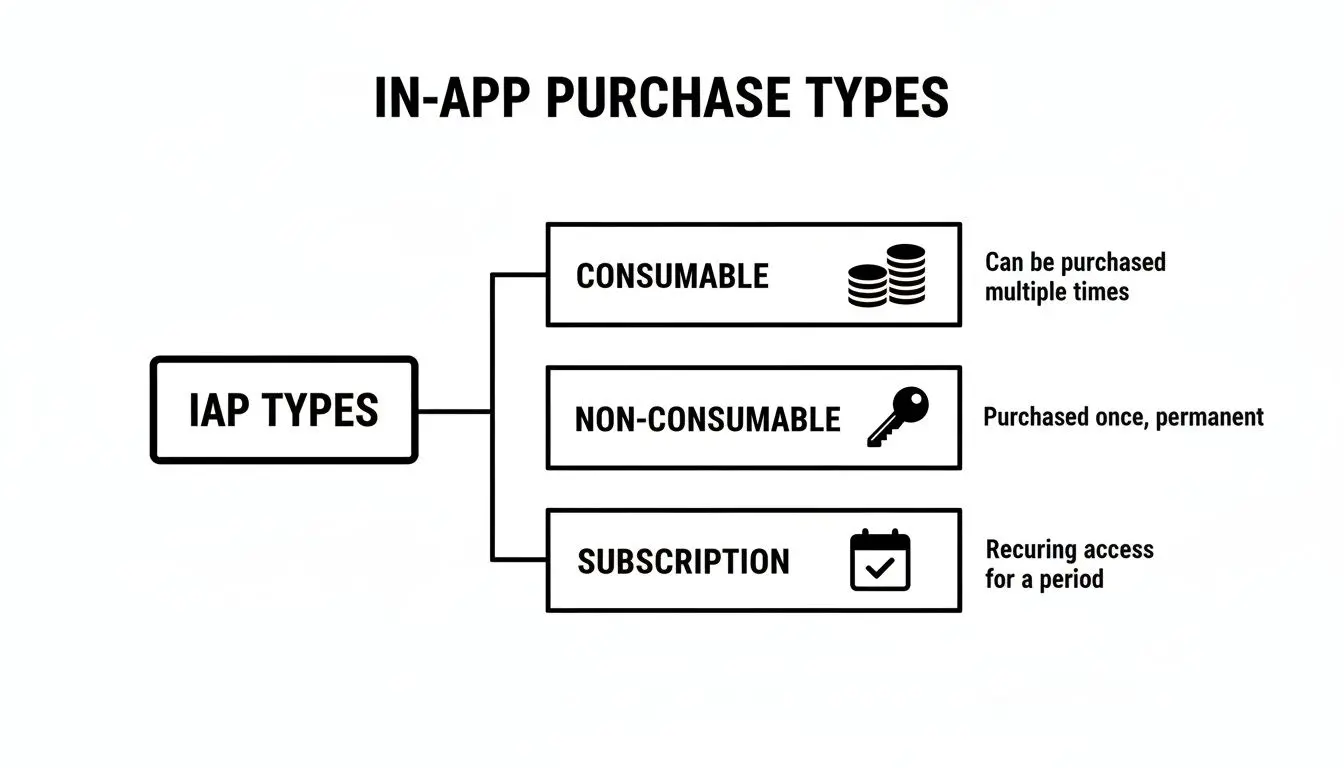
Just as these purchase types offer different kinds of value, your ad strategy needs to be just as thoughtful.
Finding The Right Ad Format
Picking the perfect ad format is all about striking a balance between earning revenue and keeping your users happy. Different formats work for different apps, whether you’ve built a game, a learning tool, or a creative suite. Here are a few of the most effective options that actually work:
- •Native Ads: These are the chameleons of the ad world. They're designed to look and feel like they belong in your app, think a promoted post in a social feed or a sponsored item in an online shop. Because they blend in, they’re far less jarring for the user.
- •Rewarded Video Ads: This format is an absolute powerhouse in the gaming world and beyond. Users _choose_ to watch a short video in return for something valuable, like extra lives, a hint, or some in-app currency. It’s a win-win; the user gets a boost, and you get paid.
- •Interstitial Ads: These are the full-screen ads that pop up at natural breaks, like between levels in a game or after you’ve finished a task. When you time them right, they’re much less annoying than a banner that’s always there.
For example, a kids' educational app could use brand-safe rewarded videos to let children unlock fun new lessons or animated characters. This keeps the learning environment positive while still bringing in revenue. If you want to get into the nitty-gritty, check out our complete guide to in-game ad formats and strategy.
Beyond Ads to Brand Sponsorships
Sponsorships are a whole different ball game, a more premium, deeply integrated way to monetise your app. Instead of plugging into an ad network, you build a direct partnership with a brand that wants to reach your specific audience. This is all about quality over quantity, creating a genuine connection rather than just a quick ad impression.
Sponsorship isn't just about placing a logo; it's about co-creating value. A successful brand partnership should feel like a natural feature of the app, enhancing the user experience rather than detracting from it.
Picture an AR museum app where a corporate sponsor funds an entire virtual gallery dedicated to a specific art collection. Or what about a fitness app that teams up with a sportswear brand to offer exclusive, co-branded workout challenges? These kinds of sponsorships can generate serious revenue while adding unique, high-value content that users will actually appreciate. At the end of the day, whether you choose ads, sponsorships, or a mix of both, the golden rule is to put the user first. By picking formats that align with your app's purpose and your audience's expectations, you can turn their attention into a sustainable revenue stream without driving them away.
Beyond The App Store: The New Frontier Of XR And B2B

While most talk about app revenue revolves around the familiar world of smartphones, there’s a high-value frontier expanding fast in Extended Reality (XR) and specialised Business-to-Business (B2B) applications. Monetisation here looks completely different. Instead of chasing millions of free users for ad money, developers are creating immersive, high-impact experiences that businesses are more than willing to pay a premium for. The whole game shifts from microtransactions to major contracts. The value isn't about killing time; it's about solving complex business problems, boosting safety, or creating unforgettable brand interactions.
Licensing And Enterprise Solutions
One of the most powerful B2B models is licensing specialised software. Think about a hyper-realistic VR training simulation for surgeons or engineers working with complex machinery. This isn't a simple one-time sale; it's a licensed product. Companies will often pay an initial setup fee, followed by ongoing annual support and maintenance fees. This covers updates, technical support, and new training modules as they’re developed. It creates a predictable, recurring revenue stream built on delivering critical business value. For the client, the return on investment is crystal clear: lower training costs, fewer workplace accidents, and more skilled employees. This is a model that perfectly suits studios with proven technical expertise. To get a better sense of what goes into it, check out our guide on mastering Unity development for business and XR experiences.
Location-Based Experiences And Ticketing
Another exciting revenue stream in XR is popping up in location-based entertainment (LBE). Imagine a multi-player VR escape room at an entertainment centre or an interactive AR historical tour at a museum. How do you make money? Straightforward ticket sales. People pay for a timed, unique experience they simply can't get at home. This model transforms a digital app into a physical attraction, opening up revenue from individual tickets, group bookings, and even private corporate events. Your app becomes a destination.
In the XR and B2B space, the product is often a high-stakes solution, not just a piece of software. Monetisation is directly tied to tangible outcomes like improved safety, increased sales, or enhanced learning, justifying a much higher price point.
The UK's mobile app market is a prime example of a population willing to spend on digital experiences. In 2023, UK consumers spent a massive £4 billion on mobile apps, ranking it as the 5th largest market globally for app spending. This high willingness to pay for premium digital content creates a solid foundation for B2B and XR developers to build upon.
Driving Commerce With Augmented Reality
Augmented Reality creates a powerful, direct bridge between the digital and physical worlds, unlocking new ways to make money that are tied directly to commerce. An AR feature in a retail app can let a customer see exactly how a new sofa will look in their living room, giving them the confidence to click "buy". In this model, revenue can come from a few different places:
- •Affiliate Sales: The app gets a commission on every sale made through its AR visualisation feature.
- •Brand Partnerships: Furniture or fashion brands pay to have their products featured prominently within the AR experience.
- •White-Labelling: The AR technology itself is licensed out to multiple retailers, who then integrate it into their own branded apps.
This approach turns an app into a powerful sales tool, where its success is measured by the real-world revenue it helps generate for partners. By moving beyond traditional app monetisation, XR and B2B solutions unlock high-value opportunities built for enterprise clients and the pioneers shaping our digital future.
How To Choose Your Monetization Strategy
Picking the right monetisation strategy is that final, make-or-break step that turns your creative project into a business that can actually stick around. It’s not about grabbing the model that looks best on a spreadsheet; it's about finding the perfect fit for your app's core purpose, what your users will accept, and where you want to be in the long run. Get this right, and you’ll have the funds for future updates and a clear return on your investment. The whole process really boils down to asking a few honest questions. Your answers will create a clear path forward, helping you build a business model that’s truly built to last.
Analyse Your Audience and App Value
First up, who are you actually building this for? You absolutely have to understand your target audience and their spending habits. Are they casual users happy to drop a couple of quid on an in-app purchase, or are they business clients who expect to pay annual licensing fees? A fun, casual game will need a totally different financial model than a specialised VR training simulation for surgeons. Next, what’s the real value your app delivers? Is it a complete, one-off experience, like a story-driven game? Or does it provide continuous, evolving value, like a fitness app that adds new workouts every single week?
- •One-Time Value: This is often a great fit for a simple pay-to-download model or a freemium app with a single "unlock everything" purchase.
- •Ongoing Value: This setup practically screams for a subscription model, where users pay for consistent access to new content or features.
Evaluate The Competitive Landscape
You're not creating this app in a bubble. Take a proper look at what your direct competitors are up to. How are they making their money? You don’t have to copy them, but their choices reveal what the market has been trained to expect. If every other app in your niche is free with ads, launching as a £5 premium app is going to be a tough sell. Look for the gaps and the weak spots. Maybe your rivals are plastering their apps with annoying, intrusive ads. That could be your opening to offer a clean, ad-free experience through a subscription. For a deeper dive into what others are doing, check out these proven mobile app monetization strategies to get more ideas flowing.
The most resilient monetisation strategies are rarely built on a single pillar. The smartest approach is often a hybrid model that caters to different types of users, maximising revenue potential without alienating anyone.
The Power Of The Hybrid Model
More often than not, the smartest move is to mix and match with a hybrid model. This approach lets you serve different types of users all within the same app, which is a massive advantage. For instance, an animation tool could start as a freemium app, giving away the basic features for free. But advanced tools? Those are locked behind a monthly subscription. To top it off, you could also sell individual asset packs as one-off in-app purchases. This blended approach creates several different income streams. It lets casual users get value from your app for free, while your power users and professional customers are happy to pay for the extra features they need. That flexibility makes your entire business model more robust and able to roll with the punches as the market changes. For a more detailed breakdown, you can read our guide on 9 proven mobile app monetization models. By carefully thinking through these points, you can build a strategy that doesn't just make money but actually improves the user experience, setting your app up for real commercial success.
Frequently Asked Questions
Figuring out how apps make money means getting your head around different models, the rules of the App Stores, and some big-picture decisions for the long haul. Here are some of the most common questions that pop up for business owners, marketers, and creators when they're planning their next mobile or XR app.
What Is The Most Profitable App Monetization Model?
There’s no magic bullet here; the "most profitable" model really comes down to your app and who you've built it for. That said, certain models just work better in specific categories.
- •For games, in-app purchases are usually the powerhouse, letting players buy digital goodies and power-ups.
- •For services or content-heavy apps, subscriptions are king. They bring in predictable, recurring cash flow, which is fantastic for business stability.
But honestly, the smartest apps often mix and match with a hybrid approach. Think about it: combining a subscription with optional one-off purchases lets you cater to everyone, from the casual user to the dedicated fan. You get to maximise what you earn from different people with different spending habits.
How Much Do App Stores Take From Purchases?
Both Apple’s App Store and the Google Play Store take a cut from any digital goods and services you sell. It’s their fee for handling all the payment processing, security, and giving you access to their massive global audience. The standard rate is 30%. However, both stores have a programme that drops this to 15% for developers earning less than $1 million a year. That lower rate also kicks in for subscriptions after a user has been with you for a full year, which is a nice incentive to keep your customers happy and loyal.
This commission is a massive factor when you're deciding on your prices. You have to build that fee into your calculations to make sure your app is actually profitable once everyone has taken their slice.
Can I Change My Monetization Model Later On?
You can, but you have to tread very carefully. It's a move that needs thoughtful planning and crystal-clear communication, otherwise you risk upsetting the very people who supported you from the start. Switching from a paid app to a freemium model is a classic move. But if you do it, you absolutely have to reward your original paid users. Maybe they get exclusive content for life or a permanent premium status, something to show you value them and to stop a backlash. Likewise, slapping ads or subscriptions onto an app that was always free can really annoy your community if it’s not handled well. Any change is possible, but it works best when you're upfront about it and make sure the new model comes with some serious new value for your users. The best bet is always to have a long-term plan from day one. At Studio Liddell, we do more than just build apps; we help you design a sustainable business around them. Whether it's an immersive XR training simulation or a captivating animated series for kids, we know how to connect your creative vision to a monetization strategy that actually works. Book a production scoping call and let's talk about how we can turn your idea into a digital product that thrives commercially.