A Guide to the UK Market of Apps
The app market is far more than a collection of games and social media platforms. It's a sprawling, multi-billion-pound economy where businesses of every kind connect directly with their customers. Think of it as the new digital high street, a primary storefront for modern commerce, education, and entertainment. For any forward-thinking business, understanding this world is no longer optional. With massive growth projected across every sector, getting to grips with the app economy is essential for survival and growth.
Exploring the £32 Billion UK App Economy
Picture a bustling city that's constantly expanding, with new districts and skyscrapers popping up almost overnight. That’s a pretty good picture of the market of apps here in the UK. It’s a place filled with immense opportunity, but the competition is fierce. Only the most thoughtfully designed and strategically placed ventures will thrive. Your app is your digital storefront, your service hub, and your direct line to millions of potential customers. The sheer scale of it all is staggering. The UK's app development industry has exploded into a powerhouse, projected to be worth an incredible £32.3 billion by 2026. This boom is powered by a strong 10.9% compound annual growth rate (CAGR) between 2021 and 2026. It’s fuelled by huge smartphone penetration, which has now reached 88% of the UK population. But with over 15,000 businesses competing in this space, just _having_ an app isn't going to cut it. You can explore a complete analysis on IBISWorld to better understand the market's trajectory.
Why Your Business Needs an App Strategy
In such a crowded marketplace, an app stops being just a piece of tech and becomes a core strategic asset. A well-executed app strategy can do wonders for your business.
- •Deepen Customer Loyalty: It opens a direct and personal channel for engagement, keeping your brand front and centre in your customers' minds.
- •Open New Revenue Streams: You can unlock fresh income through in-app purchases, subscriptions, or exclusive premium features.
- •Improve Operational Efficiency: Custom enterprise apps can streamline internal workflows, from employee training to customer service.
- •Gather Valuable Data: Gain direct, first-hand insights into user behaviour and preferences that can inform smarter business decisions.
An app strategy is your blueprint for building a valuable digital asset. It defines not just what the app does, but how it integrates with your business goals, delights users, and ultimately delivers a measurable return on investment.
To help you visualise the opportunity, here's a quick look at where the UK app market is heading.
UK App Market at a Glance 2026
| Metric | Value/Statistic | Significance for Businesses |
|---|---|---|
| Market Size Projection | £32.3 Billion | Indicates a massive and growing addressable market for app-based services and products. |
| Compound Annual Growth | 10.9% (2021-2026) | Shows strong, sustained growth, making it a stable area for long-term investment. |
| Smartphone Penetration | 88% of Population | Your target audience is already equipped and accustomed to using apps daily. |
| Number of Businesses | 15,000+ | High competition underscores the need for a unique value proposition and excellent user experience. |
These figures paint a clear picture: the app economy is not just a trend, but a fundamental shift in how business is done. Navigating this complex but rewarding environment requires more than just a bit of technical skill. It demands a creative partner with a deep understanding of market dynamics. Having been involved in high-quality digital production since 2019, our studio has watched this market evolve from the very beginning. We combine this long-standing expertise in animation, user experience, and immersive technologies to build apps that don't just function, they captivate audiences and deliver on business objectives. This guide will give you the strategic insights you need to make your mark.
Choosing Your Platform: Native, Web, and XR
So, you’ve decided to step into the bustling market of apps. Great. Now comes the first big, strategic question: _where_ will your app live? Think of it like picking the right retail location. A high-street boutique, a sprawling out-of-town superstore, or a futuristic pop-up experience each attracts a different crowd and serves a different purpose. Your platform choice is much the same. It’s not just a technical detail; it’s a decision that will ripple through your entire project, influencing everything from user experience and development costs to your long-term roadmap. It all comes down to what you want to achieve. Do you need the raw power and polished feel of a native app, or the friction-free, wide-reaching access of a web app?
The Core Platforms: Native vs. Web
For most, the journey starts with a fundamental choice between native and web applications. Native apps are the ones you download from the Apple App Store or Google Play. They’re built specifically for a single operating system (like iOS or Android), which allows them to tap directly into the device’s hardware. The result? Unbeatable performance, a slick user experience, and access to features like the camera, GPS, and push notifications in a way that feels completely seamless. On the other side of the coin are web apps, which run inside a web browser. Their superpower is accessibility; they work on any device with a browser, with no download required. The modern evolution of this is the Progressive Web App (PWA), a clever hybrid that delivers an app-like feel, complete with offline access and notifications, right from a website. As you weigh your options, understanding the nuances of Native vs Hybrid Mobile App Development is a crucial step in matching the technology to your project’s goals.
Choosing a platform is a strategic fork in the road. Native offers depth and performance, ideal for complex, engaging experiences. Web offers breadth and accessibility, perfect for reaching the widest possible audience with minimal friction.
For a much deeper look at how these two approaches stack up for different business needs, we've put together a full guide on Progressive Web Apps vs Native apps. The decision-making process can seem complex, but it often follows a logical path. This flowchart gives a simplified overview of how to approach these initial questions.
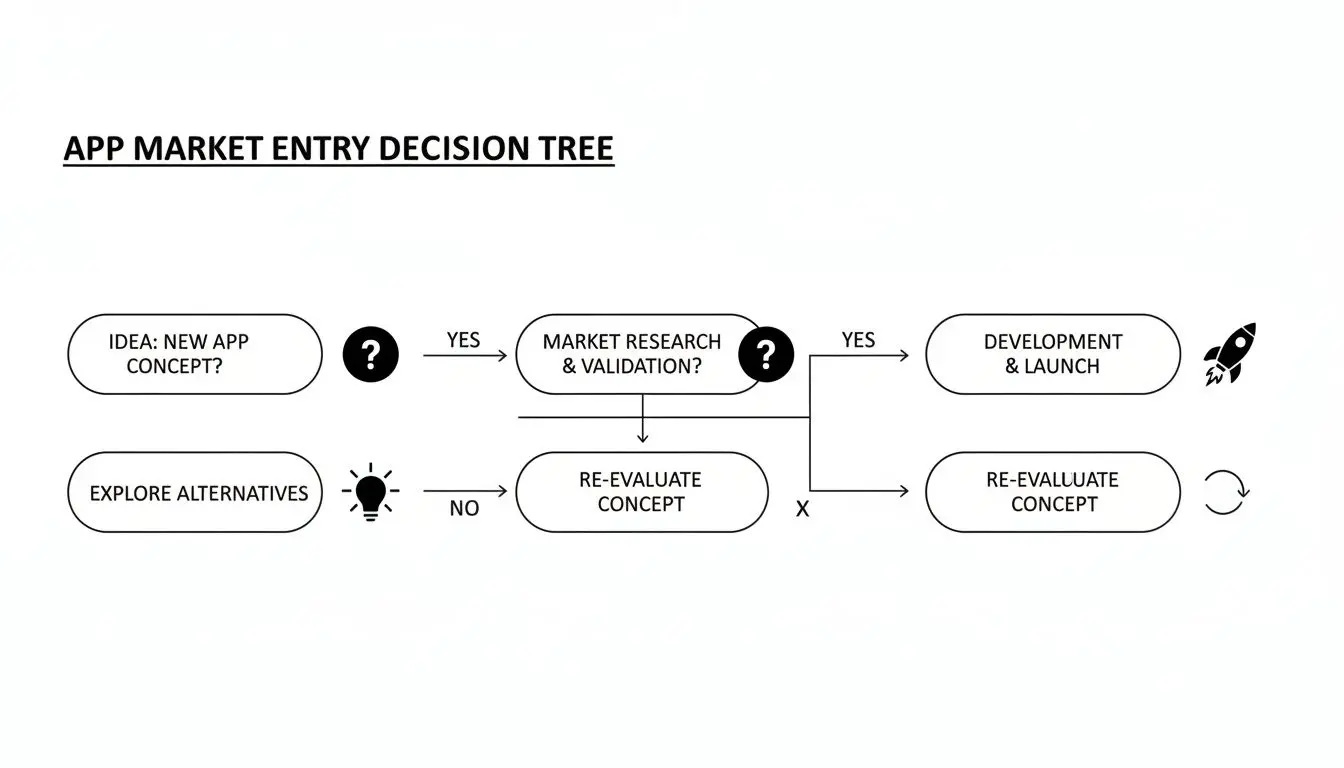
As the chart shows, the path doesn't just stop at a 'yes' or 'no'. Each decision opens up new strategic questions about your platform, your audience, and your ultimate purpose.
The Immersive Frontier: XR
Beyond the familiar world of phone and computer screens lies the exciting frontier of eXtended Reality (XR). This isn't science fiction anymore; it's a rapidly maturing set of technologies, including Virtual and Augmented Reality, that are becoming powerful business tools.
- •Virtual Reality (VR): This is all about full immersion. VR headsets transport users to completely digital worlds, making it a game-changer for things like architectural walkthroughs, high-stakes training simulations, and unforgettable brand storytelling.
- •Augmented Reality (AR): AR takes a different approach by overlaying digital information onto the real world. It’s perfect for letting customers visualise a new sofa in their living room, bringing museum exhibits to life, or providing on-site industrial workers with hands-free instructions.
Building for XR is a more specialised craft, often relying on powerful game engines like Unity and Unreal. While the audience is currently smaller than for mobile, the potential for creating genuine impact and truly memorable experiences is enormous. Immersive apps are already carving out high-value niches in education, enterprise, and entertainment. Choosing to build for XR is a bold move, but it’s a commitment to pioneering the next wave of user interaction.
Finding Your Niche in High-Growth Sectors
The app market is enormous, but real success rarely comes from trying to be everything to everyone. The smartest move is to specialise, find a specific, high-growth niche and aim to become the go-to solution within it. These focused markets have less competition, more passionate users, and a much clearer route to becoming profitable. It’s like choosing to open a specialist bakery on a high street full of generic supermarkets. They might all sell bread, but your artisan sourdough attracts a loyal, high-value clientele who will happily pay a premium for real quality and expertise. In the app world, you need to find your digital sourdough.
The Fitness and Wellness Boom
One of the most powerful growth areas is digital fitness and wellness. The pandemic fundamentally changed how people look after their health, creating a huge demand for apps that provide guidance, tracking, and community without needing to leave the house. This makes the sector a perfect example of a niche with massive potential. If we zoom in on the UK fitness app niche, the numbers speak for themselves. The market was valued at USD 455.3 million in 2025 and is on track to hit an incredible USD 1,293.4 million by 2033. That explosive growth is powered by a 13.7% compound annual growth rate (CAGR). Even more telling, the exercise and weight loss segment alone took a 61.7% revenue share in 2025, proving that users are flocking to apps that deliver clear, tangible results. Grand View Research has published the full report on these findings in the fitness app market. The data tells a simple story: people aren’t just downloading these apps for fun; they are actively investing in their health through them. To succeed here, you need an engaging, visually polished experience, which is exactly where expertise in animation and user experience can make all the difference.
Corporate Training and Enterprise XR
Another incredibly strong niche is corporate training, especially with the growth of XR technologies. Traditional training is often expensive, a logistical nightmare, and frankly, not always that effective. Enterprise apps, particularly those using VR and AR, offer a far better solution. Think about training engineers on complex machinery in a completely risk-free virtual world. Or guiding new retail staff through a store layout with an AR overlay on their phone. These apps deliver serious business value:
- •Improved Safety: Trainees can practise high-stakes procedures without any real-world danger.
- •Increased Retention: Immersive, hands-on learning is far more memorable than reading a manual.
- •Scalability: A single training app can be rolled out to thousands of employees worldwide, ensuring total consistency.
- •Cost Savings: It cuts down on the need for physical equipment, travel, and instructor time.
This is a B2B market where a well-designed app solves a very clear and expensive problem. The trick is to partner with a studio that gets both the technical side of XR and the strategic goals of the business.
The most valuable enterprise apps aren’t just digital tools; they are solutions to critical business challenges. They streamline operations, reduce risk, and empower employees with skills they can apply immediately.
Niche Entertainment and Location-Based Experiences
Finally, the entertainment world offers plenty of room for specialised apps that go beyond standard gaming. Location-Based Entertainment (LBE) is a particularly exciting space. These experiences cleverly blend the physical and digital worlds, using AR or VR to transform real locations like museums, theme parks, or event spaces. For instance, an AR app could bring historical figures to life at a heritage site, or a pop-up VR game at a music festival could create a unique brand activation that people can’t stop talking about. These apps succeed by being novel and immersive, creating truly unforgettable moments. For brands and cultural institutions, they’re a powerful way to connect more deeply with an audience. The one thing all these high-growth niches have in common is a demand for high-quality, engaging content. Whether it’s a slick animation in a fitness app, a realistic simulation for corporate training, or a captivating AR story, the user experience is everything. This is where creative and technical excellence stops being a "nice-to-have" and becomes your biggest competitive advantage.
Monetisation and App Store Discovery
So, you’ve built a brilliant app. That’s a huge achievement, but the work doesn’t stop there. The next, all-important question is: "How will it actually make money?" A clear monetisation strategy is what turns a great idea into a genuinely profitable venture. The landscape is certainly promising. UK consumers are more than comfortable with in-app commerce. In 2025, 94% of UK adults made purchases online, and an incredible 97% of them used digital payment platforms to do so. This behaviour bleeds directly into the app economy, with 67% ordering groceries via apps and another 67% using them for in-store payments. You can explore this in more detail in S&P Global's report on the UK Digital Economy. #### Choosing Your Revenue Model There are several well-trodden paths to making money from an app. The right one for you will hinge entirely on what your app does, who it’s for, and the value you’re providing.
- •Premium (Pay-to-Download): This is the most traditional model. Users pay a single, upfront fee to download your app. It’s a great fit for high-value, specialised apps, think professional creative software or in-depth games where the value is obvious right from the start.
- •Freemium (In-App Purchases): A hugely popular approach where the app is free to download, but users can pay for optional extras. This might mean unlocking advanced features, buying virtual goods in a game, or paying to remove ads. It’s a fantastic way to build a large user base first and then convert your most dedicated fans into paying customers.
- •Subscription: Here, users pay a recurring fee (usually monthly or yearly) for continuous access. This model is perfect for content-led apps like streaming services, news platforms, or fitness programmes, as it builds a steady, predictable stream of revenue.
- •Advertising: With this model, your app remains completely free for the user. Instead, you earn revenue by showing them ads from other businesses. You’ll need a large and active user base for it to be truly profitable, but it’s a powerful strategy for casual games, social media, and many utility apps.
For a deeper dive into these strategies, you can check out our comprehensive guide on mobile application monetization. #### Getting Your App Discovered Once you've settled on how your app will generate revenue, you need to tackle distribution. It’s not enough to just publish your app and hope for the best; you need a plan to make sure people can actually find it. This is where App Store Optimisation (ASO) becomes essential. ASO is the practice of fine-tuning your app's page on the Apple App Store and Google Play Store to rank higher in search results and attract more organic downloads. In simple terms, it's SEO for apps. Key elements of a solid ASO strategy include:
- •A Compelling App Name & Icon: Your first chance to make a great impression.
- •Keyword-Rich Descriptions: Using the right language to explain what your app does.
- •High-Quality Screenshots & Videos: Showcasing your app’s best features visually.
- •Positive Ratings & Reviews: Crucial social proof that convinces others to download.
Think of your app store page as your digital shop window. ASO is what makes sure that when potential customers walk past, they are not only drawn in but also convinced to step inside.
Of course, ASO is just one piece of the puzzle. A wider marketing strategy involving social media, influencer outreach, and paid advertising is vital for building and sustaining momentum. A successful distribution plan ensures your thoughtfully crafted app doesn’t just launch, it thrives.
The Future of Apps: AI, XR, and Gamification

The app market never sleeps. While today’s models are certainly profitable, the ground is already shifting under our feet. If you want to build apps that lead the pack tomorrow, you need to get to grips with the three major forces shaping the future: Artificial Intelligence (AI), Extended Reality (XR), and Gamification. These aren’t sci-fi fantasies. They’re practical tools that innovative studios are already using to build stickier, smarter, and more impressive applications. Getting these elements right is how you create an app that feels personal, immersive, and genuinely valuable to your users.
AI: Personalisation at Scale
AI has finally moved out of the lab and into the core of modern app development. In the app world, its most powerful use is delivering incredibly smart, real-time personalisation. AI algorithms watch user behaviour, learn their preferences, and serve up content that feels like it was made just for them. It's the difference between getting a generic junk mail flyer and having a personal shopper who knows your taste inside and out. That level of bespoke service gets results.
- •E-commerce: AI can suggest products based on an individual’s browse history, nudging conversion rates higher.
- •Content Platforms: It learns what you like and curates a news feed or video playlist that keeps you hooked.
- •Fitness Apps: AI can dynamically tweak a workout plan based on your performance, helping you hit your goals much faster.
This tech adds a layer of intelligence that turns a static app into a responsive partner for the user. It’s a surefire way to build loyalty and make people feel truly understood. Even subtle touches matter, and learning how to animate your app's logo with AI can add a polished, dynamic feel that enhances your brand’s presence.
XR: Immersive, Hands-On Experiences
Extended Reality (XR) is the catch-all term for technologies like Augmented and Virtual Reality, and it’s dissolving the screen between the digital and physical worlds. While VR drops you into a completely new digital space, AR overlays digital information onto the world around you. Both are opening up entirely new possibilities for apps. AR, specifically, is becoming a go-to tool for brands. It gives customers the chance to "try before they buy" in a way that was impossible just a few years ago. Think about pointing your phone at your living room to see how a new sofa _really_ looks, or seeing a 3D model of a complex machine come to life at a trade show. This isn't just a fun gimmick; it’s a powerful tool that directly influences buying decisions. Creative studios with a background in game engines like Unity and Unreal have a massive head start here. These platforms are the foundation for almost all high-quality XR content, from complex VR training simulations for enterprise clients to fun AR apps for consumers.
Gamification: Boosting Engagement and Retention
Gamification is the secret sauce for making an app addictive (in a good way). It’s all about taking the mechanics that make games so compelling, points, badges, leaderboards, and progress bars, and applying them to non-game apps. When done right, it can supercharge user motivation and keep them coming back.
Gamification isn't about turning your app into a game. It's about borrowing the motivational psychology that makes games so compelling and using it to drive desired user behaviours.
This strategy is incredibly versatile and works across almost any sector:
- •Education: A language app uses daily streaks and experience points to make practice feel like a rewarding habit.
- •Finance: A banking app gives out badges for hitting savings goals, turning a chore into a positive achievement.
- •Productivity: A to-do list app unlocks new themes as you complete tasks, giving you a little hit of accomplishment.
By tapping into our innate desire for achievement and friendly competition, gamification gives people a solid reason to open your app every single day. It turns passive consumption into active participation, forging a much deeper connection between the user and your brand.
The convergence of AI, XR, and gamification is creating a new frontier for app development. The table below summarises how these technologies are making a tangible impact on both functionality and business outcomes.
Impact of Key Technologies on App Development
| Technology | Primary Application in Apps | Business Benefit |
|---|---|---|
| Artificial Intelligence (AI) | Real-time personalisation, predictive analytics, and content curation. | Increases user engagement, boosts conversion rates, and improves retention by delivering tailored experiences. |
| Extended Reality (XR) | Immersive "try-before-you-buy" AR features and fully immersive VR training or entertainment environments. | Enhances brand interaction, influences purchase decisions, and provides unique, memorable user experiences. |
| Gamification | Points, badges, leaderboards, and progress tracking to motivate user behaviour. | Drives daily active use, improves user retention, and fosters a strong sense of community and achievement. |
As you can see, these aren't just features; they are strategic tools that fundamentally change what an app can do for a user and for a business. Embracing them is key to staying relevant and building products that people will not just use, but love.
Building Your App Market Entry Strategy
Diving into the app market is a significant business move, but it doesn’t have to feel like a leap of faith. Success isn't about luck; it's about crafting a solid, workable plan. This final step is where we pull everything together into a strategic playbook, transforming your concept into a valuable digital asset. It all starts by asking two fundamental questions: “What real-world problem are we solving for our audience?” and “How will we define and measure success?” Your answers form the very foundation of your project, shaping every decision you make, from the technology you choose to how you’ll make money.
The Strategic Pillars of App Development
A powerful strategy stands on several key pillars. Each one demands serious thought and ensures your creative vision is firmly anchored to real business outcomes. Getting these right from the very beginning is the best way to avoid expensive missteps and give your development partner a clear path to follow. Your core pillars must include:
- •Defining Business Goals: What’s the number one objective? Are you looking to boost sales, streamline your operations, build deeper brand loyalty, or open up an entirely new revenue stream? Your goal has to be specific, measurable, and directly linked to what your app actually does.
- •Deep Audience Understanding: Who, exactly, are you building this for? You need to go beyond basic demographics and create detailed user personas. Get to grips with their pain points, their digital habits, and what would genuinely make their lives better or more fun.
- •Platform & Technology Selection: As we’ve covered, your choice of native, web, or XR has enormous consequences. This decision has to be driven by your goals and your audience, not just by what’s currently trending.
- •Monetisation and Distribution Plan: You need to decide how the app will make money _before_ a single line of code is written. At the same time, you should map out your App Store Optimisation (ASO) and marketing strategy to make sure you can find and keep users after launch.
A great app idea is only the beginning. A great strategy is what turns that idea into a sustainable, profitable business that solves a genuine need for its users.
Choosing the Right Development Partner
Your last strategic decision is arguably the most critical: picking who will actually build your app. The right partner is far more than just a team of programmers; they are strategic advisors who will challenge your assumptions, help you refine your ideas, and bring a wealth of hard-won experience to the table. A partner with a proven track record can expertly steer you through the complexities we've outlined in our complete guide to app development in the UK. When you're assessing potential studios, look for a team that shows not just technical talent but a genuine understanding of your business goals. They should be able to show you a portfolio that proves their expertise on your chosen platform, whether that's mobile, web, or the immersive worlds of XR. Deep experience in high-quality animation, compelling user experience design, and sharp strategic thinking is what separates an average app from an exceptional one.
At Studio Liddell, we bring a proven track record in animation, XR, and strategic thinking to every project. We're ready to help you turn information into action. Book a production scoping call