Augmented Reality Logos: A Brand Guide
Most brand managers arrive at augmented reality logos from the same place. They've already invested in identity work, motion guidelines, campaign assets, packaging, and paid media. The logo is consistent. The brand system is polished. Yet in the moments that matter most, on packaging, at events, in-store, in print, and on social cut-throughs, the logo still behaves like a sticker. That is the primary shift. The problem isn't that logos have stopped mattering. It's that static marks now sit inside interactive customer journeys. People scan, tap, swipe, rotate, compare, and expect the next layer of information to appear immediately. A logo that only identifies can still do its job. A logo that also launches an experience can do far more. Augmented reality logos sit in that gap between recognition and action. They turn a brand mark into a trigger, a stage, or a lightweight interface. Sometimes the logo becomes a 3D object floating above packaging. Sometimes it opens a product demo, a character animation, a trailer, or a guided path to purchase. Sometimes it makes a printed asset worth engaging with for longer. The important distinction is this. Good AR logo work isn't about making the logo do tricks. It's about giving the brand a useful interactive behaviour.
A logo in AR has to earn its place. If it doesn't clarify, persuade, guide, or entertain in a way the customer values, it's decoration with extra steps.
That's where production discipline matters. The strongest AR logo projects don't begin with software. They begin with a commercial question. Do you need more scans from packaging, better stand engagement, a cleaner route from print to product page, or a memorable launch asset for a campaign? Once that's clear, the format decisions become much easier.
Beyond Static A New Reality for Brand Logos
A static logo still works well in places where attention is guaranteed. Corporate decks. Signage. App icons. Endboards. But most branded touchpoints now compete with movement, sound, personalisation, and immediate utility. A logo on a box, leaflet, badge, or event wall has only a few seconds to prompt any action at all. That's why augmented reality logos are gaining attention from brand and campaign teams. They don't replace your identity system. They extend it into a behaviour layer. The logo becomes something people can scan, place, explore, or use as a doorway into richer content.
Where AR logos make strategic sense
Some uses are obvious. Product packaging can reveal assembly guidance, provenance, or a short branded animation. Event graphics can launch a character, a product demo, or a competition mechanic. Business cards can open a portfolio piece instead of asking someone to remember a URL later. Other uses are more subtle. A logo can become the persistent visual anchor for a WebAR experience, which helps the interaction feel branded without covering the screen in promotional clutter. That matters because people engage more easily when the experience feels simple and coherent. A practical test helps here:
- •Brand recall problem: Your audience sees the logo but forgets the brand context.
- •Conversion gap: Print or out-of-home gets attention but doesn't create a clean digital next step.
- •Experience mismatch: The campaign promises innovation, but the branded asset itself feels passive.
- •Content overload: You need to deliver more information without cramming more text onto packaging or display materials.
If none of those problems exist, AR probably isn't necessary. If one or more do, an AR logo can be a smart production choice.
What works and what falls flat
The strongest projects respect the logo first. They don't distort it beyond recognition, overcomplicate the interaction, or force users into a long loading sequence just to watch a novelty animation. Weak AR logo executions usually fail for three reasons: the trigger is unclear, the reward is underwhelming, or the experience is too heavy for the device. The commercial value comes from utility plus memory. If the logo helps people do something and leaves a stronger impression of the brand, it's doing real work.
What Are AR Logos and How Do They Work
An AR logo is a brand logo enhanced with augmented reality behaviour. In plain terms, it means someone points a phone at a logo, or scans a trigger linked to it, and digital content appears within the physical space. That content might be a 3D version of the logo, a short animation, a product model, a video layer, or interactive buttons. Think of it as a business card that doesn't stop at contact details. It opens a miniature branded experience.
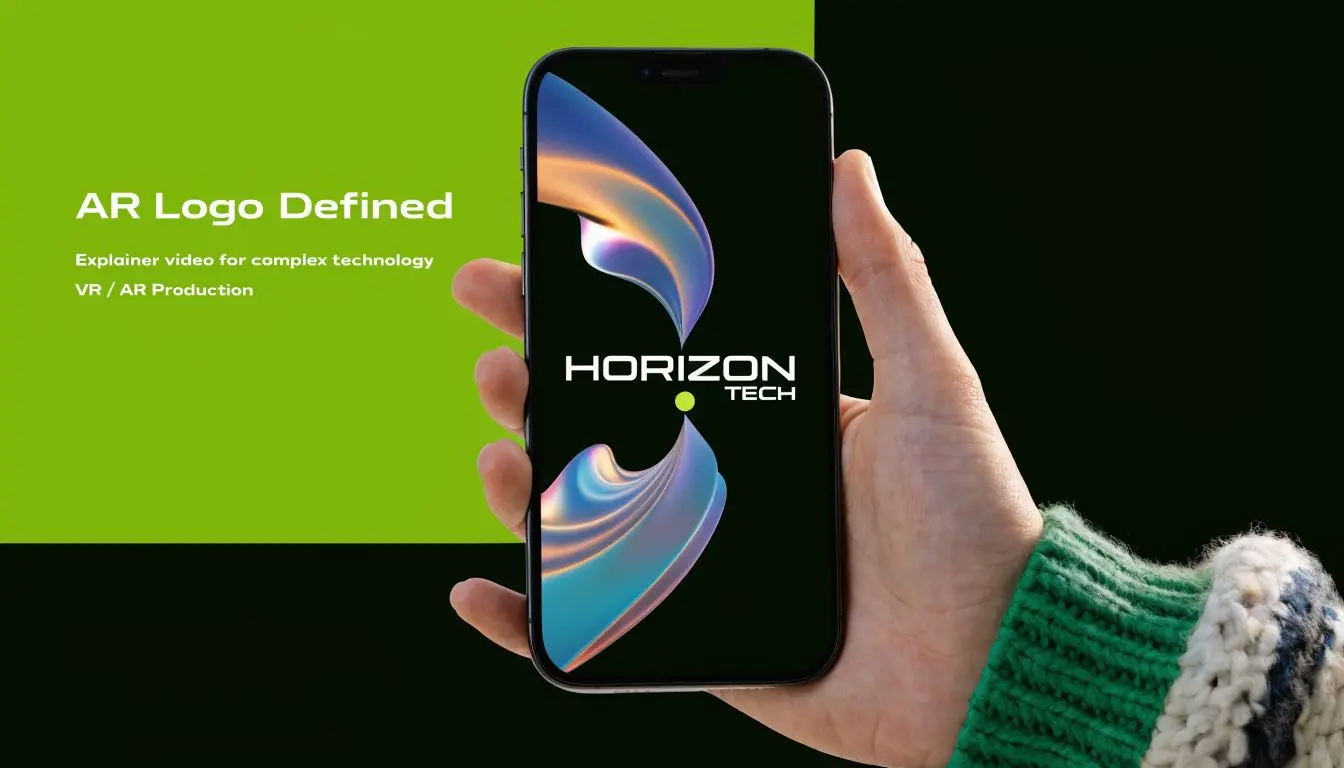
Two common ways AR logos are triggered
Most projects fall into one of two approaches. Marker-based AR uses a recognisable image as the trigger. That might be the logo itself, a printed lockup, a label, or a QR code placed with the logo. The phone camera detects the image, then anchors digital content to it. Markerless AR doesn't rely on a fixed printed marker in the same way. Instead, the user places the logo experience into their environment, usually on a floor or tabletop. This is useful when the logo is acting more like a 3D object or product companion than a printed trigger. Both methods can work well. The right one depends on context.
- •Marker-based suits packaging and print: It gives users a clear place to point the camera.
- •Markerless suits launches and demos: It lets users place a logo or brand object at scale in their own space.
- •QR-led access lowers friction: It's often the easiest way to get users into the experience reliably.
- •Image recognition can feel more magical: When it works well, the branded surface itself becomes the gateway.
What the user actually experiences
From the customer's side, the process should feel simple. Open camera or browser, scan, wait briefly, interact. If any stage feels confusing, completion drops quickly. Under the hood, the system is doing a few jobs at once:
- It recognises a trigger or maps the environment.
- It loads optimised assets for mobile.
- It pins the content in a stable position on screen.
- It enables simple interactions such as tap, rotate, play, or open link.
Practical rule: If a first-time user can't understand the interaction in a few seconds, the concept needs simplifying, not explaining.The best AR logos feel immediate. They don't ask the audience to learn a new interface. They use familiar behaviours, camera view, tap targets, short animations, and obvious calls to action, to make the brand feel alive without turning the experience into a technical demo.
Strategic Benefits and Real-World Use Cases
AR logos are most useful when they shorten the distance between attention and action. A printed or physical brand asset already has the audience in front of it. Augmented reality gives that asset a next step without forcing the person to search, type, or remember. The scale of that opportunity is significant. Projections show mobile AR users reaching 1.7 billion worldwide by 2024, and the wider AR/VR market reaching $89.82 billion in 2025 according to global augmented reality market projections. That doesn't prove every brand needs AR. It does show the channel sits inside mainstream mobile behaviour, not a niche technical corner.Where the business impact comes from
The return rarely comes from the logo itself. It comes from what the logo enables. A packaging logo can launch a usage guide that reduces hesitation at the point of ownership. An exhibition graphic can trigger a product reveal that keeps visitors at the stand long enough for staff to start a conversation. A direct mail piece can use the logo as the branded gateway to a personalised offer. If you want a broader view of those kinds of brand activations, this guide to AR for brands is a useful companion. The strongest commercial benefits usually sit in four areas:- •Longer attention on physical assets: Packaging, print, and event graphics stop being dead ends.
- •Cleaner handoff to commerce or content: Users can move from scan to product page, signup, or demo in one flow.
- •Richer brand memory: People tend to remember interactions more vividly than static impressions.
- •Better first-party interaction signals: Teams can learn what people launched, tapped, or explored.
Use cases that justify the effort
Not every sector needs the same kind of experience. That's why copy-paste AR concepts usually underperform. Retail and packaging A logo on pack can reveal preparation steps, ingredients context, or a branded 3D product animation. This works best when the customer already has the item in hand and wants fast guidance or reassurance. Events and exhibitions A stand logo can become an entry point to motion content, a product exploded view, or a playful interaction. The payoff is usually better when the AR layer supports a live sales conversation rather than replacing it. Sport and entertainment Fan audiences already understand scanning and second-screen behaviour. In those contexts, the logo can act as a collectible, a reveal mechanism, or a route into campaign content. Corporate and B2B materials AR logos on business cards, brochures, and presentation leave-behinds can open a showreel, technical animation, or product walkthrough. That works especially well when the subject is easier to show than explain.
The most effective AR logo brief is usually small and sharp. One audience, one action, one reason to scan.
Teams get into trouble when they try to make one AR logo do everything at once. Better to pick a single business objective and design the interaction around that.
The End-to-End AR Logo Production Workflow
From a client's perspective, AR logo production should feel like a structured content project, not an experiment. The discipline is the same one used in animation and interactive production. Clear brief, concept approval, asset build, implementation, testing, launch, then optimisation.
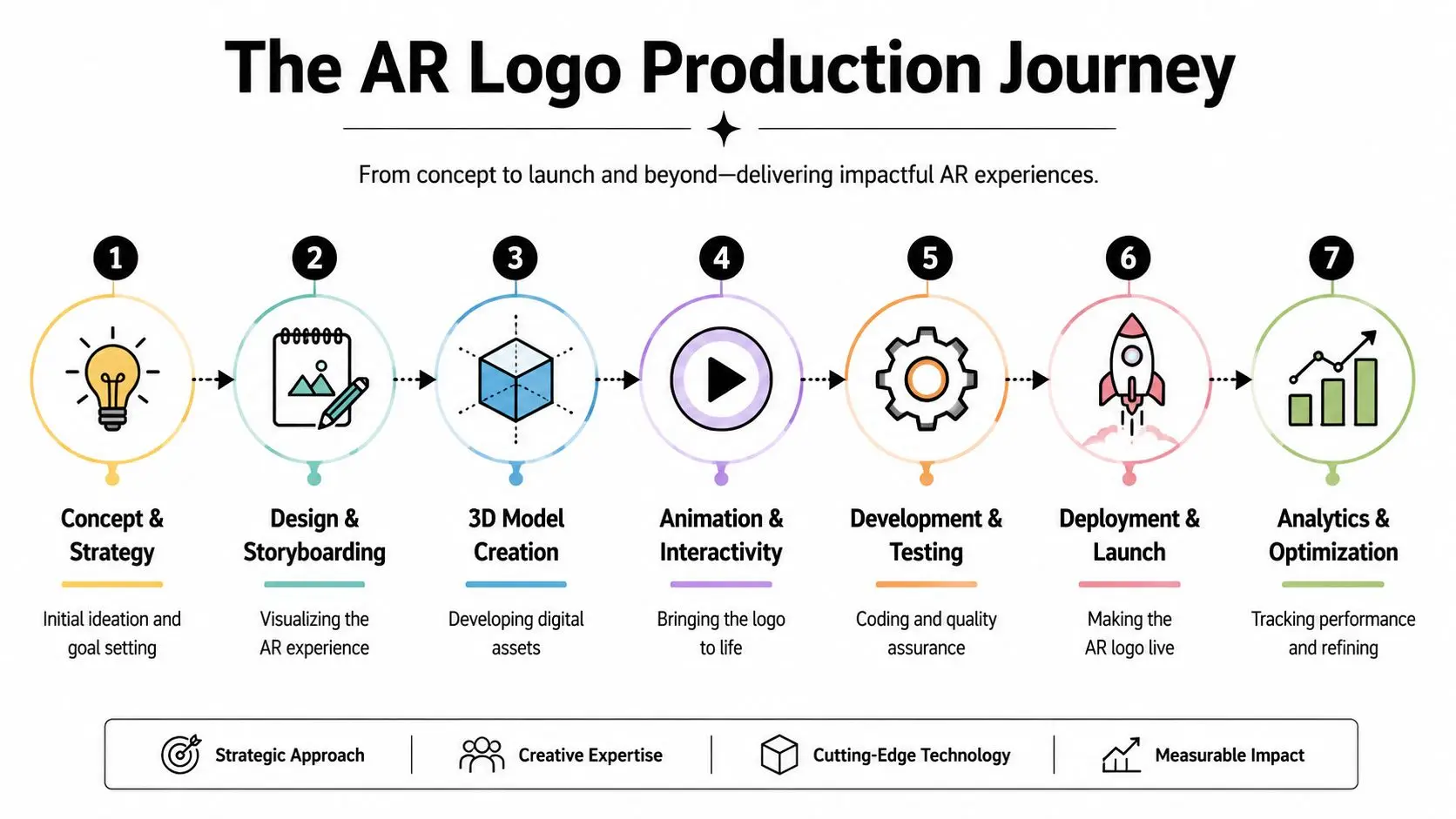
A well-executed AR branding strategy can produce real commercial gains. The cited benchmark most relevant here is from the AR branding workflow and ROI reference, which states that AR branding initiatives lifted ROI by an average of 28% for 42% of London-based agencies that had adopted the technology.
Stage one and two with brief and concept
The brief needs to answer practical questions before any design starts. Where will the AR logo live? Packaging, event wall, print ad, merch, business card, retail display? What action matters most? Scan, dwell, click through, share, learn, or purchase? Then the concept phase turns that objective into a usable interaction. Storyboards, motion frames, and user flow matter at this stage. A logo might extrude into 3D, reveal text, open a model, or transition into buttons. The concept has to be strong enough to justify the scan and simple enough to execute cleanly. Good scoping usually settles these points early:
- •Entry method: QR, image recognition, or direct web link.
- •Experience length: Short enough to hold attention, long enough to deliver value.
- •Content type: 3D logo, animation, video overlay, product visual, or mixed interaction.
- •Success event: What counts as a useful outcome once the user is inside.
Stage three and four with asset build and implementation
At asset stage, the design team prepares the logo for motion and real-time use. That often means rebuilding vector artwork, creating a 3D version, preparing textures, and deciding how much realism the materials need. Flat logos don't always translate well into depth. Some marks need restrained extrusion. Others need a more graphic treatment to stay recognisable. Then development starts. That can mean WebAR, a native app workflow, or a platform-specific deployment. A practical reference for that wider delivery process is this guide to AR app development from concept to launch. One factual example of what's now possible on the asset side is the use of hyper-realistic logo conversion tools. Gaussian Splatting can turn a 2D SVG logo into a 3D model with sub-millimetre depth accuracy and render times under 2 seconds on standard smartphones, as described in this technical overview of AR logo generation.
Stage five to seven with QA launch and optimisation
Testing is where many AR logo projects are won or lost. The team needs to test lighting conditions, camera behaviour, device differences, browser quirks, load performance, and how obvious the interaction feels to someone who hasn't been in the project for weeks. Launch isn't the finish line. Distribution materials matter just as much. The printed CTA, the placement of the trigger, the wording around “scan to view”, and the page or asset someone lands on after the interaction all shape performance.
If users need a staff member to explain how to start, the launch asset isn't finished.
After launch, the analytics tell you whether the concept worked or only looked good in review meetings. That's when teams refine the CTA, simplify the opening moments, or replace underperforming interaction steps.
Choosing Your Technical and Creative Pipeline
The technical stack for augmented reality logos isn't one decision. It's a chain of trade-offs. You're balancing access, fidelity, development time, hosting model, and how much interaction the brand needs. A useful first split is WebAR versus native app AR. WebAR wins when access speed matters most. Native approaches win when the experience needs deeper device capability, heavier interactivity, or tighter integration with an existing product.
Engine and delivery decisions
Unity is often the practical choice for cross-platform AR builds because of its mature mobile workflow and broad ecosystem. Unreal can be compelling when the visual ambition is higher and the team needs specific rendering strengths, but it can be heavier than many logo-led activations require. Then there's the question of delivery layer. ARKit and ARCore support strong native experiences on Apple and Android devices. Browser-based routes lower friction because the user doesn't need to install an app, which is why many campaign-led AR logos favour the web route. This WebAR guide for UK businesses is useful if your project lives in packaging, print, events, or short-term campaigns. For buyers comparing partners, curated roundups of leading augmented reality agencies can help you assess different production models, especially if you're weighing campaign studios against product-focused developers.
AR technology stack comparison
| Technology | Best For | Key Trade-off |
|---|---|---|
| WebAR | Packaging, print, events, fast campaign access | Lower friction, but usually tighter performance constraints |
| Native AR app | Deep interaction, persistent product features, advanced tracking | Strong capability, but higher barrier to entry |
| Unity pipeline | Cross-platform production, practical real-time workflows | Flexible and efficient, but visual choices still need optimisation discipline |
| Unreal pipeline | High-end visual presentation and bespoke experiences | Strong rendering potential, but may be more than a logo-led activation needs |
| QR-triggered access | Reliability and simple onboarding | Less magical than pure image recognition |
| Image recognition | Branded trigger moments where the logo itself activates the experience | More sensitive to print quality, lighting, and recognition conditions |
Asset formats and realism choices
File format decisions matter more than many clients expect. USDZ and GLB are common choices because they support mobile-friendly 3D delivery. But format alone won't save a poorly built asset. Polygon count, texture weight, animation logic, and material setup still determine whether the experience feels smooth or sluggish. That's also where creative restraint pays off. A logo doesn't need cinematic complexity to feel premium. In fact, overly dense assets often make the brand feel less polished on mobile. One interesting option for premium finishes is Gaussian Splatting. As noted earlier, it can convert a 2D SVG into a 3D AR logo with sub-millimetre depth accuracy and render times under 2 seconds on standard smartphones. That makes it attractive for brands chasing a more tactile, material-rich look without turning the experience into a long load. If you're evaluating implementation routes, Studio Liddell is one example of a studio working across Unity, Unreal, animation, and XR production, which matters when the AR logo is only one part of a broader campaign or content pipeline.
Choose the pipeline that protects the user experience first. Nobody on the customer side cares which engine you used if the logo jitters, lags, or fails to load.
Real-World Examples Typical Budgets and Timelines
The easiest way to judge an AR logo idea is to look at how it behaves in context. Not in a pitch deck. In the actual environment where someone encounters it.
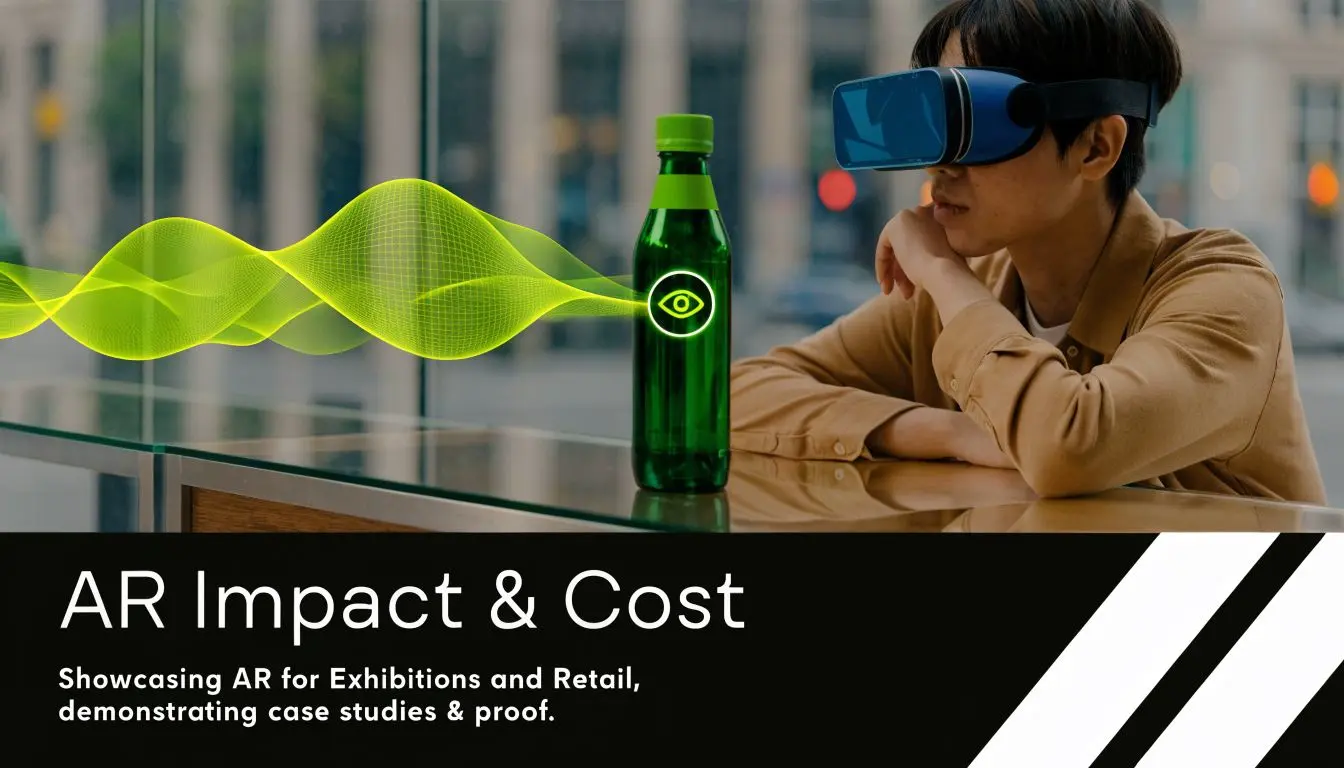
Example patterns that tend to work
Sports and fan engagement A strong benchmark comes from a Manchester United campaign where AR-enabled logos achieved a 52% scan-to-interact rate when triggered via QR code overlays, as referenced in the earlier workflow source. That kind of result makes sense because the audience already has affinity, the scan behaviour is familiar, and the reward is emotionally relevant. Packaging and product storytelling A food, beverage, or consumer product logo can trigger an animated sequence, a preparation guide, or a short origin story. This format works best when the AR layer answers a question the customer already has. It works poorly when it only repeats the front-of-pack messaging in 3D. Exhibition and launch environments At events, a logo can become the starting point for a product reveal or lightweight interactive explainer. The practical value is dwell time and conversation quality. Sales teams usually prefer short experiences they can use as conversation tools, not self-contained mini apps that isolate the visitor.
Budget and timing realities
Precise budgets vary too much by scope to pretend otherwise. What matters is understanding what changes the cost. Lower-complexity build A straightforward WebAR logo activation with a clean trigger, a short animation, and one or two CTA paths is the leanest route. These projects usually move faster because asset creation and testing stay contained. Mid-range project Add a custom 3D logo build, richer interactions, multiple devices to test, analytics planning, and campaign adaptation across print or event materials, and the effort rises quickly. This is often where brand teams get the best balance between ambition and reliability. More complex activation Budgets climb when the AR logo is only the entry point to a larger interactive environment, product visualisation layer, or app-based experience. Native development, content branching, and heavier QA all increase production load. A realistic timeline depends on three things:
- •How finished the brand assets are: Clean source files save time.
- •How many approvals are involved: Slow review loops often stretch timelines more than production itself.
- •How many unknowns exist in deployment: Packaging runs, venue lighting, or multiple print suppliers add risk.
The cheapest AR logo is often the one with the clearest brief. Scope drift costs more than rendering.
Measurement and Best Practices for 2026
If you can't define success before launch, the AR logo is still a visual experiment. The useful metrics are usually straightforward: scans, launches, interaction completion, dwell behaviour, CTA taps, and the downstream action that matters to the campaign. That might be a product click, a signup, a content view, or a handoff to sales. The design best practices are equally practical. Keep the entry obvious. Keep the first reward immediate. Make the brand recognisable without making the screen feel like an advert. Test the experience in real lighting, on ordinary devices, with people who haven't been trained on it.
Compliance and discoverability
One issue still gets ignored too often. Regulatory compliance. There's a growing need in the UK to align AR experiences with GDPR and ASA expectations around interactive advertising and data handling, as outlined in this discussion of logo design trends and AR compliance considerations. If the experience collects behavioural data, opens personalised content, or connects to remarketing flows, that needs proper planning from the start. There's also a visibility question beyond the activation itself. If your brand is building interactive experiences and wants them to surface in newer discovery environments, it's worth understanding how to rank in AI-generated answers. That's increasingly relevant when campaign content, brand FAQs, and product explainers all feed how people encounter brands online. For 2026, the strongest AR logo projects will be the ones that behave like proper brand systems. Useful, measurable, lightweight, and compliant.
If you're exploring augmented reality logos and need a production-minded view of scope, workflow, or technical fit, Studio Liddell can help assess whether the idea belongs in WebAR, app-based XR, or a broader branded content pipeline.