Augmented Reality for Brands That Drives Real Engagement
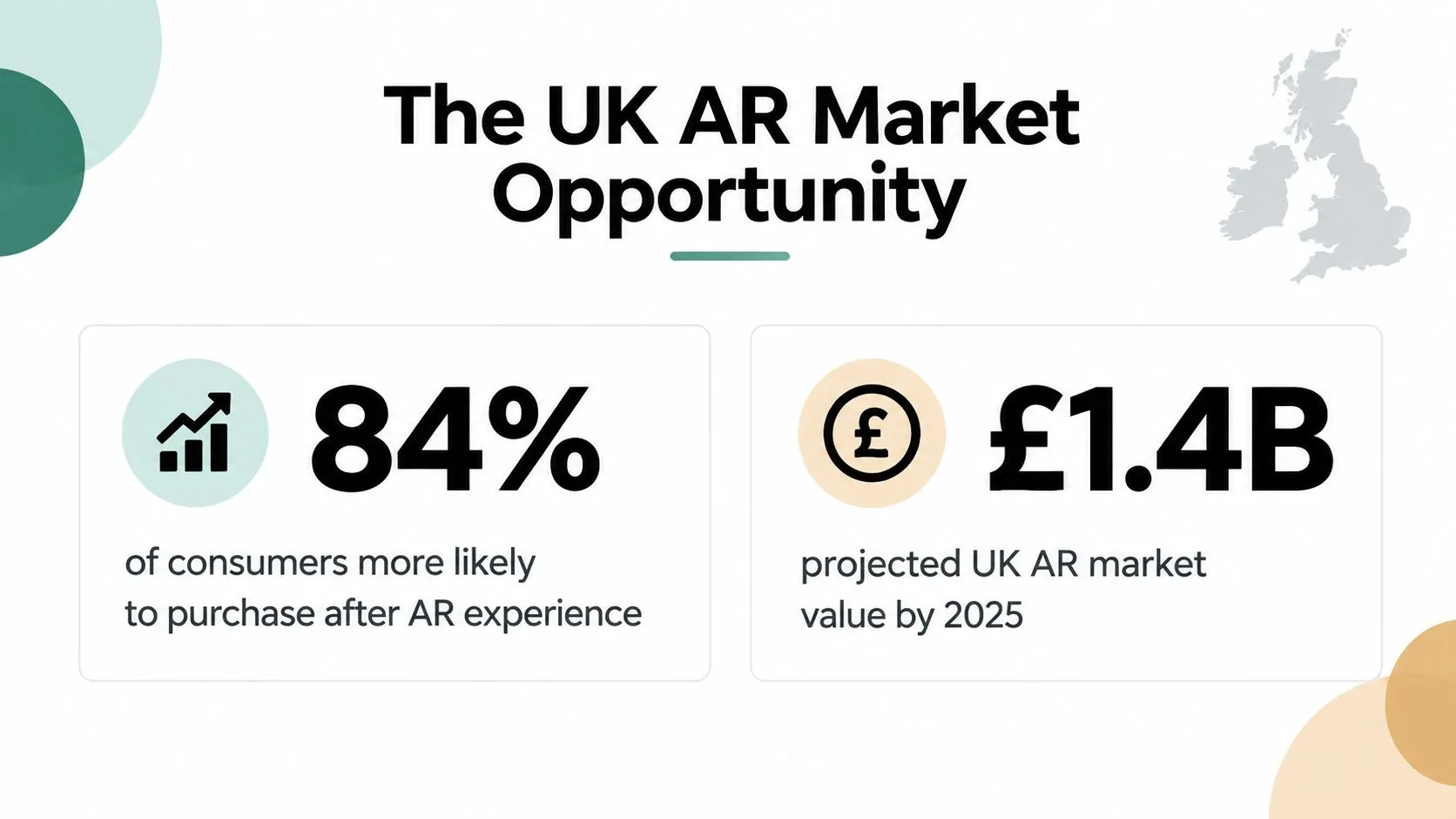
A shopper is standing in a showroom, holding a phone over a dining table. They're interested, but one question is stopping the purchase: will it fit at home? An augmented reality preview can place the table in their room, let them inspect its scale, and turn uncertainty into a more informed decision. That moment captures the practical value of augmented reality for brands. AR works best when it helps someone choose, understand, remember, or interact with a product, rather than adding a digital effect. It can support ecommerce, retail, exhibitions, advertising, technical communication, training, and brand storytelling. The UK already has the production capacity to support this shift. The 2022 UK Immersive Economy Report estimated 2,106 immersive technology companies, an 83% increase over five years, with industry turnover of around £1.4 billion. London represented 41% of companies, 55% of employees, and roughly half of total turnover according to the 2022 UK Immersive Economy Report. This guide takes a marketer from first principles to a sustainable operating model. You'll learn how AR works, where it creates commercial value, how a production pipeline fits together, what to ask a partner, and which measures reveal whether an experience deserves further investment. For a useful companion to the underlying mechanics, Sculpty offers a clear explanation of how supports augmented reality, including the relationship between physical surroundings and digital content.
Introduction to Augmented Reality for Modern Brands
AR adds digital content to a view of the physical world. On a phone, that usually means the camera sees a room, face, product, exhibition stand, or printed surface while software places a digital object or interface into that view. For a brand team, the important question isn't whether the effect looks impressive. It's whether the experience helps the audience complete a meaningful task. A furniture retailer might let a customer preview a product at home. A cosmetics brand might provide a virtual try-on. An engineering business could show an internal component that customers can't see in a finished machine. These experiences reduce the distance between interest and action. A customer can inspect a product in context instead of relying only on photographs. A visitor can explore a complex offer at an exhibition without waiting for a sales representative. A campaign can turn a passive advert into a moment of participation.
Producer's rule: Start with the hesitation, question, or action you want to address. Choose AR only when it improves that moment.
The UK audience is already familiar with camera-led digital experiences, although awareness of the term “augmented reality” remains uneven. A Mindshare Futures report found that 51% of UK consumers were aware of the term, while 27% had used at least one AR-enabled service. Usage rose to 41% in London and 60% among 18 to 34-year-olds, and a third of consumers said AR would help with shopping choices, according to Mindshare Futures reporting from WARC. That combination creates a useful planning principle. Don't make people learn the category before they can use the experience. Put the interaction inside a familiar channel, explain the benefit in ordinary language, and give users an immediate reason to point their camera, tap a button, or move around the space.
How Augmented Reality Works in Simple Terms
Think of AR as a live camera view with a digital layer carefully attached to it. The camera provides the view, tracking works out where the phone is and what it's looking at, rendering creates the digital object, and interaction lets the user control what happens next. A simple AR product preview follows a sequence:
- The camera looks at the environment. It captures surfaces, lighting conditions, faces, objects, or visual markers.
- Tracking estimates position. The software determines where the digital content should sit as the user moves the phone.
- The system renders content. A 3D model, animation, label, button, or effect appears in the camera view.
- The user interacts. They might rotate a product, select a colour, open information, follow an animation, or move closer.
- The experience records useful signals. Depending on the design and permissions, the team can assess interactions, product views, engagement paths, and downstream actions.
 For a marketing brief, you don't need to specify every tracking method. You do need to describe the user's starting point, physical setting, expected action, device context, and fallback if tracking fails. A good brief might say, “A visitor scans the product card, sees the machine cut away, selects a component, and sends the specification to a sales contact.” That gives a creative and technical team something testable.
 Why Augmented Reality Matters for Brands Right Now
A customer is choosing between two products online. The specifications are clear, yet one question remains: will it fit the room, suit their appearance, or work as expected? AR can place that answer inside the customer's existing shopping journey, turning uncertainty into a quick, observable decision. The commercial case rests on two developments. Consumers are using AR for practical choices, and the UK now has enough specialist capacity to support repeatable programmes rather than isolated experiments. Shopping provides a clear signal. Snap and Ipsos reported that 55% of UK consumers listed shopping as their top reason for engaging with AR, while six in ten said AR helps them shop in new and exciting ways, according to the Snap and Ipsos study reported by New Digital Age. The research also points to product visualisation, fit and size previews, and contextual information delivered through social or communications apps. That use matters because AR addresses a specific source of hesitation. A customer may understand the offer but lack confidence about its size, finish, appearance, fit, or operation. A well-designed experience answers that concern quickly, without requiring a separate app or complicated onboarding. The interaction works like a product sample that can travel through a phone.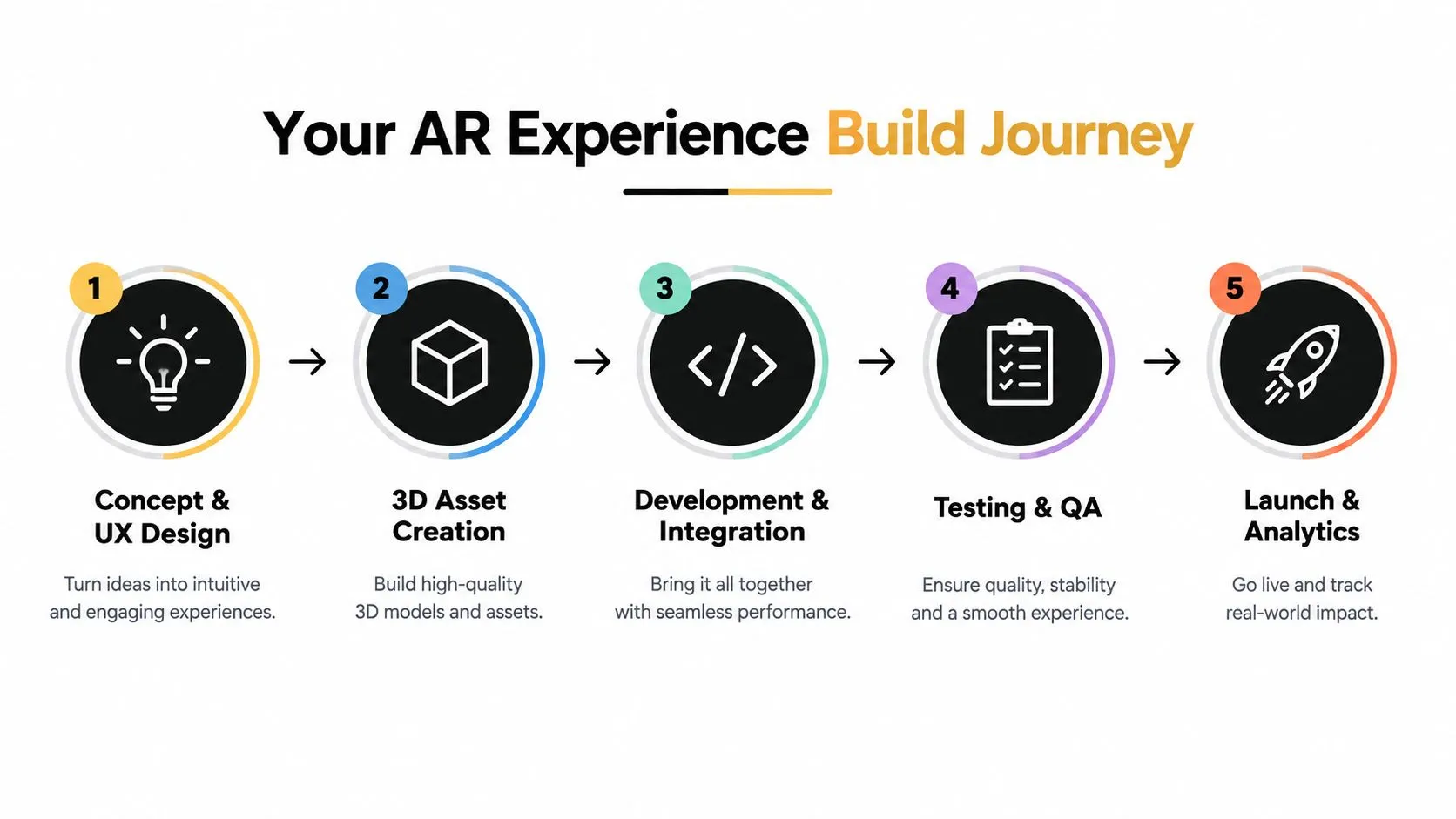 The UK supply base has expanded too. The earlier 2018 Nesta report placed the sector at about 1,000 specialist companies, 4,500 jobs, and £660 million in sales. That earlier baseline was roughly half the footprint described in later industry reporting, indicating greater capacity for retail activations, product visualisation, experiential campaigns, and interactive advertising. AR therefore belongs in an operating model, not only a campaign calendar. Real-time engines, 3D content, spatial design, digital commerce, data integration, and post-production can support reusable product assets. A brand can update an experience for a new range, connect interactions with retail or CRM systems, and measure what happens after the initial launch. For a closer examination of augmented reality advantages for ROI, engagement and efficiency, the practical question is whether the organisation can distribute, measure, update, and support AR as part of normal brand operations. That is what makes the format repeatable.
 Proven Use Cases and Real World Brand Examples
AR performs different jobs for different brands. Matching the format to the job prevents a common mistake, building a technically polished experience that doesn't solve a business problem.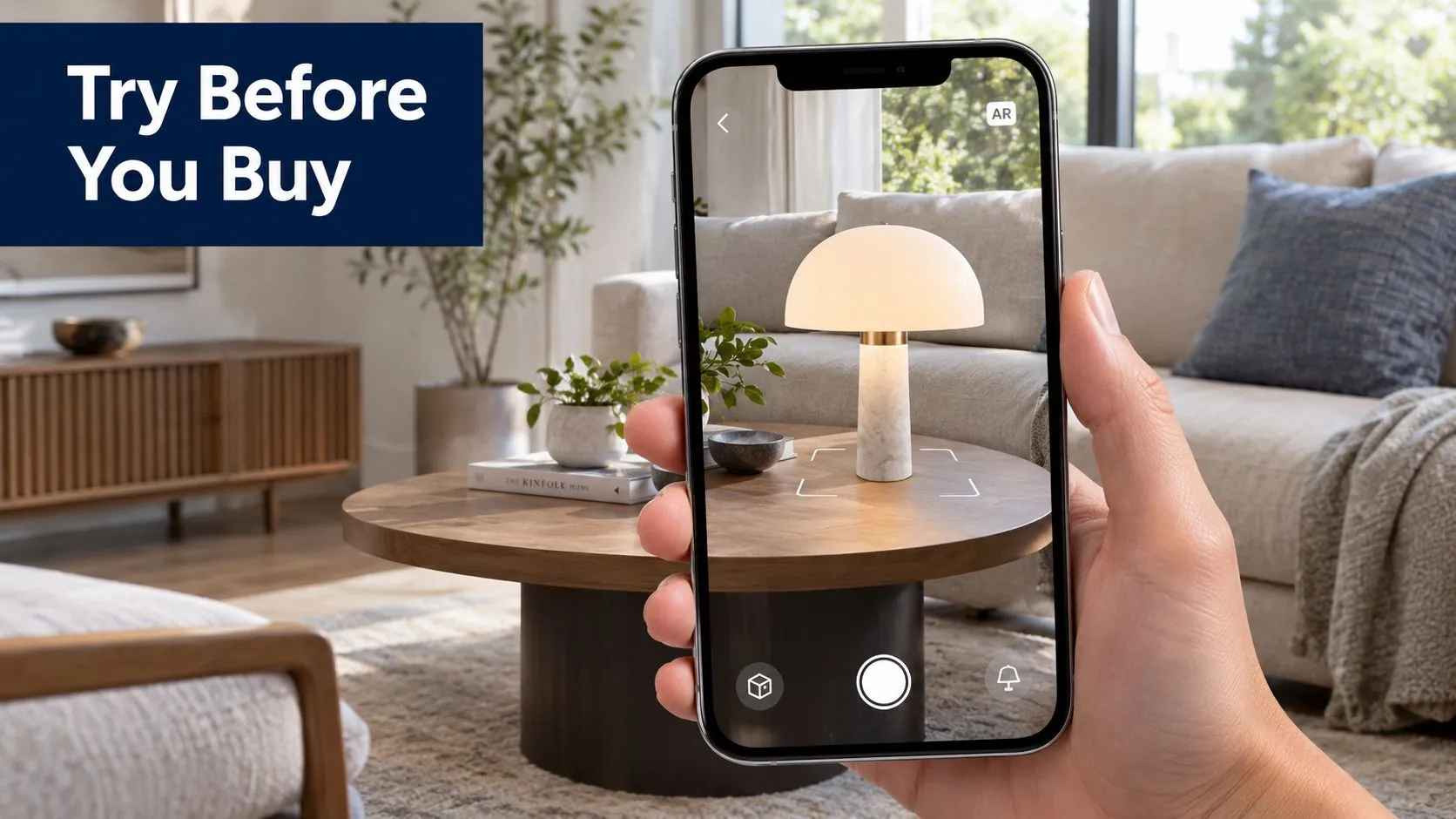
Product confidence
Furniture, homeware, fashion, beauty, and accessories can use AR to help customers assess a product before purchase. A lamp can appear on a side table. A sofa can be viewed against an existing room. A watch or pair of glasses can be positioned on the user's wrist or face. The value isn't the novelty of seeing a 3D object. It's the additional context. The user can inspect proportion, placement, colour, or style before committing. For a premium product, that can make the digital buying journey feel closer to a physical consultation. For content teams, the same 3D asset can support product pages, social posts, sales presentations, and in-store screens. Brands exploring visual product content may also find useful inspiration in jewelry product video AI, particularly where product presentation needs to combine close-up detail with a guided visual experience.Retail and exhibitions
At a stand, AR can give visitors a reason to pause and explore. A product configurator might let someone change materials or features. A technical demonstration could reveal hidden processes. A campaign could place a branded character or object into the visitor's surroundings for a photograph or short video. The physical environment still matters. Lighting, floor space, device handling, queue management, signage, and staff prompts all influence participation. A strong AR build includes the surrounding experience, not just the screen interaction.Advertising and storytelling
An advert can become an entry point into a short narrative. A printed pack might reveal animation. A social effect might transform a face or environment. A location-based trail could connect several scenes across a venue. This format works when the interaction extends the brand idea rather than decorating it. The user should understand what they're doing and why the action belongs to the campaign.Training and explanation
Complex products often need to be seen in layers. AR can show internal parts, operating sequences, assembly instructions, or technical annotations. A training user might examine a machine model, select a component, and follow a guided procedure. A sales audience could explore an industrial process without visiting a facility. The best use case is the one where spatial context carries information that flat media would struggle to communicate. More examples appear in this collection of augmented reality examples changing industries.Building Your AR Experience From Concept to Launch
A reliable AR build starts with the user journey, not the 3D model. The team needs to know who begins the experience, what they see first, what action they take, what the brand wants them to do afterwards, and what happens when the device or environment doesn't behave as expected.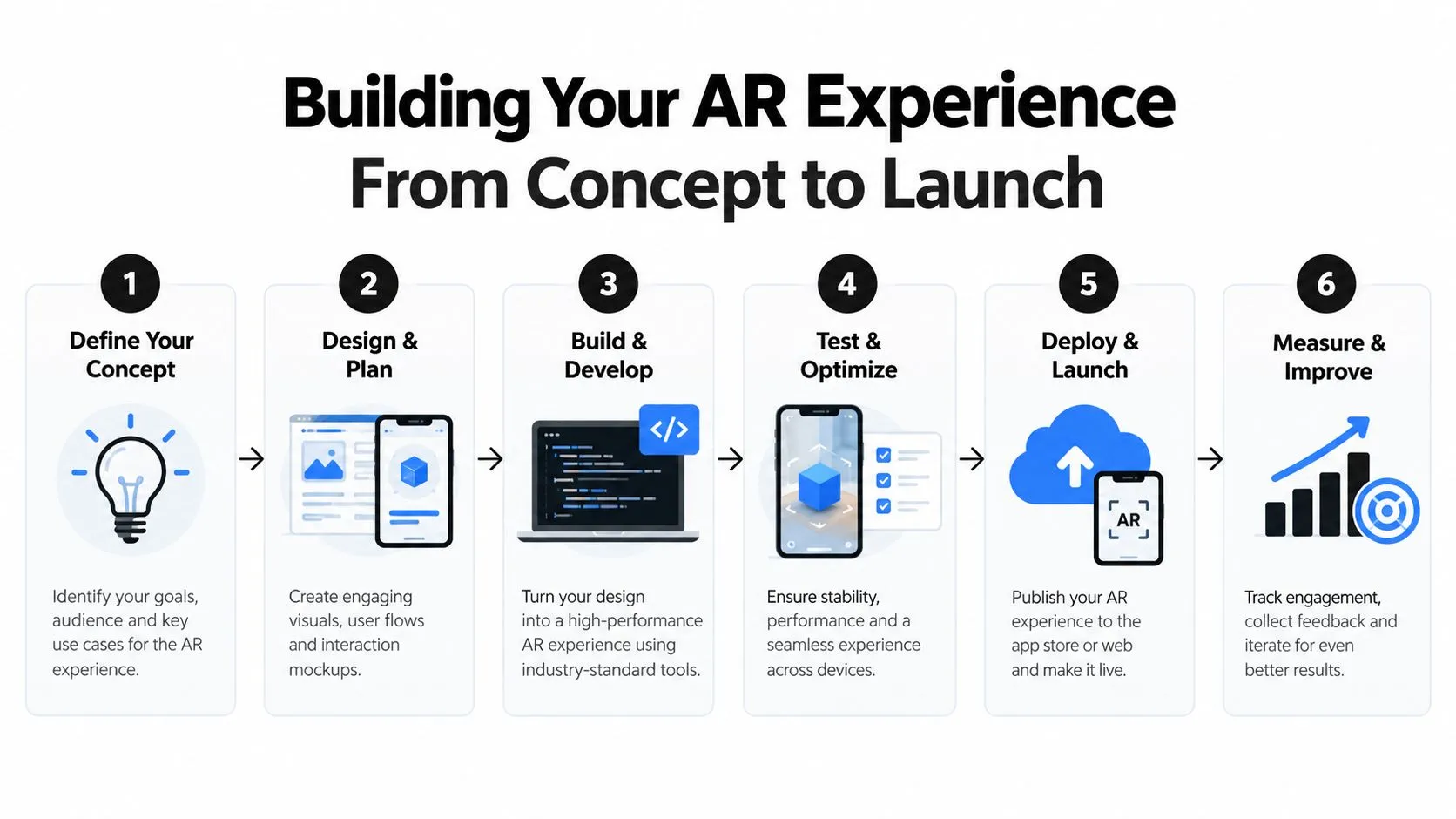
Begin with concept and UX
Write the experience as a short sequence of user actions. “Scan, place, inspect, select, share” is more useful than “create an immersive product story”. Define the channel early, because a social lens, WebAR experience, native app, and exhibition installation have different constraints. The team should also decide whether the experience needs persistent accounts, ecommerce links, CRM capture, content updates, or offline operation. Those decisions affect architecture before production begins.Create assets for the real device
A beautiful model can still fail if it's too heavy for a phone. Artists optimise geometry, textures, animation, lighting, and loading behaviour for the intended platform. Product accuracy matters, but so does performance. The asset pipeline may include new modelling, conversion from CAD, material authoring, rigging, animation, and multiple levels of detail. A model designed for a high-end film render won't automatically work in real time.Select the engine and tracking approach
Unity and Unreal can both support real-time interactive work, but the choice should follow the team, target hardware, visual requirements, plugins, and delivery route. The guide to AR development from concept to launch provides further context for planning the stages and dependencies. Tracking deserves an early test. A showroom with reflective surfaces, a crowded exhibition hall, or a dim room can produce different results from a controlled studio. Test the experience in the places where people will use it.Build integrations and fallback paths
AR becomes more valuable when it connects to the rest of the customer journey. A product view might lead to a retailer page. A configuration could pass selected options to a sales team. An exhibition interaction might invite a follow-up conversation. The fallback should be deliberate. If a user's device doesn't support a feature, offer a product viewer, video, web page, or guided demonstration rather than a dead end. Accessibility also needs planning, including readable text, captions, audio alternatives, clear instructions, and interaction that doesn't depend on one physical movement.Test, composite, and launch
QA covers tracking, device compatibility, frame rate, loading, touch targets, occlusion, animation, links, analytics, and recovery from interruptions. For productions that include composited visual effects, the UK standard SKSVFX14 was approved in 2024 and has an indicative review date of 2027, providing a documented workflow anchor for compositing in UK visual-effects production. The standard is listed by the UK standards finder. Launch isn't the end of production. Monitor where users stop, which products they inspect, and whether the intended next action occurs. Keep source assets organised so the team can update products, offers, environments, or language without rebuilding everything from scratch.How to Choose the Right AR Production Partner
The right partner depends on the complexity of the job. An in-house team may understand the brand thoroughly and move quickly on a familiar platform, but it may lack specialist 3D, tracking, optimisation, or technical-art skills. Freelancers can be effective for focused tasks, although the brand may need to manage several suppliers and connect their work. A full-service studio can take responsibility for concept, design, asset creation, development, testing, and delivery. That model suits campaigns where creative decisions and technical constraints need to stay closely aligned. It also gives the brand one production conversation rather than separate discussions about models, code, animation, and deployment.Questions for a shortlist
- •Relevant delivery: Can the partner show work that resembles your audience, channel, physical environment, or product complexity?
- •Technical ownership: Who handles device testing, performance optimisation, tracking, analytics, accessibility, and launch support?
- •Asset workflow: Will you receive reusable models, animations, textures, source files, and documentation where appropriate?
- •Integration experience: Can the team connect the experience to ecommerce, CRM, event systems, or content workflows?
- •Production clarity: Will the proposal identify assumptions, dependencies, review points, approvals, and fallback options?
Studio Liddell is one UK option for brands needing animation, XR design and development, Unity or Unreal production, and interactive content across campaigns, retail, exhibitions, and immersive experiences. Its wider production background includes 2D and 3D animation, games, TV advertising, multi-episode CGI, and XR work. A useful discovery call should end with a defined audience, user journey, platform recommendation, asset list, technical risks, measurement plan, and next decision. Be cautious if a supplier starts with spectacle but can't explain deployment, ownership, maintenance, or how the experience connects to a business action.
Measuring Success and Scaling AR for Long Term Growth
A useful AR measurement plan links user behaviour to the job the experience was built to perform. For a product preview, track product views, placement attempts, configuration choices, and the route to purchase. For an exhibition activation, examine participation, dwell time, repeat interactions, lead capture, and staff-assisted conversions. For a storytelling lens, measure completion, sharing, saves, and movement into the next brand touchpoint. Choose KPIs before production. Otherwise, teams often collect impressive interaction counts without knowing whether the experience changed consideration or supported a commercial outcome. Analytics should connect with retail, campaign, CRM, or event systems where consent and technical access allow it. The operating model matters as much as the initial build. The UK had 107 AR-platform companies headquartered there by August 2026, with London leading at 46, according to the UK augmented-reality platform company directory. The same source estimates the UK immersive-technology industry at £3.6 billion in 2026. That supply-side depth creates opportunity, but it can also leave brands with fragmented tools and uneven capability outside major hubs. The practical answer is to treat AR as a content and integration workflow. Define reusable assets, ownership, update processes, analytics access, accessibility checks, and support responsibilities before launch. Start with one focused use case, learn from real usage, then expand only where the evidence supports another release. The wider UK production market also provides a commercial backdrop. The animation, VFX, and post-production market is forecast to reach USD 3.94 billion in 2025 and USD 9.36 billion by 2030, implying an 18.91% CAGR over 2025 to 2030, according to Mordor Intelligence's UK market forecast. Those figures are projections, not guarantees, but they underline the availability of production capability for brands planning sustained visual content. --- Studio Liddell can help shape the user journey, create optimised 2D and 3D assets, develop AR and XR experiences, and connect production decisions to launch and measurement needs. Visit Studio Liddell to discuss your product, campaign, retail environment, or exhibition brief and arrange a focused scoping conversation.