Artem Special Effects & Top UK SFX Companies for Film & TV
You're on a tight prep schedule, the script is locked, and the director wants practical impact that reads clean on camera without turning the unit into a firefight. That's where the right UK special effects partner matters. If you're comparing artem special effects against other houses, the question isn't who does the most, it's who fits your brief, your location plan, and the level of risk you can carry. For producers balancing realism, safety, and logistics, the shortlist usually comes down to a few proven names with very different strengths. For broader production context, I'd also keep an eye on how practical and digital teams split the work, especially if you're already coordinating with a creative production partner like video marketing agency NYC.
1. Artem
Artem is the safest first call when a production needs breadth, continuity, and a crew that can handle more than one kind of practical effect without turning the job into vendor wrangling. The company's own history places it in the UK practical-SFX sector for more than 35 years, with roots in the BBC special-effects department and active bases in London, Glasgow, and Manchester Artem. That matters because projects rarely fail on imagination alone, they fail when the effect team can't scale, test, and turn up where the shoot is. Artem's visible credits tell you why producers keep returning to it. Independent industry coverage links the company to the Opening and Closing Ceremonies of the London 2012 Olympics, the Glasgow Commonwealth Games 2014, and titles including Paddington 2, T2: Trainspotting, Bodyguard, and Bridgerton Animation UK coverage of Artem. That mix says “nationally trusted” rather than “single-genre specialist.”
Where Artem fits best
The strongest case for Artem is when you want one supplier to cover pyrotechnics, floor effects, rigs, models and miniatures, prosthetics, animatronics, and weather simulation without stitching together half a dozen separate quotes. The company also reports physical special effects services that extend across film, television, commercials, and live events Artem. In practice, that makes it a strong fit for productions that need on-set operation as much as fabrication.
Practical rule: if your brief includes both stunt pressure and creative uncertainty, pick the house that tests hard before it ever turns up on set.
For a producer, the trade-off is clear. Artem gives you scale and a wide bench, but that kind of enterprise-grade capability can sit above boutique shops on price and may need longer lead times during busy commercial and TV periods. If you're comparing practical versus digital routing, this producer's guide to SFX vs VFX is worth reading before you lock the brief.
What makes it stand out technically
One benchmark case shows why Artem's process feels engineered rather than improvised. For a small bomb detonation stage effect, the team ran approximately 30 tests, measured peak sound pressure levels and debris velocity/travel distance on each pass, then finalised an effect using 25 debris mortars, 3 orange flash units, 2 sections of detonating cord, 2 jerk rigs, and 4 air mortars, all fired over 0.4 seconds by a computer-controlled system 4RFV feature. That's the kind of workflow you want when the effect has to feel dangerous without becoming dangerous.
2. Machine Shop
Machine Shop is the name I'd pull into a conversation when the brief leans heavily on mechanical rigs, animatronics, and repeatable in-camera gags. Their value sits in engineering discipline. They're the sort of team you bring in when a director wants the effect to behave exactly the same way on take 1 and take 18, not just look good in a concept deck. The brand position matters here too. Machine Shop operates as an Employee-Owned Trust, which usually signals continuity in craft teams and a culture that tends to protect knowledge inside the business. For producers, that often translates into fewer surprises during build and shoot phases, especially on projects where the rig is more important than the spectacle around it. Their website is direct about screen, experiential, and live work, so they're not narrowly tied to one format Machine Shop.
Best use cases and trade-offs
Machine Shop is strongest when the effect itself is the hero. Think electro-mechanical builds, animatronics, model-making, and practical units that need engineering oversight from design through operation. That kind of technical range is an advantage on action sequences, creature beats, and installations where the audience will be close enough to spot any cheat. The downside is predictable. Highly engineered builds can add lead time and cost, and if all you need is a few consumables or a simple one-off atmospheric effect, this may be more house than you need. Producers should also expect a more specification-led conversation, which is useful on demanding shows but can feel heavy for very small jobs.
How I'd brief them
Start with the movement, not the scenery. If you can define the timing, the load, the reset cycle, and what the camera must see, you'll get a much better response than if you ask for “something mechanical.” That's where Machine Shop earns its keep, because precision requirements suit their problem-solving culture. If your team is also planning virtual production or adjacent technical infrastructure, this virtual production equipment guide is a useful companion read before vendors start cross-checking specs.
3. Real SFX
Real SFX sits in the lane you want when the project is moving fast, the scenes are effect-heavy, and you need a house with clear TV and streamer pedigree. Their positioning is broader than one signature trick, with work spanning pyrotechnics, atmospherics, gimbals and rigs, prosthetics, soft props, and model-making. That mix is valuable on modern episodic shoots, where practical needs shift from day to day and the crew has to absorb last-minute script changes. What makes them especially relevant to producers is the balance between breadth and in-house engineering. If a sequence needs a custom rig, a physical gag, and a prosthetic element to land in the same shot, you want a team that can keep all three parts in sync. Real SFX has that sort of footprint, and the company's profile is tied to high-profile UK and US broadcasters and streamers, which usually means working under pace, notes, and delivery pressure.
When Real SFX is the right call
Choose Real SFX when the show has action density rather than just one or two standout moments. Broad service catalogues matter on long-running series because they reduce the need to manage multiple vendors across consecutive episodes. That doesn't just save admin, it reduces risk when continuity becomes a moving target.
A strong practical house should make the shot feel inevitable, not like a heroic exception.
The main trade-off is availability. Houses with strong tentpole and streamer demand can compress fast, so if you're chasing them for a big series, you need your schedule and script pages tight early. Pricing is also usually quote-led rather than transparent, which means the brief has to be sharp enough for them to price the engineering properly. In other words, the cleaner your breakdown, the cleaner the quote.
4. MTFX
MTFX is the obvious contender when the brief is dominated by weather, atmosphere, and event-friendly spectacle. If you need snow, rain, wind, fire, pyrotechnics, confetti, streamers, CO₂, water, or other mechanical effects, they're built for that lane MTFX. They also offer hire and sales of kit, which changes the conversation on lower-complexity jobs because not every production needs a fully operated package. That flexibility is what makes them useful across film, TV, and live contexts. The company's scale is especially handy when the brief spans outdoor sequence work or stadium-style environments where the effect needs to read at distance. For producers, that can be a major advantage because atmosphere is often what makes a scene feel expensive even when the shot list is modest.
Where MTFX wins
MTFX is a strong choice for fast-turnaround commercial shoots, live events, and productions that need a practical supplier with flexible engagement models. Supply-and-operate is ideal when you want the vendor to own the setup and execution. Dry hire can make sense if your in-house crew already knows the equipment and just needs the hardware. Their weakness, from a producer's point of view, is not capability so much as specificity. If your brief needs intricate animatronics or highly bespoke mechanical interaction, you may still need a separate specialist. MTFX is also a better fit when your schedule is stable enough to secure crew and equipment in advance, because short-notice regional bookings can create friction.
Practical producer note
Atmospherics are often under-scoped until the final tech recce, and that's where budgets start to wobble. Bring MTFX in early if weather simulation or crowd-facing effect volume is part of the visual language. If the sequence leans into real-time or hybrid delivery, this real-time VFX guide for producers helps frame how practical systems and real-time workflows can sit together without duplication.
5. Asylum Models & Effects
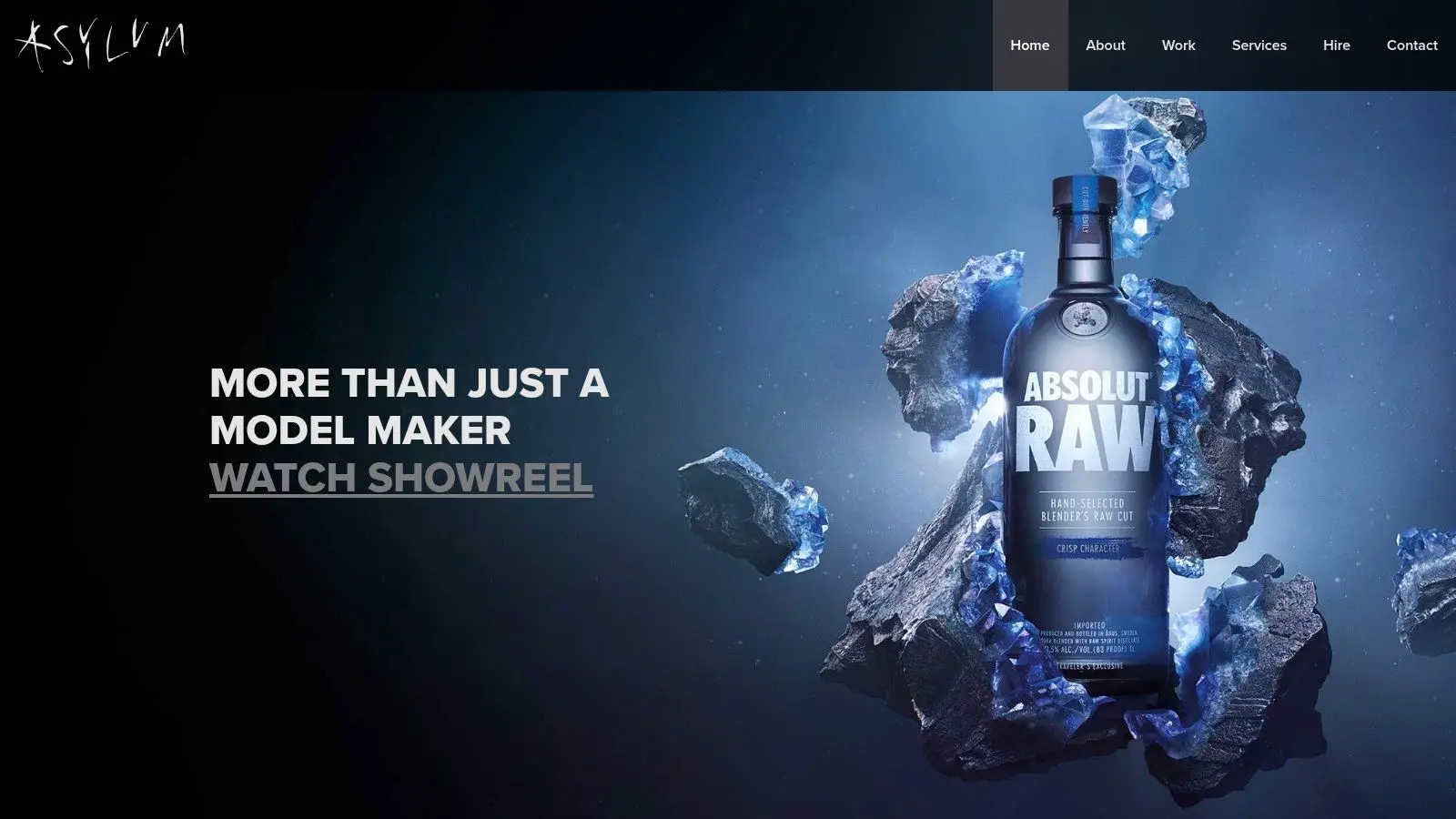
Asylum Models & Effects is the house I'd shortlist when the production needs precision miniatures, hero props, and bespoke physical builds more than large-scale pyrotechnics. They've been in the space since 1983, and their reputation comes from workshop craft rather than loud marketing Asylum Models & Effects. That usually means the work looks more resolved up close, which matters on close-up product shots, promo builds, and anything that will be lit cleanly on camera. Their service blend spans model and prop design and fabrication, including textiles and patterning, alongside a team that covers sculpt, digital, and traditional craft. That's important because the best miniature and hero-prop work often depends on how well those disciplines merge. A prop can look perfect in a still and still fail if the surface finishing, scale logic, or integration with camera movement isn't nailed.
Ideal project fit
Asylum makes the most sense on productions that blend screen work with experiential, retail, or installation needs. If a brand wants a physical object that can live both as set dressing and as a standalone display piece, they're in a strong position. Their cross-sector experience is a real advantage there. The drawback is straightforward. They are not the first choice if the brief is primarily about live fire, explosions, or a highly atmospheric rig package. They can fit into a larger SFX ecosystem, but they're better viewed as a craft-led model and prop specialist than a one-stop pyrotechnic vendor.
Producer takeaway
Use Asylum when the camera will get close enough to punish bad joins, poor paint, or sloppy scale logic. That's where their precision reputation pays for itself. If the brief is part screen, part retail, and part physical brand world, they can save you from splitting the job between a model maker and a separate finishing team.
6. FBFX
FBFX is the practical choice when special effects collide with costume engineering. Their focus is not on atmospherics or fire, it's on special effects costume and specialty wardrobe fabrication for film and television, including hard and soft suits, armour, helmets, stunt and crowd variations, and digital workflows like 3D scanning, photogrammetry, and dimensional printing FBFX. That puts them in a different category from the more floor-effects-led houses, and it's exactly why they matter on franchise work. For a producer, the value is simple. When the armour, creature suit, or hero costume needs to work in close-up, endure action, and still fit the actor properly, a costume-led SFX house reduces the handoff risk between design, fit, and shooting. FBFX's integrated digital-to-physical pipeline is particularly useful when the wardrobe needs to scale across hero, stunt, and crowd units.
Where they shine
This is the team you brief when costume and effect are inseparable. If the suit has to survive physical action, allow for repeat fittings, and still read as the same character language across units, FBFX is in its element. Their broad track record across major franchises and period or military builds reflects that kind of production pressure. The trade-off is focus. If your project needs pyrotechnics, rain, or on-set atmospherics, this is not the house to carry the whole effects brief. Bespoke suits also require scanning and fitting cycles, so the schedule needs to accommodate iteration.
A practical producer lens
I'd use FBFX when costume failure would become an on-set failure. That tends to be the case on stunt-heavy shows, creature-heavy stories, and anything where wardrobe is part engineering, part performance. They're the right call when the brief demands durability without sacrificing the shape language the director wants.
7. Snow Business
Snow Business is the specialist you bring in when winter is not a background detail but the point of the scene. Their offer covers light frosting, full blizzards, ice wax, snow dressing, and snowstorm SFX for film, TV, and events Snow Business. That narrow focus is exactly their strength, because snow work is one of those disciplines that looks simple until continuity, texture, and camera movement expose every shortcut. A dedicated winter-effects house solves problems generic SFX vendors often can't. They understand how snow reads under different light, how much coverage is too much, and how to preserve consistency when a sequence has to play across multiple setups. Their emphasis on sustainable materials and process also matters when a production needs repeatable winter dressing without creating unnecessary mess on location.
Why producers hire them
Snow Business is at its best on major features or TV projects where winter continuity is a core storytelling issue. Their film-unit scale crews and logistics make them credible for location or stage work, and their methodical approach keeps the effect coherent from wide shots to inserts. If the audience has to believe the cold, the ground cover, the wind, and the set dressing all belong to the same weather system, a category specialist makes life easier. The trade-off is obvious. Their scope is narrower than a full-service SFX house, so you'll probably still need other vendors for rigs, fire, or broader practical effects. Environmental control also matters, because snow effects always need planning around weather windows and set conditions.
Producer note
Use Snow Business when winter is a narrative asset, not a decorative layer. That distinction changes the level of scrutiny you should apply. If the scene has to hold up under close inspection, a dedicated specialist usually pays off in continuity and realism.
Artem Special Effects, 7-Provider Comparison
| Vendor | 🔄 Implementation complexity | ⚡ Resource requirements | 📊 Expected outcomes (⭐) | 💡 Ideal use cases | Key advantages |
|---|---|---|---|---|---|
| Artem | Medium, High, multi-discipline coordination, on-set operation | High, workshop, CAD/CAM, test stage, multi-base crews | Reliable, broad delivery ⭐⭐⭐⭐ | Single-vendor commercials, TV, film, museums, live events | 35+ yrs, in-house fabrication and test stage; reduces multi-vendor overhead |
| Machine Shop (MACHINESHOP) | High, engineering-led custom rigs & animatronics | Medium, High, specialist engineers, precision builds | Precise, repeatable mechanical effects ⭐⭐⭐⭐ | In-camera realism, animatronics, engineered gags | Employee‑owned continuity; strong mechanical heritage |
| Real SFX | Medium, High, complex rigs and pyrotechnic coordination | High, experienced crews for high-volume episodic work | Proven on marquee productions ⭐⭐⭐⭐ | Action-heavy scenes, large TV/streamer series | Award-winning delivery; broad effects catalog and sustainability focus |
| MTFX | Medium, modular atmospheric systems, fast deployments | Medium, High, large inventory, nationwide logistics | Fast turnaround for atmospheric sequences ⭐⭐⭐ | Commercials, outdoor/stadium sequences, large atmospherics | Flexible supply (operate or dry hire); depth in weather effects |
| Asylum Models & Effects | Medium, precision miniature and prop fabrication | Medium, specialist workshop, sculpt/digital crafts | High-fidelity miniatures and hero props ⭐⭐⭐⭐ | Miniatures, hero props, installations, experiential retail | Longstanding reputation for precision model-making and bespoke rigs |
| FBFX (Special Effects Costume) | Medium, High, scanning, fittings, integrated costume workflows | Medium, 3D scanning/printing, soft/hard costume workshops | Durable, integrated hero/stunt costumes ⭐⭐⭐⭐ | Projects where SFX overlaps with hero or stunt costuming | Scalable wardrobe production; seamless digital-to-physical pipeline |
| Snow Business | Low, Medium, focused winter-effect processes | Medium, specialist snow systems and location crews | Highly realistic, repeatable winter effects ⭐⭐⭐⭐ | Productions with central winter requirements (features, TV) | 40+ yrs specialist inventory; sustainable materials and continuity methods |
Choosing Your Ideal SFX Partner
The best special effects company depends on the exact problem you need solved. A production with fire, debris, and timed detonations needs a different vendor from a costume-heavy franchise, and both are different again from a winter sequence or an atmospheric live event. That's why artem special effects stands out so often in producer conversations. It offers the scale, testing discipline, and multi-discipline range that make it easier to cover complex briefs without fragmenting the job across too many suppliers. Artem is the name to start with when the brief spans several practical disciplines and you need a team that can handle design, workshop build, testing, and on-set delivery. Machine Shop is the sharper fit for mechanical rigs and precision animatronics. Real SFX fits heavy episodic work, MTFX handles weather and atmosphere, Asylum Models & Effects is the precision choice for miniatures and hero props, FBFX owns special effects costume, and Snow Business is the winter specialist when snow itself is the star. The right way to shortlist is to match the effect to the vendor's strongest discipline, then pressure-test availability, site access, and turnaround. Don't ask a specialist to be something they're not. A good producer gets better results by choosing the house whose day job already looks like the scene on the call sheet. If you're building a practical effects brief and want help deciding whether to go all-practical, hybrid, or vendor-led, Studio Liddell can help you shape the scope before you spend money on the wrong lane. Visit Studio Liddell to discuss the brief, compare options for practical and digital delivery, and start a production scoping conversation that's grounded in what your shoot needs.