Animation Art Direction: A Practical Guide for 2026
Animation art direction is the strategic framework that establishes visual identity across 2D, 3D, and XR productions before any asset is built. In the UK, that matters because the production base has grown around 570 animation programmes claiming tax relief by 2022, 23, with £166 million paid out in total, and the pipeline now has to hold together across broadcast, streaming, and immersive delivery. The common advice says art direction is mostly taste. That's the mistake. In a real studio, animation art direction is the set of decisions that keep style, production logic, and delivery requirements aligned when multiple teams are drawing, modelling, rigging, lighting, comping, and exporting at the same time.
What Animation Art Direction Actually Means
Art direction in animation isn't the final polish added after the “real work” is done. It's the system that defines how a project looks, feels, and behaves before the first asset is approved, so every department is building toward the same visual target. That distinction matters because animation pipelines are cumulative. If the silhouette language is unclear, the colour rules are inconsistent, or the lighting assumptions aren't documented, every downstream team improvises in slightly different ways. The result is usually not a bold artistic choice, it's a production that looks uneven from shot to shot.
A working definition
A practical definition is simple. Animation art direction is the creative and technical framework that translates a story, brand, or IP into repeatable visual decisions for character design, environments, motion, camera language, colour, and final delivery. That's why a strong art director asks questions before drawing mood boards. What format are we delivering, what engine or pipeline is involved, who's building the assets, and where can detail be simplified without hurting identity? In hybrid workflows, those questions are not secondary, they're the brief.
Practical rule: if a visual decision can't be repeated by the team building the assets, it isn't art direction yet, it's just inspiration.
The best studios treat this work as infrastructure. They don't just make things “look good”, they make sure the look survives production pressure, schedule changes, and platform shifts. That's also why a tool like browse the AI video generator is only useful when the visual system beneath it is already clear, otherwise you get faster output, not better direction.
Art Director Responsibilities Across 2D, 3D, and XR
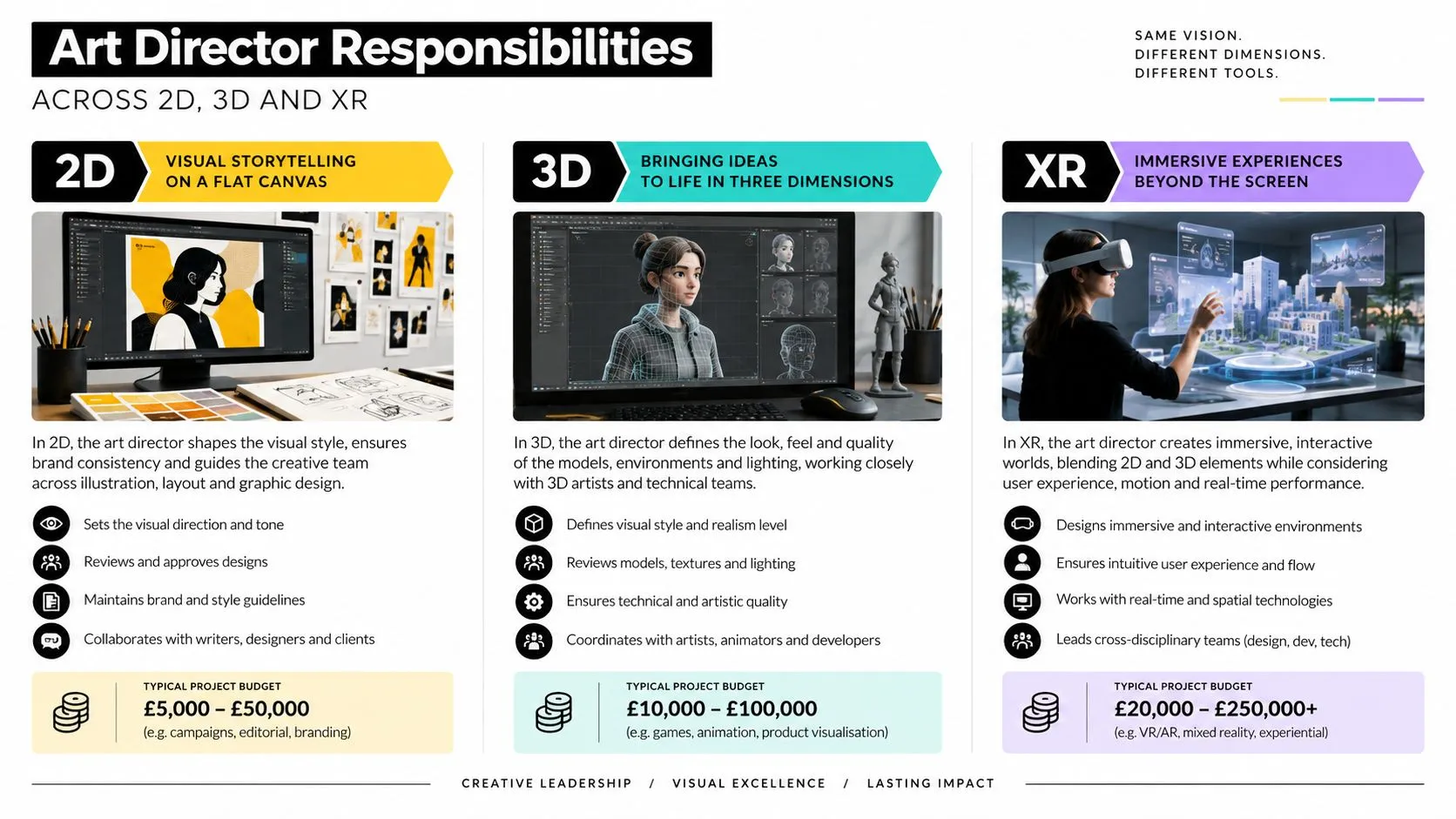
The job shifts depending on the medium. A 2D series, a CGI commercial, and an XR experience all need art direction, but they don't need the same kind of oversight or the same kinds of compromises.
In 2D, consistency is the battle
2D work lives or dies on line discipline, shape consistency, and turnaround control. The art director has to keep characters recognisable across multiple animators, scenes, and revisions, which means style guides must be specific about proportion, facial construction, line weight, palette, and background treatment. The problem is scale. When several artists are handling boards, clean-up, and colour passes, loose direction turns into drift. A character may still be “on model” in one shot, then feel oddly stretched or simplified in the next, even though nobody intended to break the design.
In 3D, the art director has to think like a pipeline lead
3D art direction goes beyond look development. The director is shaping how designs translate into rigging, lighting, rendering, and compositing, so decisions about clothing folds, surface detail, or facial complexity can't be made in isolation. That's why animated explainer work often benefits from a tighter visual system than teams expect. A useful discussion of how that clarity supports business communication can be found in how animated explainers convert B2B. In practice, the same principle applies across commercials, series, and branded content, the stronger the visual hierarchy, the easier it is for viewers to read the message.
In XR, space becomes part of the design brief
XR adds another layer. The art director isn't only designing frames, they're designing a navigable environment, and that means spatial composition, user attention, feedback cues, and interaction logic matter as much as palette or style. The work gets even more technical when teams use real-time tools. Studio teams that combine animation with engines and AI-assisted workflows, including approaches described in Studio Liddell's AI animation software guide, need art direction that survives variable camera positions, runtime lighting, and user-driven pacing. That's why XR direction often looks less like cinema and more like systems design.
Seven Core Principles Shaping Visual Identity
Strong visual identity comes from the way several choices reinforce each other. Style, colour, composition, lighting, mood, camera, and timing are not separate checkboxes, they're one interconnected control surface.
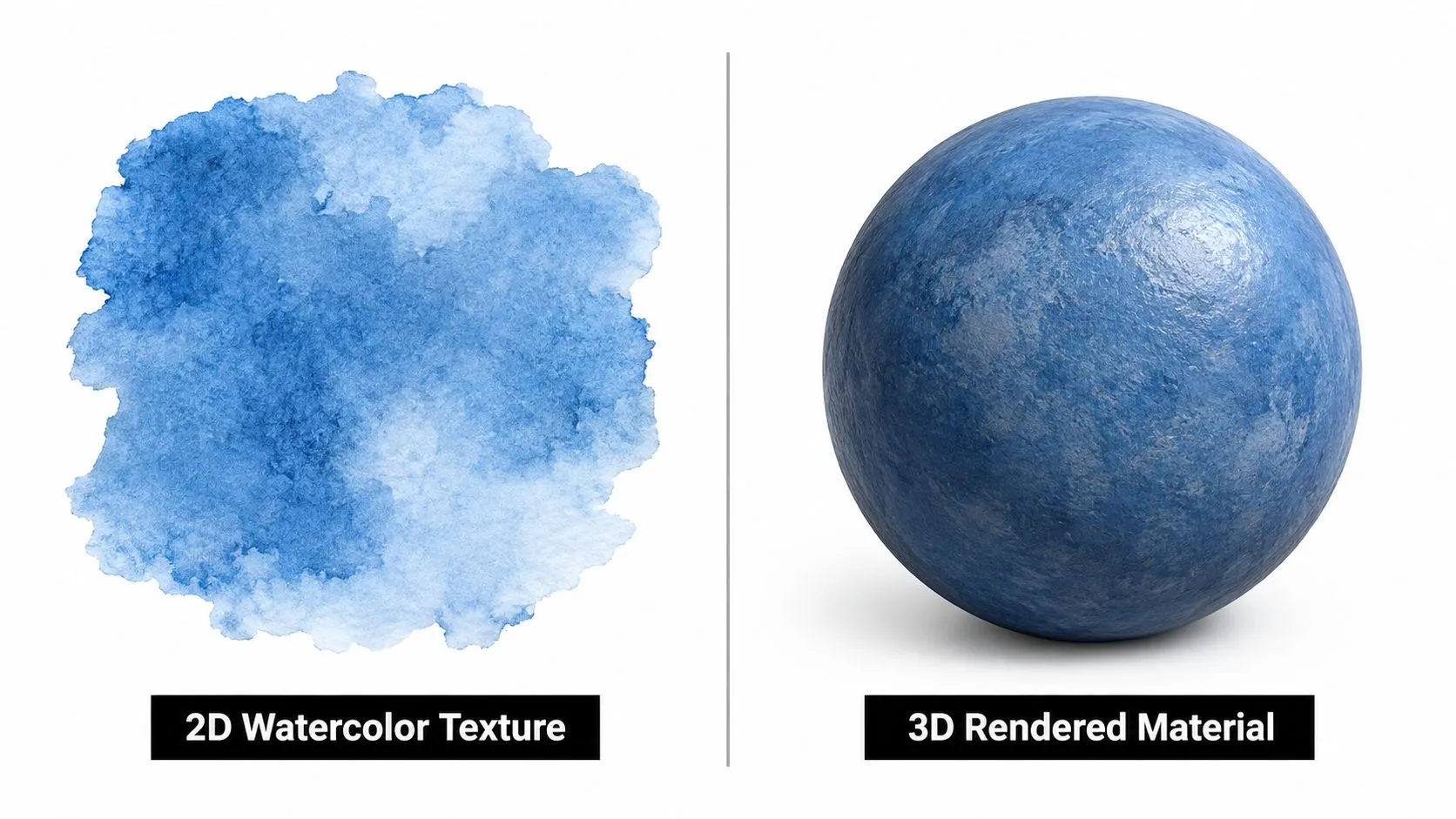
Style and colour set the rules first
Style establishes the visual grammar. It tells the team whether the world is angular, soft, textured, graphic, painterly, minimalist, or hyper-detailed, and colour gives that grammar emotional temperature and brand memory. The common mistake is to treat colour as decoration. In practice, it's structural. If the palette doesn't support hierarchy, the audience has to work harder to understand what matters in the frame, and that hurts both mood and readability.
Composition, lighting, and mood decide what the viewer feels
Composition is where attention gets controlled. It guides the eye through the frame, separates foreground from background, and makes room for action without clutter. Lighting and mood then lock in the emotional tone. A scene can carry the same characters and settings but feel entirely different if the contrast, shadow shape, and colour temperature shift. That's why good art direction doesn't solve mood with one isolated choice, it builds it from all of them at once.
The strongest frames usually look simple because several decisions are doing quiet work at the same time.
Camera and timing carry the rhythm
Camera language affects how a viewer understands power, distance, and pace. In animation, that includes lens feel, framing, motion path, and how often the camera moves versus holds. Timing is the last link in the chain, but it changes how all the earlier work lands. A character can be beautifully designed and still feel flat if the pacing is too rushed or too mechanical. If you want a useful comparison point between visual development and production workflow, RemotionAI's guide to video generation APIs is a helpful reference for how structured output depends on structured inputs.
Building Effective Style Guides and Deliverables
A style guide isn't a pretty PDF you make at the end for the client. It's a production document that keeps the look stable when multiple departments are moving at different speeds. That's why the old approach, one mood board, one model sheet, one “general vibe” deck, breaks down fast in modern production. Teams now need colour-management rules, asset naming conventions, material libraries, camera references, and lighting targets that can be applied in rendering, in real-time tools, and during review.
What belongs in the pack
The best documentation set separates creative reference from technical instruction. Model sheets should lock proportions and expression logic. Colour keys should define what belongs on character, environment, and effects layers. Look-development files should show surface finish, line treatment, and lighting response, not just a hero render. A complete style guide also needs rules for reuse. If one asset is going into a rendered sequence and another into a real-time environment, the document should say which details are mandatory and which can be simplified. Without that, the team spends time correcting avoidable differences between departments.
Why pipeline-aware documentation saves time
The practical advantage is rework reduction. Assets move better between engines, survive stereoscopic presentation more cleanly, and stay legible across different screen conditions when the guide was built with those endpoints in mind. That's especially relevant when teams need to translate concept art into a working production bible. A useful companion to that mindset is Studio Liddell's animation concept art guide for 2026, because it treats early visual decisions as production-ready assets rather than loose inspiration.
Useful test: if a junior artist, a senior lighter, and a client reviewer all interpret the same guide differently, the document isn't clear enough yet.
How Clients Should Collaborate with Animation Studios
The smoothest projects usually start with a brief that respects how animation is made. A client who knows the audience, format, deadline, and approval process gives the studio room to make strong decisions early, which is where the expensive mistakes are easiest to avoid. I've seen projects go well for one simple reason, the client didn't ask the studio to guess. They showed reference frames, named the delivery platform, explained the business goal, and accepted that the first round is for alignment, not final perfection. A better starting point is to assess whether the studio can talk about both taste and process. A portfolio with pretty images is not enough. You want consistency across formats, clear reasoning about technical constraints, and evidence that the team understands how design decisions affect rigging, lighting, revision cycles, and delivery. For clients comparing options, a practical checklist is more useful than a wishlist:
- •Brief quality: does the studio ask for audience, format, and delivery details, or just for “a fun concept”?
- •Pipeline fluency: can they explain how their design choices hold up in 2D, 3D, or real-time production?
- •Revision discipline: do they define review stages, or does feedback seem to happen ad hoc?
- •Communication rhythm: is there a clear point of contact, or does everything bounce between departments?
A useful benchmark for buyers is Studio Liddell's buyers' guide to choosing an animation studio, because it matches creative ambition with practical red flags like unclear scope and weak production planning. The biggest client mistake is asking for detail before the project has earned it. Good studios will show where detail helps the story and where it just inflates cost. That honesty is usually the sign you're working with professionals.
Case Studies Showing Art Direction Impact
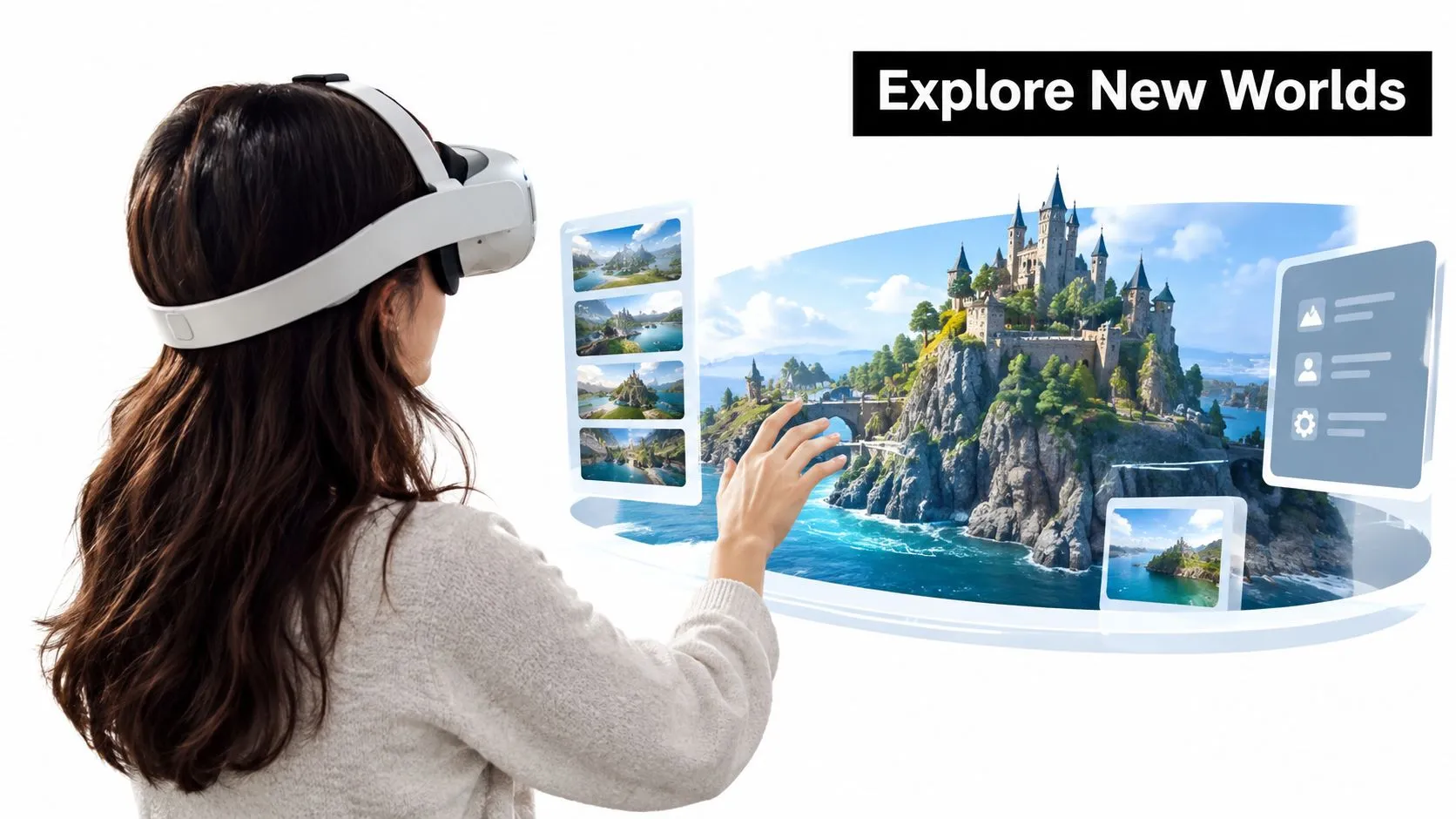
BooSnoo, Dance! Dance! Dance!, and Aurora each show the same truth in different ways, art direction changes what a production can carry emotionally and technically.
BooSnoo and continuity at scale
For children's IP, continuity is often the core challenge. The design system has to stay recognisable across series material and shorter digital pieces, which means every shape, expression, and colour choice has to survive reuse without feeling stale. That kind of work rewards restraint. The art direction can't depend on one-off hero moments, it has to give the team a stable language that holds across episodes and formats.
Dance! Dance! Dance! and the pressure of live environments
Mixed-reality event work adds throughput pressure to aesthetic pressure. The visual design has to be appealing, but it also has to perform under time limits, audience movement, and live technical constraints. That's where art direction acts like a traffic system. It helps direct attention, keep interfaces readable, and make sure the experience still feels deliberate when the event floor is busy and the pacing is unforgiving.
Aurora and the value of a unified vision
Immersive shorts ask for a different kind of discipline. Story, performance, spatial sound, and visual style all have to support one another, or the piece feels fragmented even if each component is strong on its own. In the strongest work, the art direction doesn't decorate the narrative, it frames how the audience enters it. That's what separates a technically competent production from one that stays with people. --- If you need animation art direction that connects concept, production, and delivery without losing the creative intent, Studio Liddell works across 2D, 3D, motion graphics, and XR with that pipeline-first approach. Bring them a brief, a script, or a rough treatment, and ask how they'd turn it into a visual system that your whole team can build.