7 Top Game Like Pokemon Go
A studio greenlights a location-based game because Pokémon Go made the category look inevitable. Six months later, the team is wrestling with the harder realities: weak session density outside city centres, expensive live ops, and an IP fantasy that does not naturally fit walking, collecting, or map control. That is the essential starting point for evaluating any game like Pokémon Go in 2026. Pokémon Go proved that location, collection, and habit loops can reach a mass audience far beyond traditional core players. Its early performance in the UK, as noted earlier, showed how quickly the format could convert curiosity into daily routine. For developers and IP holders, the lasting lesson is not nostalgia. It is product-market fit between the physical world, the core mechanic, and the reward cadence. Smartphone-first design remains the only credible route to mainstream reach. Analysts at Mordor Intelligence found mobile devices held 59.40% of global augmented reality games market share in 2025. Teams that chase wearables or headset-first concepts too early usually trade distribution for novelty, which is a poor bargain unless the business goal is brand activation rather than scaled retention. Execution lives or dies on spatial systems. Teams need sharper market insights with geospatial data because spawn density, route friction, dwell time, safety, and network reliability directly shape retention. Studios that want a stronger grounding in production realities should also review this guide to augmented reality game development and immersive play production. The games below are not just alternatives for players. They are operating models. Each one shows a different answer to the same commercial question: what kind of location-based loop can retain users, support live content, and justify ongoing production spend for a specific audience or IP?
1. Pikmin Bloom
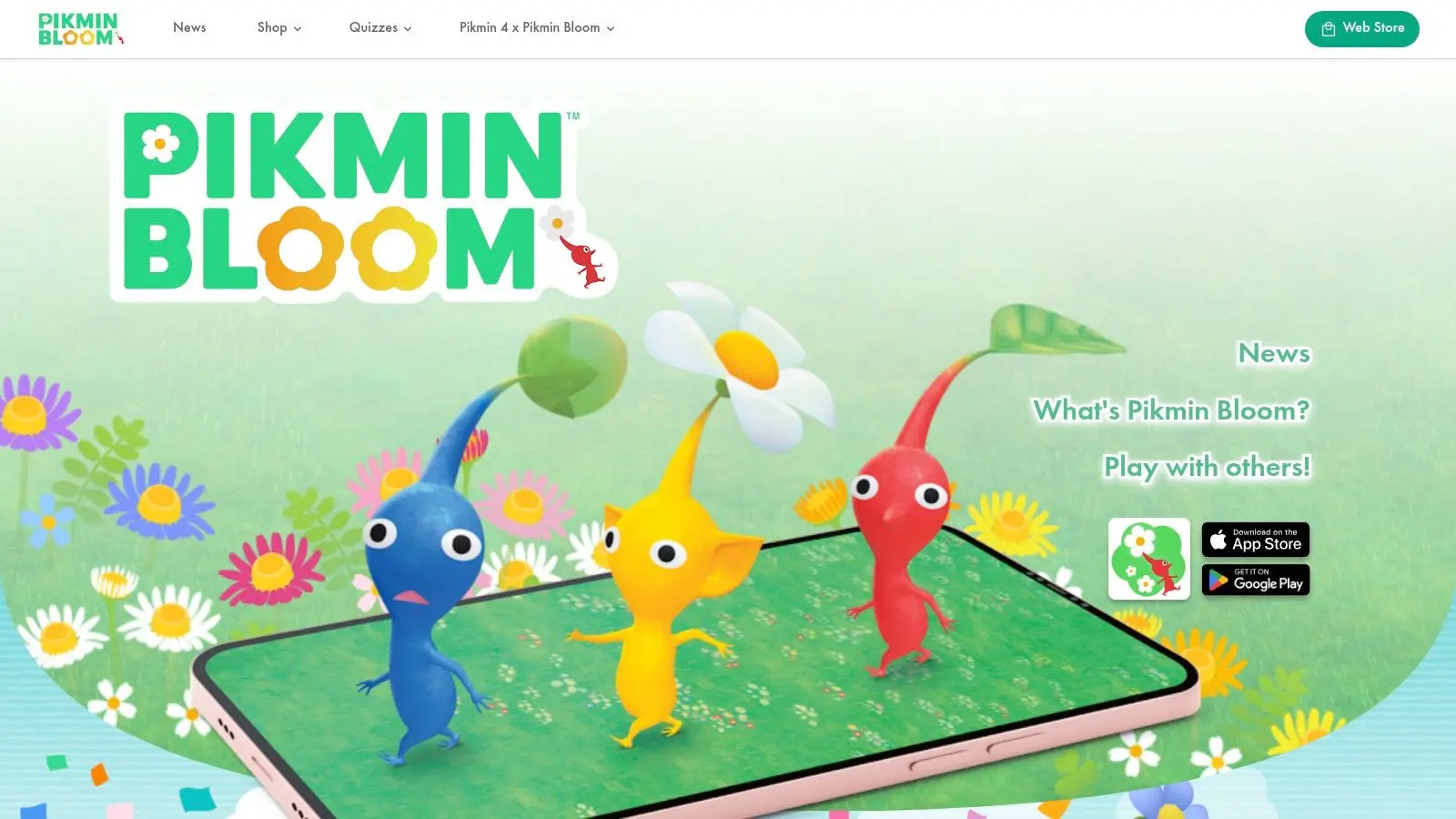
Pikmin Bloom is the gentlest game like Pokémon Go on this list, and that's exactly why it works. It strips out the confrontation-heavy loop and turns everyday movement into progress. Steps grow Pikmin, expeditions create light tasking, and flower planting leaves a visible social trace on the map. That makes it a strong lesson in friction reduction. Players don't need a raid schedule, combat mastery, or a dense local community to feel momentum. For developers, that's useful if the product brief prioritises wellness, family play, tourism, or low-pressure retention over competitive depth.
What it teaches about soft live ops
Pikmin Bloom's event design is the key production takeaway. Seasonal themes, collection tasks, and occasional ticketed experiences refresh the loop without forcing the core system to become something it isn't.
- •Best fit: Lifestyle-led brands, family IP, and public space activations where walking itself is the hero behaviour.
- •Monetisation model: Coins, bundles, storage expansion, and event tickets. That keeps spend tied to convenience and participation, not brute-force power.
- •Main limitation: If your audience wants mastery, buildcraft, or meaningful PvP stakes, this loop will feel thin quickly.
Practical rule: If the fantasy is calm, the economy has to stay calm too. Hard pressure systems can break a walk-first experience.
It also runs well across a broad range of phones, which matters more than many teams admit in greenlight discussions. Mobile-first optimisation remains the commercial centre of AR gaming, and UK developers planning similar products should think carefully about battery draw, GPS polling, and camera dependence. Studio teams exploring that side of production can get a useful grounding in augmented reality games and immersive play pipelines. The downside is obvious. Progress can feel slow outside event windows, and the gameplay loop is lighter on “gamey” goals than Pokémon GO. But that's not a flaw if the product strategy is built around habit, not conquest.
2. Monster Hunter Now

Monster Hunter Now answers a question many licensed game teams struggle with. How do you preserve a heavyweight franchise fantasy inside short mobile sessions? Its answer is smart. Compress the hunt, keep the weapon identity, and build progression through gear crafting rather than pure collection. That gives the game sharper moment-to-moment action than most Pokémon GO alternatives. Players still move through real space, but the emotional payoff comes from execution and build progression, not just map discovery.
Why the IP translation works
Capcom's core fantasy survives because the game protects recognisable verbs. Hunt, dodge, break parts, craft, upgrade. It doesn't try to flatten Monster Hunter into a generic map wrapper. For developers and IP holders, that's the key lesson. A location game based on an existing franchise shouldn't just borrow characters. It needs to preserve the franchise's reason for being.
- •Where it wins: Meaningful weapon and armour progression, strong action feel, and regular live ops.
- •Where it pushes too hard: Scarcity systems, event pressure, and purchase nudges can feel aggressive if balancing slips.
- •Who should study it: Teams adapting action IP that can't survive on collection alone.
Some events also favour dense urban play. That's an unresolved issue across the category. UK-specific evidence on how Pokémon Go-like alternatives perform in rural areas versus cities is still limited, despite Office for National Statistics context highlighted in this UK market gap analysis. That matters if your design depends on population clustering to make encounters or co-op feel alive. For producers, the deeper takeaway is structural. If you're trying to turn a franchise into a location product, mechanics translation comes before content volume. That principle sits at the heart of good game design and development strategy for commercial products.
3. Ingress
Ingress still does something most location games don't even attempt. It makes coordination the game. Players don't just collect from the map. They organise, claim portals, link territory, and build regional operations between two global factions. That makes Ingress less accessible than Pokémon GO, but strategically more interesting. It proves that real-world geography can support deep systems play, not just lightweight encounters.
The strongest location games don't just use places as backgrounds. They turn places into strategy.
A better model for community-led depth
Ingress benefits from mature player-run communities, global events, medals, and the optional C.O.R.E. subscription. But its real strength is social architecture. The game asks players to communicate, plan routes, defend assets, and think beyond individual sessions. That creates high commitment and a steeper learning curve. It also means the game works best where an active local faction network exists. If you launch a similarly social title without community seeding, the map can feel empty even when the mechanics are solid.
- •Best use case: Competitive systems, faction warfare, civic exploration, and event-led regional play.
- •Weak point: New player onboarding is demanding.
- •Commercial lesson: Subscription perks can support a live service without replacing the core strategic loop.
For studios designing installations, mixed reality attractions, or city-scale experiences, Ingress is also a reminder that place-based systems need operational thinking as much as game design. Throughput, route planning, clustering, and social coordination all matter in location-based entertainment production, whether the format is mobile AR or venue-led XR. Ingress won't appeal to every player looking for a game like Pokémon Go. But for teams interested in long-tail engagement, it remains one of the category's clearest examples of systems depth over mass-market softness.
4. Jurassic World Alive
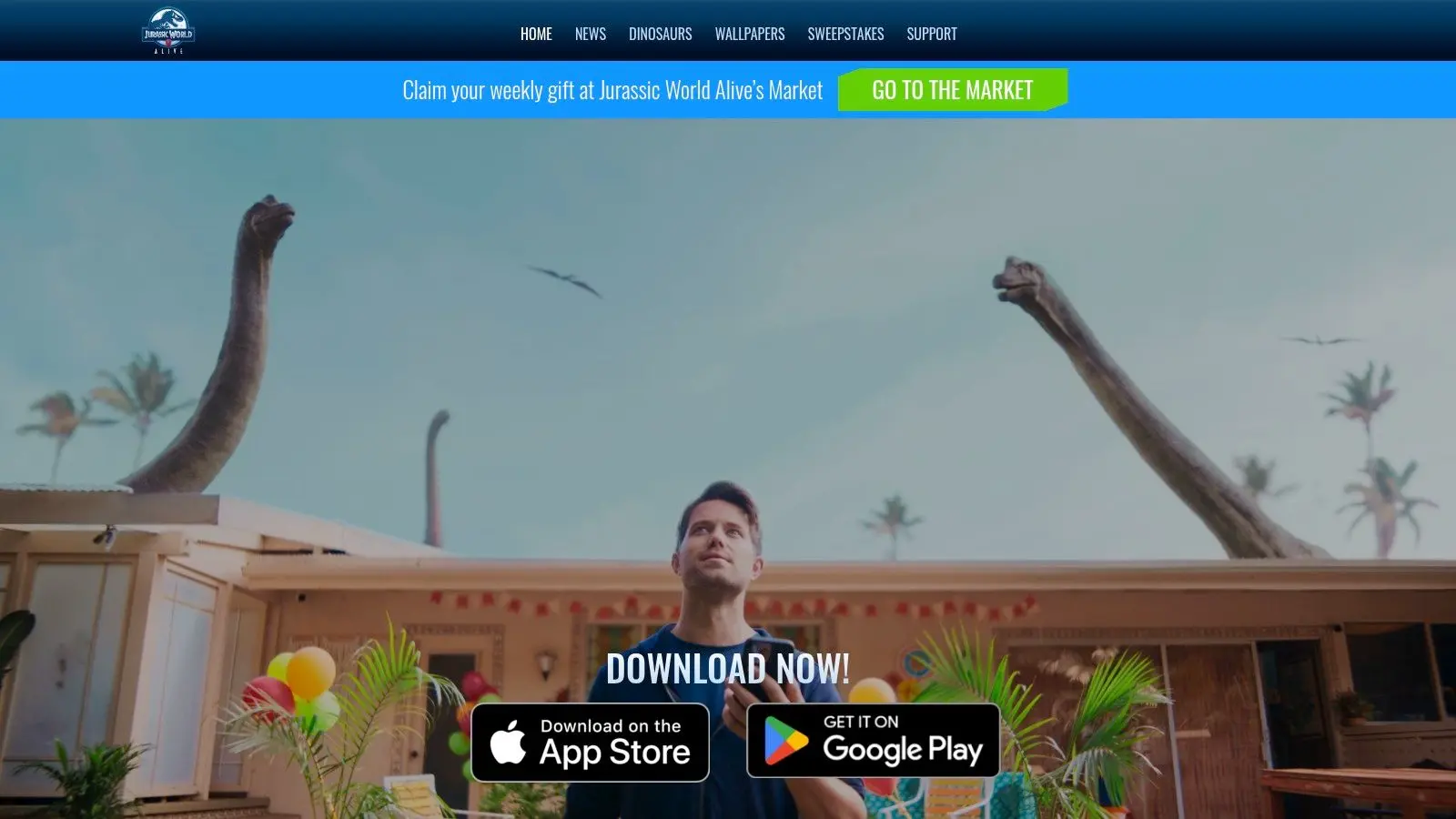
Jurassic World Alive is what happens when a location game leans hard into franchise appetite and collection compulsion. Dinosaurs spawn across the map, DNA gathering feeds progression, hybrids add a crafted ownership layer, and PvP creates a more explicit endgame than many AR peers. From a product perspective, the drone mechanic deserves attention. It slightly extends reach beyond immediate physical proximity, which helps reduce frustration in stop-and-start play. That sounds small, but it changes the feel of engagement. A game doesn't always need players standing exactly on top of a point of interest to create satisfying interaction.
Strong IP fit, heavier commercial pressure
Jurassic World is an excellent fit for map-based discovery because the source fantasy already supports pursuit, rarity, and creature excitement. The hybrid system also gives collection a second life. Players aren't just finishing a Pokédex-style checklist. They're converting gathered resources into something new. That said, the monetisation is assertive. Passes, VIP layers, and rotating bundles create pressure around best rewards and event participation. For some teams, that's a viable revenue structure. For others, especially those working with family-facing or educational brands, it would be the wrong tone.
- •Production lesson: Creature-driven IP works best when collection feeds transformation, not just ownership.
- •Design lesson: Slightly extending interaction range can make real-world play feel more forgiving.
- •Business lesson: Paid tracks can lift revenue, but they also shape how fair the game feels.
If you're benchmarking this title, watch how every system points back to the brand promise. You're not just finding dinosaurs. You're building a fantasy of genetic control and escalating prehistoric power. That coherence is why the game feels more deliberate than many licensed copycats.
5. Orna The GPS RPG
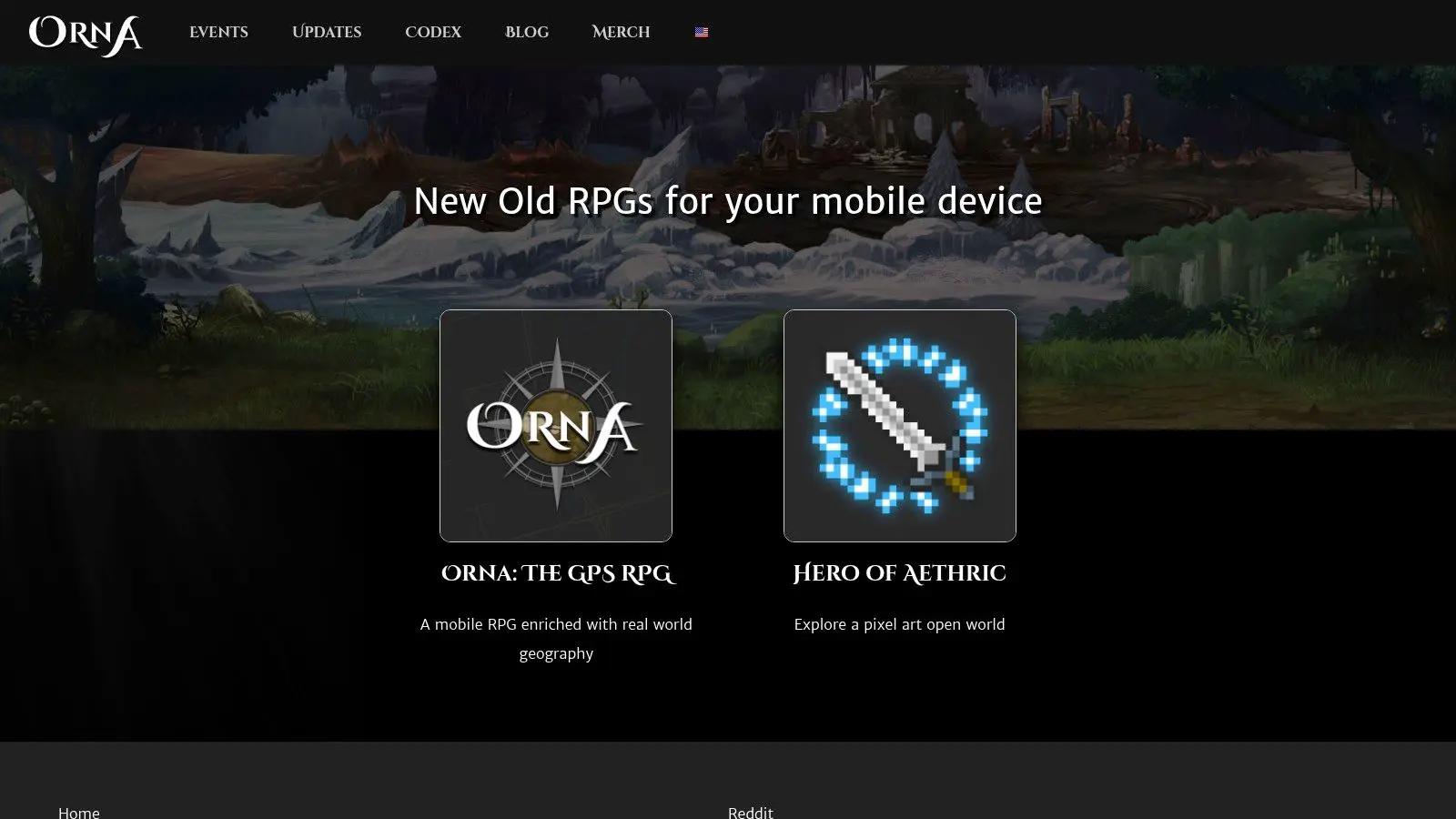
Orna takes the opposite path from polished AR spectacle. It looks functional, leans into pixel-art nostalgia, and puts almost all of its value into systems depth. For the right audience, that's a strength. This is the best example on the list of a location game built for RPG players first and walkers second. Classes, loot, bosses, raids, kingdoms, and buildcrafting drive the experience. GPS adds context and texture, but the game's heart is progression design.
The niche-first model
Orna is useful because it shows that a game like Pokémon Go doesn't need broad lifestyle appeal to survive. It can win by serving a narrower, more committed audience very well. Its monetisation posture also matters. Optional cosmetics and support purchases tend to create better trust when the game's identity depends on fairness and long-term character investment. If players feel the build meta is for sale, the entire RPG proposition weakens.
Build depth can outperform visual flash when the audience wants mastery, not novelty.
There's another angle UK teams shouldn't ignore. Questions around offline or reduced GPS dependency remain underserved in the category, especially for users in weaker coverage areas. That gap is relevant because Ofcom-linked discussion of rural UK coverage issues and GPS game avoidance is highlighted here. Orna often enters that conversation because its presentation is lighter and its loop can feel more tolerant than camera-heavy AR products, even if recent comparative analysis is still limited. The trade-off is obvious. Casual players may bounce off the old-school grind and presentation. But if your studio is building for hobbyist depth, Orna is one of the clearest proofs that map-based design doesn't have to chase mainstream AR aesthetics to be commercially credible.
6. Geocaching
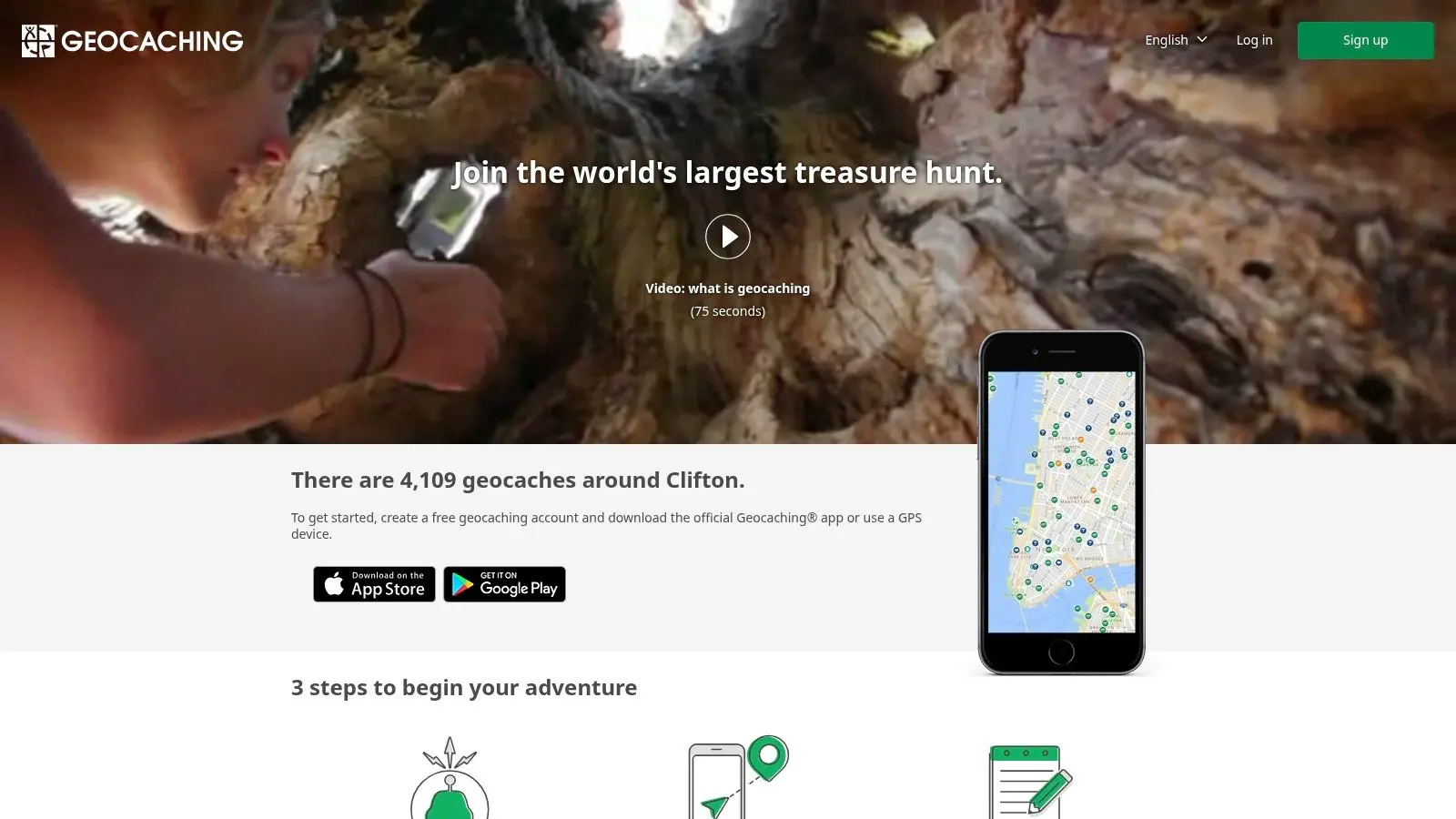
Geocaching isn't an AR game, but it belongs in this conversation because it solves a problem many AR products still struggle with. It gives players a reason to care about the journey itself. The reward isn't flashy rendering or combat. It's discovery, local knowledge, and the social pleasure of finding something hidden in the physical world. For developers, Geocaching is a reminder that location design existed long before AR overlays. Community-placed caches, logs, hints, and route planning create a durable activity loop because they tap into curiosity rather than novelty alone.
Why it still matters to product teams
The platform works well for families, schools, tourism, and organised outdoor exploration. It also handles geography flexibly. A city centre, a woodland route, and a heritage site can all support meaningful play if the content is maintained properly. That last point is important. Experience quality depends heavily on local cache density and upkeep. In production terms, this is a content operations problem. Place-based products live or die on map hygiene.
- •Best strategic takeaway: User-generated location content can scale discovery efficiently.
- •Operational warning: Community content always needs moderation, maintenance, and clear quality standards.
- •Commercial note: Premium tools and offline planning features make sense because they support serious usage rather than bypassing the core activity.
Geocaching also shows the value of reduced dependence on high-end AR presentation. When connectivity, hardware variability, and rural usability are concerns, simpler interaction models can widen the practical audience. That's especially relevant in UK regions where coverage quality can shape whether a location product feels usable day to day.
7. Street Tag
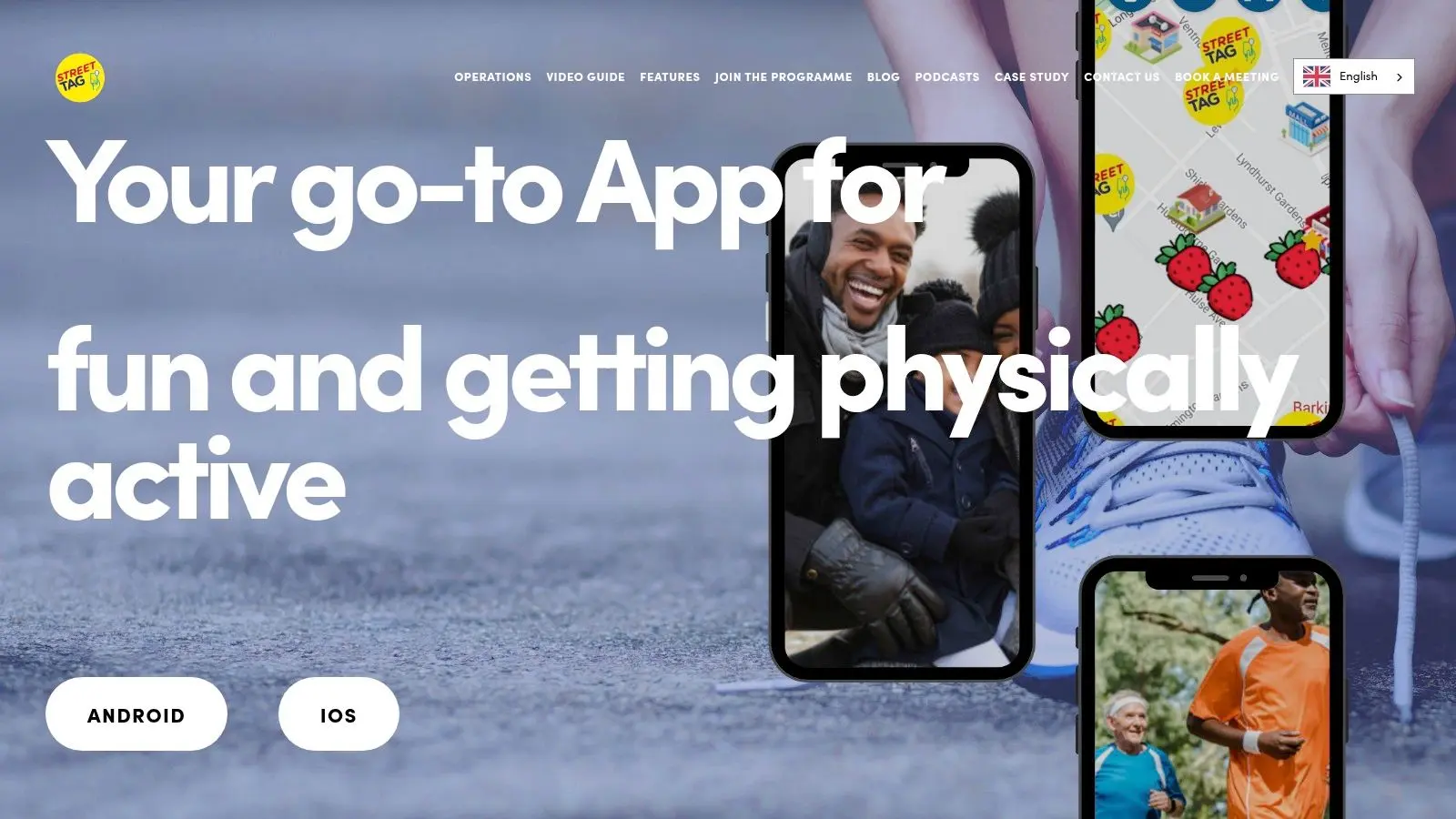
A council wants to increase walking, a school wants a safer competition loop, and a local partner wants measurable participation instead of vanity installs. Street Tag is built for that brief. For UK developers, this is one of the clearest examples of a location game designed around programme delivery rather than franchise fantasy. Its mechanics are straightforward. Players move through real places, collect virtual tags, scan QR points where relevant, join teams, and push leaderboard progress tied to local initiatives. The product design serves administrators as much as players. That makes Street Tag useful to study from a production and commercial perspective. It shows how location play can support councils, schools, public health campaigns, and sponsors without the cost structure of a content-heavy AR title. There is less pressure to build deep character systems, combat balancing, or expensive 3D encounter content. In return, the product has to be very good at partner onboarding, area setup, reporting, safeguarding, and incentive operations. The trade-off is reach. A game with borough-level deployment can perform well in active regions and feel thin outside them. For studios, that means retention depends less on universal map density and more on local programme quality, prize support, and operational follow-through. For IP holders, the lesson is equally practical. Location-based play does not always need to start with a mass-market entertainment app. In some cases, the stronger entry point is a managed civic or education product where branded goals, local events, and administrative control matter more than spectacle. Street Tag's value as a Pokémon Go comparison is structural, not thematic. It proves the genre can work as a service layer for institutions, not only as a consumer hit. That is a useful model for any team assessing whether their next location-based product should chase scale first or win through tightly defined regional partnerships.
7 AR Games Comparison
| Title | Implementation (🔄) | Resources (⚡) | Expected outcomes (📊) | Ideal use cases (💡) | Key advantages (⭐) |
|---|---|---|---|---|---|
| Pikmin Bloom | Low, ambient AR + pedometer integration | Low, Med: backend events, art, store | Steady daily engagement; casual retention | Daily activity, family-friendly outdoor play | Low-friction daily loop; wide device support |
| Monster Hunter Now | Med, High, real-time short-session combat & group hunts | High: real-time servers, combat tuning, live-ops, IP coordination | Strong short-session engagement; progression-led monetisation | IP-driven action on-the-go; event-driven spikes | Faithful franchise action; meaningful progression |
| Ingress | High, persistent faction systems & large-scale events | High: global ops, community tools, event delivery | Deep long-term retention for hardcore players | Competitive, strategic team play and coordination | Rich strategy; strong community ownership |
| Jurassic World Alive | Med, map spawns, drone mechanic, PvP systems | High: PvP backend, content pipeline, IP licensing | High collection engagement; revenue from passes/VIP | IP collectors, PvP enthusiasts, hybrid crafting | Strong IP appeal; hybrid creation; extended interaction (drone) |
| Orna: The GPS RPG | Med, turn-based combat, many classes and progression systems | Med: content creation, balance, community features | High depth retention among RPG fans; fair monetisation | Classic RPG fans, theorycrafters, solo & co-op play | Deep progression; non‑P2W reputation |
| Geocaching | Low, Med, UGC mapping, search and logging features | Low, Med: mapping infra, community moderation, premium tools | Long-lived hobbyist engagement; educational/outdoor impact | Families, schools, explorers, outdoor discovery | Massive UGC base; global coverage |
| Street Tag | Low, Med, geo-tagging, background tracking, admin dashboards | Med: council partnerships, prize logistics, tracking tech | Strong local adoption; measurable activity increases | Public-health programmes, schools, local engagement campaigns | Local partnerships and real-world incentives
Your Turn Building the Next Location-Based Hit
The strongest titles in this category don't all copy the same formula. Pikmin Bloom reduces friction and turns walking into a calm ritual. Monster Hunter Now preserves action-IP identity inside short outdoor sessions. Ingress proves that geography can support strategy-heavy social systems. Orna shows that niche depth can beat mass-market gloss when the audience cares about mastery. For developers, the practical takeaway is clear. Start with the behaviour you want in the physical world, then build mechanics, content cadence, and monetisation around that behaviour. Don't start with a map and hope the rest will follow. Location products succeed when movement, reward, and context reinforce each other. For IP holders, the lesson is even sharper. The best adaptations don't just reskin PokéStops. They translate the source fantasy into place-based verbs. Hunting, planting, scanning, collecting, defending, collaborating, or exploring all create different production demands and different audience expectations. The execution side matters as much as the concept. Smartphone-first delivery is still the practical centre of the category, and UK teams need to account for device variability, GPS accuracy, battery use, route design, and regional coverage constraints from the earliest prototype. Creative ambition has to survive operational reality. That's where an experienced production partner can change the outcome. Studio Liddell brings together AR development, real-time animation, XR production, and game pipeline expertise across commercial, entertainment, and immersive formats. Whether you're extending an existing brand into the physical world or shaping a new original concept, the right team can pressure-test the idea before it becomes an expensive dead end. If you're already exploring technical tooling, prototyping workflows, or AI-assisted production support, it's also worth reviewing how Claude AI for app development fits into modern digital product planning. Book a production scoping call with Studio Liddell to assess the concept, the mechanics, and the delivery path before you commit full production budget. --- If you're developing a location-based game, extending an IP into XR, or need studio-grade animation and real-time production support, talk to Studio Liddell. Their team can help scope mechanics, prototype player flows, and build a production plan that stands up commercially as well as creatively.