16 Pillars of the Best Cartoon TV Show Productions
Ever wondered what elevates a series to become the best cartoon TV show? It's more than just a great idea. Behind every beloved show is a complex framework of technical artistry, strategic planning, and production mastery. From initial concept to multi-platform success, certain principles and capabilities are non-negotiable. This guide explores the 16 essential pillars, from animation services and immersive production to case studies and strategic foresight, that top studios leverage to create broadcast-quality content that captivates audiences and builds lasting intellectual property. For brands, producers, and creators, understanding these elements is key to commissioning work that truly stands out. Understanding the foundational elements that contribute to a hit cartoon includes embracing the innovative technologies reshaping the industry. Tools like game-ready mesh tools are part of a broader shift toward efficient, high-quality production pipelines that studios depend on to deliver polished results on tight schedules. Whether you're a brand seeking animation services, an entertainment company developing new IP, or a marketing agency requiring design and branding support, this guide breaks down what separates forgettable content from enduring success. Each pillar addresses a specific capability or strategic consideration, giving you a clear framework for evaluating production partners or planning your next project.
1. 3D Animation Services UK: Studio-Quality Production from Pitch to Delivery
The foundation of any Best Cartoon TV Show contender lies in a studio's core animation capability. This pillar covers end-to-end production proficiency in 3D, from initial pitch through to final delivery. A studio with a broadcast pedigree since 1996 demonstrates its ability to handle complex series, commercials, and trailers, ensuring consistent, studio-quality results every time.
What This Means in Practice
Studios offering full-spectrum 3D animation services manage the entire production pipeline internally. This includes the brief, previz, lighting, and compositing stages. For brands and producers, this eliminates the friction of coordinating multiple vendors.
A unified pipeline from brief to broadcast delivery reduces revision cycles and keeps creative vision intact across every frame.
When to Prioritise This Approach
- •Series production requiring consistent character performance across episodes.
- •Commercial work with tight deadlines and brand guidelines.
- •Trailer and promo content demanding polished, high-impact visuals.
Actionable Considerations
- •Request a breakdown of the studio's process before committing.
- •Inquire about their experience with your target broadcast or streaming specifications.
- •Discuss timelines and budgets upfront to ensure alignment.
Beyond the visual rendering, the impact of your animation is significantly amplified by expertly crafted sound. For a deeper dive into audio production for animation, see LesFM's guide to animated audio. Studios like Studio Liddell have built their reputation on this kind of broadcast-ready production. Learn more about their animation services to see their case highlights and book a production scoping call.
2. 2D vs 3D Animation: Which Drives Better Results for Ads and Explainers?
Choosing the right animation style is a critical decision that impacts budget, timeline, and creative appeal. This pillar explores the strategic trade-offs between 2D and 3D animation, helping you decide which format best serves your goals for commercials and explainer videos.
What This Means in Practice
The choice between 2D and 3D animation depends on your project's objectives. 2D often excels at stylistic, graphic-led storytelling, making it ideal for abstract concepts. 3D offers depth, realism, and dynamic camera movements, making it perfect for product showcases and immersive worlds.
The right choice isn't about which is "better," but which is more effective for your specific message and audience.
When to Prioritise This Approach
- •When to use 2D: Your project requires a distinct visual style, relies on clear graphical communication, or has a tighter budget.
- •When 3D wins: Your project needs to showcase product details, create a realistic environment, or use complex camera movements.
- •Cost/lead-time matrix: 2D is generally faster and more cost-effective, while 3D requires more setup time (modeling, rigging) but can be efficient for series work.
Actionable Considerations
- •Analyze creative examples of both styles within your industry.
- •Discuss the cost and timeline implications of each with your production partner.
- •Consider a hybrid approach that leverages the strengths of both.
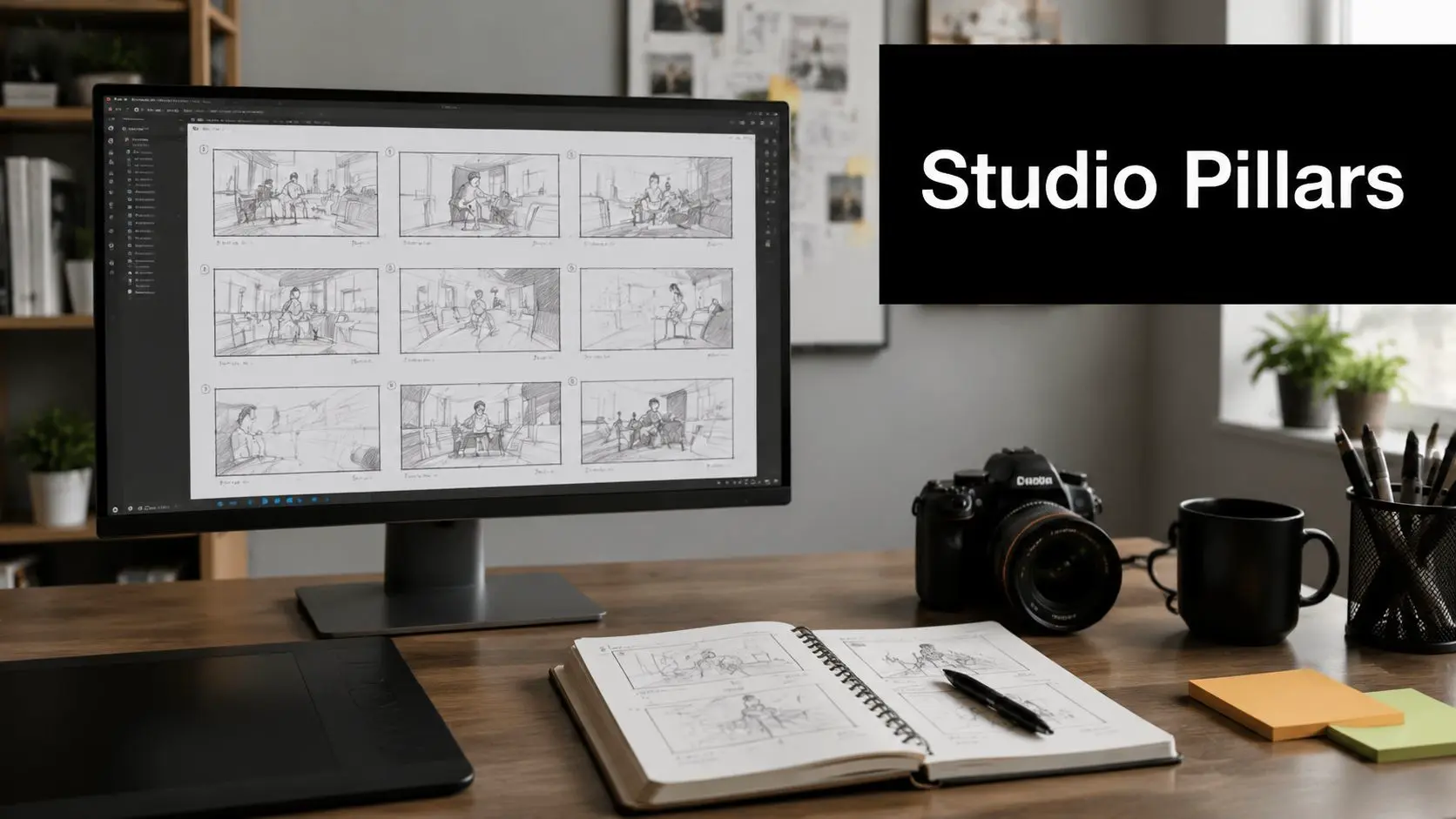
This pillar-based structure works particularly well for studios offering diverse services. For a deeper understanding of how modern production strategies support this approach, explore this producer's guide to TV production in the modern era. You can also share your script with Studio Liddell to get a treatment deck.
3. Character & Creature Animation: Rigging, Performance, and Pipeline Best Practices
A standout entry for the Best Cartoon TV Show is often defined by its memorable characters. This pillar focuses on the technical artistry behind character and creature animation, from rigging and performance to the pipeline best practices required for broadcast-quality results.
What This Means in Practice
High-quality character animation depends on a robust technical foundation. The rigging and motion workflow defines how a character can move, while facial animation brings personality and emotion to life. Studios must choose between motion capture for realism or keyframe animation for stylistic control, followed by rigorous QA for broadcast.
Key Technical Aspects
- •Rigging + motion workflow: Creating the digital skeleton and control system for animators.
- •Facial animation: Developing systems for expressive and nuanced facial performances.
- •Motion capture vs. keyframe: Choosing between capturing real-life performances or hand-crafting animation frame by frame.
- •QA for broadcast: Ensuring every performance is consistent and technically flawless.
These technical processes are what allow animators to deliver the emotional, believable performances that make audiences connect with characters.
Actionable Considerations for Producers
- •Ask a potential character animation studio UK about their rigging philosophy and motion workflows.
- •Inquire about their team's expertise in both keyframe and motion capture techniques.
- •Request a rigging review to assess their technical capabilities.
For studios looking to develop impactful properties, a deep understanding of character performance is non-negotiable. Explore Studio Liddell's animation services and check their "About" page to understand how team credibility translates into broadcast-quality character animation.
4. Motion Graphics Services for Brands: From Logo Stings to Title Sequences
Motion graphics are a powerful tool for brand communication, transforming static logos and data into dynamic visual stories. This pillar covers motion graphics services, from quick logo stings and social cut-downs to elaborate title sequences that set the tone for an entire series.

What This Means in Practice
Effective motion graphics services for brands go beyond simple animation. They involve understanding brand guidelines, designing for various platforms, and delivering files in the correct specifications. Pricing bands are often structured around complexity, from simple kinetic text to complex 3D compositions.
Great motion graphics don't just animate elements; they communicate brand identity in a clear, concise, and visually engaging way.
Common Deliverables
- •Styles & deliverables: Including 2D, 3D, and cel-animated graphics.
- •Social cut-downs: Repurposing main assets for platforms like Instagram, TikTok, and LinkedIn.
- •File delivery specs: Providing final files in formats optimized for web, broadcast, and social media.
- •Pricing bands: Offering transparent pricing based on project scope and complexity.
Actionable Considerations
- •Prepare your brand pack (logos, fonts, color palettes) before briefing a studio.
- •Specify all required deliverables and formats upfront.
- •Ask for examples of their work that align with your brand's aesthetic.
The Best Cartoon TV Show keyword can anchor your content strategy, but the angle matters. By focusing on production-focused services like motion graphics, you keep content commercially relevant. Send your brand pack to Studio Liddell or explore Studio Liddell's animation services to see how their portfolio aligns with buyer intent.
5. VR Production Studio in Manchester: Designing Immersive Experiences with Real Impact
Beyond traditional screens, the future of animated content lies in immersive experiences. This pillar focuses on VR production, from initial concepting and design to deployment on platforms like the Quest, for location-based entertainment (LBEs), expos, or app stores.
What This Means in Practice
Creating impactful VR requires a blend of creative storytelling and technical expertise. A specialized VR production studio in Manchester manages the entire process: concepting and design, development in engines like Unity or Unreal, and optimization for target hardware. The goal is to create immersive experiences that are not just visually impressive but also intuitive and performant.
The best VR experiences are built from the ground up for the medium, considering user interaction and immersion at every stage.
Key Stages of VR Production
- •Concepting & design: Brainstorming ideas that leverage the unique strengths of VR.
- •Unity/Unreal development: Building the experience in a real-time game engine.
- •Optimization for Quest: Ensuring the application runs smoothly on standalone VR headsets.
- •Deployment: Managing the release on LBEs, expo stands, or public app stores.
Actionable Considerations
- •Partner with a studio that has a proven track record of published VR projects.
- •Start with a VR concept sprint to rapidly prototype and validate your idea.
- •Discuss user comfort and performance optimization early in the process.
For a practical example of how animated IP extends into interactive formats, read more about extending children's brands across platforms. See Studio Liddell's work on Dance! Dance! Dance! and Aurora to understand their VR capabilities.
6. AR for Exhibitions and Retail: Increase Stand Dwell Time with Spatial Content
Augmented Reality (AR) offers a powerful way to bridge the physical and digital worlds, especially in retail and exhibition settings. This pillar explores how AR for exhibitions can be used to increase stand dwell time, engage visitors, and provide rich, interactive product information.
What This Means in Practice
AR transforms a physical space or product into an interactive experience. Use cases include virtual product demos, interactive configurators, and gamified content that draws visitors to an exhibition stand. Success depends on reliable hardware, precise tracking, and robust analytics to measure engagement.
AR doesn't just add a digital layer; it creates a memorable, interactive touchpoint that makes your brand stand out in a crowded environment.
When to Prioritise This Approach
- •Product demos: Allowing users to see a product in 3D, explore its features, or visualize it in their own space.
- •Configurators: Letting customers customize products (e.g., colors, materials) in real time.
- •Exhibition traffic: Using AR as a hook to attract visitors and keep them engaged at your stand.
Actionable Considerations
- •Brief your production partner on your stand footprint and visitor flow.
- •Discuss how you will track user interaction and measure success.
- •Brainstorm AR concepts that align with your key marketing messages.
For studios specialising in clarifying complex topics, explainer videos are a key offering. Understanding how to make an explainer video effectively can help, but AR takes it a step further. Check out Studio Liddell's VR & AR work to get case ideas.
7. Location-Based VR (LBVR): Throughput, Safety, and ROI, A Producer’s Guide
Location-based VR (LBVR) presents a unique set of challenges and opportunities. This pillar provides a producer's guide to creating successful LBVR experiences, focusing on key operational factors like player throughput, safety, and monetization models to ensure a positive return on investment.
What This Means in Practice
Unlike at-home VR, LBVR must be designed for public spaces. This means optimizing the game loop for high throughput, ensuring robust safety and hygiene protocols, and developing a monetization model that makes business sense. Staffing and training are also critical for smooth operations.
A successful LBVR experience is as much about operational excellence as it is about compelling gameplay.
Key Considerations for LBVR
- •Game loop & throughput: Designing short, repeatable experiences that can accommodate a high volume of players.
- •Staffing: Training staff to onboard players quickly and troubleshoot technical issues.
- •Safety & hygiene: Implementing protocols for physical safety and equipment cleanliness.
- •Monetisation models: Choosing between pay-per-play, timed sessions, or other revenue strategies.
Actionable Considerations
- •Request an LBVR feasibility worksheet to model potential ROI.
- •Discuss throughput targets and operational requirements with your development partner.
- •Prioritize user safety and comfort in your design.
For a UK-based perspective on location based VR, it's crucial to partner with a studio that understands both the creative and business sides of the equation. Explore their full range of services and check their "About" section to see how content strategy and team credibility support studio growth.
8. Medical & Training Simulations in XR: Accuracy, Assessment, and Compliance
Extended Reality (XR), encompassing both VR and AR, is revolutionizing professional training. This pillar focuses on the development of medical and training simulations, highlighting the importance of accuracy, assessment, and compliance in creating effective learning tools for B2B and enterprise clients.
What This Means in Practice
Creating a VR training simulation UK providers can trust requires a rigorous development process. It involves close collaboration with subject matter experts (SMEs) to ensure accuracy, designing scenarios with clear assessment rubrics, and adhering to strict data and privacy standards.
Effective XR training isn't about technology; it's about creating safe, repeatable, and measurable learning outcomes.
When to Prioritise This Approach
- •High-risk training: For procedures where mistakes in the real world are costly or dangerous.
- •Complex equipment: Allowing trainees to learn on virtual equipment without tying up physical assets.
- •Standardized assessment: Ensuring every trainee is evaluated against the same criteria.
Actionable Considerations
- •Involve your SMEs from the very beginning of the project.
- •Define your learning objectives and assessment metrics upfront.
- •Schedule a discovery workshop to align on project goals and technical requirements.
For teams navigating creative projects, Studio Liddell's animation services page offers a useful reference. Their work on GeoEnergy NI showcases a pedigree in technical communications, crucial for projects like this.
9. BooSnoo for Sky Kids: Scaling a Beloved IP from Series to Digital Shorts
A true test of a kids' IP is its ability to scale. This case study on BooSnoo for Sky Kids shows how a beloved series was successfully extended into digital shorts, demonstrating a nimble pipeline and a deep understanding of the children's media landscape. This is a prime example of what makes a Best Cartoon TV Show a sustainable franchise.
What This Means in Practice
This kids TV animation case study breaks down the project from start to finish. It covers the initial brief and goals, the production pipeline and tools used, the team structure, and the successful outcomes, including awards and lessons learned.
Scaling an IP requires a flexible production pipeline that can efficiently produce high-quality content for different platforms and formats.
Key Takeaways from the Case Study
- •Brief & goals: Understanding the client's objectives for extending the IP.
- •Pipeline: Adapting the production workflow for shorter, faster-turnaround content.
- •Team & tools: Leveraging an experienced team and efficient tools to maintain quality.
- •Outcomes/awards: Measuring success through viewership, awards, and client satisfaction.
Actionable Considerations
- •Discuss your kids' IP roadmap with a potential production partner.
- •Ask how they would adapt their pipeline for different types of content (e.g., series vs. shorts).
- •Look for studios with a proven track record of working with established children's brands.
Ready to move from inspiration to production? Get in touch with Studio Liddell to discuss your next project and receive a tailored production roadmap.
10. Dance! Dance! Dance!: Building a High-Throughput Mixed Reality Game for Events
This mixed reality event game case study on Dance! Dance! Dance! showcases how to build an engaging, high-throughput experience for live events. It highlights the blend of creative art direction and technical execution required to deliver a successful enterprise project.
What This Means in Practice
Creating a game for an event requires a focus on key performance indicators (KPIs) like player throughput. This case study examines the game's mechanics and art direction, the tech stack used to build it, and the overwhelmingly positive player feedback.
A successful event game must be immediately fun, easy to understand, and technically robust enough to handle a constant flow of players.
When to Prioritise This Approach
- •Brand activations: Creating a memorable and shareable experience at a trade show or conference.
- •Enterprise events: Using gamification to engage employees or clients.
- •Public installations: Drawing a crowd with a fun, interactive experience.
Actionable Considerations
- •Prototype your event game to test mechanics and user experience early.
- •Define your throughput KPIs before development begins.
- •Choose a tech stack that is reliable and easy to troubleshoot on-site.
Studios like Studio Liddell handle these technical requirements as standard. Learn more about their production capabilities and see their work to understand how structured compliance and creative processes support projects.
11. Aurora: Crafting an Award-Calibre VR Short, From Script to Spatial Sound
This pillar showcases creative excellence through a case study on Aurora, an award-calibre VR short film. It details the journey of VR short film production, from the initial story concept to the final touches of performance capture and spatial sound design.
What This Means in Practice
Creating a narrative VR short is a showcase of a studio's creative and technical capabilities. It involves translating a script into an immersive experience, directing performance capture for believable characters, and using post-production and optimization to create a polished final product.
In VR, the story isn't just told; it's experienced. Every element, from direction to sound design, must contribute to the sense of presence.
Key Stages of Production
- •Story: Developing a narrative that works specifically for the VR medium.
- •Direction: Guiding the user's attention and pacing the story in an immersive environment.
- •Performance capture: Capturing nuanced human performances to create believable digital characters.
- •Post & optimisation: Polishing the experience and ensuring it runs smoothly on target hardware.
Actionable Considerations
- •If you have a story you believe in, pitch it to a studio's directors.
- •Look for studios that have experience with narrative VR and performance capture.
- •Consider how spatial sound can enhance your story's emotional impact.
12. GeoEnergy NI: Explaining Complex Tech with Visuals That Win Stakeholders
This technical animation case study on GeoEnergy NI demonstrates how to use visuals to explain complex technology and win over stakeholders. It's a powerful example of how animation can be used as a strategic communication tool in a B2B context.
What This Means in Practice
The goal of this project was to take a complex technical subject and make it clear, concise, and compelling. The process involved developing a visual strategy, iterating on the animation with client feedback, and delivering a final product that had a measurable impact on stakeholder understanding and buy-in.
The best technical animations don't just show how something works; they build a bridge of understanding between experts and non-experts.
The Four-Step Process
- •Goal: Defining the key message and target audience.
- •Visual strategy: Developing a visual language to simplify complex concepts.
- •Iteration: Working closely with the client to refine the animation and ensure accuracy.
- •Stakeholder impact: Measuring the project's success by its effect on stakeholder perception.
Actionable Considerations
- •Get a visual strategy session to brainstorm how animation could clarify your message.
- •Choose a partner with a pedigree in technical communications.
- •Prioritize clarity and accuracy above all else in technical animations.
13. The 2026 Buyer’s Guide to Choosing an Animation Studio (Budgets, Timelines, Red Flags)
For anyone looking to commission animation, knowing how to choose an animation studio is the most critical first step. This pillar acts as a buyer's guide, covering everything from creating a brief and understanding budget bands to performing due diligence and recognizing red flags like unethical spec work.
What This Means in Practice
Choosing the right studio is a strategic decision. This guide provides a checklist for creating a comprehensive brief, explains typical budget bands for different types of animation, and offers advice on how to vet potential partners. It also addresses the ethics of asking for unpaid "spec" work, a major red flag.
A good partner will be transparent about their process, pricing, and capabilities. A great partner will act as a strategic advisor.
When to Prioritise This Approach
- •First-time buyers: If you're new to commissioning animation, this guide will help you navigate the process.
- •Large projects: For high-stakes projects, rigorous due diligence is essential.
- •Evaluating partners: Use this guide to create a standardized process for comparing studios.
Actionable Considerations
- •Use a free brief template to ensure you provide all the necessary information.
- •Ask for references and case studies from previous clients.
- •Be wary of any studio that is not transparent about its process or pricing.
14. From TV IP to Games & XR: Extending Children’s Brands Across Platforms
The most successful children's properties today are not just TV shows; they are transmedia brands. This pillar explores the strategy of transmedia IP development, covering how to extend a children's brand from its original TV format into games, XR experiences, and other platforms.
What This Means in Practice
Extending an IP requires careful strategic planning. This includes understanding your audience and age gates, designing game mechanics that fit the brand, planning production across multiple platforms, and navigating the complexities of licensing.
Successful transmedia development isn't about simply porting content; it's about creating a cohesive ecosystem of experiences.
Key Strategic Considerations
- •Audience & age gates: Ensuring all content is appropriate for your target demographic.
- •Mechanics fit: Designing interactions that feel authentic to the brand and characters.
- •Production planning: Coordinating development across different teams and timelines.
- •Licensing: Managing the business and legal aspects of brand extension.
Actionable Considerations
- •Run a cross-platform ideation sprint to brainstorm extension opportunities.
- •Develop a brand bible that can guide development across all platforms.
- •Partner with a studio that has experience in both animation and interactive development.
15. Unreal vs Unity for Real-Time Animation: What Producers Need to Know in 2026
The rise of real-time engines has transformed animation pipelines. This pillar provides a technical comparison of Unreal vs Unity for real-time animation, giving producers the information they need to make informed decisions about their tech stack.
What This Means in Practice
The choice between Unreal and Unity has significant implications for a project's render quality, tooling, team skills required, and overall cost and timeline. This guide breaks down the key differences to help producers decide which engine is the best fit for their real-time animation project.
The right engine choice depends on your project's specific needs, from photorealistic rendering to mobile deployment.
Comparison Criteria
- •Render quality: Unreal is often favored for its high-fidelity, photorealistic rendering, while Unity is known for its versatility and stylized looks.
- •Tooling & plugins: Both engines have robust ecosystems, but their strengths differ.
- •Team skills: The availability of talent can vary between the two engines.
- •Total cost & timeline impact: Consider licensing costs and how each engine's workflow will affect your production schedule.
Actionable Considerations
- •Ask for a real-time pipeline audit to assess your studio's readiness.
- •Discuss the pros and cons of each engine with your technical director.
- •Consider the long-term goals of your project when choosing an engine.
16. Explainer Videos for Complex Tech: Storyboarding Clarity for Hard-to-Explain Products
Explainer videos are a vital tool for B2B marketing, especially for companies with hard-to-explain products. This pillar focuses on explainer video production UK studios offer, detailing how to use storyboarding to achieve clarity and communicate complex ideas effectively.
What This Means in Practice
Creating an effective explainer video for a technical product is about more than just animation. It starts with a solid messaging ladder, uses clear visual metaphors to simplify complex ideas, ensures accessibility for all viewers, and delivers files in all necessary formats.
The goal of a technical explainer is not to show everything, but to provide just enough information to create an "aha!" moment for the viewer.
When to Prioritise This Approach
- •Product launches: Introducing a new technical product to the market.
- •Sales enablement: Giving your sales team a tool to explain your product quickly and clearly.
- •Customer onboarding: Helping new users understand how to get the most out of your product.
Actionable Considerations
- •Send your deck or product information to a studio to get a free storyboard outline.
- •Focus on the "why" and the "what" before getting bogged down in the "how."
- •Use a professional voiceover and clear on-screen text to reinforce your message.
Bringing Your Vision to Life
Creating the next Best Cartoon TV Show demands more than a strong concept. It requires a disciplined pipeline, broadcast-level technical execution, and a team that understands how animation, XR, and transmedia storytelling connect. The shows that endure share common traits:
- •Clear audience fit, paired with production choices that serve the story rather than chase trends.
- •Robust pipelines, from previz and rigging through to lighting and compositing, that keep quality consistent across episodes.
- •Strategic IP thinking, where the original series is designed to extend into games, VR shorts, branded content, and educational formats without losing its identity.
The strongest children's and family IP is built as a system, not a single deliverable. Every production decision should feed the next platform.
For studios, brands, and agencies evaluating their next project, the takeaway is straightforward. Match your brief to a partner who can demonstrate proven work across animation, VR/AR, and technical storytelling, not just pitch decks. Look for case studies that show measurable outcomes, whether that is audience growth, stakeholder buy-in, or dwell-time gains at live events. Whether you are scaling a beloved kids' IP into digital shorts, producing a real-time animated series, or exploring location-based VR extensions, the right production partner turns creative ambition into repeatable, revenue-generating output. --- Studio Liddell has been delivering broadcast-quality animation, motion graphics, and immersive XR content since 1996, working with brands across entertainment, education, and enterprise. If you want a partner who understands what it takes to build the next Best Cartoon TV Show, from initial concept through to multi-platform rollout, get in touch with Studio Liddell to discuss your project.