A Producer's Guide to Production for TV in the Modern Era
Bringing a show to the screen is a monumental undertaking, a journey that transforms a spark of an idea into a finished episode ready for broadcast. The process is universally structured around three core stages: pre-production (planning), production (creation), and post-production (refinement). To succeed, every phase must be managed with precision, ensuring the creative vision comes to life on time and, crucially, on budget.
From Concept to Screen: The Three Pillars of TV Production
Every programme you watch, from a sprawling animated series to a tense live-action drama, follows this well-trodden path. This structured workflow is what turns a creative concept into a technically polished, engaging final product audiences will love. Understanding this process is the first and most critical step for anyone aiming to create content for broadcast. The entire journey is built around three distinct yet deeply connected stages. Each has its own objectives, specialist teams, and vital deliverables that the next stage depends on. A misstep in one phase will almost certainly cause expensive headaches down the line. This flowchart maps out how each stage of TV production flows logically from planning and preparation to the actual creation and final polish.
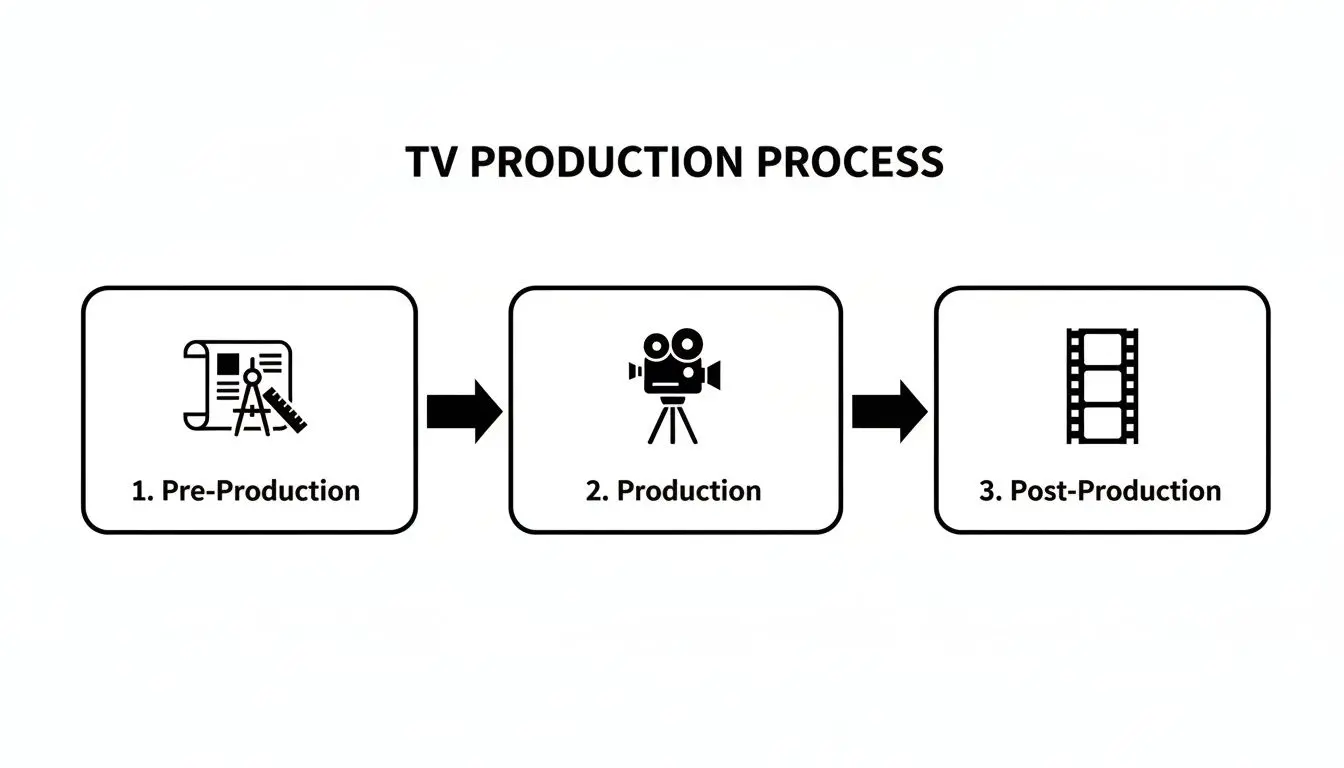
As the diagram shows, a successful project relies on a seamless handover between these pillars, where the output from one phase provides the essential ingredients for the next. To help you visualise the complete journey, here's a quick overview of what each stage involves.
Key Stages of TV Production at a Glance
| Production Phase | Primary Objective | Key Deliverables |
|---|---|---|
| Pre-Production | Plan and prepare every single detail of the project. | Scripts, storyboards, budgets, schedules, cast & crew, concept art. |
| Production | Capture all the raw visual and audio elements. | Filmed footage (live-action), animated scenes (CGI), sound recordings. |
| Post-Production | Assemble, refine, and polish all assets into the final product. | Edited episodes, visual effects, colour grading, sound mix, final master files. |
Now, let's unpack what really goes on inside each of these crucial phases.
Breaking Down the Core Stages
To truly understand the journey, we need to look at what each stage actually involves. These phases are the absolute backbone of any professional production, giving it the structure needed to wrestle with complex creative and logistical challenges.
- •Pre-Production: This is where the magic really begins , in spreadsheets, scripts, and storyboards. It's the strategic planning phase where the entire project is mapped out in minute detail. This involves finalising scripts, creating storyboards, designing characters, locking down financing, and assembling key creative and technical teams. Think of it as an architect's blueprint; you wouldn't start building a house without one. A rock-solid pre-production is the single most important factor in a project's success.
- •Production: This is the "lights, camera, action!" phase. It's the stage where all the raw content is created. For a live-action show, that means filming on set or on location. For animation, it’s the hands-on work of modelling, rigging, animating scenes, and creating stunning visual effects. This stage is all about executing the master plan laid out in pre-production. Technology is rapidly changing this phase, with real-time engines blurring the lines between production and post-production, a topic you can explore in our practical guide to what virtual production is.
- •Post-Production: Once every shot has been filmed or every frame has been rendered, the project moves into post. This is where the story is truly found. Editors piece together the narrative, colourists craft the visual mood, sound designers build the entire audio world, and VFX artists seamlessly integrate their work. The final step is a painstaking quality control (QC) check, ensuring the final master file is technically perfect and meets the broadcaster's exacting delivery specifications.
Building the Blueprint in Pre-Production
Every great TV production is built on the bedrock of a thorough pre-production phase. This is where the magic really starts, long before cameras roll. It's the crucial, often unglamorous stage where a creative spark is forged into a concrete, actionable plan. Think of it as drawing up the architectural plans for a skyscraper , every pound, every minute, and every creative choice is mapped out to prevent the whole thing from collapsing later. This early planning is your best insurance policy in the high-stakes world of production for TV. Skimping on details here almost guarantees costly overruns, chaotic shoots, and painful creative compromises down the line. In many ways, a show's fate is sealed in these initial meetings, not on the set.
From Script to Storyboard
It all starts with the script, the heart and soul of the project. But words on a page are just the beginning. To visualise the story, two key processes come into play:
- •Storyboarding: This is essentially creating a comic-book version of your script. Each panel maps out a key shot, helping everyone from the director to the animators visualise the flow of a scene. It's how you plan camera angles, block out action, and get a real feel for pacing before you’ve spent a penny on filming or animation.
- •Character and Asset Design: Simultaneously, our artists are busy creating the look and feel of the world. This covers everything the audience will see , characters, creatures, environments, and props. These designs don't just establish the show's unique aesthetic; they become the official models for the animation and production teams to build from.
Getting these steps right ensures the entire creative team is on the same page from day one. This shared vision is vital for consistency, a principle we followed religiously when developing _BooSnoo for Sky Kids_, ensuring the beloved IP was brought to life exactly as everyone imagined.
Technical Planning and Pre-visualization
Once the creative vision is locked in, we shift gears to how we'll actually achieve it. This is where pre-visualization, or "previz," becomes an absolute game-changer, especially for series packed with complex CGI or VFX. Previz involves creating simplified, often blocky, 3D animated versions of scenes. It’s a low-cost digital sandbox where the team can resolve tricky problems before committing to expensive production time.
By mapping out camera movements, action choreography, and scene timing in a rough digital format, directors can experiment freely and spot potential headaches early on. The amount of time and money this saves during the main production phase is enormous.
This technical blueprinting connects the creative dream to practical reality. It's the step that confirms what looks great on a storyboard is actually achievable on screen.
Logistics and Financials: The Unseen Foundation
Behind every creative decision, there's a logistical and financial framework holding it all together. This part of pre-production is less about art and more about the cold, hard facts that make a project possible. The key pieces of this puzzle include:
- Detailed Budgeting: This means breaking down every single conceivable cost, from crew salaries and software licenses to voice actor fees and post-production suites. A rock-solid budget is the financial roadmap for the entire project.
- Production Scheduling: A master schedule is drafted, laying out key milestones and deadlines for every single department. This master plan ensures all moving parts are working in sync and that the project is on a clear path to its final delivery date.
- Legal and Clearances: This is a huge, often overlooked task. The legal team must secure the rights for any music, existing IP, or third-party assets used in the show. Getting these clearances sorted upfront is non-negotiable; failing to do so can lead to serious legal trouble and even prevent the show from ever airing.
Bringing Your Vision to Life During Production
With the pre-production blueprint locked in, we dive into the most exciting phase: production. This is where the rubber meets the road, where all that meticulous planning starts to become something real and tangible. Our artists, animators, and technicians roll up their sleeves and begin the hands-on work of crafting the visuals that will eventually grace the screen. The world of production for TV is much broader than it used to be. It’s no longer just about traditional filming. Today, it’s a sprawling landscape of sophisticated animation, complex visual effects (VFX), and even interactive extended reality (XR) experiences. Each of these disciplines has its own unique workflow and requires specialist expertise to bring a story to life, frame by painstaking frame.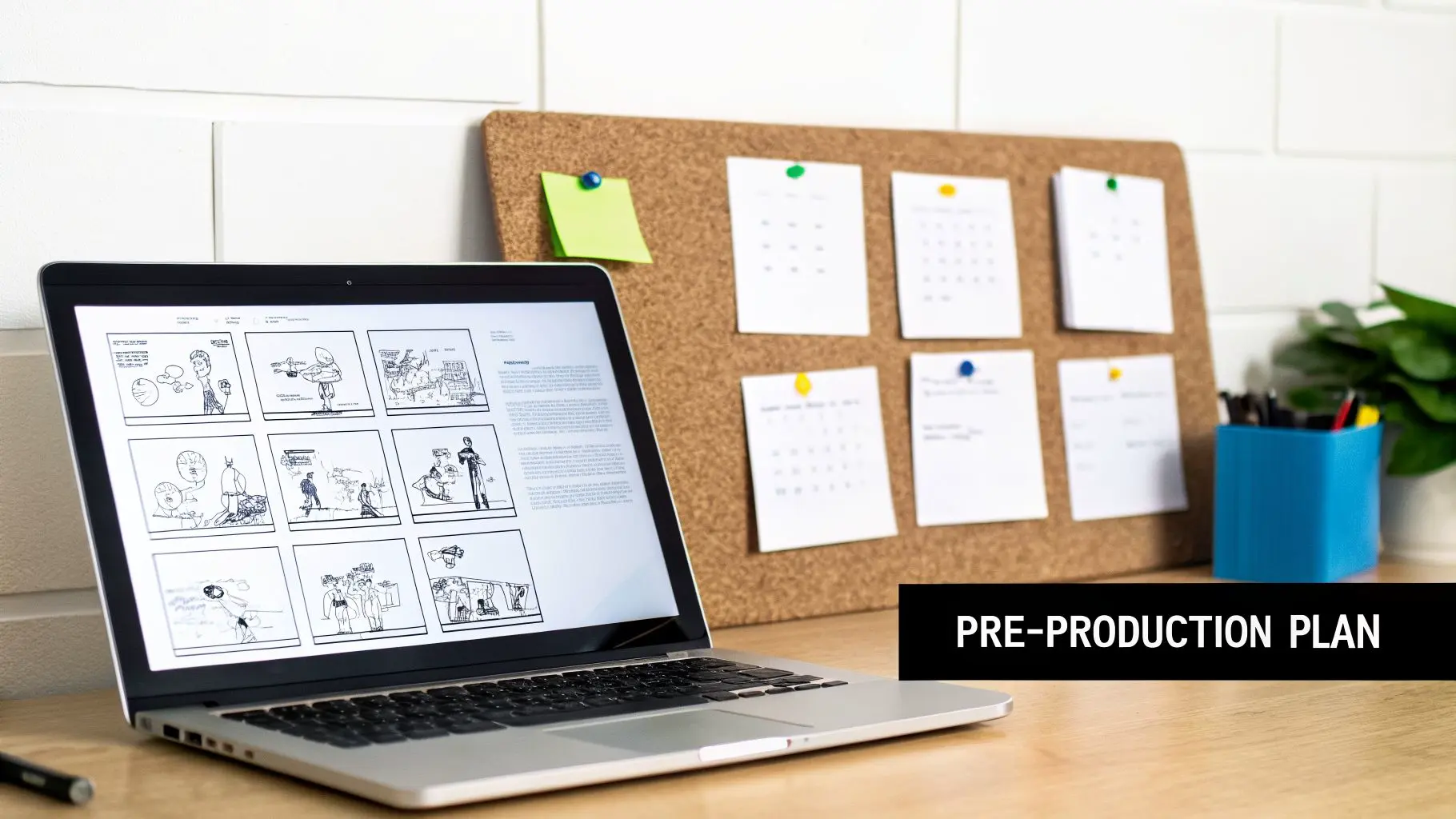 This expansion isn't just a niche trend; it's a huge part of why the UK has become a global hub for high-end TV. The sector's growth has been staggering, hitting £4.03 billion in spending recently , a 17% jump from the previous year. This boom, covered in the BFI's official 2025 statistics, demonstrates just how attractive the UK is for major international productions.
 The Animation and VFX Pipeline
For any animated series or a show heavy on digital magic, the production stage is less of a single event and more of a structured, multi-step pipeline. Think of it as a digital assembly line, transforming raw concepts into polished, moving images. It generally breaks down into these key stages:- •Modelling and Rigging: Our 3D artists start by building the digital characters, sets, and props from the approved concept art. For characters to move, they need a digital skeleton, or "rig," which allows animators to pose and manipulate them believably.
- •Animation: This is where the performance truly begins. Animators work frame by frame, breathing life into characters and objects, ensuring every movement feels right and serves the story laid out in the script and storyboards.
- •Lighting and Texturing: This is all about realism and mood. Artists apply surfaces, colours, and textures to the 3D models to make them look tangible. Then, they place digital lights in the scene to create atmosphere, depth, and guide the viewer's eye.
- •Rendering and Compositing: This is the final, computationally-heavy step. The computer "renders" each frame, calculating all the data to create the final image. These rendered layers are then composited, or stacked together, with VFX, backgrounds, and other elements to create the finished shot.
Proper illumination is absolutely crucial for creating high-quality visuals, whether in a digital or real-world setting. Understanding the best lighting for video recording is a fundamental skill that elevates any scene.
The Rise of Real-Time Engines
One of the biggest game-changers in modern TV production is the use of real-time game engines like Unreal Engine and Unity. Originally built for video games, these platforms are completely transforming how we approach animation and VFX.
Instead of waiting hours or even days for a single frame to render, real-time engines allow creators to see a high-quality version of the final shot instantly. This enables rapid iteration, experimentation, and on-the-fly creative decisions that were previously impossible.
This technology doesn't just speed up the traditional animation process; it's the engine driving the creation of immersive and interactive content. For shows that blend CGI with live-action, these tools are indispensable. To get a better sense of how this works in practice, we break it all down in our producer's guide to real-time VFX.
Crafting Immersive XR Experiences
When producing Virtual and Augmented Reality (XR) content, we add another layer of complexity. The focus shifts from telling a linear story to building an entire interactive world that the user can explore and influence. The production process for XR looks something like this:
- Environment Building: We develop the 3D world in a platform like Unity or Unreal, ensuring it’s highly optimised to run smoothly on hardware like the Meta Quest.
- Interaction Design: This involves programming the rules of the world, how users can pick up objects, interact with characters, and navigate the virtual space.
- User Experience (UX) Testing: We constantly put people into the experience to test it. Is it intuitive? Is it fun? And crucially, is it comfortable? Avoiding issues like motion sickness is a top priority.
Polishing Your Project in Post-Production
Once the cameras stop rolling or the last frame is rendered, your project enters post-production. This is where the real alchemy begins. We take all the raw ingredients gathered during the production phase and transform them into a polished, cohesive, and broadcast-ready experience. It's a detailed and often painstaking process where the story truly finds its rhythm, the mood is finely tuned, and every technical detail is perfected for the demanding world of television. Think of it like a master chef in a high-end kitchen. The production phase was about sourcing the best possible ingredients. Now, in post-production, we carefully combine, season, and plate everything to create a Michelin-star dish. This is the stage that turns good material into truly great television.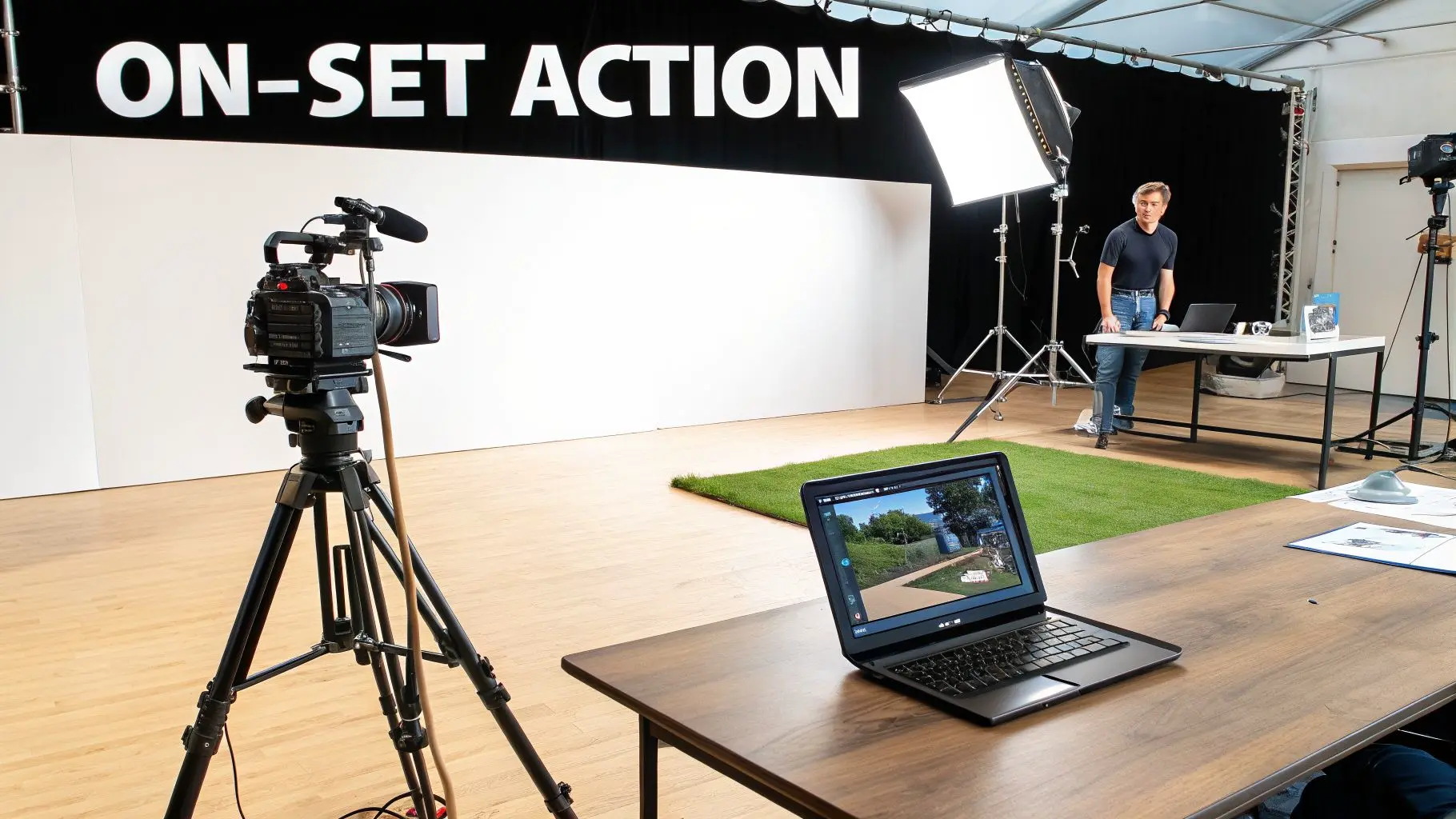
Crafting the Narrative in Editing and Colour
The journey starts in the edit suite, where the narrative truly comes alive. Editors dive into hours of footage or animated sequences, selecting the perfect takes and weaving them together to build a compelling story. This is where pacing is dialled in, jokes are given space to land, and emotional moments are sculpted to hit just right. After we get to "picture lock", meaning the sequence of shots is final, the project heads for colour grading. It’s a crucial, often subtle art form with a massive impact on the final look and feel.- •Colour Correction: This is the science. It involves balancing the colours, exposure, and contrast from one shot to the next, ensuring everything looks consistent and natural.
- •Colour Grading: This is the artistry. We apply a specific colour palette to evoke a particular mood, warm, golden tones for a nostalgic flashback, or cool, desaturated blues for a tense, dramatic scene.
Together, these processes give the show its unique visual signature, ensuring it looks professional and powerfully supports the story.
Building the World with Sound Design
What you see is only half the picture. Sound design is the craft of creating the entire audio world of a show, making everything feel tangible and real. It's a complex job involving several distinct layers of audio wizardry. A great example of this is our work on the VR short film _Aurora_, where the soundscape was absolutely vital for creating a sense of immersion. We didn't just add noises; we designed a spatial audio mix that guided the viewer’s attention and amplified the emotional journey.
The post-production phase is where a collection of assets becomes a finished piece of art. It’s the final and most crucial quality gate, ensuring that the creative vision is not only realised but also technically flawless for broadcast.
This intricate audio work involves a few key stages:
- Dialogue Editing: We meticulously clean up all recorded dialogue, removing background noise to ensure every word is crisp and clear.
- Foley and Sound Effects: We create or source every sound you hear on screen, from the crunch of footsteps on gravel to the futuristic whoosh of a spaceship.
- Scoring and Music: We either compose an original score or license existing tracks to perfectly underscore the emotional core of the story.
- Final Mix: The last step is blending all these elements, dialogue, effects, and music, into one balanced, dynamic, and immersive final soundtrack.
Meeting Stringent Broadcast Delivery Standards
The final, non-negotiable hurdle in production for TV is technical delivery. Broadcasters like the BBC and Sky have incredibly strict technical specifications, and every programme must meet them before it can air. This isn’t just a box-ticking exercise; it’s a rigorous quality control (QC) process that guarantees a perfect viewing experience for the audience at home. The delivery checklist is long and unforgiving. We must supply master files in very specific video codecs, file formats, and colour spaces. Audio levels must conform to precise loudness standards (like EBU R128) to ensure consistency across the channel’s entire output. Every frame is scrutinised for visual glitches, and every audio channel is checked for errors. This final QC pass is the last line of defence. It ensures that all the creative and technical effort poured into the project results in a final product that is not just creatively compelling, but technically impeccable and ready for millions of viewers.Mastering Budgets and Timelines
Let's talk about the two most critical resources in any production: money and time. Getting a handle on your budget and schedule isn't just admin; it's the bedrock of a successful project. This is where creative vision meets practical reality, blending artistry with the kind of meticulous planning that keeps a show on track from day one to final delivery. Without a solid financial plan, even the most brilliant idea can quickly run into trouble. It's about more than just a top-line number; it's about knowing every single cost, from initial concept sketches and artist day rates to software licences and the final sound mix. A project without a detailed budget is a project at risk of creative compromises or, worse, not making it to the finish line.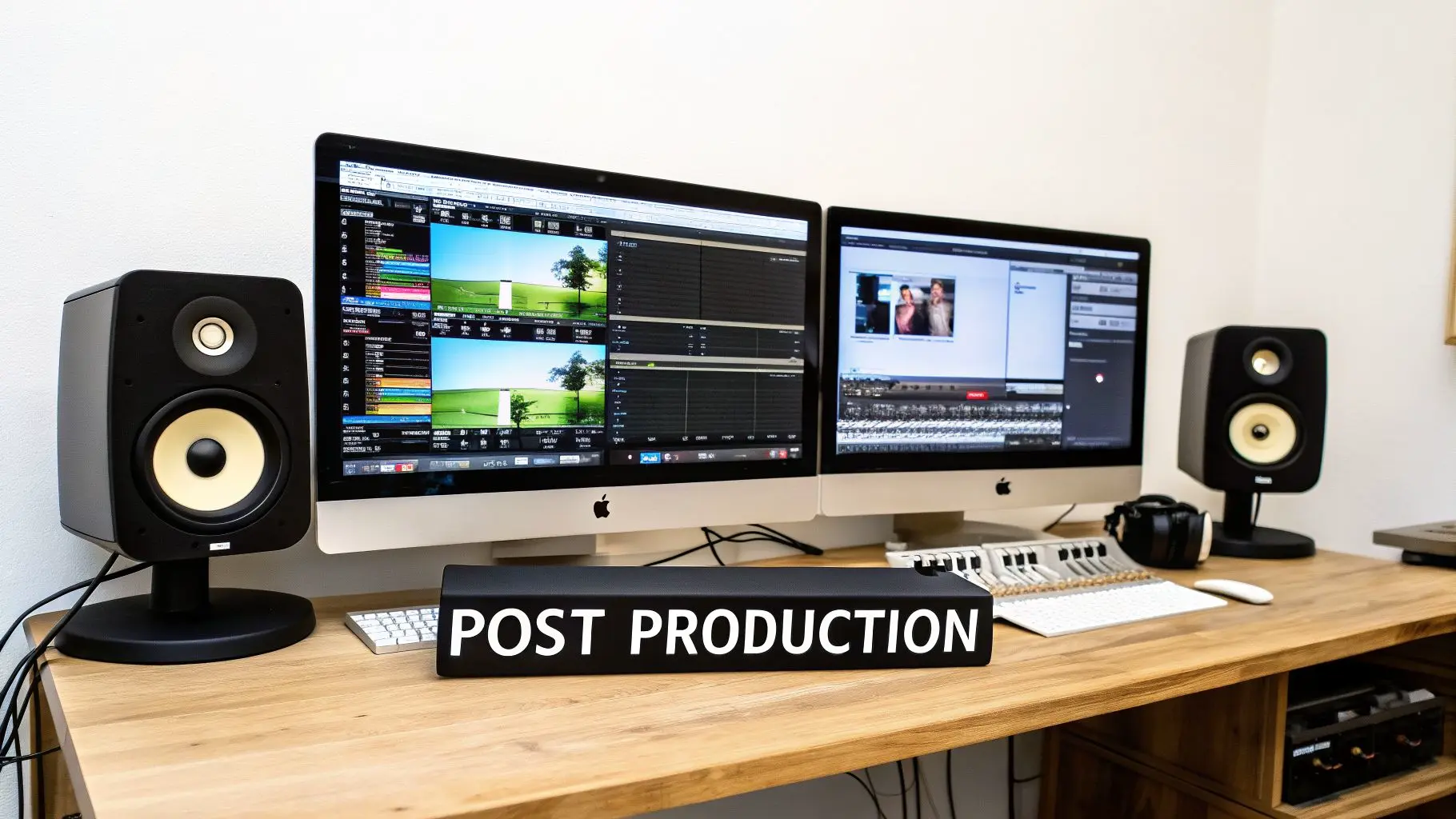 Fortunately, this all happens within a buzzing UK production scene. In a recent record-breaking year, film and high-end TV production spending in the UK soared to £2.8 billion, a massive 31% jump from the year before. This isn't just a number; it shows the incredible momentum and world-class infrastructure available right here, which you can read more about in this deep dive into UK production spending.
 Identifying Common Cost Centres
A proper TV production budget is a detailed map, not a ballpark figure. Knowing exactly where the money is allocated is the first and most important step to keeping it under control. Most budgets are broken down into a few key areas:- •Creative Development: This is your foundation. It covers everything that happens before production begins: concept art, scriptwriting, storyboarding, and character design.
- •Pre-Production: Think of this as the organisational powerhouse. It includes project management, scheduling, legal clearances, and technical pre-visualisation (previz).
- •Production Crew: Often the biggest slice of the pie, this covers the salaries for your talented team of directors, animators, riggers, lighters, and technical artists.
- •Software and Technology: You need the right tools for the job. This means licences for industry-standard software like Maya, Unreal Engine, or the Adobe Creative Suite, plus costs like render farm time.
- •Post-Production Services: This is the final polish. It includes everything from editing and colour grading to sound design, musical scoring, and the all-important final quality control (QC) checks.
A smart budget doesn't just list known expenses; it anticipates the unknown. Building in a contingency fund, usually around 10-15% of the total budget, is an absolute must. It’s your safety net for the inevitable curveballs that every production faces.
Mapping Realistic Production Timelines
Time is just as valuable as money in TV production. A realistic schedule, often visualised as a Gantt chart, maps every phase of the project and shows how everything is connected. Like a row of dominoes, a delay in one area, such as creating 3D models, will inevitably knock over the animation and lighting schedules down the line. So, what does that look like in practice? For a standard 22-minute 3D CGI episode, you might see a timeline like this:
- Script and Storyboard (4-6 weeks): Nailing down the story and creating the visual blueprint for every shot.
- Asset Creation (6-8 weeks): Our team builds all the digital characters, props, and environments.
- Animation (10-12 weeks): The main event! This is the longest phase, where animators bring every scene and character to life.
- Lighting and Rendering (4-6 weeks): We create the final mood and look, then generate the high-resolution image sequences.
- Post-Production (3-4 weeks): The final assembly, where editing, sound, and visual effects come together.
How to Choose the Right Production Partner
Picking the right studio is easily the most important decision you'll make for your project. Think of it less like hiring a supplier and more like finding a strategic collaborator who is as invested in your project's success as you are. A great partner brings far more than just technical skills. They are creative problem-solvers with deep industry experience. Crucially, they have a proven pipeline that will safeguard both your vision and your budget. Your evaluation must start with a deep dive into a studio's track record. Don't just get dazzled by a flashy showreel; look at the actual projects they’ve delivered. Do they have direct experience in your specific format, whether that's a children's IP, a complex VFX series, or an interactive XR experience? A studio with a long history, like our own broadcast pedigree dating back to 2019, demonstrates resilience and an ability to adapt to the ever-changing demands of production for TV.Key Evaluation Criteria
When comparing potential partners, there are a few non-negotiable areas you need to focus on. A mismatch in any of these can cause serious headaches down the line. Your checklist should include:- •Technical Capabilities: Do they have genuine expertise in the right tools for your project? For real-time animation, for instance, a studio's proficiency in Unreal Engine versus Unity can have a massive impact on the final look and the efficiency of the pipeline.
- •Communication and Collaboration: A good partner should feel like an extension of your own team. Look for transparency, responsiveness, and an ability to guide you through complicated decisions with clarity and confidence.
- •Creative Alignment: Does their portfolio resonate with your creative vision? You're looking for a studio whose style and storytelling approach feels like a natural fit for what you want to achieve.
By far the most crucial step is writing a clear and effective creative brief. This document is the absolute foundation of your partnership. It must clearly outline your project goals, target audience, desired style, technical requirements, and budget constraints. A well-thought-out brief is what allows a studio to provide an accurate quote and a realistic production plan.
Spotting Potential Red Flags
As you start talking to different studios, keep an eye out for common warning signs. A studio that promises an impossibly fast timeline or a suspiciously low budget is probably cutting corners somewhere you can't see. Be wary of studios that are slow to respond, vague about their process, or seem hesitant to provide client references. A true partner is proud of their work and should be more than happy to connect you with past clients. Making the right choice takes time, but this due diligence is the best investment you can make in your project's future. For a more detailed breakdown, check out our in-depth buyer's guide on how to choose an animation and visual effects studio.
Frequently Asked Questions About TV Production
Stepping into the world of television production can feel a bit like learning a new language. There's a lot of unique jargon, specific timelines, and technical standards that can seem complex at first. To help clear things up, we’ve put together some straightforward answers to the questions we hear most often from our clients and partners. This is all about giving you practical insights so you know what to expect when you're ready to get a TV project off the ground, from the first day to the final delivery.
How Long Does It Take to Produce One Animated TV Episode?
The timeline for a single animated TV episode can vary wildly depending on its complexity, animation style (2D vs. 3D), and length. For a fairly standard 22-minute 3D CGI episode, you're typically looking at a production schedule of around six to nine months. That’s from the moment the script is signed off to when the final file is ready for broadcast. That timeframe covers every single stage of the production pipeline:
- •Storyboarding and creating animatics to lock down the visual story.
- •Building all digital assets , every character, environment, and prop from scratch.
- •The incredibly detailed work of animation itself, followed by lighting and texturing to make it all look real.
- •Rendering all the final frames and finishing with post-production touches like sound design and colour grading.
Of course, simpler 2D projects or shorter digital-first formats can often be turned around much faster. On the flip side, anything with exceptionally detailed visuals will naturally need more time.
What Is the Difference Between Broadcast and Streaming Delivery Specs?
While everyone wants the highest quality, traditional broadcasters and streaming platforms have very different technical requirements for final files. Broadcasters like the BBC or Sky have long-established, rigid standards for things like frame rates, colour space (usually REC. 709), and precise audio loudness levels (like EBU R128). These rules are non-negotiable. Streaming giants like Netflix or Disney+, however, play by their own rules. They provide incredibly detailed "spec sheets" designed for a global, on-demand audience. These often require final files in 4K HDR (High Dynamic Range), plus a wider variety of subtitle formats and audio tracks for different languages. Everything must be packaged into a very specific file structure that slots perfectly into their digital systems.
How Do I Protect My Intellectual Property During Production?
Without a doubt, protecting your intellectual property (IP) is the most critical legal step in any production. The absolute best way to keep your creative work safe is to partner with a reputable studio under a crystal-clear contract.
A solid contract is the bedrock of IP protection. You need to ensure your agreements clearly state that you own the core IP and spell out the rights for any new assets created during the production.
Here are the key steps to take:
- Sign Non-Disclosure Agreements (NDAs) before you share any sensitive scripts or concepts. This should be standard practice.
- Double-Check IP Ownership Clauses in your main production agreement. Get a lawyer to review it if you're unsure.
- Use a Secure Workflow. Your production partner should have secure systems in place to prevent leaks or unauthorised access.
Ready to take your TV concept from script to screen? Studio Liddell has been bringing incredible stories to screens of all sizes since 2019. Let's talk about what makes your project special and build a production plan to match. Book a production scoping call