10 Best Apps for Advertising
You’re probably dealing with the same problem most marketing teams hit once the first media plan lands on the table. There are too many apps for advertising, too many formats, and too much bad advice that treats every channel as interchangeable. They aren’t. A polished brand film won’t automatically work as a six-second YouTube cutdown. A sharp carousel for Instagram often dies on LinkedIn. An AR activation that feels playful on Snapchat can feel heavy-handed if you force it into the wrong audience or objective. Platform choice is really a creative decision disguised as a media decision. That’s why the useful question isn’t “Which ad platform is best?” It’s “Which platform matches the attention, intent, and creative behaviour of the audience I need to reach?” If you’re also weighing discoverability around app promotion, understanding ASO vs SEO for 2026 helps clarify where paid acquisition fits versus store visibility and search demand. The list below looks at the best apps for advertising from a practitioner’s point of view. Not just what each platform does, but what kind of assets it rewards, what usually goes wrong, and where animation, motion graphics, vertical video, 3D product visuals, or XR creative can make the difference.
1. Google Ads
Google Ads is still the broadest practical buy for most brands because it lets you cover very different moments of demand inside one system. Search captures intent. YouTube gives you room for story and product demonstration. Display can support remarketing, lighter-touch awareness, and frequency around a launch.
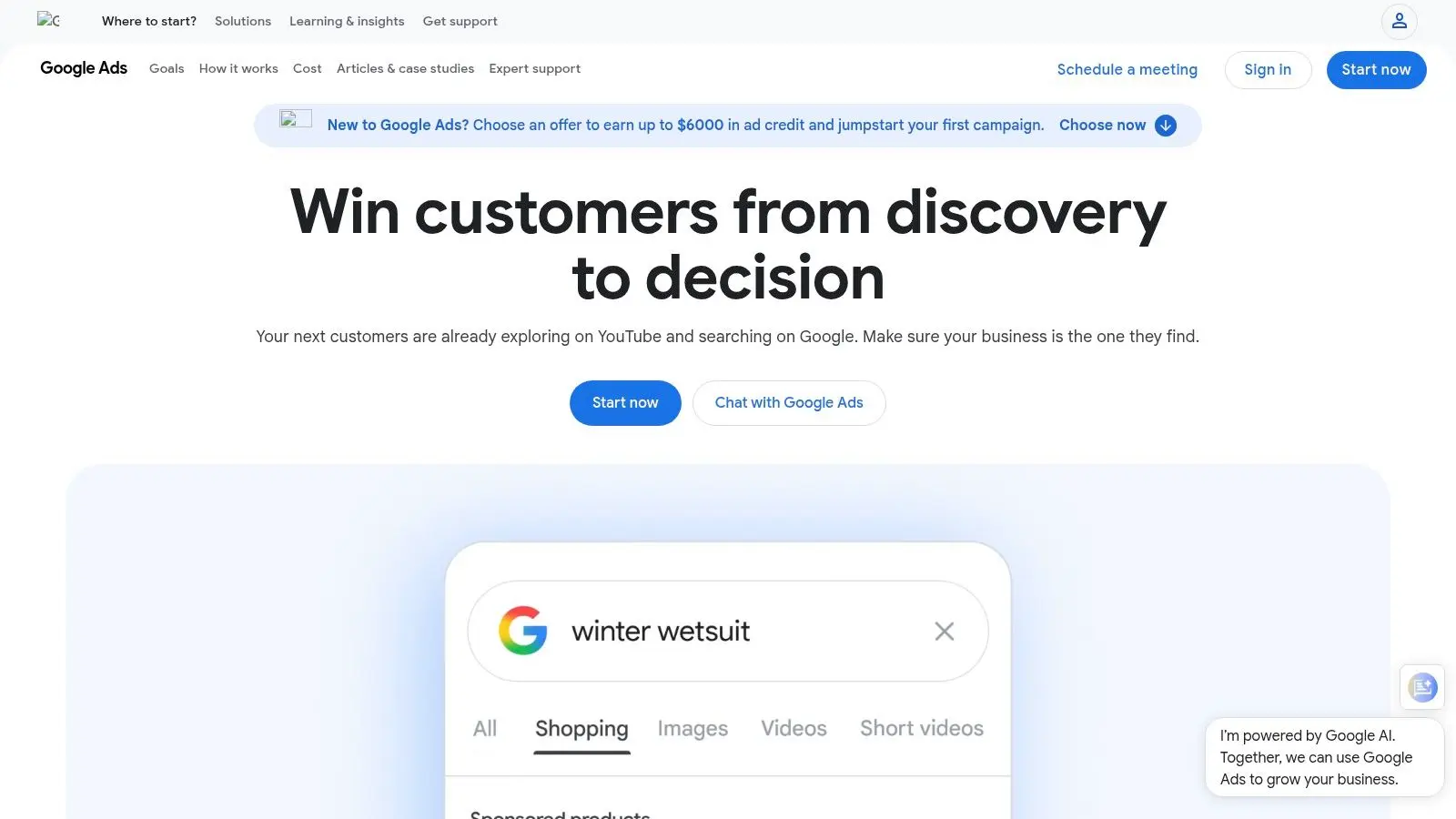
The mistake is treating all of that inventory with one creative package. Search needs tight offer language and clean landing page alignment. YouTube needs a strong opening beat, visible branding, and edits built for skip behaviour. Display needs legibility first, not cinematic ambition.
Where Google earns its place
If someone already knows the problem they need solved, Google is usually the first platform I’d test. It’s especially useful when a campaign has both bottom-funnel and upper-funnel pressure, because the same account can support direct response and video sequencing without forcing your team into separate workflows. For app marketers, Studio Liddell’s guide to mobile app promotion in the UK is worth reviewing before creative production starts, because channel structure affects what assets you’ll need.
Practical rule: Build separate cuts for Search support, YouTube skippable, and Display. One “master ad” usually underperforms across all three.
A few trade-offs matter:
- •Best when intent exists: Search performs best when buyers already have language for the need.
- •Video needs discipline: YouTube rewards clarity early. Slow brand-build intros often waste impressions.
- •Display can drift: If your art direction is loose, Display inventory can spread budget into placements that add reach but not much persuasion.
You can explore the platform directly through Google Ads, and if paid search sits alongside your wider acquisition mix, this perspective on SEO, Google Ads, and social media services gives useful strategic context.
2. Meta Ads
Meta remains one of the most flexible apps for advertising when the brief depends on visual variety. Facebook, Instagram, Messenger, and Audience Network give you a lot of surfaces, but its strength is the speed at which you can test hooks, edits, formats, and audience angles. What works on Meta usually looks less “finished” than clients expect. That doesn’t mean low quality. It means the creative has to feel native to feed behaviour. Shorter edits, clearer focal points, stronger text hierarchy, and a visual idea that lands without sound all matter more than polish for its own sake.
What Meta creative needs
Meta is where motion design teams earn their keep. Reels, Stories, carousels, collection ads, static cutdowns, and lead-gen variants all need different compositions. If you produce one hero asset and ask the platform to crop it automatically, you’ll usually pay for that shortcut in weak thumb-stop power. The measurement side also needs realism. Privacy changes have made attribution less tidy, so the best campaigns rely on a strong testing rhythm rather than false certainty from one dashboard.
On Meta, creative fatigue arrives faster than most teams budget for. Plan refreshes before launch, not after performance softens.
For UK advertisers trying to understand the media side before locking production, how much a Facebook ad costs in the UK gives a practical planning baseline. A good Meta package usually includes:
- •Hook-first edits: Open with the product, payoff, or problem immediately.
- •Format-native layouts: Build vertical, square, and feed-safe versions separately.
- •Modular asset design: Swap headlines, supers, backgrounds, and end cards quickly for testing.
You can review placement and campaign options through Meta Ads Manager.
3. LinkedIn Ads
LinkedIn is expensive enough that weak creative becomes obvious very quickly. That’s why I rarely recommend it for broad awareness unless the audience is tightly defined and the offer is commercially serious. For B2B, education, training, enterprise software, or specialist services, though, it can be the cleanest route to the right decision-makers. The platform rewards relevance over theatre. You don’t need viral energy here. You need clarity, authority, and a reason the person seeing the ad should care in their working day. That often means concise motion graphics, data-led visuals where appropriate, explainers, thought-leadership clips, or short product demonstrations.
The right style for LinkedIn
If your team produces LinkedIn ads like TikTok videos in office clothes, performance usually suffers. The audience expects a more professional context, and the ad should respect that without becoming stiff or dull. Lead Gen Forms are useful, but they’re not a substitute for persuasive creative. If the value proposition is vague, prefilled forms won’t save the campaign.
- •Best fit: Enterprise offers, recruitment marketing, B2B services, executive education, and specialist events.
- •Creative that travels well: Animated diagrams, interview-led cuts, product UI demos, and concise founder or expert messaging.
- •What usually fails: Over-designed brand films with no concrete takeaway, or consumer-style hype language.
I’d also watch the landing page experience closely. LinkedIn traffic tends to be less forgiving when message match is poor. If the ad promises a practical solution, the click needs to land on material that feels equally practical. You can see the available formats and targeting options on LinkedIn Ads.
4. TikTok for Business
TikTok punishes advertising that looks like advertising. That’s the simplest way to think about it. If the creative feels over-scripted, too polished, or detached from platform behaviour, users scroll past it immediately.
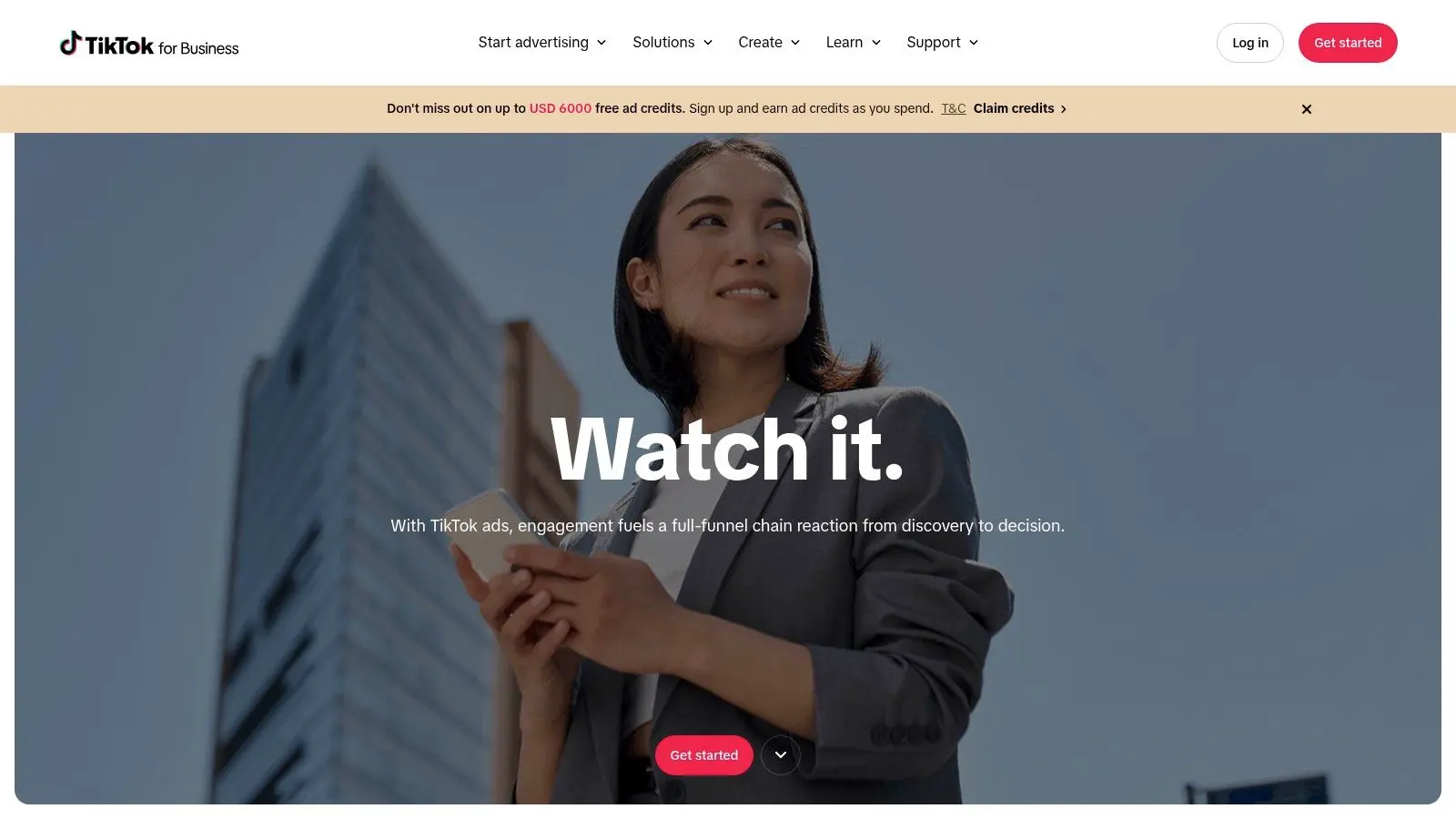
That doesn’t mean brands should chase chaos. The strongest TikTok campaigns are usually carefully constructed to feel effortless. They use creator-style framing, direct address, fast edits, strong captions, and a simple narrative beat. For entertainment, retail, launches, and youth-facing campaigns, it’s one of the most creatively demanding platforms on this list.
What actually works on TikTok
Spark Ads are useful because they let brands build from content that already behaves naturally on the platform. Even then, the ad needs a hook in the opening seconds and a payoff that justifies attention. Animation and VFX can work very well here, but only if they support a clear idea. Slick 3D transitions with no human point of view often look expensive and empty. Motion graphics need to feel additive, not decorative.
If your TikTok ad would also run unchanged on LinkedIn, it probably isn’t a TikTok ad.
A few practical trade-offs:
- •Fast creative turnover: Concepts burn out quickly, so production has to be modular.
- •Loose tone, tight craft: The best ads feel spontaneous, but they’re edited with precision.
- •Sound helps, captions matter more: Assume many viewers will watch with mixed attention.
For product launches, game trailers, or youth-skewing campaigns, TikTok is often where studios need to supply multiple variants rather than one final film. You can explore placements and tools through TikTok for Business.
5. Microsoft Advertising
Microsoft Advertising is often treated as an afterthought, which is exactly why it can be useful. If you already have a functioning Google search structure, Microsoft can add incremental reach without asking your team to reinvent the account from scratch.
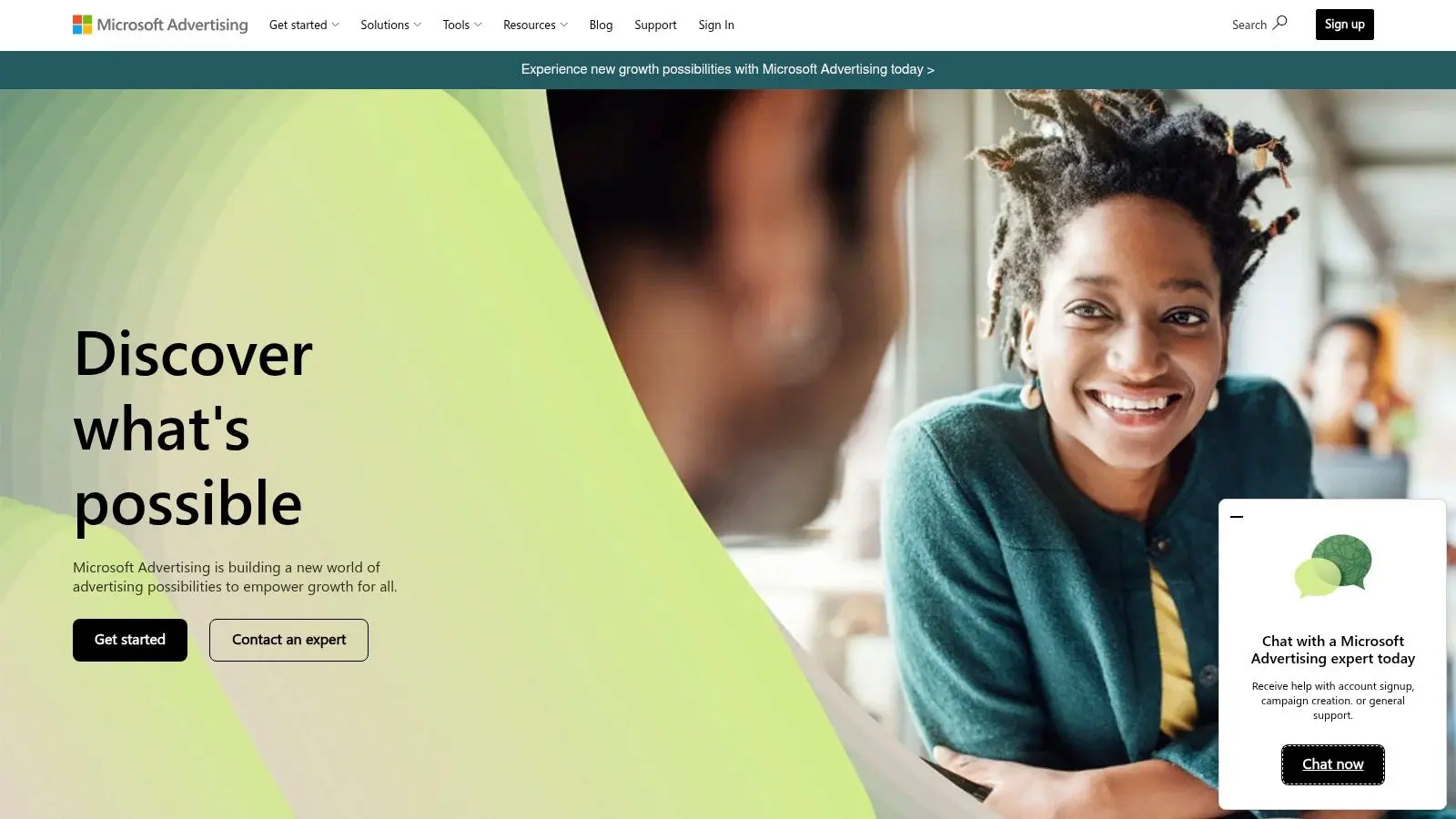
The practical value is less about novelty and more about efficiency. Search campaigns can often be ported over, then refined for the audience and query mix you see there. Native placements through the Microsoft Audience Network need more care, because they reward softer, context-aware creative rather than hard sell display banners.
Where it fits in the mix
I’d look at Microsoft when a brand already knows search works and wants more coverage, especially in categories where buyer intent is strong and the click is valuable. It’s also useful for advertisers who want another search channel without the same level of competition they face elsewhere. Creative expectations are straightforward:
- •Search needs message discipline: Strong copy, clear offer, and sensible extensions.
- •Native needs editorial fit: Think lightweight motion, stills with clear hierarchy, and headlines that don’t feel like ad clichés.
- •Landing pages still carry the sale: Native curiosity clicks can fall apart if the page feels too sales-heavy too quickly.
What doesn’t work is lazily imported structure with no tuning. The import tool saves time, but it doesn’t replace judgment. Keyword intent, ad copy nuance, and audience context still need human review. You can assess the platform and import options on Microsoft Advertising.
6. Amazon Ads
Amazon Ads is less forgiving than many brand teams expect because the ad isn’t isolated from the retail environment. Product page quality, reviews, imagery, pricing logic, and availability all affect performance. In other words, the media and the merchandising are connected.
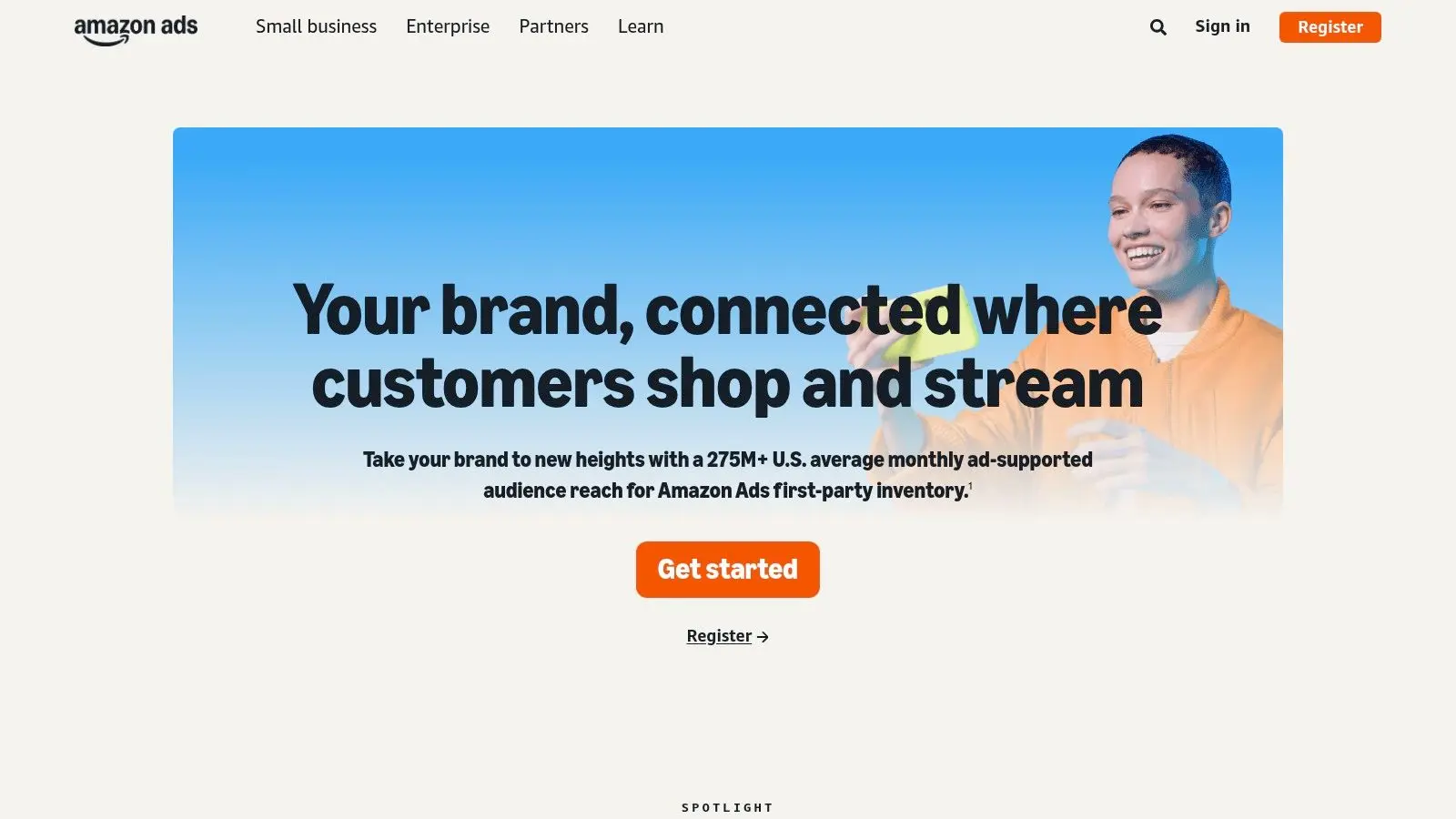
That’s why Amazon works best when the whole retail journey is prepared. Sponsored Products and Sponsored Brands can be powerful for active purchase behaviour, and DSP becomes more interesting when you want to extend audience signals beyond the marketplace. But weak product content can waste otherwise good media.
Creative priorities on Amazon
This isn’t the place for vague branding. The creative should clarify product difference fast. Strong pack renders, clean 3D turnarounds, comparison graphics, short utility-led video, and concise lifestyle context usually do more work than atmospheric storytelling. For ecommerce-led campaigns, I’d usually brief the creative team on retail readiness first, not campaign aesthetics first.
- •Marketplace ads reward clarity: Show the product, benefit, and use case without clutter.
- •DSP broadens the role: Off-Amazon placements can support brand narrative, but they still need a path back to purchase logic.
- •Good visuals can’t rescue weak listings: The PDP has to convert.
If Amazon is central to your commercial plan, specialist operational support can matter as much as ad buying. For that side of the equation, Amazon account management support is a relevant consideration. You can review the ad products and DSP offering on Amazon Ads.
7. Snapchat for Business
A user opens Snapchat to message friends, tries a Lens in seconds, shares it, and moves on. That speed shapes the brief. Snapchat works best for campaigns that ask people to do something with the creative, not just watch it.
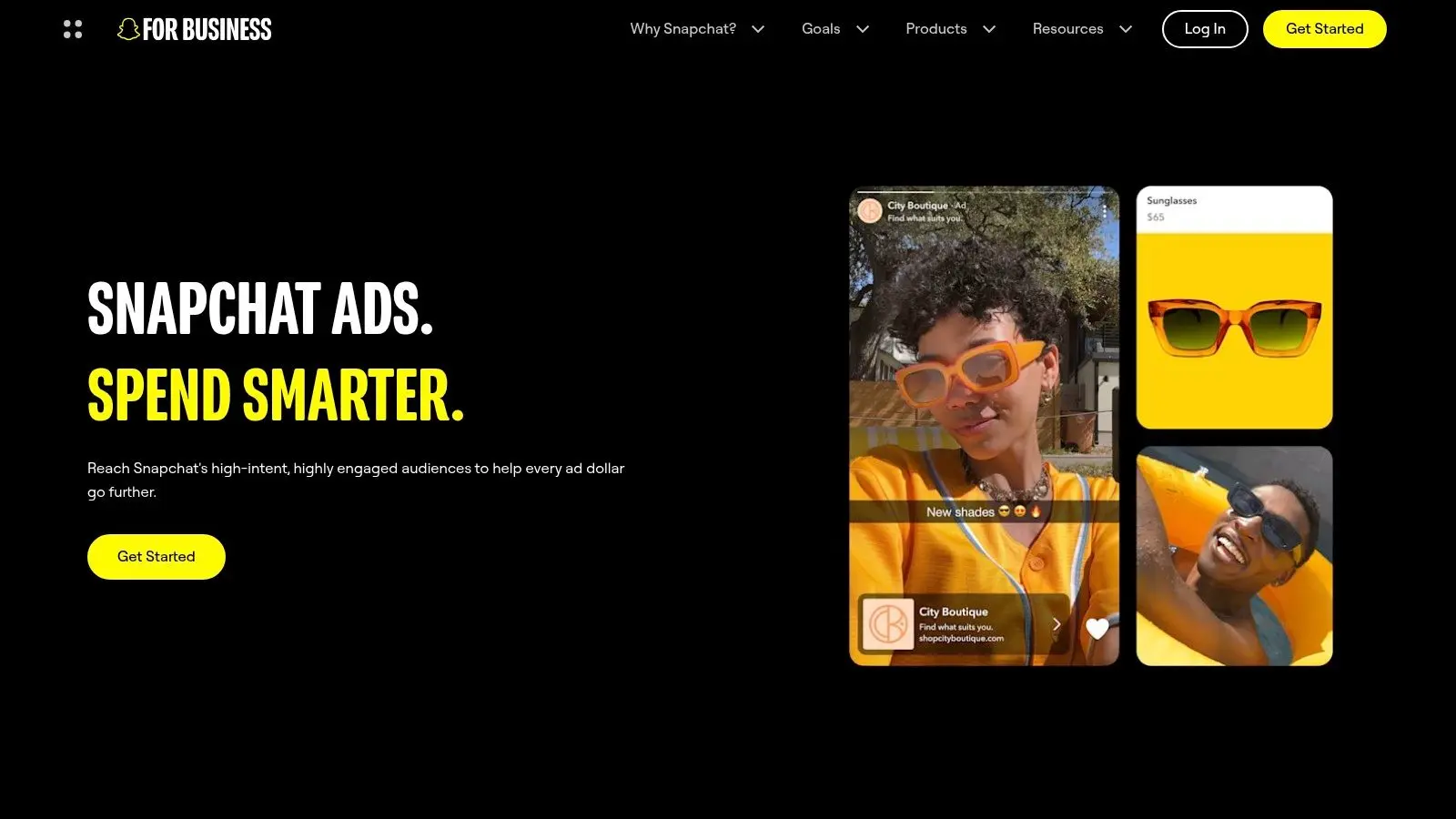
The platform suits launches, entertainment, retail moments, live events, and youth-focused brand activity where participation matters. AR can be effective here, but only if the interaction is clear straight away. A face transformation, product try-on, simple game mechanic, or environment effect usually has a better chance than a layered experience that needs explanation. That is the key planning question with Snapchat. Is the idea stronger because the camera is involved?
When Snapchat is the right call
Snapchat earns its place when the campaign needs play, self-expression, or a quick visual transformation. It is less convincing for static persuasion or message-heavy brand films. The user mindset is fast, social, and camera-first, so the creative has to reward immediate action. In practice, that changes production requirements. Brands usually need lightweight vertical video, motion-led edits, and interactive assets designed for the phone camera from the start. If AR is part of the plan, the concept, 3D assets, animation logic, and user journey all need to be resolved early. That is where a studio partner such as Studio Liddell can add value, producing the 2D, 3D, motion graphics, and AR components the platform demands rather than forcing standard social assets into a Snapchat placement. For a closer look at how to plan those experiences, Studio Liddell’s guide to augmented reality advertising for UK businesses is directly relevant.
Build Snapchat AR around one interaction. If the user has to learn the experience before enjoying it, the ad is too complicated.
You can test formats including Lenses and Story Ads through Snapchat for Business.
8. Pinterest Ads
Pinterest is one of the most misunderstood advertising platforms because people still treat it like a social feed. It behaves more like a visual planning engine. Users arrive with intent to explore, compare, save, and return later, which makes it strong for considered purchases, seasonal campaigns, interiors, fashion, food, education, craft, and branded worlds with a clear visual system.
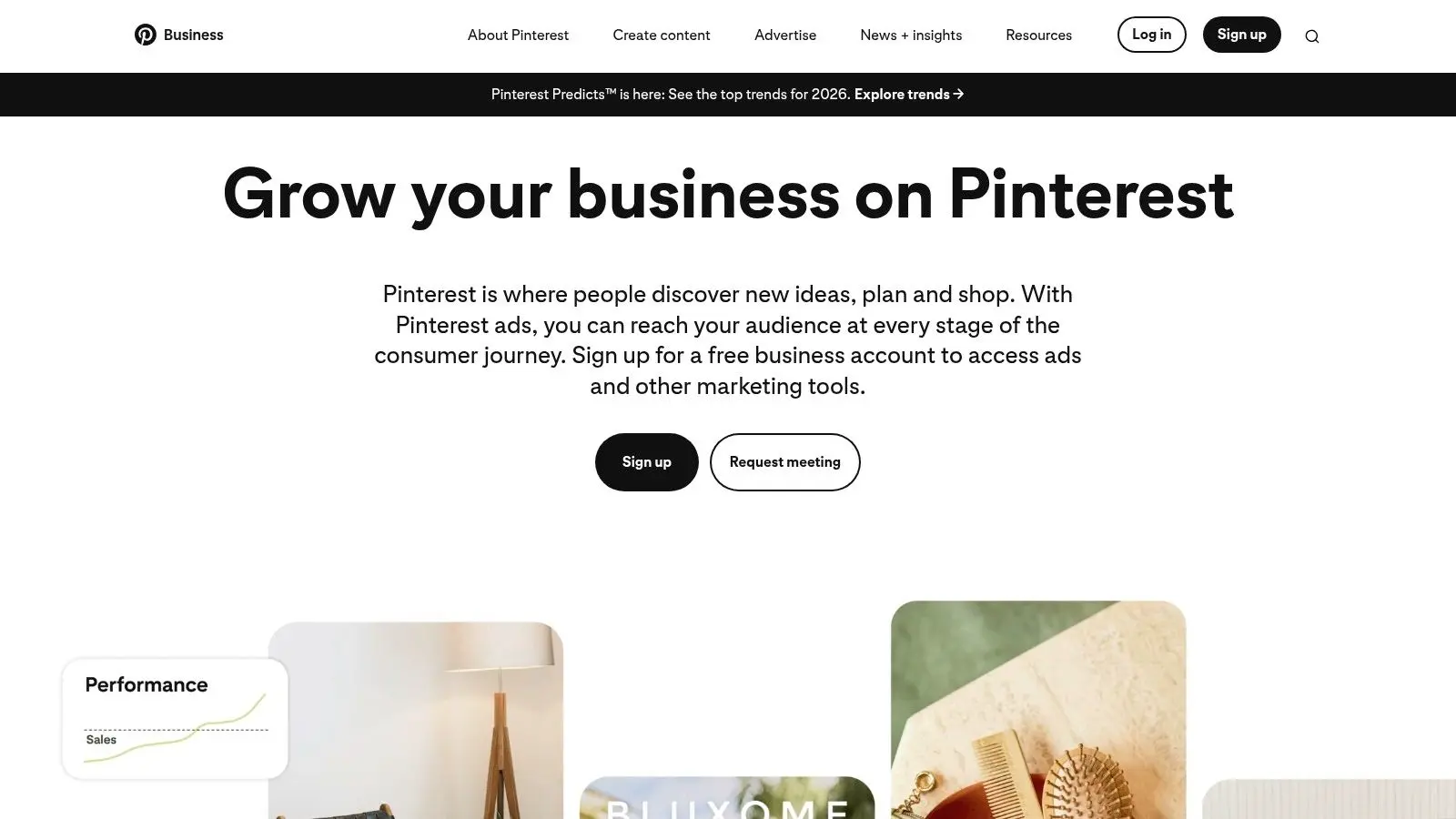
That planning mindset changes the creative brief. Pinterest wants useful inspiration. Strong vertical stills, animated explainers, mood-led collections, product-in-context imagery, and step-by-step visual narratives often outperform generic social ads.
The creative advantage on Pinterest
This is one of the better channels for brands with a distinctive art direction. If you have character design, 3D packshots, room-set renders, themed lookbooks, educational graphics, or a well-built visual identity system, Pinterest gives those assets room to work over time. It’s not ideal for reactive trend chasing. It is good for campaigns with a longer shelf life and a clear search or inspiration logic.
- •Evergreen beats disposable: Think useful, saveable, referable content.
- •Design matters: Composition, typography, and colour system carry real weight.
- •Seasonal planning helps: Pinterest rewards campaigns built ahead of key buying periods.
For brands in children’s IP, publishing, heritage, home, lifestyle, or product categories with strong visual storytelling, Pinterest often supports the middle of the funnel better than clients expect. You can explore formats and business tools via Pinterest Ads.
9. Reddit Ads
Reddit is where broad marketing language goes to get challenged. That’s not a drawback. It’s the whole point. If your audience includes enthusiasts, hobbyists, gamers, developers, technical buyers, or people who actively discuss the category, Reddit can be extremely useful. If your message is vague or over-polished, the same audience will reject it just as quickly.
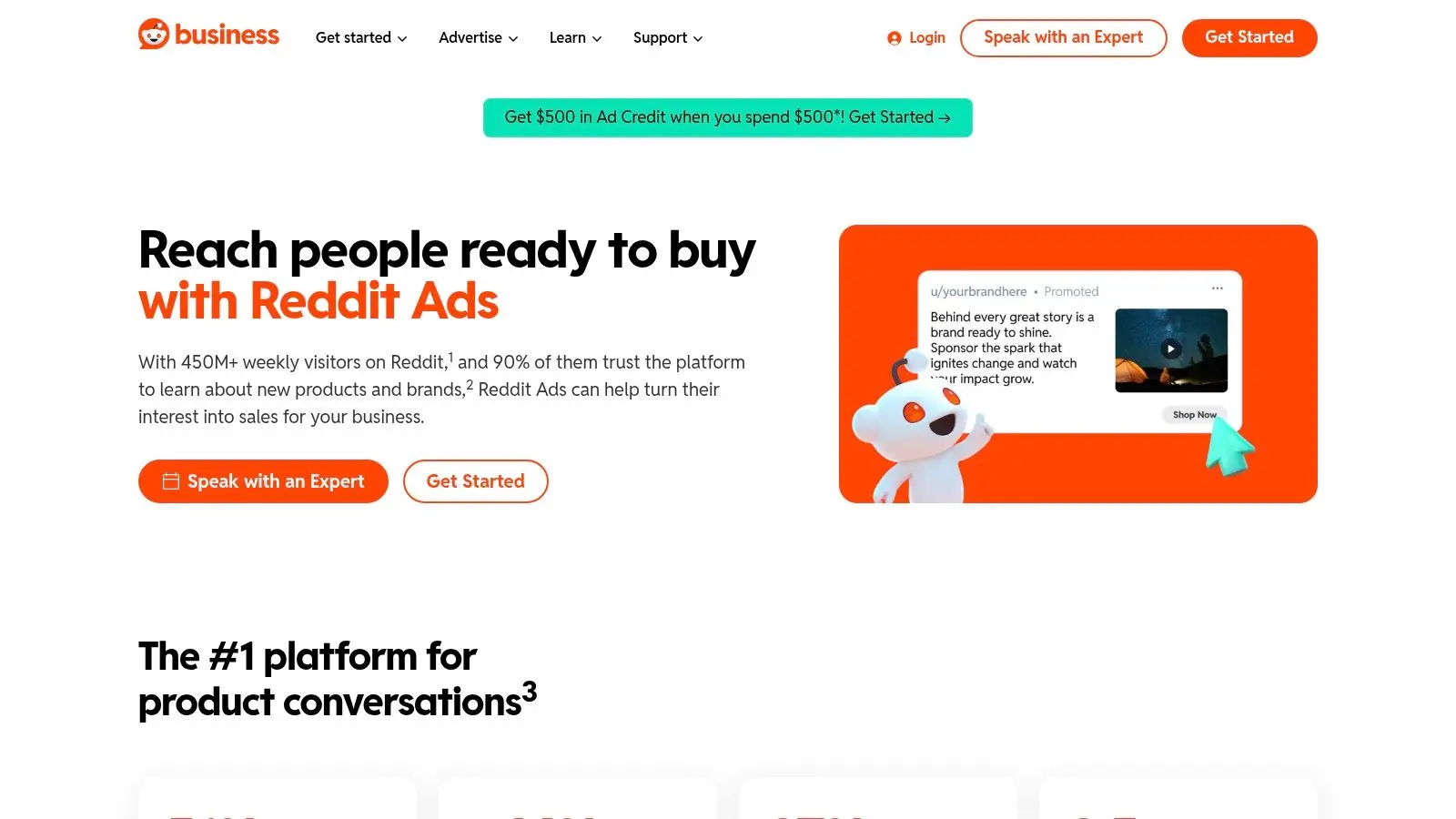
The creative should feel informed by the community you’re entering. Promoted posts, product demos, behind-the-scenes breakdowns, launch announcements, and technically literate explainers tend to travel better than glossy slogans. This is a platform where the comment section is part of the campaign environment.
Where Reddit shines
I’d consider Reddit for gaming launches, tools, VFX products, technical education, fandom-driven entertainment, and specialist software. It’s also useful when you need to reach self-identifying interest groups that don’t respond well to mainstream social creative. What works here is honesty and specificity.
Say what the product is, who it’s for, and why it matters. Reddit users usually spot evasive ad language immediately.
A few practical rules:
- •Tailor by community: One ad concept rarely fits every subreddit-adjacent audience.
- •Show your workings: Demos, process clips, and development context help.
- •Prepare for scrutiny: Campaign managers need to monitor response and adapt.
For creative studios, Reddit can be surprisingly effective when the ad respects the audience’s intelligence. You can review targeting and formats on Reddit Ads.
10. Sky AdSmart
Sky AdSmart changes the TV conversation for brands that want premium video placement but don’t want to buy television in the old all-or-nothing way. It’s still TV, so the creative standard matters, but the targeting is more precise than a traditional broad linear buy. That precision is the appeal. Sky AdSmart offers more than 900 household-level segments for targeting by demographic, location, and lifestyle, according to Sky AdSmart. For regional campaigns, category tests, or brands moving into TV for the first time, that makes the medium far more practical than many assume.
TV craft still applies
The trade-off is simple. Better targeting doesn’t lower the creative bar. If anything, it raises it, because poor TV creative looks even more wasteful when served with tighter audience logic. High-end 2D, 3D, live action finishing, motion graphics, and proper audio post matter. A weak social cutdown repurposed for TV usually feels small on the screen. AdSmart works best when the spot is built for television first, then adapted outwards.
- •Best for: Regional brand building, premium launches, test markets, and campaigns needing household relevance.
- •Creative requirement: Broadcast-grade picture, sound, pacing, and legal clearance.
- •Common mistake: Treating addressable TV as just another digital video slot.
For brands with a strong visual world and a clear proposition, AdSmart can sit very effectively between national TV ambition and digital targeting discipline.
Top 10 Advertising Platforms Comparison
| Platform | Core strengths | 👥 Target audience | ✨ Unique features / 🏆 | ★ Performance / UX |
|---|---|---|---|---|
| Google Ads | Intent-led Search + YouTube + Display | 👥 Performance & brand advertisers | ✨ AI bidding, massive cross-format reach 🏆 | ★★★★ |
| Meta Ads (FB/IG/Messenger) | Visual-first social + wide inventory | 👥 Consumer awareness & engagement | ✨ Reels/Stories, Advantage+ placements 🏆 | ★★★★ |
| LinkedIn Ads | Professional, B2B targeting & Lead Gen | 👥 Enterprise, education, agencies | ✨ Company/job targeting + prefill Lead Gen Forms 🏆 | ★★★ |
| TikTok for Business | Short-form video discovery & virality | 👥 Gen Z / entertainment-first audiences | ✨ Spark Ads (UGC amplification), high engagement | ★★★★ |
| Microsoft Advertising | Search + privacy-forward native inventory | 👥 Incremental search & older demos | ✨ Easy Google import, Outlook/MSN/Edge placements | ★★★ |
| Amazon Ads (Sponsored + DSP) | Retail-first ads + programmatic DSP | 👥 Shoppers & ecommerce brands | ✨ First-party shopping signals + DSP reach 🏆 | ★★★★ |
| Snapchat (Snap Ads) | Full-screen vertical & AR formats | 👥 Younger (Gen Z), mobile-first | ✨ AR Lenses & immersive vertical creative | ★★★ |
| Pinterest Ads | Visual discovery & planning journeys | 👥 Planners, shoppers, IP/merch marketers | ✨ Inspiration-to-commerce formats, seasonal value | ★★★ |
| Reddit Ads | Community-driven, niche targeting | 👥 Enthusiast communities (gaming, VFX) | ✨ Subreddit-level targeting & authentic placements | ★★★ |
| Sky AdSmart (Addressable TV) | Premium TV environment + household targeting | 👥 Regional brands & TV-first campaigns | ✨ 900+ household segments; premium broadcast context 🏆 | ★★★★ |
| Cost & Value | 💰 Pricing/value (typical) | |||
| --- | ---: | :---: | :---: | ---: |
| Google Ads | 💰 Medium, High (competitive CPCs) | |||
| Meta Ads | 💰 Medium (creative testing costs) | |||
| LinkedIn Ads | 💰 High (CPMs/CPCs) | |||
| TikTok | 💰 Medium (creative refresh needed) | |||
| Microsoft | 💰 Low, Medium (lower competition) | |||
| Amazon Ads | 💰 Medium (Sponsored) / High (DSP) | |||
| Snapchat | 💰 Low, Medium (test-friendly) | |||
| 💰 Medium, Low (seasonal ROI) | ||||
| 💰 Low, Medium (niche reach) | ||||
| Sky AdSmart | 💰 High (TV production + media) |
Your Creative Is Your Competitive Edge
Media teams often talk about platforms as if the platform is the strategy. It isn't. The platform is the delivery mechanism. The strategy sits in the match between audience intent, creative format, message structure, and production quality. That's why choosing among apps for advertising shouldn't start with audience size alone. It should start with behaviour. Google catches intent. Meta rewards testing velocity. LinkedIn values professional relevance. TikTok needs native-feel entertainment. Snapchat can justify interactive AR. Pinterest rewards useful visual planning. Reddit demands authenticity. Sky AdSmart asks for television craft with sharper targeting. The pattern across all of them is straightforward. Creative has to be made for the environment in which it appears. Repurposing can work, but only when the original campaign has been designed as a modular system. That means planning hero assets, cutdowns, aspect ratios, copy variants, motion systems, subtitles, stills, landing page logic, and where needed, immersive or interactive layers such as AR filters or 3D product demonstrations. Several of the market shifts around mobile and immersive advertising make that even more important. UK marketers are adopting AI more widely in ad production, and the challenge isn’t whether teams can generate more assets. It’s whether they can produce the right assets, safely, consistently, and in a way that still protects the brand and the idea. The useful model isn’t automation for its own sake. It’s a disciplined pipeline where creative direction, design, animation, edit, and testing work together. That's also why studio support matters more than many advertisers expect. A campaign rarely fails because the platform had no features. It fails because the creative didn’t fit the placement, the audience, or the buying objective. A strong studio partner helps solve that upstream. They shape the concept around real placements, build asset systems that can travel across channels, and know when a campaign needs polished CG, motion graphics, creator-style edits, or immersive XR execution. For brands that need that kind of production support, Studio Liddell is one relevant option. The studio works across animation, XR, games, apps, and digital content production, which is useful when a campaign has to move between paid social, product storytelling, interactive experiences, and broadcast-grade delivery. The strongest campaigns still follow a simple rule. Match the platform to the behaviour, and match the creative to the platform. When both decisions are right, budget works harder.
If you need campaign assets that are built for the platforms they'll run on, from animated social cutdowns to AR activations and broadcast-ready spots, talk to Studio Liddell about your next brief.