10 Apps for Entertainment: A Practical UK Guide
The biggest catalogue doesn't automatically make the best entertainment app. That advice sounds sensible until you're choosing for a real audience, a real device, and a real use case. A family that needs dependable kids controls, a brand building a companion app, and a college team planning an interactive learning experience shouldn't all buy on the same criteria. The better filter is experience. Ask four questions first. What experience does the audience need? Where will they use it: sofa, classroom, event floor, commute, headset, or mobile-only downtime? How do rights, region access, and account rules shape delivery? And does the platform mainly support discovery, interaction, or monetisation? That matters in the UK because entertainment apps sit inside a very large, heavily used market. UK app revenue reached $4.4 billion in 2023, with 2.3 billion downloads in the same year. Consumers aren't just downloading casually. They're spending, subscribing, and building habits around apps as their default entertainment layer. For anyone comparing apps for entertainment, the useful distinction isn't just watch, listen, or play. It's whether the app is a finished destination or a model for something you might build. That's especially relevant for studios, brands, and educators looking at streaming apps, music platforms, and interactive worlds as reference points for their own products.
1. App Development
If you're not just consuming entertainment but planning to launch it, Studio Liddell is the strongest fit in this list. This isn't a utility-app shop trying to bolt on media features later. It's a production-led studio that combines animation, real-time development, interactive design, and XR into apps that feel like entertainment products from day one. That distinction matters. A lot of agencies can ship menus, profiles, and playback wrappers. Far fewer can make an app feel authored, cinematic, and mechanically engaging at the same time.
Where it stands out
Studio Liddell is most useful when the brief sits somewhere between content, game design, and branded experience. That could mean a TV tie-in, an IP-led kids app, an immersive promotional product, or a learning app that needs visual storytelling rather than flat screens and forms. A few practical strengths make that possible:
- •Cross-disciplinary production: The studio works across 3D and 2D animation, app development, games, and XR, which is exactly what premium entertainment products usually need.
- •Real-time capability: Unity and Unreal experience matters when you need responsive interaction, device optimisation, or a pipeline that can support evolving content.
- •End-to-end scope: Concept, creative direction, design, engineering, animation, and ongoing support can sit under one roof instead of getting fragmented across vendors.
- •Strong fit for premium briefs: If the app needs to carry an IP, support narrative content, or feel polished enough for a broadcaster or major brand, this is the right level of production.
Practical rule: If your app brief includes phrases like “story world”, “character-driven”, “immersive”, or “event-ready”, don't hire like you're procuring a standard business app.
The useful background reading is Studio Liddell's guide to app development in the UK from concept to launch, which helps frame what has to be decided before production starts.
Trade-offs before you shortlist
Studio Liddell won't be the cheapest route, and it shouldn't be. Premium entertainment apps usually cost more in time and coordination because animation, interaction, and technical stability all have to land together. If all you need is a simple content wrapper or a lightweight internal app, this is probably more studio than you need. The current service page also keeps technical specifics fairly high level, so platform support, delivery model, timeline, and budget need a direct conversation. That's normal for bespoke work, but buyers should come in with a clear brief. For teams thinking about acquisition and revenue as well as build quality, this kind of product planning should sit alongside campaign economics such as CPI and LTV in influencer campaigns. Best for: Brands, broadcasters, educators, and IP owners that need premium, media-rich entertainment apps rather than generic mobile products. Website: Studio Liddell App Development
2. BBC iPlayer
BBC iPlayer is one of the strongest examples of an entertainment app succeeding because the product intent is tight. It does not try to win on total catalogue size. It wins by being the default place for BBC viewing in the UK, whether that means catch-up after broadcast, live channels during major events, or on-demand access to drama, factual and children's programming. That focus matters. For viewers, iPlayer is practical because the content proposition is easy to understand. For studios, brands and educators, it is a useful reference point for digital experience design. Clear editorial curation, recognisable programme brands, and a strong public-service identity reduce decision fatigue. That is a different design lesson from global streaming platforms built around endless breadth and algorithmic discovery.
Where BBC iPlayer works best
iPlayer works best for audiences who actively want British programming and still value a mix of live and on-demand viewing. It is particularly effective for family use, current affairs, documentaries, children's content, and national moments where viewers expect reliability more than novelty. Ofcom's Online Nation 2024 report tracks how central smartphone apps are to media use in the UK. That context helps explain why iPlayer matters beyond catch-up TV. It sits inside established mobile viewing habits, which is part of why the product remains culturally visible. The design trade-off is equally clear. If the goal is broad film depth or an international library across many rights holders, iPlayer is not built for that. If the goal is trusted access to BBC content with low friction, it is one of the clearest products in the UK market.
- •Best strength: Strong UK relevance across drama, factual, kids, and live BBC channels.
- •Best use case: Households, educators, and public-interest audiences that want dependable access to BBC programming.
- •Main limitation: It is UK-only, and legal use requires a valid TV Licence.
- •Strategic lesson: Local relevance, editorial clarity, and trusted brand identity can outperform a larger library.
Good entertainment apps need more than content volume. They need a clear reason to be opened first. Website: BBC iPlayer
3. ITVX
ITVX is a useful reminder that entertainment apps do not have to feel premium to be effective. In the UK, a large part of the audience still wants fast access to familiar shows, live channels, and catch-up without adding another monthly bill. That shapes the product. ITVX is built around mainstream demand: reality formats, ITV drama, soaps, event television, and a free tier that lowers the barrier to entry. For viewers, that makes it a practical everyday app. For studios, brands, and educators reviewing UK entertainment products, it is also a clear reference point for ad-supported experience design. The interesting lesson is commercial as much as editorial. ITV has positioned ITVX as part broadcaster player, part digital video platform, with free access sitting at the centre of the offer. You can see that in ITV's own reporting on its streaming business through the ITVX hub on ITV plc, which is useful if you are assessing how a legacy broadcaster frames growth, advertising, and audience migration. From a product perspective, ITVX works best when the job is simple: open the app, find something recognisable, and start watching quickly. That sounds basic, but many branded and educational apps get this wrong by overcomplicating discovery. ITVX shows the value of clear content categories, obvious entry points, and a proposition users understand immediately. A few trade-offs are hard to miss. The free tier is attractive, but ads interrupt the experience and can make longer sessions feel uneven. Rights windows also shift, so film and acquired box set availability is not always stable. If a studio wants to model permanence, deep catalogue access, or a polished subscription feel, ITVX is not the strongest reference. If the goal is reach, regular return visits, and low-friction access to known content, it is a stronger example than many higher-end apps. For UK brands considering sponsorship, AVOD, or broadcaster partnerships, ITVX matters because it sits close to mass-audience viewing habits rather than niche fandom. That makes it a better benchmark for broad-reach digital entertainment than for prestige product design.
- •Best strength: Free access to familiar UK entertainment, live streams, and catch-up in one app.
- •Best use case: Broad household viewing, ad-supported distribution models, and teams studying how mainstream streaming products reduce sign-up resistance.
- •Main limitation: The free experience includes ads, and some content availability changes with rights periods.
- •Strategic lesson: A clear proposition and easy access can outperform a more polished interface if the audience wants speed, familiarity, and low commitment.
Website: ITVX
4. Channel 4
Channel 4's streaming app is one of the better examples of curation doing real work. The service doesn't just host programmes from Channel 4, E4, and More4. It often surfaces offbeat, youth-skewing, documentary, and cult content in a way that feels editorial rather than purely algorithmic. That's useful if you're studying apps for entertainment as product models. Discovery doesn't always have to mean recommendation-heavy personalisation. Sometimes it means a clear voice and good programming judgment.
Best fit and practical limitations
Channel 4 is strongest for viewers who like browsing collections and finding something slightly less obvious than the biggest mainstream title. It also remains a practical free option for UK users who are comfortable with registration and ad-supported viewing. The weakness is familiar. Rights windows can be uneven, some titles disappear, and ad breaks are part of the deal. If your audience wants maximum control and permanence, this won't feel as stable as a paid subscription platform.
Producer's view: Curated discovery is especially effective when the catalogue has personality. A generic interface can flatten good content.
For agencies, educators, and studio teams, Channel 4 is also relevant on the delivery side. The broadcaster's programme delivery specification states that electronically generated moving graphics and effects such as wipes, fades, and dissolves must be generated and added as interlaced, and that 2160p/50 deliverables require those effects to be edited at 50 frames per second. That doesn't change whether audiences should download the app, but it does matter if you're making moving image work intended for broadcast-grade environments around these platforms. Website: Channel 4 streaming
5. Netflix
Netflix matters in the UK because it set the default standard for what a paid entertainment app should feel like. People judge other services against it, often without realising it. Fast profile switching, competent search, reliable resume points, strong subtitle support, and consistent playback across devices have become baseline expectations partly because Netflix made them feel ordinary. That product maturity has strategic consequences. Barb's Q1 2026 Establishment Survey reported that Netflix reached 18.1 million UK homes, or 61.0% of households. For studios, educators, and brands, that scale makes Netflix useful as a reference point even if you are not building a subscription video service. If your app includes lessons, episodes, trailers, or branded video libraries, users will compare your onboarding, playback stability, and recommendation logic with services they already use at home. A better way to assess Netflix is by the habits it reinforces: Netflix rewards low-friction return visits. Open the app, continue watching, switch profile, start quickly. That loop sounds simple, but it is expensive to design and maintain well. For audience use, the fit is broad. Households that want one subscription covering drama, documentaries, reality, kids viewing, and original films usually get good value from it. The trade-off is less flattering. Pricing tiers, ad-supported options, and quality settings can create decision fatigue, especially for users who just want the best version without checking the small print. For product teams, the lesson is practical rather than aspirational. Good entertainment apps do not just carry content. They reduce hesitation at every step, from account handoff to playback recovery. If you are studying interface patterns for media products, embedding video in Vue UI is a useful technical reference because it shifts the conversation from catalogue size to how video components behave in real interfaces. Netflix is still hard to beat on polish. It is less distinctive if your priority is public-service context, British broadcaster identity, or franchise-specific depth, which is where other apps in this list can make a clearer case. Website: Netflix UK
6. Disney+
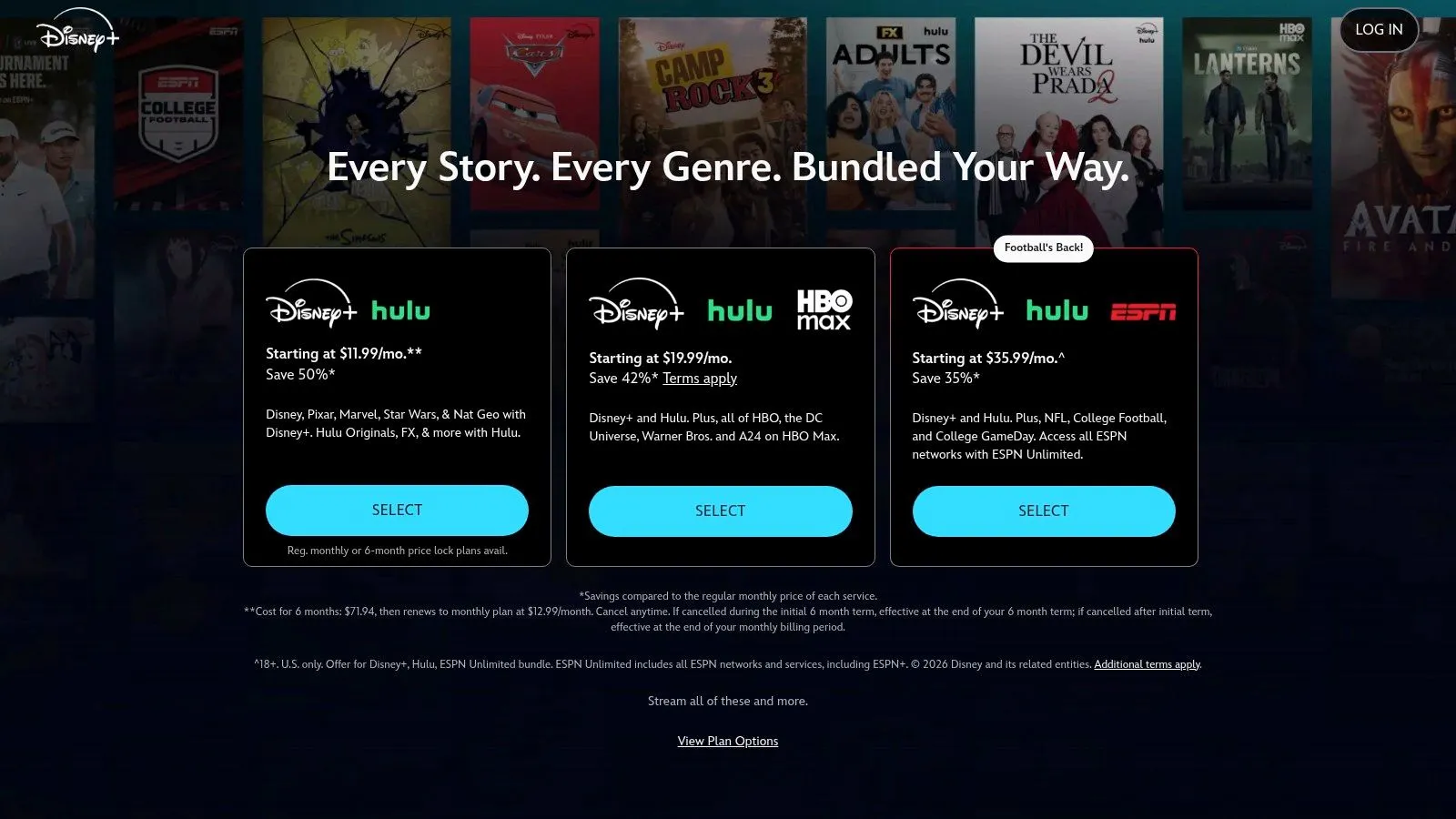
Disney+ is a useful reminder that bigger catalogues do not always produce better products. In UK households, its appeal comes from concentration. Disney, Pixar, Marvel, Star Wars, National Geographic, and Star sit inside one service with a clear audience promise. For viewers, that means less hunting. For studios, brands, and educators, it shows what happens when an app is organised around recognisable worlds rather than around maximum volume. That strategy has clear commercial weight. PocketGamer.biz reported that Disney+ generated £44 million in the UK in 2023. The more useful lesson is not the revenue figure on its own. It is that tightly held IP can support a paid app model when the product keeps the route from interest to playback simple. For families, Disney+ is often an easy recommendation. Profile controls are well handled, kids areas are easy to understand, and repeat viewing feels natural instead of like an afterthought. That matters because children do not use entertainment apps the way adults do. They return to the same characters, the same artwork, and the same entry points. Disney+ is built for that pattern. For product teams, the design lesson is specific. Brand consistency reduces cognitive load, but it can also narrow discovery. If you are building a branded experience for a UK media owner, museum, publisher, school, or franchise, Disney+ is a strong reference for how to make a content universe feel coherent across ages. It is a weaker reference if your goal is broad exploration, editorial serendipity, or public-service range. The limitation is straightforward. Outside Disney-owned ecosystems, the catalogue can feel bounded more quickly than Netflix or Prime Video. That is the trade-off. Disney+ does not try to be the default answer for every taste. It tries to be the obvious destination for a defined set of properties, and in product terms that focus is part of why it works. Website: Disney+ UK
7. Amazon Prime Video
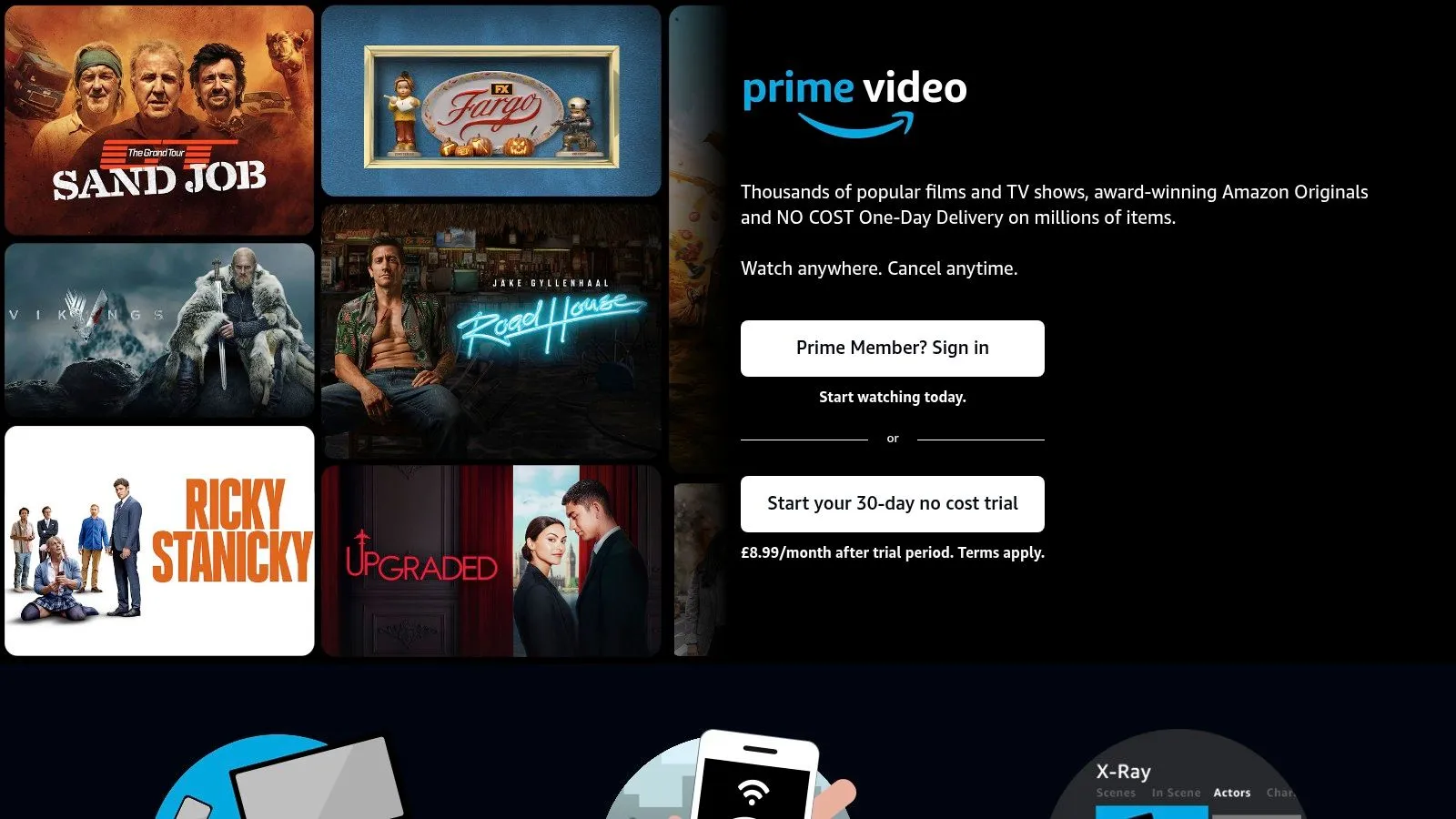
Amazon Prime Video is useful because it behaves less like a pure streaming service and more like an entertainment hub. Originals, licensed titles, rental options, and add-on channels all sit in one place. For some users that's efficient. For others it feels busy. That's the core trade-off. Prime Video gives you aggregation, but aggregation can come with interface clutter.
Where Prime Video makes sense
It's strongest when you already subscribe to Amazon Prime and want video as part of a wider membership. The channels model also suits viewers who'd rather manage extra services from inside one app instead of maintaining separate destinations. That hub logic has become more relevant in a mature market. Senal News reported that in 2025 20 million UK households subscribed to at least one streaming platform, with Amazon Prime Video at 13.6 million households. That doesn't make Prime Video the neatest experience. It does show it has become embedded in UK household entertainment behaviour.
The more an app tries to be an aggregator, the more carefully it has to handle navigation. Convenience disappears fast when every rail feels like merchandising.
The main compromise is browsing clarity. Some users like having subscriptions, rentals, and channels under one roof. Others want a cleaner promise from the app they open. Website: Amazon Prime Video UK
8. NOW
NOW is a useful reminder that convenience is not always about having more content. Sometimes it is about keeping commitment low. In the UK, where households often rotate services rather than stay loyal to one app all year, that matters. Its strongest product decision is simple. Users can buy into Entertainment, Cinema or Sports around a real need, then leave without the friction of a long contract. For viewers, that keeps spend closer to intent. For studios, brands and educators, it is a strong reference point for modular access design. A smaller, clearly priced offer can be easier to justify than an all-in subscription that asks too much too early.
Who gets the most value from NOW
NOW suits people who want Sky programming and HBO shows licensed through Sky in the UK, but do not want a full Sky package. It also fits event-led behaviour well. A football run-in, a boxing card, or a month of prestige TV is easier to buy into when the app supports short-term commitment. That makes NOW especially relevant as a design example. It is built around spikes of intent, not just endless browsing. That is a different job from Netflix or Disney+, and it leads to different product choices around packaging, promotion and retention. The trade-off is quality and clarity. The entry proposition is flexible, but the best viewing experience can depend on paid upgrades, which weakens the appeal for users who expect top-tier picture and sound as standard. That tension is worth studying. Flexible pricing gets people in. If the feature set feels segmented in the wrong places, goodwill drops quickly. As noted earlier, UK streaming is already mainstream, and many households manage more than one service at a time. NOW's role in that market is not to be the default app for every night. It is to be the service people add when specific rights, channels or events justify it. That is a narrower proposition, but it is also a disciplined one. Website: NOW
9. Spotify
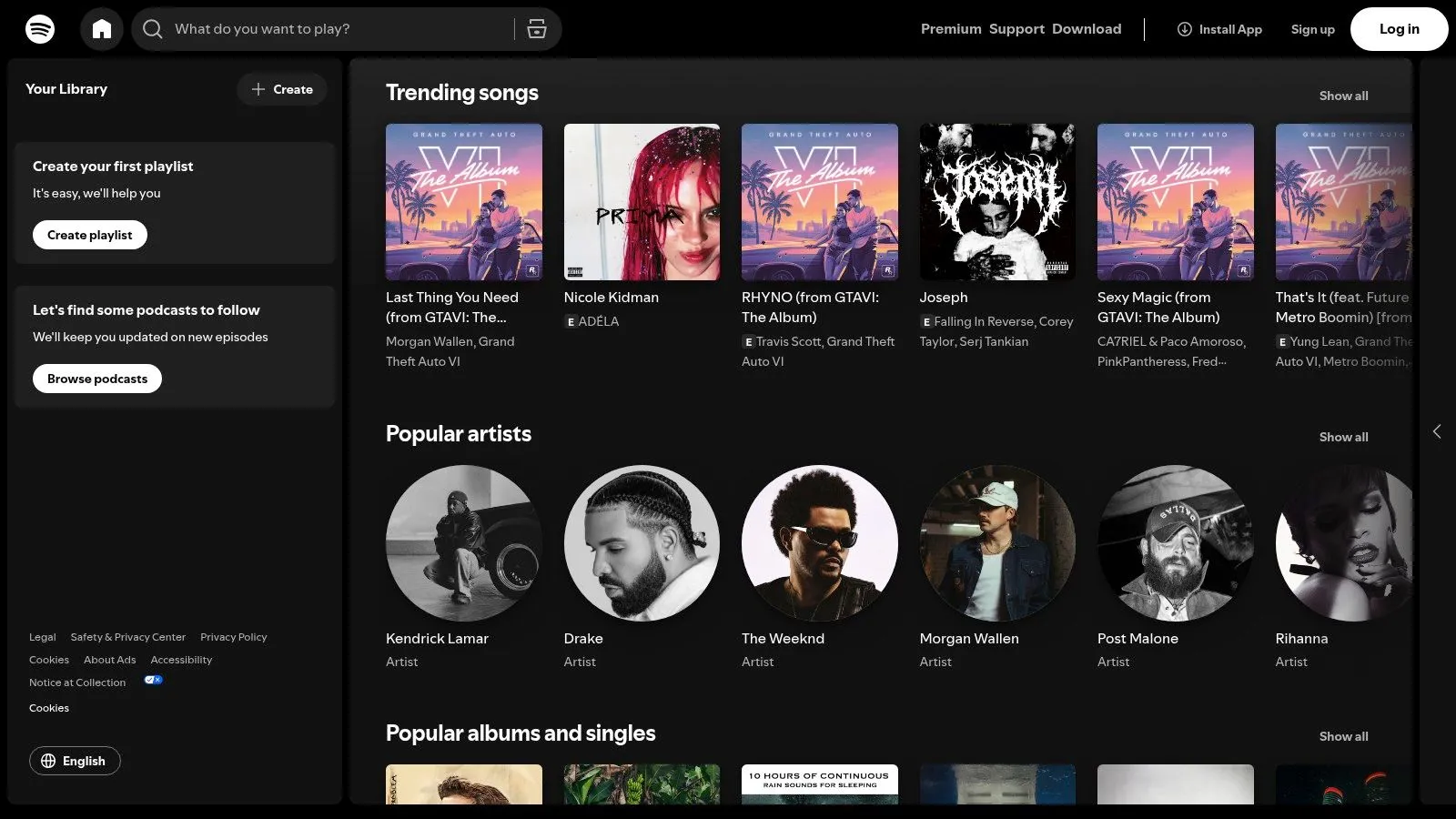
Spotify matters less because it streams music and more because it turns abundance into habit. For UK audiences, it is one of the clearest examples of an app that keeps earning return visits through recommendation design, playlist logic, and continuity across devices. That makes it useful well beyond music. Studios can study Spotify to understand how editorial curation and personalisation work together. Brands can look at how playlists, podcasts, and artist pages create different entry points for different moods and intents. Educators can borrow the same structure for reading lists, lesson series, revision audio, or topic-led collections where users need guidance without feeling pushed into a rigid path. One practical strength is session flexibility. Spotify works for deliberate actions, such as searching for a track or building a playlist, and for low-attention moments, such as commuting, working, or cooking. That is harder to get right than it looks. An app that supports both modes needs strong search, competent recommendations, reliable resume behaviour, and interfaces that stay clear on mobile, desktop, speakers, wearables, and in-car systems. As noted earlier, online music use in the UK is mainstream. Spotify's role in that market shows what audio apps can do when they become part utility, part curator, and part routine. The business model is just as instructive. The free tier widens reach, but it also creates product tension around ads, skips, downloads, and audio control. Premium reduces that friction for heavier listeners, which is why Spotify is a strong reference point for teams working through tiering, retention, and conversion. Studio teams assessing those trade-offs can use Studio Liddell's guide to mobile application monetization models and pricing choices. Its limitations are worth studying too. Discovery can become repetitive if recommendation loops get too narrow, and some features are shaped by licensing rather than pure product choice. For users, that can feel inconsistent. For app teams, it is a reminder that great interface design still depends on commercial constraints behind the scenes. Website: Spotify UK
10. Roblox
Roblox matters because it turns entertainment into participation. People do not just open it to consume a finished library. They drop into games, concerts, social spaces, branded activations, and creator-built worlds that can feel closer to a live venue or toybox than a video service. That makes it a useful UK reference point for studios, educators, and brands designing audience experiences with repeat visits in mind. Analysts at S&P Global, in its State of the UK Digital Entertainment Market 2026, placed Roblox among the most time-intensive apps used by UK audiences. For product teams, that matters. An app does not need passive viewing to compete for attention with iPlayer, Netflix, or YouTube.
Why Roblox matters beyond gaming
Roblox sits at the meeting point of play, identity, community, and virtual spending. That combination is hard to copy well. Streaming apps mostly need strong playback, discovery, and rights management. Roblox-style products also need moderation systems, creator tooling, safe social design, and economies that do not overwhelm the experience. For brands, the lesson is restraint. A branded world that behaves like an advert usually gets ignored. The better examples give users a reason to return, such as competition, customisation, collaboration, or status signals that feel native to the platform. For educators, the trade-off is similar. Interactivity can raise engagement, but only if the activity is clear, age-appropriate, and supervised properly. The limitations are part of the evaluation. Quality is inconsistent because user-generated platforms always produce a long tail of forgettable experiences beside the stronger ones. Younger audiences may also face spending pressure and social risk if parental controls, moderation, and age gating are weak. Teams planning children's products or adjacent interactive formats should treat Roblox as both inspiration and a warning sign. Studio Liddell's look at gaming apps that shape interactive product decisions is a useful companion if the brief sits closer to play than streaming. Website: Roblox
Top 10 Entertainment Apps, Feature Comparison
| Product | Core offer & unique features ✨ | Quality / UX ★ | Price / Value 💰 | Target audience 👥 | Standout strength 🏆 |
|---|---|---|---|---|---|
| App Development (Studio Liddell) | Cinematic apps, Unity/Unreal, AI pipelines; end‑to‑end studio service ✨ | ★★★★★ Studio‑grade | 💰 Premium, enterprise budgets | 👥 Brands, IP owners, broadcasters, publishers | 🏆 High‑production CGI, XR & multi‑episode expertise |
| BBC iPlayer | Full BBC catalogue, live channels, downloads & profiles ✨ | ★★★★☆ Reliable, high‑quality streams | 💰 Free (requires UK TV Licence) | 👥 UK viewers seeking BBC originals & kids content | 🏆 Best for UK originals, kids & factual programming |
| ITVX | Live ITV channels, ad‑supported box sets; optional Premium ✨ | ★★★☆☆ Good UX; ad interruptions | 💰 Free (ads) or paid Premium | 👥 UK drama & reality audiences | 🏆 Strong drama/reality library |
| Channel 4 (streaming) | On‑demand Channel 4/E4/More4, live streams & curated collections ✨ | ★★★☆☆ Solid discovery, ad breaks | 💰 Free (ads & registration) | 👥 Fans of cult hits, docs & curated picks | 🏆 Curated editorial discovery |
| Netflix | Global Originals, 4K/HDR, strong recommendations & profiles ✨ | ★★★★★ Top‑tier streaming UX | 💰 Paid (tiered; ad & premium plans) | 👥 Global binge‑watchers & families | 🏆 Unmatched original slate & app polish |
| Disney+ | Disney/Pixar/Marvel/Star Wars/NatGeo; kids profiles & IMAX titles ✨ | ★★★★☆ Family‑friendly, consistent 4K | 💰 Paid (family/franchise focus) | 👥 Families & franchise fans | 🏆 Franchise catalogue & parental controls |
| Amazon Prime Video | Amazon Originals, channel add‑ons, downloads & device support ✨ | ★★★★☆ Strong app; mixed catalogue | 💰 Bundled w/Prime (ads by default) | 👥 Value seekers & Prime members | 🏆 Channels aggregation & Prime bundle value |
| NOW (Sky) | Contract‑free Sky/HBO content; Boost add‑ons for 4K/5.1 ✨ | ★★★★☆ Flexible; pay‑for‑quality | 💰 Monthly passes; Boost costs extra | 👥 Sky/HBO fans wanting no contract | 🏆 Access to Sky/HBO without long contracts |
| Spotify | Massive music & podcast library, algorithmic discovery & playlists ✨ | ★★★★★ Best‑in‑class discovery | 💰 Free (ads) or Premium (duo/family/student) | 👥 Music listeners, podcast fans & curators | 🏆 Superior personalized discovery & playlists |
| Roblox | User‑generated games, live events, age‑based safety controls ✨ | ★★★☆☆ Highly engaging; quality varies | 💰 Free (in‑app Robux purchases) | 👥 Kids, creators & social gamers | 🏆 Massive creator ecosystem & live engagement |
Match the Platform to the Experience
There isn't one winner here because the category is too broad. The right choice depends on what the audience wants to do, how often they'll do it, and what level of control you need over content, access, and interaction. That's why “best” usually turns into “best for this situation” as soon as you move past generic consumer advice. For personal use, the practical checks are straightforward. Start with audience fit. A household with children may prioritise parental controls and familiar franchises, while a single-user setup may care more about discovery, prestige series, or music recommendations. Then check region and rights. BBC iPlayer only works in the UK and legally requires a valid TV Licence. Other services may vary by plan, title availability, or account setup. Catalogue size matters less than whether the catalogue matches actual viewing or listening habits. Advertising tolerance is another dividing line. Some people are happy to trade ads for free access. Others will stop using an app the moment it interrupts the session. Device support matters in the same way. A service that works beautifully on a phone but poorly on a smart TV can still be the wrong choice for a living-room audience. If downloads, accessibility options, or cross-device continuity matter, test those before committing. For brands, studios, and educators, the bar is higher. Don't just ask which platform is popular. Ask what product behaviour is worth borrowing. Netflix is strong on retention and interface consistency. Spotify is strong on discovery. Roblox shows how interaction, identity, and repeat engagement can merge. BBC iPlayer and Channel 4 show the continuing value of curation and local relevance. Those are design signals, not just consumer features. Before building anything, prototype the actual experience. A deck won't tell you whether users understand the navigation, whether discovery works, or whether the content loop feels thin after the first session. Confirm licensing early if you're using brand assets, broadcaster material, music, or character IP. Check privacy requirements if the audience includes children, students, or event attendees. Test performance on the devices people will really use, not just on your internal favourites. If the end product needs to feel premium rather than merely functional, creative and technical production have to be planned together. That's where a studio-led approach becomes useful. For media-rich, animated, interactive, or XR entertainment products, Studio Liddell's App Development service is the better fit than a generalist app supplier because the experience itself is the product. --- If you're planning an entertainment app that needs more than standard screens and menus, Studio Liddell can help shape the concept, design the experience, and build it with the level of animation, interactivity, and technical polish that premium audiences expect. Explore Studio Liddell if you need an end-to-end partner for branded apps, children's IP, interactive learning products, or XR-led entertainment experiences.