Your Guide To Apprenticeships In Animation UK
So, you’re thinking about a career in animation? An apprenticeship in the UK is a fantastic way to get your foot in the door. It’s a paid, hands-on job that blends real studio work with structured training, a direct alternative to university that lets you earn a salary and build a professional portfolio from day one.
Your Starting Point For An Animation Career

Think of an animation apprenticeship as the ultimate 'earn-while-you-learn' pass into the creative industry. Forget sitting in a lecture hall for three years. This is a practical role where you’re immediately part of a production team, guided by seasoned professionals. It’s a powerful launchpad for your career. This route is all about applied skills. Imagine you need to build a complex 3D character rig. An apprenticeship doesn’t just give you the theory; it gives you the software, the digital skeleton, and an expert looking over your shoulder, showing you how to make it move with real personality and weight. You learn by doing.
Apprenticeships vs University
For many aspiring animators, choosing between an apprenticeship and a degree is a huge decision. A university course provides a broad academic foundation over three or more years. But it also comes with hefty tuition fees and often leaves you with theoretical knowledge but little practical studio experience. An apprenticeship completely flips that model. You gain priceless real-world experience, build a network of industry contacts, and earn a wage right from the start. Your training is directly tied to the job you’re doing, making every single day a lesson in professional practice. If you're weighing up your options, you might also want to explore our guide to internships for animation in the UK, which covers similar hands-on career routes.
The real value of an apprenticeship isn't just about the skills you gain; it's about the confidence you build. It’s that moment you stop being a student and become a professional who contributes to real projects and sees their name in the credits.
This practical focus makes apprentices incredibly attractive to employers. You finish your training not just with a qualification, but with a proven track record, a professional showreel, and a deep understanding of how a studio pipeline and culture actually work.
UK Animation Apprenticeship Levels At A Glance
Apprenticeships in the UK are neatly organised into levels, each matching up to an educational equivalent. This structure creates clear pathways, so you can jump in at a level that fits your current skills and work your way up. Getting to grips with these levels is the first step in mapping out your career. Here’s a quick breakdown of what you can expect at each stage.
| Level | Equivalent Education | Typical Role | Focus Area |
|---|---|---|---|
| Level 3 | 2 A-Levels | Junior Animator, Trainee | Foundational skills, animation principles, software basics |
| Level 4 | Foundation Degree | Junior 2D/3D Artist, Assistant | Specialised tasks like texturing, basic rigging, or compositing |
| Level 5 | HND / Foundation Degree | VFX Technician, Junior Compositor | Technical and artistic roles within a specific department |
| Level 6 | Bachelor's Degree | Visual Effects Technical Director | Advanced technical skills, problem-solving, pipeline development |
| Level 7 | Master's Degree | Senior Artist, Creative Lead | High-level creative direction, project management, mentorship |
As you can see, the system is designed to support you whether you're a complete beginner or looking to formalise your existing skills with a degree-level qualification. Each level is a stepping stone to more senior and specialised roles within the animation industry.
Understanding The Different Apprenticeship Pathways
Trying to get your head around the different apprenticeship standards can feel a bit overwhelming, but it’s simpler than it looks. Think of it as a roadmap for your career, showing you the different routes you can take to land a specific job in the animation industry. Getting to grips with these pathways is the first step in figuring out your perfect starting point. Each apprenticeship, whether it’s a Level 4 ‘Junior 2D Artist’ or a Level 7 ‘Creative Industries Professional’, is built around a specific set of skills and responsibilities. These aren’t just random lists of tasks; they're properly structured programmes designed to shape raw talent into a studio-ready professional. This diagram shows you exactly how an apprenticeship provides a direct, hands-on route into the industry, especially when compared to a more traditional academic path.
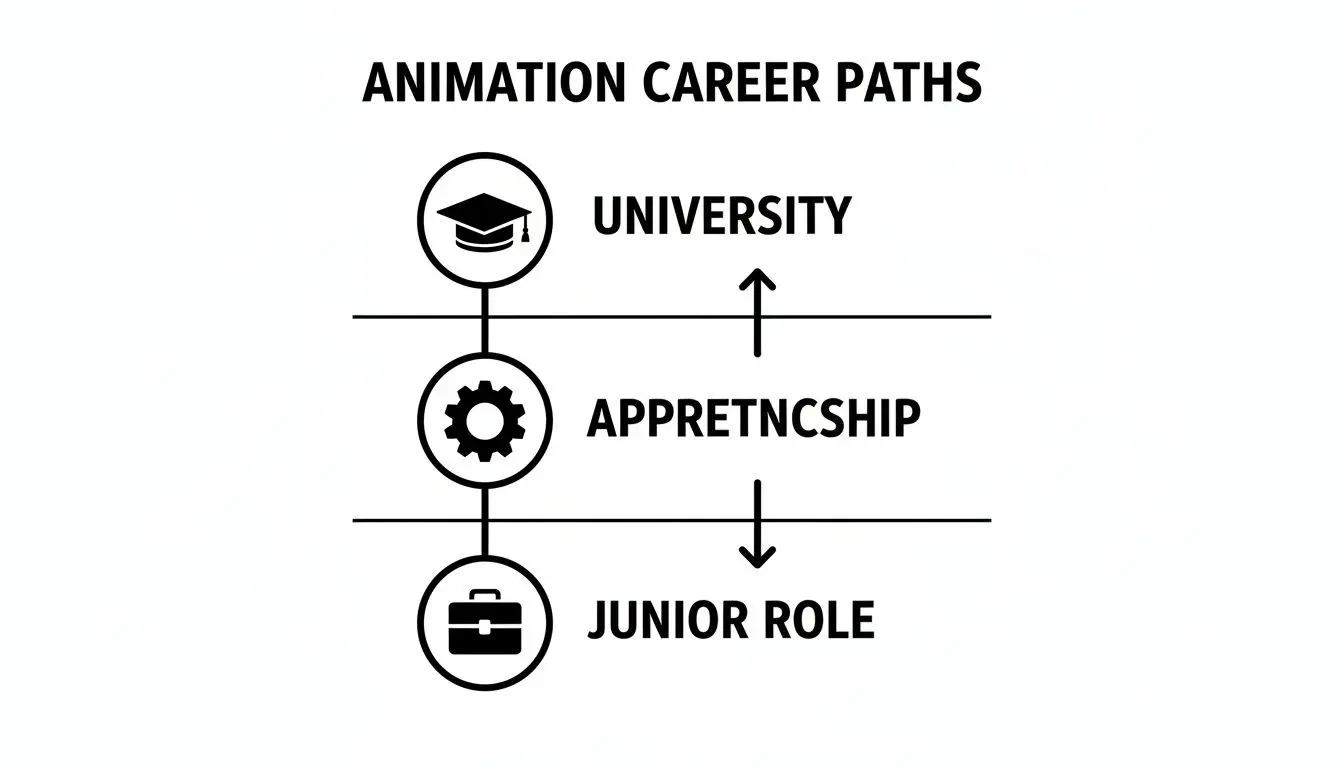
As you can see, apprenticeships act as a practical bridge, connecting your training directly with a junior role. It’s a path where you start earning and building real-world experience from day one.
The Core Components Of An Animation Apprenticeship
No matter the level or specialism, all apprenticeships in animation UK are built on two key elements: on-the-job work and off-the-job training. You’ll spend about 80% of your time working right there in a studio, getting your hands dirty on live projects. This is where you learn the real-world flow of a production pipeline. The other 20% of your time is for formal learning, usually with a college or a specialist training provider. This is where you cover the theory that backs up your practical work, from core animation principles to the nitty-gritty of the software you’ll be using every day. To get a feel for the kind of tools you'll be mastering, check out our guide on the best 3D animation software.
An apprenticeship isn't just about learning software; it's about learning how to think like an animator. It’s about understanding teamwork, hitting deadlines, and turning a director’s feedback into beautiful, moving images.
This mix of doing and learning is what makes apprenticeships so effective. By the end, you won't just have a recognised qualification , you’ll have a portfolio bursting with professional work and the confidence that only comes from real studio experience.
Exploring Specific Animation Pathways
The pathways are designed to feed directly into the jobs that studios are actually hiring for in animation and VFX. Let’s break down some of the most common standards you’re likely to come across.
- •Junior 2D Artist (Level 4): This is a brilliant way into the industry. You’ll learn the fundamentals of drawing, design, and creating 2D animated sequences. You could find yourself working on anything from character animation for a kids' TV show to creating assets for a mobile game.
- •Junior VFX Artist (Level 4): This route leans more into the technical side of visual effects. You’ll learn about compositing, which is the art of blending different visual elements into one seamless shot. It’s a role that perfectly marries an artistic eye with technical problem-solving.
- •Creative Industries Professional (Level 7): This is a master’s degree-level apprenticeship aimed at people who already have some industry experience. It’s all about developing leaders and senior creatives, focusing on project management, creative direction, and high-level pipeline strategy.
This kind of structured training is what makes these roles so valuable. To see how these apprenticeships fit into the wider world of skills development, it’s worth learning more about vocational education. This hands-on approach prepares you for the realities of the job in a way that purely academic study often can't.
How To Find And Apply For Animation Apprenticeships
Finding the right apprenticeships in animation UK can feel like searching for a needle in a haystack. But here’s the thing: while these opportunities might seem elusive, they’re often hiding in plain sight if you know which channels to tune into. Think of this as your practical guide to sniffing out and, more importantly, landing that dream role. Let's get started.
Where To Look For Opportunities
A smart search isn't just about hammering one jobs board. The best approach is to combine broad platform alerts with some targeted digging into the studios you admire. Don’t put all your eggs in one basket; casting a wide net is key to making sure you don't miss that perfect opening. Here are the key places to focus your search:
- •The UK Government's 'Find an Apprenticeship' Service: This should be your first port of call. It’s the official, most comprehensive database for every apprenticeship in England. Set up alerts for keywords like "animation," "VFX," "junior artist," and "creative digital media" to get notified automatically.
- •ScreenSkills: As the industry body for the UK's screen sectors, ScreenSkills is an absolute goldmine. Their opportunities board is constantly updated with apprenticeships, traineeships, and other entry-level roles specifically for film, TV, and animation.
- •Studio Career Pages: Got a list of dream studios? Good. From the big VFX houses to smaller indie studios like ours, make a habit of checking their career pages directly. Many will post new roles on their own site before they appear anywhere else.
- •LinkedIn: Get connected! Follow studios, creative recruiters, and well-known industry figures on LinkedIn. It’s become a go-to platform for announcing new schemes and finding fresh talent.
Once you’ve found an opening that gets you excited, it's time to put together an application that a recruiter simply can't ignore.
Crafting An Application That Gets Noticed
Your application is your personal pitch. Your CV and cover letter are the script, telling the story of your potential. Your portfolio? That’s the sizzle reel, the visual proof that you've got the creative chops studios are desperate to find. For many aspiring animators, an apprenticeship is that first big break. It’s perfectly possible to write a powerful student resume even without work experience by shining a spotlight on your skills and personal projects. Keep your CV clean and concise, one page is all you need. Highlight relevant software skills (like Blender, Maya, or Toon Boom Harmony) and showcase any creative projects you're proud of, even if they were for college or just for yourself. Your cover letter is where the magic happens. This is your chance to connect your passion directly to the studio's work. Don't just say you love animation; tell them why you admire a specific film they produced or how their unique style genuinely inspires you. A custom letter shows you’ve done your homework.
An outstanding application is more than a list of skills; it's a narrative that shows a studio not just what you can do now, but the creative talent you will become. Show them your passion, your process, and your unique point of view.
Your Application Checklist Before You Hit Submit
Hold on! Before you fire off that email, run through this final checklist. A tiny mistake can be the difference between getting a callback and getting lost in the pile.
- •Proofread Everything: Seriously. Check your CV, cover letter, and even the text in your portfolio for typos or grammar mistakes. Better yet, get a friend to give it a once-over with fresh eyes.
- •Is Your Portfolio Ready? Is your showreel link working and easy to find? Your portfolio should only include your absolute best work. Start strong, and end even stronger. Keep it snappy, 60 to 90 seconds is the sweet spot.
- •Does It Match The Role? Go back to the job description. Have you tailored your application to highlight the exact skills and experience they’re asking for?
- •Are Your Contact Details Correct? It sounds simple, but you’d be surprised. Double-check your email and phone number. Don't make it hard for them to get in touch!
Following these steps will give your application a professional polish and put you in the best possible position to catch a recruiter's eye.
Which UK Studios Hire Animation Apprentices
So, you’re ready to dive into an animation apprenticeship. The big question is: where do you actually apply? It’s crucial to know who’s hiring, because the UK’s animation scene is a vibrant mix of studios, from household-name broadcasters to fiercely creative independent outfits. Knowing what each type of studio is looking for, and the kind of experience you’ll get, helps you be smarter with your applications. Not all apprenticeships are built the same, and picking the right one can set the tone for your entire career.
Broadcast Giants And Major VFX Houses
First up are the big players. We’re talking about employers like the BBC, Sky, and the visual effects powerhouses behind Hollywood blockbusters, such as Framestore and DNEG. These companies are huge, and they frequently run very structured apprenticeship programmes. Apprenticeships here tend to be incredibly specialised. You won’t just be an "animation apprentice"; you'll likely land in a role that’s laser-focused on one part of the pipeline. That could be:
- •Creature FX: Making the fur, muscles, or clothing on digital characters look and move realistically.
- •Compositing: Blending all the computer-generated elements perfectly into live-action shots.
- •Matchmove: Tracking the movement of the real-world camera so digital objects sit flawlessly in the scene.
The massive upside is that you’ll gain world-class skills in a very specific, high-demand area. You're learning from the absolute best in the business on projects seen by millions. The trade-off? Your role can be quite narrow, so you might not see the full picture of how an animation gets made from start to finish.
Independent And Boutique Studios
On the other side of the coin, you have independent and boutique studios. This includes places like us here at Studio Liddell, and countless other creative hubs dotted all over the country. Our own guide to top animation studios in Manchester gives you a taste of just how lively the regional scene is. At an indie studio, an apprenticeship usually means you’ll be wearing a lot of different hats. One week you might be rigging a character for a kids' TV show, and the next you could be building a virtual environment for a training app. It’s a fantastic way to get a well-rounded education in how all sorts of digital content get made, from the first pitch to the final export.
"A smaller studio environment fosters a different kind of growth. You're not just a cog in a large machine; you're a vital part of a close-knit team, gaining hands-on experience across the entire creative process."
This broad experience is priceless for building a flexible skill set. It gives you the chance to figure out which parts of animation you truly love, which can guide you towards a specialism later on or set you up for a successful career as a multi-talented generalist. The project budgets might not match a Hollywood film, but the direct mentorship and sheer variety are huge pluses.
Salaries, Contracts, and What Comes Next
Alright, let's talk about the important stuff: the pay, the paperwork, and where this is all heading. An apprenticeship isn't just a learning phase; it’s your first proper step into a long and creative career. Knowing your worth, understanding your rights, and seeing the path ahead is crucial right from the start. This is where we’ll get into what you can expect in your pay packet, how to make sense of your contract, and the exciting career routes that open up once you’ve qualified.
What to Expect From Your Salary
First things first: every apprenticeship in the UK is a paid job. You are legally guaranteed the National Minimum Wage for apprentices, but the great news is that most animation and VFX studios pay a fair bit more than that. The creative industries are competitive, and studios want to attract the best new talent, so offering a decent wage is just good business. Your starting salary will usually depend on a few things:
- •Studio Location: Unsurprisingly, pay tends to be higher in cities with a greater cost of living, like London or Manchester.
- •Apprenticeship Level: A Level 6 or 7 apprenticeship will naturally pay more than a Level 3 or 4.
- •Studio Size: A major international VFX house might have a different pay scale compared to a small, independent animation studio.
Realistically, you can expect a salary that starts around the national apprentice wage but could climb much higher, especially for technical roles in VFX. Your pay will also likely increase each year as your skills grow and you become a more essential part of the team.
Decoding Your Apprenticeship Contract
When you land a role, you’ll be given an apprenticeship agreement. This is a legally binding contract, so take your time and read it properly before you sign anything. Never be afraid to ask questions if something isn’t clear. Your contract should clearly spell out all the key details of your employment.
- •Duration: Most animation apprenticeships run for 12 to 24 months, though some of the higher-level ones can be longer.
- •Working Hours: This will outline your standard working week, which is usually around 35-40 hours. It should also cover the studio’s policy on any overtime.
- •Job Role and Responsibilities: Your contract must clearly state your job title and the main duties you’ll be taking on.
- •Training Commitment: It will specify the ‘20% off-the-job training’ requirement and name the college or training provider you'll be partnered with.
Think of your apprenticeship agreement as your roadmap. It makes sure you get the structured training you were promised and protects both you and your employer.
This document simply sets clear expectations for everyone. It confirms that you're there to learn and contribute, and that your employer is committed to helping you develop your skills.
Your Career Path After the Apprenticeship
Finishing your apprenticeship in animation UK is really just the beginning. For most apprentices and employers, the main goal is to move you into a permanent, full-time role at the studio. After a year or more of proving your skills and fitting into the team, you’re the perfect candidate for a junior position. But the journey doesn't just stop at 'Junior Animator'. Your apprenticeship is the launchpad for a career that can branch out in many exciting directions.
- Junior to Mid-Level Animator: After a couple of years of solid project experience, you’ll be ready to step up to a mid-level role. This usually comes with more complex animation shots and a bigger say in the creative process.
- Specialising Your Craft: You might find you have a real knack for a particular area. Many animators branch out into specialised roles like Character Rigger, Lighting Artist, or Compositor, becoming go-to experts in a crucial part of the production pipeline.
- Exploring New Frontiers: The skills you'll learn are incredibly versatile. Expertise in 3D animation and real-time engines like Unreal Engine or Unity can open doors to incredible roles in the booming VR and AR development sectors, creating anything from immersive games to advanced training simulations.
- Stepping into Leadership: With enough experience under your belt, you could set your sights on senior and lead positions. As a Lead Animator or Animation Supervisor, you'll be guiding a team of artists, overseeing projects, and helping to shape the studio’s creative direction.
The demand for skilled creative professionals is only growing. Recent data for the 2023/24 academic year shows that while overall apprenticeship numbers saw a small bump, higher apprenticeships have surged by 8.2%, with degree-level programmes growing by 7.1%. This points to a clear industry shift towards highly skilled, hands-on training for creative and digital careers. You can dig into the numbers yourself by exploring the government's official apprenticeship statistics.
Your Animation Apprenticeship Questions Answered
The world of apprenticeships in animation UK can feel complex, and it's easy to get bogged down with questions. We frequently hear from aspiring animators trying to figure out their next steps. To cut through the noise, we've answered some of the most common queries we see. Here's what you need to know to move forward in your creative career.
Do I Need A University Degree To Get An Animation Apprenticeship?
No, you don't. In fact, apprenticeships are designed from the ground up to be a practical, work-based alternative to a traditional university degree. For entry-level schemes (like a Level 3 or 4), studios are much more interested in your raw talent, passion for the craft, and the skills you can show in a portfolio. They aren't looking for academic qualifications. Your energy should be spent on making your showreel and artwork as strong as possible.
What Should My Portfolio Include If I Have No Professional Experience?
Studios don't expect a reel full of professional client work. They want to see your potential and whether you have a solid grasp of the core animation principles.
- •Animation Fundamentals: Focus on short, polished exercises. A classic ball bounce with personality or a well-timed character walk cycle shows a far better understanding of timing, spacing, and weight than a long, unfinished project.
- •Artistic Skills: Include life drawings, observational sketches, and character or environment designs. This demonstrates you have the foundational artistic eye that every animation role demands.
- •3D or 2D Work: If you’ve dabbled in software like Blender, Maya, or Toon Boom Harmony, show it off. Include any models, simple rigs, or short animated clips you've put together.
The goal of your portfolio is to tell a story about your potential. It should scream "I am passionate, I am learning, and I have a great eye for detail."
Are Animation Apprenticeships Paid?
Yes, absolutely. Every official apprenticeship in the UK is a paid position with a contract of employment. By law, you must be paid at least the National Minimum Wage for apprentices. However, the animation sector is competitive. To attract the best emerging talent, many studios offer a salary that is significantly higher than the legal minimum. You can typically expect your pay to increase as your skills develop and you take on more responsibility.
Can I Do An Animation Apprenticeship Remotely?
While remote and hybrid working are now common, the majority of animation apprenticeships still require time in the studio. This can be fully in-person or a hybrid model. The reason is simple: so much of the learning process comes from being immersed in the environment. The hands-on mentorship, quick-fire creative problem-solving with seniors, and just soaking up the studio culture are vital parts of the training. You learn a huge amount just by being around experienced professionals. Always read the job description carefully, but be prepared for some required studio time.
At Studio Liddell, we believe in nurturing the next generation of creative talent. If you have a project idea and need a partner with a proven track record in animation, XR, and games, we'd love to hear from you. Book a production scoping call with our team today.