A Guide to Internships for Animation in the UK
Animation internships are your most direct path into the UK's buzzing creative industry. They’re the bridge between what you learn in a classroom and the real-world skills needed in a professional studio. For any aspiring animator, landing an internship isn't about fetching coffee; it's about becoming a genuine part of a production pipeline. This guide will show you how to find and secure top-tier internships for animation, from building a standout portfolio to thriving once you’re in the studio.
Why the UK Animation Scene Is a Major Opportunity
The UK animation industry isn't just growing, it's actively looking for its next wave of talent. Internships are the front door, and there’s never been a better time to walk through it. The demand for fresh artists is at an all-time high, driven by a perfect storm of factors that make your skills more valuable than ever. A huge part of this surge comes from the explosive growth of streaming platforms. Giants like Netflix, Disney+, and Sky Kids are pouring money into UK-based animated productions. These projects need big, talented teams, and studios are turning to internships to discover and groom new artists.
The Forces Driving Industry Demand
It's not just about TV and film. The need for animation skills is popping up in a wide range of industries, creating diverse opportunities for interns. Studios now produce a broad spectrum of content, including:
- •Explainer Videos for Complex Tech: Businesses need clear, engaging ways to showcase hard-to-explain products. Our work on the GeoEnergy NI case study shows how technical animation can win over stakeholders, creating steady work for animators who are great visual storytellers.
- •Immersive XR Experiences: The rise of VR and AR has opened a new frontier for 3D artists, especially those skilled in real-time engines like Unreal and Unity.
- •Video Games and Interactive Media: The UK’s world-class games industry is a massive employer of animators, from character performance gurus to environment artists.
This diversity means there are opportunities for artists with all kinds of specialisms. Hunting for an internship right now isn't just a box-ticking exercise; it’s a smart career move into a booming ecosystem.
The UK animation industry has seen a massive surge in demand for new talent, with internships being a key part of its growth. Internship positions have climbed steadily, showing a remarkable 25% year-on-year increase from 2020 to 2024. This growth mirrors the sector's expansion, which now supports an additional 15,390 jobs in the wider industry. You can dig deeper into this growth with our detailed guide.
The UK's animation sector is clearly booming. Here's a quick look at the numbers projected for 2026, which paint a picture of a competitive but rewarding landscape for aspiring interns.
UK Animation Internship Landscape at a Glance (2026)
| Metric | Statistic |
|---|---|
| Projected Annual Internship Openings | 3,500+ |
| Average Applicant-to-Position Ratio | 30:1 |
| Intern-to-Hire Conversion Rate | ~40% |
| Growth in VR/AR Animation Roles | +18% (Projected Y-o-Y) |
These figures show that while competition is stiff, studios are serious about hiring their interns, with nearly half securing full-time roles. The future is bright, especially in emerging areas like XR.
Building a Strong Talent Pipeline
Studios know that a healthy industry needs a constant flow of new blood. That’s why structured internship programmes are about so much more than filling a temporary seat; they're the bedrock of a solid talent pipeline. These programmes are built to spot people with raw potential and shape them into professionals who are ready for production. Yes, the competition is fierce. But that pressure has pushed studios to offer more valuable, structured experiences. They're looking for interns they can invest in for the long haul, which turns your time in the studio into a real audition for a future job. For anyone keen to check out the creative hubs in the North West, you might want to read our guide on the best animation studios in Manchester. This focus on development is a massive plus for you. It means that as an intern, you’re far more likely to get meaningful mentorship, work on live projects, and truly understand how a professional pipeline works. It’s your chance to prove you’re not just a student, you’re a future colleague.
Crafting a Portfolio and Showreel That Recruiters Actually Watch
When you're hunting for an animation internship, your portfolio is everything. It's not just a gallery of your best work; it's your audition and your creative DNA all rolled into one. A powerful portfolio and showreel can make you impossible to ignore, but a weak one will get you passed over in seconds. Recruiters are swamped. Their time is measured in seconds per applicant, so you have to make an immediate impact. Forget slow build-ups or fancy title cards. The first 10 seconds of your showreel are the most important part of your entire application. Always, always start with your single most impressive and relevant piece of animation. Get straight to the good stuff.
Show, Don’t Just Tell
Your portfolio needs to prove your skills, not just list them. A great way to do this is by including technical breakdowns for your major pieces. This gives studios a peek behind the curtain, showing them you understand the production pipeline and aren't just hitting 'render'. So, what does that actually look like?
- •For Animators: Show the final animated clip, then follow it up with a wireframe version or a shot of your animation curves in the graph editor. This proves you have total control over the performance.
- •For Riggers: Don't just show a static model. Display your rig being pushed to its limits with dynamic poses, facial expression sheets, and a video of the controls in action to show they're intuitive.
- •For Lighters/Compositors: Present the finished beauty shot, then break it down into the different render passes you used to build it, like diffuse, specular, and ambient occlusion.
This level of detail signals that you're a technical problem-solver, not just an artist. If you're keen to build up your software knowledge, having a look at the 12 best animation software for beginners can help you build a solid foundation.
Tailor Your Content to the Role
Sending out a generic, one-size-fits-all portfolio is a surefire way to get rejections. Studios need to see that you've done your homework and that your skills are a perfect match for what they're looking for. A portfolio aimed at a 2D broadcast series like our kids' TV animation for _BooSnoo_ should feel completely different from one targeting a real-time VR project like _Aurora_. For some solid advice on getting your work online effectively, this guide on how to create digital portfolio is a brilliant place to start. A well-organised site makes a recruiter's job much easier.
We see this mistake all the time: students include everything they've ever made. Be ruthless with your curation. A killer 30-second reel of exceptional, finished work is far better than a 2-minute reel padded out with old student exercises and unfinished walk cycles. Every shot has to earn its place.
Think of your portfolio as a story about your skills. Applying for a character animation role? Fill it with performance and acting. Going for a real-time internship? Showcase your work in Unreal or Unity. The table below gives you a quick breakdown.
Showreel Content Checklist for Different Animation Roles
Your showreel should be a concentrated blast of your best work, tailored to the job you want. Here’s a quick guide to help you decide what to include (and what to leave out) for different specialisms.
| Focus Area | Character Animation Intern | VFX/Compositing Intern | Real-Time/Games Intern |
|---|---|---|---|
| Primary Skill | Strong acting, timing, weight, and convincing character performance. Focus on emotion and personality. | Seamless integration of CG elements with live-action plates. Photorealism and attention to detail. | Fluid in-game motion, looping cycles, and implementation within a game engine (e.g., Unity/Unreal). |
| Technical Proof | Wireframe playblasts, facial expression tests, and clear arcs of motion. | AOV breakdowns (specular, diffuse, z-depth), matte passes, and before/after shots. | Engine captures showing gameplay, blend trees, and state machines. Optimised topology is a bonus. |
| "Don't Include" | Weak or floaty mechanics. Avoid overly complex rigs that you struggle to control. | Obvious green screen edges or mismatched lighting. Poorly tracked shots. | Jerky or robotic animations that feel unnatural in a game context. Excessively high-poly models. |
Ultimately, your portfolio tells a story about you as a developing artist. Make it a compelling one that ends with the recruiter thinking, "We need to get this person in for an interview."
How to Find and Apply for the Right Internships
Figuring out where to even start looking for animation internships can feel like the first big hurdle. The trick is to combine a wide search with a few well-aimed applications. Industry-specific job boards are your best friend here, they pull together listings from loads of studios, saving you time and surfacing opportunities you’d otherwise miss. Get familiar with sites like Animation UK and the UK Screen Alliance. They’re brilliant resources for listings from member studios. But don’t stop there. General job sites like LinkedIn and Indeed are still worth checking, just be sure to use specific keywords like “3D animation intern,” “junior rigger,” or “VFX trainee.” And a pro tip? Always check the careers pages of studios you admire. Many post openings there first.
Researching Studios for a Genuine Fit
Once you have a list of potential studios, the real work begins. It’s tempting to just fire off applications to the biggest names, but finding a studio that genuinely matches your creative style and career ambitions is what really counts. You need to look past their flashy main showreel and really dig into their body of work. What’s their speciality? Is it charming 2D character work for kids’ TV, like our series _BooSnoo_? Or are they exploring the cutting edge of real-time production with projects like our VR short, _Aurora_? This distinction is everything. A studio known for stylised 2D isn’t the best audience for your photorealistic VFX reel, and the reverse is just as true. Watch their work, read up on their pipeline, and get a feel for their unique creative voice.
Crafting a Compelling Application
Nothing kills an application faster than a generic cover letter. Your email or cover letter is your chance to prove you’ve done your homework. Mention specific projects of theirs that you loved and, more importantly, explain _why_ they resonated with you.
Instead of this: "I am applying for the animation internship I saw advertised. I am a skilled animator and would love to work at your studio." Try this: "I was incredibly inspired by the fluid creature animation in your work on the _King of Fighters_ trailer. My own experience in Maya, particularly with complex quadruped rigs, aligns with the high standard of performance I saw in that project, and I'm eager to contribute to a similar production pipeline."
See the difference? This specific approach shows you’re genuinely interested and immediately connects your skills to their actual work. This is how you get your application moved from the ‘maybe’ pile to the ‘must-interview’ list.
Application Timeline and Strategy
Timing can make or break your chances, especially for those coveted summer internships for animation. Many studios kick off their recruitment in January or February for summer placements. Your best bet is to get your portfolio polished in the autumn and start your active search right after the new year.
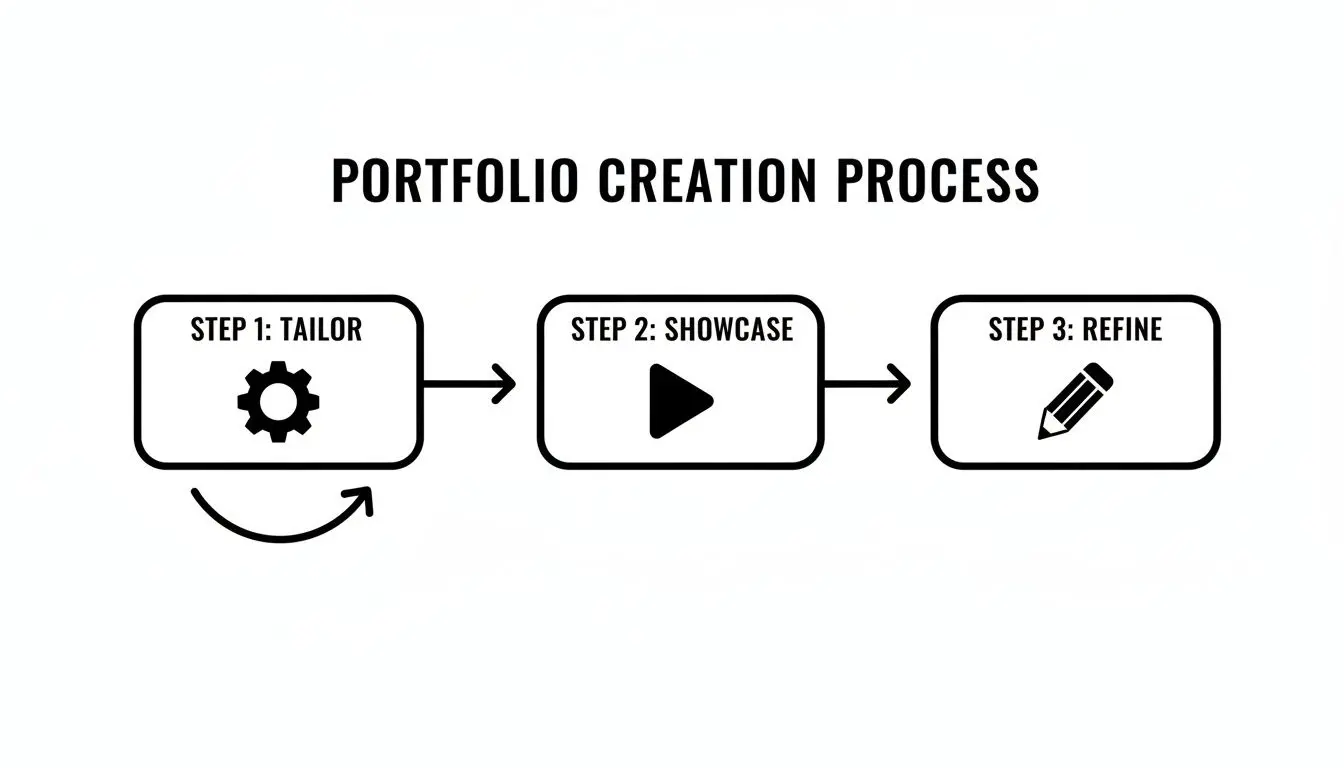
This simple cycle, tailoring your work, showcasing your absolute best pieces, and constantly refining based on feedback, is the secret to a knockout application. Make no mistake, the competition is getting fiercer. Internships in UK animation are more competitive than ever, mirroring a wider trend that saw a 34% surge in applications for intern roles in 2024/25. This demand is driven by talent shortages in a booming sector that already supports 16,000 jobs. As you dive in, a smart, strategic approach is your biggest advantage. For more insights on landing a role, don’t miss our guide on the top resources for animation jobs in London.
Nailing the Interview and Animation Test
The email has landed, you’ve got an interview. This is your chance to move beyond your portfolio and show the studio the professional artist behind the work. Interviews for animation internships are a mix of technical validation, creative discussion, and a personality check. Studios want to know if you have the skills, but they also want to see if you'll be a great colleague to have in the trenches when deadlines are tight. Be prepared to talk specifics. Recruiters will ask about your proficiency with key software, so be honest about your skill level in Maya, Blender, Unreal Engine, or whatever tools they use. They’ll also hit you with behavioural questions designed to see how you handle feedback, collaborate with a team, and manage your time. Think of it as a two-way street. Asking thoughtful questions about their pipeline, team structure, or creative process shows you’re genuinely invested and thinking like a pro, not just a student looking for any old opportunity.
Decoding the Animation Test
More often than not, the final hurdle is the animation test. This isn't a surprise pop quiz; it's a small, self-contained project designed to simulate a real production task. You might be asked to animate a short character action, rig a simple prop, or light a pre-made scene. The goal here isn't to see if you can create a masterpiece in 48 hours. Studios are looking for something much more specific: your ability to follow a brief to the letter. Can you stick to the required style, hit the key story beats, and deliver exactly what was asked for?
An animation test isn't just about the final render. It’s a test of your professionalism. We look at how you interpret the brief, manage your time, and how clean and organised your final submission file is. A well-named, tidy scene file speaks volumes about your readiness for a studio environment.
Your ability to manage time is also under the microscope. Don’t try to add extra flair that takes you hours over the suggested timeframe. Delivering a solid, complete piece of work on time is infinitely more impressive than an overly ambitious but unfinished one. It proves you understand the realities of production.
Articulating Your Creative Choices
Whether you’re in the interview or submitting your test, being able to talk about your work is crucial. If you made a specific acting choice in an animation, be ready to explain your thought process. Why that timing? What emotion were you trying to convey through that particular pose? This isn’t about defending your work; it's about demonstrating your intention. It shows you’re a thoughtful artist who makes deliberate choices to serve the story, not just someone who moves keyframes around until it "looks right." To get comfortable with this, try practising on your own portfolio. Record yourself explaining one of your pieces:
- •The Goal: What was the core objective of this shot?
- •The Process: What steps did you take? What challenges popped up?
- •The Solution: How did you tackle those challenges to get to the final result?
This simple exercise builds confidence and helps you find the right words when you’re in the hot seat. The interviewers aren't just hiring a pair of hands; they're looking for a creative collaborator. Proving you can think and communicate like one is your key to acing the interview and landing one of the best internships for animation out there.
How to Thrive During Your Internship and Beyond
Getting that offer for a top UK animation internship is a huge win, but now the real work begins. Think of this time as less of a placement and more of a live audition for a junior role. This is your chance to show you’ve got the skills and the right attitude to become a permanent fixture on a professional production team. Your success won’t just be about how well you can animate a character or clean up a model. Studios are communities, and they hire people they genuinely want to work with day in, day out. Your professionalism, how you communicate, and your general attitude are every bit as crucial as your technical chops.
Be Professional From Day One
Every studio has its own rhythm and unspoken rules. Showing you can pick up on this studio etiquette from your first day will make a massive impression. This isn’t about being overly formal; it's about proving you're reliable, respectful, and genuinely ready to get stuck in. A few simple habits can make all the difference:
- •Be on Time: Punctuality is non-negotiable, whether you’re remote or in the studio. Being on time for dailies and ready at your desk shows you respect everyone’s schedule.
- •Take Notes: When you get a brief or receive feedback, write it down. It shows you’re paying attention to the details and saves you from asking the same question twice.
- •Understand the Pipeline: Take the time to learn how your work impacts the next person in line. Delivering a clean, well-organised scene file to the lighting or compositing team is a hallmark of a true professional.
This kind of reliability builds trust, and trust is the currency of any collaborative environment. It tells your supervisor they can count on you, especially when deadlines are tight.
Master the Art of Communication
Clear, concise communication is the glue that holds any production together. As an intern, your ability to listen carefully, ask intelligent questions, and clearly explain your progress is vital. Don’t be afraid to speak up, but learn how to do it effectively. If you hit a wall, try to avoid the classic "I don't know what to do." Instead, frame it as a problem you've already started to tackle. For example: "I'm trying to fix the gimbal lock on this character's shoulder. I've already counter-animated the keyframes and checked the rotation order, but it’s still not quite right. Could you have a quick look when you get a moment?" This shows you've used your initiative and that you respect your supervisor's time.
The UK animation sector is defined by its highly qualified workforce, where 93% of workers hold at least a degree and 26% have postgraduate qualifications. Internships are the main entry point for this talent, supported by over 50 animation degree courses at top institutions. As you can see when you explore the animation workforce in more detail, this focus on education means studios expect interns to have a solid foundation and be ready to learn the nuances of professional collaboration.
Seeking and Receiving Feedback
Feedback isn't personal criticism; it's the single most valuable resource you'll get during your internship. Learning to take it gracefully and act on it decisively is a skill that will serve you for your entire career. When a director or lead gives you notes, listen carefully without jumping to defend your choices. Your first instinct might be to explain _why_ you did something a certain way, but it's far more productive to first understand their perspective and what the shot truly needs. Thank them for the feedback, clarify anything you're unsure about, and then get on with the revisions. This kind of adaptability demonstrates that you're coachable and can prioritise the project's goals over your own ego, a quality every studio actively looks for.
Be Proactive and Contribute to the Culture
The best interns don't just sit and wait for their next task. They're observant, curious, and constantly looking for ways to contribute. If you finish an assignment early, don't just sit there. Politely ask your supervisor if there's anything else you can help with, whether it's organising files, prepping scenes, or even just shadowing someone in another department. Make an effort to be a positive presence on the team. Be friendly, join in on team chats or social events (if you're comfortable), and offer encouragement to your colleagues. Studios are communities, and proving you’re a great team player can be the deciding factor when it’s time to discuss a full-time position. Turning your internship for animation into a permanent job is all about leaving a lasting, positive impression that goes beyond the pixels on the screen.
Common Questions About Animation Internships
When you're starting out, the path to an animation internship can feel a bit mysterious. We get a lot of the same questions from students and junior artists, so let's clear up some of the big ones and give you some straightforward, practical advice.
Do I Need a Degree to Get an Animation Internship?
This one comes up all the time. While a degree from a top UK animation programme can certainly give you a leg up, it’s not the be-all and end-all. What studios _really_ hire is talent and readiness. A killer portfolio that shows you have a deep understanding of animation principles and a handle on the technical side can absolutely land you an interview, degree or not. That said, a degree course gives you the structure, deadlines, and dedicated time to build that portfolio under expert guidance. It's no surprise that a high percentage of animators in the UK have a degree. Think of it this way: a degree can help open the door, but a phenomenal self-taught portfolio can just as easily kick it down.
What Is the Single Biggest Mistake Applicants Make?
Without a doubt, it’s sending out a generic, copy-and-paste application. We’re talking about the same cover letter for every studio and a showreel that has zero connection to the work we do. Recruiters see hundreds of applications, and these ones stand out for all the wrong reasons. They show a real lack of interest.
Your application is your first conversation with a studio. Make it count. Mentioning a specific project, like the character work in our _BooSnoo_ series or the real-time pipeline we used for our VR short _Aurora_, shows you’ve actually looked at what we do. Tailor your reel and explain how your specific skills can help us. That’s what makes an application memorable.
Should I Only Apply for Paid Internships?
In the UK, the law is pretty clear. If an intern is doing scheduled work that adds real value, they’re considered a 'worker' and must be paid at least the National Minimum Wage. Any legitimate unpaid roles are usually very short work experience tasters or an official part of a university course. We would always recommend prioritising paid internships for animation. When a studio invests in you financially, it shows they're serious about your talent and your growth. It sets a professional tone from day one and suggests a genuine opportunity, not just a way to get a few tasks done for free.
How Important Are Software Skills Versus Artistic Skills?
It's not a case of one versus the other, they are two sides of the same coin. Your artistic skill is your foundation. Your grasp of weight, timing, posing, and storytelling is what breathes life into a character. Without that core knowledge, knowing how to use the software is just empty button-pushing. At the same time, you can't bring those artistic skills to life in a studio without being proficient in the tools of the trade. Whether that's Maya, Blender, Toon Boom Harmony, or Unreal Engine, you need to speak the language. The perfect intern shows off their strong artistic fundamentals _through_ clean, professional use of the software. Your portfolio’s job is to let your artistry shine through your technical skill.
What Happens if I Don't Get an Internship?
Rejection is just part of the process, so don't let it stop you. It's certainly not the end of the line. If you don't land a spot on your first go, the most important thing is to be proactive. If you got as far as an interview or a test, it's always worth politely asking for feedback. Was your portfolio missing something specific? Did your animation test need a bit more polish? Use that information to spot the gaps in your skills and start filling them. Kick off a new personal project, find other artists to collaborate with, or take a specialised online course. The goal is to just keep making things. Every finished piece makes your portfolio that much stronger for the next round.
At Studio Liddell, we're passionate about nurturing the next generation of creative talent. Our team's expertise spans from award-winning kids' TV series to cutting-edge XR experiences, and we are always on the lookout for passionate artists. If you have a project in mind, let's talk. Book a production scoping call