Motion Graphics Services for Brands: From Logo Stings to Title Sequences
Think about the difference between a photograph and a short film. One is a static snapshot, the other is a living, breathing story. That’s precisely what motion graphics services do for your brand, they take flat logos, static product shots, and abstract data and give them life, depth, and a narrative.
What Are 3D Motion Graphics and Why Do They Matter?
At its heart, 3D motion graphics is the art of animating design elements within a three-dimensional space. We’re not just talking about making things move from left to right; we're adding genuine depth, perspective, and a tangible sense of realism that you just can't get with 2D. This is how brands can peel back the layers of a complex idea, let customers explore a product from every conceivable angle, and build a visual identity that truly stands out. The final result is content that grabs your attention and holds it. For any business, that’s where the magic really happens. A cleverly animated logo is far more memorable. A product demo becomes a compelling story. Even a dense set of data can be transformed into something intuitive and easy to grasp.
Driving Real Business Results
The real power of 3D motion graphics is its ability to deliver tangible business results. For a studio like ours, with a history in broadcast that stretches back to 2019, it's always been about making a message felt, not just seen. Done right, this translates directly into:
- •Better Brand Recall: Think about dynamic logo stings or slick title sequences. They stick in your head long after a static image has been forgotten.
- •Deeper Audience Engagement: On a crowded social feed or a busy website, movement is what stops the scroll. It hooks people in and encourages them to stay.
- •Clearer Communication: We can take a highly technical process or a complex product feature and break it down into simple, easy-to-follow visual steps.
The demand for this kind of work is soaring. The UK's creative industry is a hotbed of digital innovation, and the global motion graphics market is on track to hit USD 280 billion by 2034. This boom is being driven by the very sectors we thrive in, advertising, broadcasting, and gaming, alongside our partners like Digitas, TT Games, and 10:10 Games. You can find out more about the growth of the motion graphics market in this detailed report.
A great piece of motion graphics work should feel effortless. It guides the viewer’s eye, explains a concept, and evokes an emotion without them ever noticing the complex animation work behind the scenes. It's about storytelling, not just technology.
Ultimately, choosing to work with a professional 3D motion graphics team isn't just a creative choice, it's a strategic move to make your brand's voice louder, clearer, and far more memorable.
Your Project's Journey From Idea to Final Render
Ever wondered how a simple idea becomes a stunning piece of 3D animation? It might seem like a dark art, but there’s a clear, structured path we follow for every project. Think of it less like throwing paint at a canvas and more like building an incredible piece of architecture; every stage has a purpose and needs to be signed off before the next brick is laid. This step-by-step process keeps your vision at the very centre of everything we do. It’s designed to prevent nasty surprises or costly re-dos late in the game, making sure the final render is exactly what you hoped for. It breaks a massive creative undertaking into smaller, logical steps, each one building on the last.
Stage 1: Discovery and Briefing
It all starts with a conversation. This first phase is about us listening intently to figure out what you need. We'll jump on a discovery call to understand not just _what_ you want to make, but _why_. What’s the business challenge? Who are we talking to? What do you want them to feel when they watch it? The cornerstone of this stage is creating a detailed design brief. This document becomes our shared map for the entire journey, outlining the goals, style, and scope. Getting this right is the single best way to make sure we’re all pulling in the same direction from day one.
Stage 2: Concept and Storyboarding
With a solid brief locked in, our creative team gets to work. This is where we start turning your objectives into real, tangible ideas. We’ll pull together mood boards to nail the aesthetic, create style frames to show you exactly what it will look like, and explore different visual concepts. Once we agree on a direction, we move on to the storyboard. This is essentially a comic-book version of your animation, mapping out the entire sequence shot by shot. It sets the narrative, the camera angles, and all the key moments. We often take this a step further by creating an animatic, a rough video of the storyboard timed to a temporary soundtrack. It gives you a genuine feel for the pace and rhythm before a single 3D element has been built.
"The storyboard and animatic phase is the single most important checkpoint in the entire process. It's where the story takes shape. Approving this 'blueprint' with confidence is the key to an efficient and successful production."
Stage 3: 3D Asset Creation and Previz
After the storyboard gets the green light, we fire up the 3D software. Our artists start meticulously building all the digital assets needed for the project, models, characters, environments, and textures. You can think of this as the digital equivalent of building film sets, sculpting props, and tailoring costumes. At the same time, we'll create a previsualisation (or 'previz'). This is a rough, 3D version of the animatic that uses simple, blocky models and camera moves to map out the action in a three-dimensional space. Previz is brilliant for ironing out complex camera movements and timing issues early on, ensuring the final scenes are as dynamic as possible.
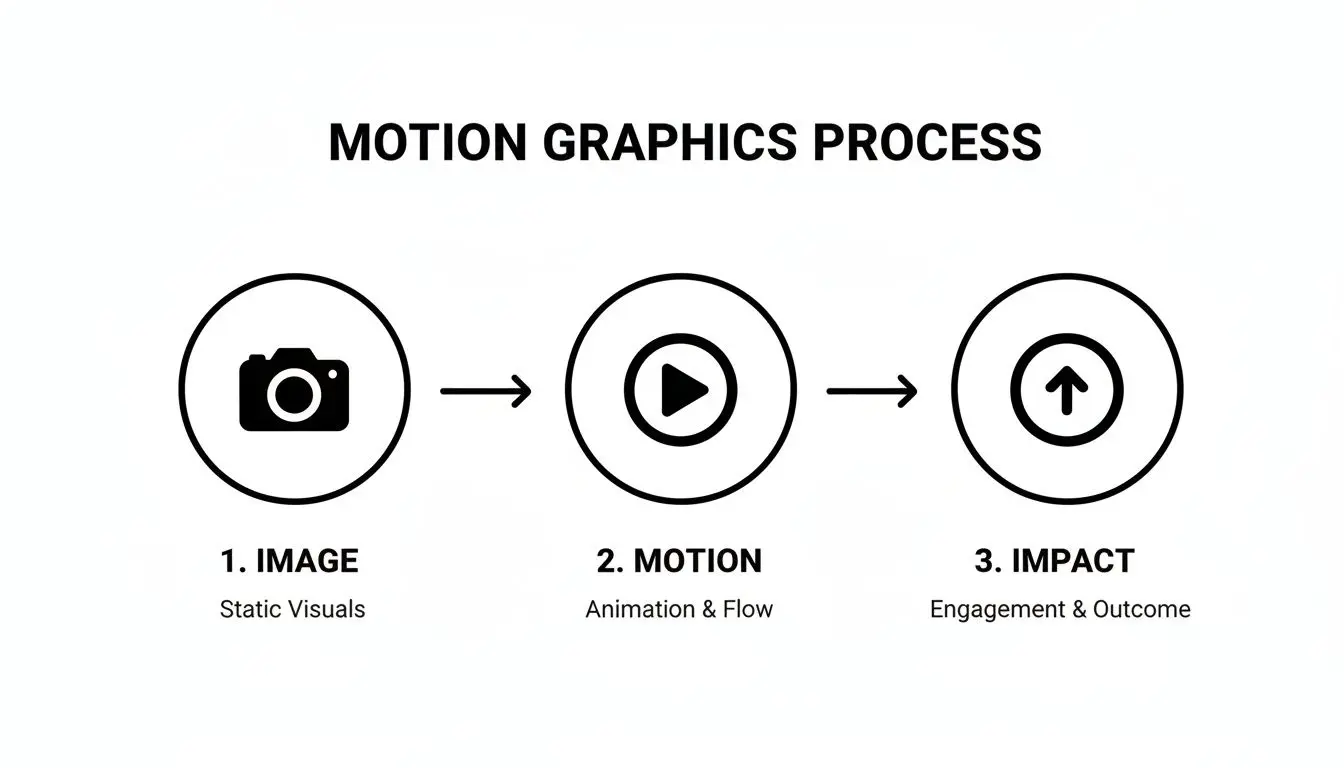
Stage 4: Animation, Lighting, and Rendering
Here’s where the real magic happens. Working from the approved previz, our animators get down to the detailed work of keyframe animation. They bring everything to life, adding fluid, believable movement to every character and object on screen. Every single motion is carefully crafted to serve the story. Once the animation is locked, our lighting artists take over. They act as virtual directors of photography, placing digital lights to sculpt the scene, create mood, and guide the viewer's eye. It’s the lighting that makes a 3D world feel truly immersive and believable. Finally, we hit the big red button: render. This is a hugely processor-intensive stage where the computers calculate the colour and light for every single pixel in every single frame to produce the finished, high-resolution visuals.
Stage 5: Compositing and Final Delivery
The freshly rendered image sequences now head to the compositing stage. A compositor is like a master chef, layering all the different visual ingredients, the 3D renders, special effects, 2D graphics, into one seamless, final shot. This is also where we add the final polish through colour grading and integrate the sound design and music. After one last review and your final sign-off, we deliver the finished video in every format you need, ready to go live on TV, social media, or your website. This disciplined pipeline for our 3D motion graphics services guarantees a smooth journey from a simple idea to a powerful piece of creative.
How Businesses Use 3D Motion Graphics to Grow
Knowing the production process is one thing, but seeing how that translates into actual business growth is where the real value lies. Let's be clear: 3D motion graphics aren't just a creative indulgence. They are powerful commercial tools, a strategic investment designed to capture attention, clarify complex ideas, and ultimately drive tangible results. From broadcast television to the endless scroll of a social media feed, businesses are using 3D motion graphics to cut through the noise. The goal is always the same: to make a message stick. Whether you’re showing off a new product or building an unforgettable brand identity, adding motion makes everything more engaging and effective.
Driving Sales Through Marketing and Advertising
In marketing, if you’re standing still, you’re getting left behind. 3D motion graphics give brands the dynamism they need to showcase products in ways that static images or simple videos just can't match.
- •Dynamic Product Showcases: Imagine launching a new piece of tech. With 3D animation, you can perform a virtual teardown, revealing its inner workings layer by layer. Or, for a new car, you can create a high-octane commercial that would be impossible or eye-wateringly expensive to film in the real world.
- •Engaging TV Commercials: With our deep roots in broadcast, we've seen first-hand how top-tier animation elevates advertising. For clients like Sky Kids, creating visually rich and characterful content is essential for capturing the imagination of a young audience and their parents, which in turn builds a loyal viewership.
This kind of visual storytelling is proven to stop the scroll on social media and hold attention during ad breaks, leading directly to more interest and more sales.
Building an Unforgettable Brand Identity
Your brand is far more than just a logo; it's the entire experience you offer. 3D motion graphics play a huge part in shaping that experience and making it memorable. Think about the iconic title sequences of major TV shows or the slick animated logos that pop up before a film starts. These aren't just decorative fluff. They are powerful branding tools that establish a tone and build recognition in an instant.
A well-executed animated logo sting or title sequence does more than just present a name. It communicates personality, quality, and professionalism in a matter of seconds, leaving a lasting impression that a static image simply can't match.
We’ve found that even simple animations for social media cut-downs or presentations can dramatically lift how a brand is perceived. If you want to go a bit deeper on this, you can learn more about how we create motion graphics for brands, from the first sketch to the final delivery.
Simplifying Complexity with Technical Explainers
Some products, services, or internal processes are just plain difficult to explain with words alone. This is where technical explainers, brought to life by 3D motion graphics, become indispensable. We’ve helped companies make sense of incredibly complex subjects for very important audiences. For instance, our work with GeoEnergy NI involved creating clear, compelling animations to explain sophisticated geothermal energy technology. The aim was to win over stakeholders by making the unseen visible and the complex easy to grasp. By turning abstract data and fiddly processes into clear visual stories, businesses can:
- •Educate Customers: Help them understand precisely why your product is the right solution for them.
- •Train Employees: Make internal training materials more engaging and much more effective.
- •Secure Investment: Clearly communicate a technical vision to stakeholders and investors who need to see the big picture.
The UK 3D animation market, which includes these vital motion graphics services, is seeing massive growth for this very reason. The market generated USD 1,941.4 million in 2023 and is projected to hit USD 4,701.3 million by 2030, growing at a robust 13.6% annually from 2024. This surge reflects the rising demand across advertising, television, and industrial sectors for visuals that both captivate and clarify.
The Big Questions: Pricing Bands and Delivery Specs
Let's get straight to it. The two questions we hear most often are, "How much will this cost?" and "How long is it going to take?" The honest answer? It completely depends on what you have in mind. Creating a simple, animated logo is a world away from producing a cinematic explainer video with a full narrative. Naturally, their budgets and schedules will look very different. The main things that influence the cost and timeline of any 3D motion graphics project are its complexity, its final length, and the artistic style you're going for. A 60-second animation filled with bespoke characters, detailed environments, and complex visual effects will always need more time and a bigger budget than a slick, 15-second piece that relies on abstract shapes and text. We believe in being completely upfront about this stuff from day one. While we can only give a precise quote after a proper scoping call, we can certainly sketch out some general project tiers to give you a solid starting point for your planning.
Mapping Out Project Pricing Bands
To make this feel a bit more real, let’s look at what different levels of investment can get you. This isn't about setting rigid boxes, but about giving you a feel for where your project might land and helping set realistic expectations.
- •Entry-Level Projects: Perfect for when you need a quick, high-impact piece of content. We're talking about dynamic logo reveals, eye-catching social media posts, or simple animated text. They're fast to turn around and fantastic for giving your online brand a boost.
- •Mid-Range Projects: This is the home of most explainer videos and product showcases. These projects usually involve creating more detailed 3D models from scratch and telling a more developed story. The goal here is a polished, professional video that can become a key part of your marketing.
- •Premium-Level Projects: Think broadcast commercials, cinematic game trailers, or incredibly detailed technical visualisations. These projects are the big ones, demanding the absolute highest level of creative and technical skill. They often involve complex character animation, photorealistic rendering, and a dedicated team of specialists for every single step.
The biggest variable, without a doubt, is complexity. A simple 30-second video with one scene can be far quicker and more affordable to produce than a 15-second spot that jumps between five intricate scenes and features custom-rigged characters. A clear brief is the absolute key to getting an accurate estimate.
Sample Project Pricing Bands
Seeing how the scope of a project connects to its timeline and what you get at the end is vital for planning. This table gives you an idea of what to expect, helping you match your project idea to a realistic schedule and set of features.
| Project Tier | Typical Use Case | Estimated Timeline | Key Features |
|---|---|---|---|
| Foundation | Animated Logo Sting | 1, 3 Weeks | Custom animation of an existing logo, sound effects, delivery in multiple formats. |
| Standard | 30-Second Social Ad | 4, 6 Weeks | Creation of custom 3D assets, dynamic scene transitions, licensed music track. |
| Advanced | 60-Second Explainer | 6, 10 Weeks | Detailed storyboarding, professional voiceover, custom characters or models, bespoke sound design. |
| Premium | TV Commercial / Title Sequence | 10+ Weeks | Full creative direction, advanced VFX, photorealistic rendering, broadcast-ready finishing. |
Having this kind of structure helps you see not just the cost, but the value and creative depth you're getting at each level. It means we can have a much more productive conversation from our very first call, making sure your budget aligns perfectly with what you want to achieve.
The Tech Stack: What Powers Modern Motion Graphics?
To create visuals that truly captivate an audience, you need some serious firepower. The technology behind today's 3D motion graphics services is the engine driving everything from creative ambition to production efficiency. A studio's choice of software isn't just a nerdy detail; it's a clear indicator of their ability to deliver slick, professional results on time and on budget. The right tools mean faster feedback loops, more creative exploration, and ultimately, a much stronger final product for your brand. It all starts with a solid foundation of industry-standard software. Tools like Cinema 4D, 3ds Max, and Maya are the absolute workhorses for 3D modelling and animation. For compositing, visual effects, and adding those final layers of polish, Adobe After Effects is indispensable. This combination has been the backbone of countless high-end productions for years, giving artists the precision they need for broadcast-quality work.
The Real-Time Revolution
But the really big shift in recent years has been the arrival of real-time game engines like Unreal Engine and Unity. Originally built for video games, their power to render complex 3D worlds instantly has completely changed the game for motion graphics. Suddenly, artists don't have to wait hours for a single frame to render. They can see changes live. This massively speeds up the creative process, encouraging experimentation with lighting, camera moves, and effects. It isn't just about working faster; it's about giving creatives the freedom to try more things, which always leads to a more refined and compelling result. For a deeper look at the tools of the trade, you can check out our guide on the best 3D animation software of 2024.
Key Technology Stacks And Their Strengths
Different jobs require different tools. A top-tier studio will know exactly which combination to use for your specific project.
- •Cinema 4D + After Effects: This is the classic duo for broadcast graphics and advertising. It provides a beautifully integrated workflow, brilliant motion graphics tools, and is perfect for layering 2D and 3D elements together seamlessly.
- •Unreal Engine 5: When you need jaw-dropping photorealism and dynamic environments, Unreal Engine is the undisputed champion. It excels at creating cinematic-quality visuals and is now a staple in virtual production and high-end commercials.
- •Unity: Known for its incredible flexibility, Unity is the go-to for interactive content. Think AR/VR experiences, immersive apps, and anything else where the audience gets to play a part.
The real magic of using game engines is the creative agility. When a director can ask for a lighting change and see the result in seconds, not hours, it totally changes the production dynamic. It leads to more deliberate, polished, and powerful creative choices.
This technological leap is happening as the industry itself is exploding. The UK's 3D rendering services market, a close cousin to motion graphics, was valued at $955 million back in 2017. By 2025, it's projected to hit an eye-watering $6,998 million. This growth is being fuelled by the demand for advanced visualisation everywhere from architecture to advertising, proving just how essential high-quality 3D visuals have become.
How to Choose the Right Motion Graphics Studio
Picking a creative partner is a huge decision, and it’s about so much more than just comparing quotes. The right motion graphics studio is an extension of your own team, a group of people who get what you’re trying to achieve and have the technical and creative firepower to make it happen. Get it wrong, and you’re looking at blown deadlines, creeping costs, and a final video that just misses the mark. This isn’t about finding the cheapest option; it’s about finding the best _value_. You're looking for a team with a solid process, clear communication, and a body of work that shows they can deliver the quality and style you need. A great partnership starts with trust.
Put Their Portfolio Under the Microscope
Your first port of call is their past work. A studio’s portfolio is their CV, so you need to look past the flashy highlight reel and dig into the details. Look for relevance. Have they worked with brands in your sector before? Do they have direct experience with the kind of project you have in mind, whether it's a detailed technical explainer, a broadcast-ready TV ad, or a punchy social media clip? A studio that excels at slick corporate videos might not be the best choice for a project built around playful character animation. Once you’ve found relevant examples, scrutinise the quality. Look closely at the details that separate good from great: the fluidity of the animation, the subtlety of the lighting, the strength of the art direction, and the overall level of polish. Does their work look and feel professional enough to represent your brand?
Get a Feel For Their Process and Communication
A stunning portfolio means nothing if the studio’s workflow is a mess. A clear, well-defined production process is the hallmark of an experienced team. Ask them to walk you through their pipeline, from how they handle the initial brief all the way to final delivery.
"A great studio doesn’t just show you what they’ve made; they can clearly explain _how_ they made it. Their ability to articulate a clear, collaborative process is often the best indicator of a successful partnership."
Good communication is the glue that holds everything together. How will they keep you in the loop? Who will be your day-to-day contact? A studio that sets up clear communication channels from the outset is building a foundation for success. To get a better handle on what to look for, check out our comprehensive buyer’s guide for choosing an animation studio, which dives into timelines and warning signs.
Key Questions to Ask a Potential Studio
To make the right choice, you need to ask the right questions. Go into your initial calls armed with a checklist. This helps you compare different studios on a level playing field and figure out who is genuinely the best fit. Here are a few essential questions to get the ball rolling:
- •Project History: "Can you show us a project you've completed that had similar goals or challenges to ours?"
- •Team Structure: "Who will be the key people working on our project, and what is their experience?"
- •Feedback and Revisions: "How do you handle client feedback, and how many rounds of revisions are typically included?"
- •Technical Capabilities: "What software and technology will you be using, and why is it the best choice for our project?"
- •Timeline and Milestones: "What are the key milestones for a project of this size, and what will you need from us at each stage?"
Asking questions like these shows you know what you're looking for and helps you find a partner who is truly ready to collaborate.
Your 3D Motion Graphics Questions, Answered
Jumping into a 3D motion graphics project for the first time can feel like a big step, and it's natural to have questions. We get it. To clear things up and help you feel confident about getting started, we've pulled together some of the most common queries we hear from clients. Think of this as a quick chat to cover the basics, so you know exactly what to expect when you partner with a studio like ours.
What Files And Assets Do I Need To Provide To Start A Project?
To get the ball rolling, the best things you can send over are your brand guidelines and your logo. Ideally, the logo should be a high-resolution vector file, like an .AI or .EPS, which gives us the clean, scalable asset we need to make your brand look its best. Beyond that, anything you already have is a bonus. Scripts, story ideas, or even a mood board of visuals you like can give our creative team a massive head start. The more you can share upfront, the quicker we can get on the same page and start building concepts that hit the mark.
How Do You Handle Feedback And Revisions During Production?
Our whole process is built on collaboration. We don’t just disappear for weeks and come back with a finished product. Instead, we have dedicated review stages built into the project plan, for instance, after we’ve completed the storyboard and again once the animatic is ready. At each checkpoint, we'll share the latest progress and ask for your team's consolidated feedback. A typical project includes two rounds of reasonable changes at each major stage. This structure keeps you in the loop and makes sure your input guides the project, preventing any surprises and keeping everything on track.
We see feedback not as a hurdle, but as an essential part of the creative process. A collaborative review cycle is the best way to ensure the final animation doesn't just meet the brief, but exceeds expectations.
Can Your Team Work Directly With Our In-House Marketing Department?
Absolutely. We often act as an extension of our clients' teams. Our producers are pros at slotting into existing workflows and working alongside in-house marketing managers, creative directors, and brand experts. We’re happy to jump on your Slack or Microsoft Teams and can adapt to your project management tools. This direct line of communication on scripts, messaging, and campaign goals ensures the final piece feels like a natural part of your wider strategy and truly speaks your brand’s language.
What Is The Typical Turnaround Time For A 60-Second Animated Video?
This is the big question, and the honest answer is: it depends on the complexity. But to give you a ballpark figure, a standard 60-second 3D animated video usually takes somewhere between 6 to 10 weeks from our first meeting to final delivery. That timeline covers everything, discovery, scripting, storyboarding, 3D modelling, animation, rendering, and all the final post-production polish. It also includes built-in time for your team to review the work at key stages and for us to implement your feedback without rushing.
Ready to bring your ideas to life with stunning 3D motion graphics? The team at Studio Liddell is here to help you navigate every step of the process. Send us your brand pack