A Guide to Business Animation Services for Growth
When people hear the word "animation," they often think of Saturday morning cartoons. But in the business world, "services animation" means something entirely different. It’s the professional craft of creating animated content specifically for businesses, institutions, and brands. Think of it as a strategic tool that turns complex ideas into visual stories that people actually want to watch. This isn't just about entertainment; it’s about creating everything from sharp 2D explainer videos to fully immersive VR training simulations for marketing, sales, or education.
What Are Animation Services and Why Do They Matter?
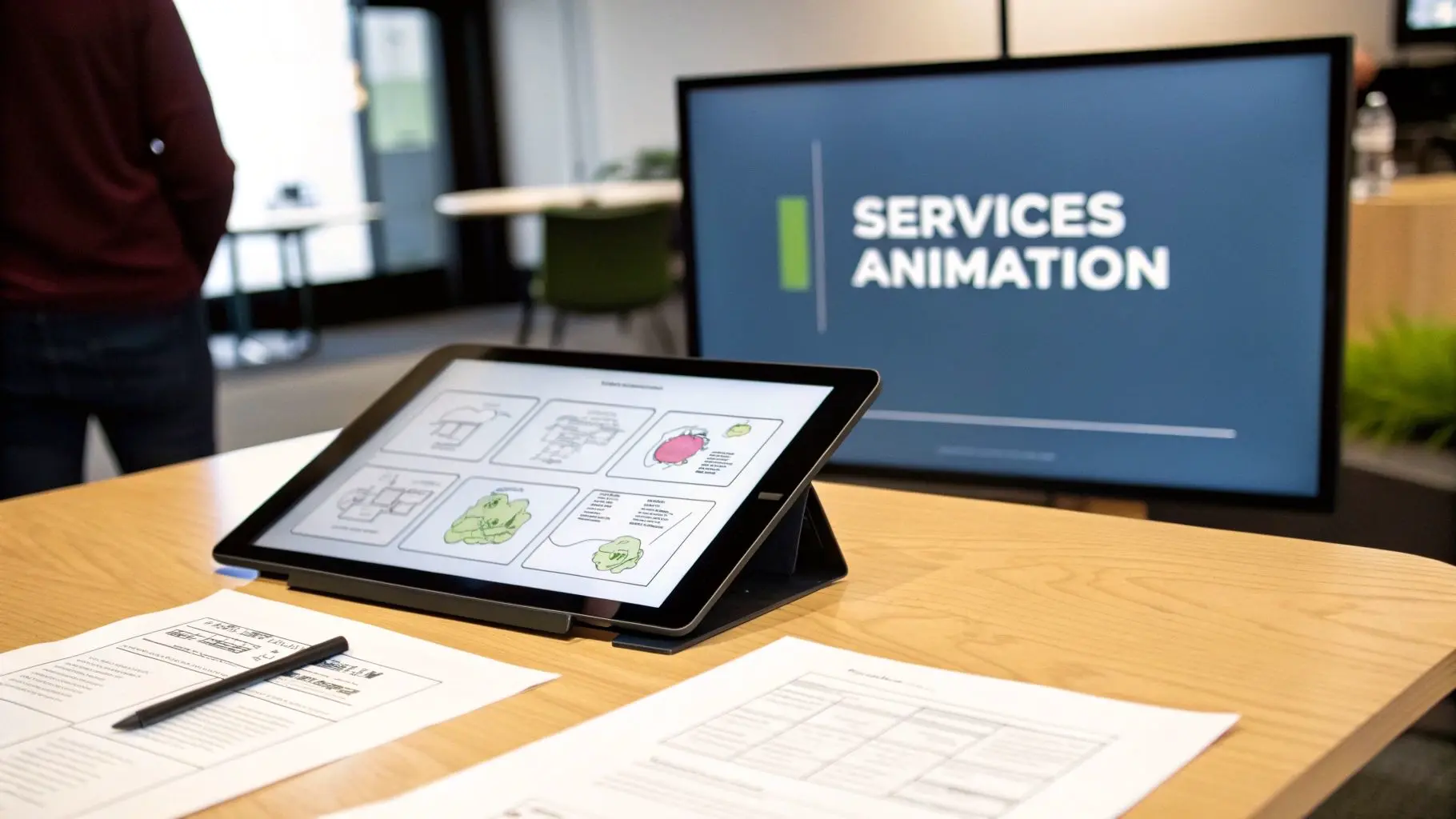
At its heart, animation is the art of making still images move. But when you apply it as a professional service, it becomes one of the most powerful communication assets you can have. Imagine the difference between a dense, text-heavy instruction manual and an interactive, animated walkthrough. One _tells_ you what to do, but the other _shows_ you. This is crucial because our brains are wired for visuals, we process images an incredible 60,000 times faster than text. That speed isn’t just a fun fact; it translates directly into business value. In a world overflowing with content, grabbing and holding someone's attention is the biggest hurdle. Animation clears that hurdle by making information not just easier to digest, but far more memorable.
The Strategic Advantage of Animation
Opting for professional animation services gives you a real edge over traditional content. It’s a versatile solution that can tackle a huge range of business challenges, from breaking down tricky technical concepts to forging a genuine emotional connection with your audience. Here’s where it really makes a difference:
- •Simplifying Complexity: Animation excels at untangling intricate processes or abstract ideas. This is a game-changer for technical product demos, scientific explainers, or internal training modules where clarity is key.
- •Boosting Engagement: Let's face it, dynamic visuals, interesting characters, and good storytelling are just more engaging than a wall of text. It's why animated videos on social media see much higher share rates and keep viewers watching longer.
- •Enhancing Brand Identity: A unique animation style can become a core part of your brand's personality. From a quick logo sting to a full-blown brand story, it helps build a consistent, recognisable identity that sticks with customers.
- •Creating Immersive Experiences: With the growth of XR technologies like Virtual and Augmented Reality (VR/AR), animation services now build entire worlds for training, product visualisation, and entertainment that users can step right into.
Animation speaks a universal language that cuts across cultural and demographic lines. Whether it's for a global marketing campaign or a highly specialised training simulation, it communicates ideas with clarity and punch, making it an essential tool for any forward-thinking organisation.
We've seen this evolution firsthand at Studio Liddell. Since 2019, we've gone from creating broadcast television productions to developing complex XR experiences. But through all that change, the core principle has stayed the same: use moving visuals to solve business problems, simplify ideas, and get people to act. This guide is your roadmap to doing just that. We'll walk you through how to harness the power of animation services to get real, tangible results for your organisation.
Exploring the Spectrum of Animation Services
Animation isn’t a single, one-size-fits-all service. It’s a huge spectrum of creative tools, each with its own unique feel and function. Getting a handle on this spectrum is the first step to picking the right approach to hit your goals. You wouldn't use a sledgehammer to hang a picture frame, and the same logic applies here. We'll start with the foundational styles that are brilliant for clear communication, then move into the more cinematic world of 3D, and finish up with the immersive tech that’s changing how we interact with content. This will help you map the right service to your specific challenge, whether you’re explaining a new product or building an entire virtual world.
2D Animation and Motion Graphics
2D animation is the art of creating movement in a two-dimensional space. Think of a classic hand-drawn cartoon or a modern explainer video with flat, graphic characters, that’s 2D. It’s the workhorse of corporate communication for a very good reason: clarity. Because it operates on a flat plane, 2D is exceptionally good at simplifying complex ideas without the distraction of photorealistic detail. It’s like a dynamic infographic, guiding the viewer’s eye exactly where you want it to go. This makes it a perfect choice for:
- •Explainer Videos: Breaking down a service, a complex process, or a piece of software.
- •Educational Content: Making learning materials far more engaging and memorable.
- •Brand Storytelling: Communicating your company's mission with a distinct and ownable visual style.
A close cousin is motion graphics, which is all about animating graphic design elements like text, logos, and shapes rather than characters. It's the engine behind dynamic branding, perfect for logo stings, title sequences, and bringing data to life. To get a better sense of how this works in practice, you can learn more about how motion graphics services for brands bring static assets to life.
3D and CGI Animation
When you need realism, depth, and a tangible sense of space, you step into the world of 3D animation. This involves building models, characters, and environments within a digital three-dimensional world, much like constructing a virtual film set. The result is often what people call Computer-Generated Imagery (CGI). Think of 3D animation as the gold standard for visualising things that are difficult, expensive, or downright impossible to film in real life. It gives you complete creative control over lighting, camera angles, and textures, allowing you to create stunningly photorealistic or beautifully stylised visuals. Its real power is in making the intangible feel real.
3D/CGI is less like an infographic and more like a high-end product photoshoot or a cinematic film. It’s not just about explaining an idea; it’s about creating an experience, evoking emotion, and showcasing a product with a level of polish that builds trust and desire.
Common applications include:
- •Product Visualisations: Showing a product from every angle, even revealing its internal workings.
- •Architectural Fly-throughs: Bringing building designs to life long before a single brick is laid.
- •Cinematic Advertising: Creating high-impact commercials with the quality you'd expect from a feature film.
Immersive XR Services: VR and AR
Beyond the traditional screen lies the world of Extended Reality (XR), a catch-all term for immersive technologies like Virtual and Augmented Reality. These animation services don’t just _show_ you a story; they put you right inside it. Virtual Reality (VR) completely replaces your surroundings with a digital environment. Pop on a headset, and you're transported somewhere else entirely. This makes it an incredibly powerful tool for training and simulation, it's the difference between reading a safety manual and actually practising a complex procedure in a risk-free, hands-on virtual workshop. Augmented Reality (AR), on the other hand, overlays digital information onto the real world through a device like a smartphone or smart glasses. This is perfect for putting information into context, letting a customer see how a new sofa might look in their living room or providing an engineer with interactive repair instructions on a piece of machinery.
Choosing the Right Animation Service for Your Goal
So, how do you pick? It all comes down to your objective, your audience, and your budget. To make it a bit easier, the table below gives a quick overview to help you match the right service to your goal.
| Animation Type | Best For | Common Use Cases | Relative Cost & Timeline |
|---|---|---|---|
| 2D & Motion Graphics | Simplicity and clarity | Explainer videos, social media content, logo stings, educational modules | Low to moderate |
| 3D / CGI Animation | Realism and visual impact | Product showcases, architectural visualisations, cinematic advertisements | Moderate to high |
| Virtual Reality (VR) | Immersion and simulation | Technical training, safety drills, immersive brand experiences | High |
| Augmented Reality (AR) | Context and interaction | Retail product previews, interactive exhibitions, maintenance guides | Moderate to high |
Ultimately, each type of animation offers a unique way to connect with your audience. By understanding their core strengths, you can make a much smarter decision that lines up perfectly with your strategy and delivers a powerful return on your investment.
The Animation Production Pipeline: From Brief to Delivery
Turning a simple idea into a polished, moving final product can seem like magic, but it’s actually a highly structured and collaborative process. Understanding this journey is key to making sure the final animation doesn't just look incredible but also perfectly hits your strategic goals. Every great animation, whether a 2D explainer or a complex 3D world, follows a clear production pipeline. This pipeline is our roadmap, guiding the project from its initial spark of inspiration all the way to final delivery. To get a feel for the complete journey, it helps to explore modern rendering and animation pipelines, as they map out every technical and creative step. Each stage includes critical checkpoints for your feedback, ensuring the project stays on track and true to your vision. The animation production process visualised below shows the journey from simpler 2D concepts through to complex 3D and finally immersive XR experiences.
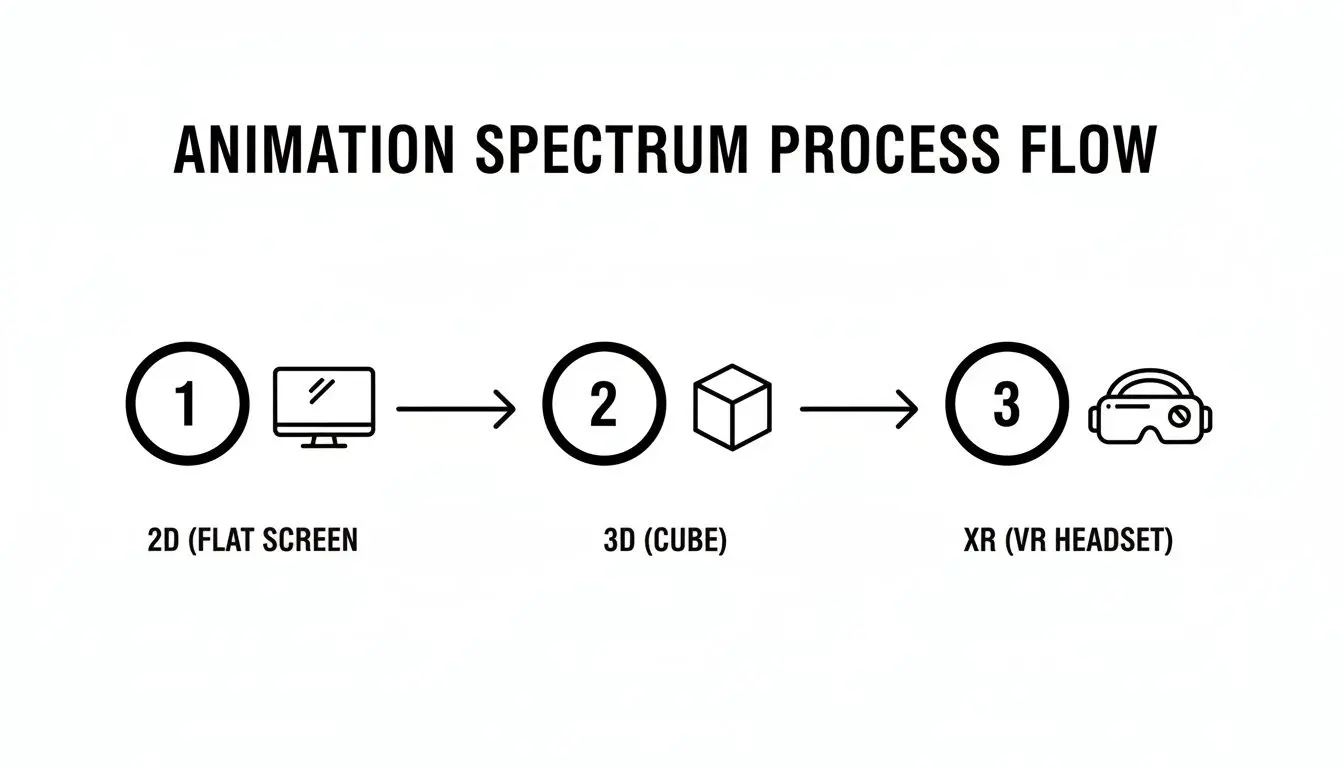
This flow really highlights how complexity and immersion ramp up as projects move from traditional animation services towards groundbreaking interactive content.
Stage 1: Pre-Production and Concepting
This is where we lay the foundations, translating your business objective into a creative vision. It all starts with the brief, a crucial document that outlines your goals, target audience, key messages, and what you want viewers to do next. From there, we dive into creative development.
- •Scripting: We shape a narrative that tells your story concisely and effectively.
- •Storyboarding: Think of this as a comic strip for your animation. We map out the entire project shot by shot, giving you the first real glimpse of what the video will look like.
- •Animatics: Next, we stitch the storyboard together, adding a rough soundtrack, voiceover, and basic timing to create a simple, moving version. This helps us nail the pacing before we commit to full production.
Honestly, this pre-production phase is probably the most important. Getting the story, structure, and visual direction right here saves an enormous amount of time and budget down the line.
Stage 2: Production and Asset Creation
Once the blueprint gets your stamp of approval, our production team gets to work building the world you envisioned. This is where the heavy lifting happens, the phase where the actual animation work comes to life. The exact steps vary depending on the style, 2D, 3D, or XR, but it always involves creating all the visual components from scratch. For a 3D project, this stage is a multi-step dance:
- Modelling: We build the 3D shapes of every character, prop, and environment.
- Texturing & Shading: This is like digital painting. We apply colours and surface properties (like shininess or roughness) to bring the models to life.
- Rigging: We build a digital skeleton inside a character model so it can be moved and animated realistically.
- Animation: The main event! Animators bring the characters and objects to life, frame by painstaking frame.
Stage 3: Post-Production and Final Delivery
With the core animation complete, the project moves into its final phase: post-production. This is where we assemble all the elements and add the final layers of polish. It's where the real magic happens.Think of post-production as the final polish that transforms a collection of shots into a seamless, cinematic experience. It’s where lighting, sound, and colour work together to create the final mood and impact.Key steps in this final stage include:
- •Lighting & Rendering: We add digital lights to the 3D scene to create mood and depth. The computer then "renders" each frame, turning the complex 3D data into the final 2D images you see on screen.
- •Compositing: Different visual layers, like characters, backgrounds, and special effects, are carefully blended together to create the final, cohesive shot.
- •Sound Design & Music: We add sound effects, ambient noise, and a musical score to heighten the emotional impact and make the world feel real.
- •Final Edit & Colour Grade: All the shots are edited together into a final sequence, and a professional colour grade is applied to ensure a consistent, polished look.
Once you give the final approval, we export the animation in all the formats you need, ready for your website, social media campaigns, or broadcast.
Animation in Action: Real-World Applications
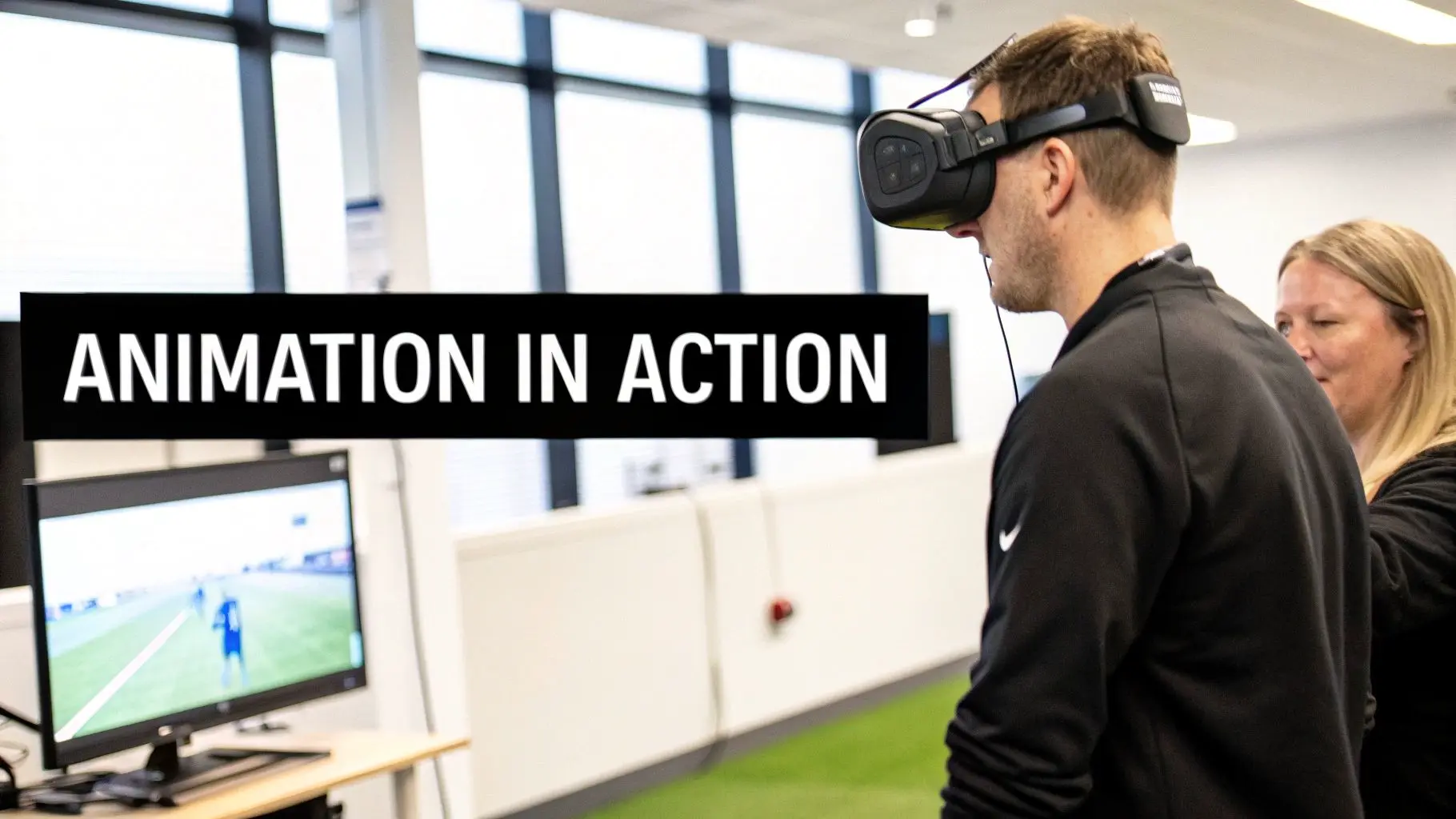
It’s one thing to talk about the theory behind different animation services, but seeing what they can do in the real world is where their value really clicks. Animation isn’t just a creative flourish; it's a powerful tool for solving specific business problems and delivering results you can actually measure. So, instead of just listing abstract benefits, let's look at a few success stories. We’ll explore how animation has tackled complex challenges across different sectors, from highly technical communication and immersive training to global entertainment. These examples show how a smart animation strategy can directly translate into business success, proving the ROI that comes from professional production.
Making the Complex Clear for Stakeholders
Trying to explain a deeply technical or scientific concept to a non-expert audience is a classic challenge. A wall of text or a series of dense diagrams will lose people fast, especially when you’re trying to get crucial buy-in from stakeholders. This is exactly where technical animation shines. Take the challenge faced by GeoEnergy NI. They had to communicate the complex science of geothermal energy in a way that was accessible and persuasive to both government bodies and the public. A standard PowerPoint deck just wasn't going to cut it. The solution was a detailed 3D explainer video. By using clear visuals and a step-by-step story, the animation broke down intricate geological processes into a narrative anyone could follow. The outcome was night and day:
- •Challenge: Simplifying a complex, technical subject for a diverse audience.
- •Solution: A 3D animated explainer that visualised the entire geothermal process.
- •Result: The animation made the project's value immediately obvious, helping to secure essential stakeholder support and public understanding.
Revolutionising Training with Immersive VR
In high-stakes fields like medicine and heavy industry, great training is non-negotiable. But hands-on practice can be incredibly expensive, dangerous, or just plain impractical. Immersive VR simulations offer a fantastic solution, creating safe, repeatable, and realistic training environments that simply aren't possible otherwise. VR animation services create entire interactive worlds, not just videos. For medical training, this means surgeons can practise complex procedures in a zero-risk environment, getting immediate feedback and building muscle memory. Trainees can run through scenarios as many times as they need to achieve mastery.
Virtual Reality training shifts learning from a passive experience to an active one. It’s the difference between reading a textbook about a procedure and actually _performing_ it, which dramatically improves skill retention and performance under pressure.
These simulations allow for the safe practice of emergency responses or the operation of heavy machinery without risking injury or damaging expensive equipment. It's easy to see why VR has become so valuable in sectors where safety is the absolute top priority.
Scaling Entertainment IP Across Platforms
The entertainment world gives us another brilliant example of animation's strategic power, especially when it comes to extending the life and reach of a character or story, what the industry calls Intellectual Property (IP). A successful IP has massive potential beyond its original home. A great case study is the journey of _BooSnoo_, a much-loved IP developed for young children. The challenge was to take a successful TV series and adapt it for a new generation of viewers on totally different platforms. The goal was to keep the brand's core charm while creating fresh, snappy content perfect for digital consumption. This was achieved by scaling the IP into a series of digital shorts for Sky Kids. The project involved re-imagining the original format for shorter attention spans and mobile viewing, which demanded a streamlined yet high-quality production pipeline. The result? A successful expansion of the _BooSnoo_ universe that kept the brand relevant and engaged a whole new audience. To see more examples of how animation solves business challenges, you can explore the diverse projects in our portfolio of work.
Getting to Grips with Animation Timelines and Costs
Right, let’s talk numbers. Budgeting for professional animation can sometimes feel like trying to hit a moving target, but it's actually a pretty logical process when you break it down. Understanding what drives the timeline and the final cost is the first real step in planning a project that lands with impact. The final price tag isn't just plucked out of thin air. It’s a direct reflection of the creative and technical effort needed to bring your idea to life. The biggest levers are the animation style you choose, the overall length, and just how complex the assets we need to create are. It goes without saying that a simple 2D explainer video is a different beast entirely from a photorealistic 3D product showcase, both in terms of time and budget.
Key Factors Driving Animation Costs
Every single project is unique, but the same core elements always shape the budget. Think of these as the main dials we can turn up or down to define the scope of work and, ultimately, the investment needed. Three things have the biggest impact:
- •Style and Complexity: This is the big one. A 2D motion graphics piece using simple shapes is far less labour-intensive than a full 3D animation that needs detailed modelling, texturing, and complex character rigging. If you’re aiming for photorealism, you're signing up for a lot more studio time compared to a more stylised, illustrative approach.
- •Project Length: This one’s pretty straightforward. While a two-minute video isn't simply double the price of a one-minute video (thanks to fixed pre-production costs), length is a major factor. More time on screen means more animating, more rendering, and more sound design.
- •Asset Creation: How many original characters, environments, and props need to be built completely from scratch? A video that cleverly reuses a single environment is always going to be more cost-effective than one that jumps between ten different locations, each demanding its own set of bespoke assets.
For some extra context on how modern tools are influencing budgets, this guide on the cost of AI video ads production is a useful read. To give you a clearer picture, we've put together a table with some typical project ranges. This is just a guide, of course, as every project has its own unique requirements.
Illustrative Animation Project Budget and Timeline Ranges
| Project Type | Typical Duration | Estimated Budget Range (GBP) |
|---|---|---|
| Simple 2D Explainer Video (60-90 secs) | 4-8 weeks | £4,000 - £12,000 |
| High-End Motion Graphics Ad (30 secs) | 6-10 weeks | £8,000 - £20,000 |
| 3D Product Visualisation (60 secs) | 8-16 weeks | £15,000 - £40,000 |
| Narrative Character Animation (2-3 mins) | 12-24 weeks | £25,000 - £75,000+ |
| Cinematic CGI Short Film (3-5 mins) | 6-12 months | £80,000 - £250,000+ |
These figures help illustrate how style, complexity, and length all come together to determine the final investment. Always best to have a chat with us directly to get a quote tailored to your specific vision.
Typical Timelines: From Weeks to Months
Just like the cost, timelines are dictated by complexity. A straightforward 60-second 2D explainer might go from the initial brief to final delivery in about 4-6 weeks. This schedule gives everyone enough breathing room for proper feedback at the script, storyboard, and animation stages without feeling rushed. On the other end of the scale, a high-end, cinematic 3D advertisement could easily take 3-6 months or even longer. That extended timeline accounts for all the detailed modelling, intricate animation work, visual effects, and the notoriously long rendering times. It's absolutely vital to factor these realistic schedules into your marketing or launch plans to avoid any last-minute chaos. For a deeper dive into planning your project and what to look for, check out our guide to choosing an animation studio.
Financial Incentives: UK Animation Tax Relief
For larger-scale projects, it’s worth knowing about the financial incentives that can really make a difference to the budget. The UK's creative tax reliefs are specifically designed to support ambitious productions and keep the sector growing.
The UK Animation Tax Relief programme is a powerful testament to the industry's economic contribution. It enables studios to undertake more ambitious projects, fostering innovation and maintaining the UK's position as a global leader in animation.
This scheme is no small thing. In the 2023-2024 financial year, it was buzzing with activity, processing 120 claims for 145 different animation projects and paying out a total of £33 million in relief. Even more telling, the high-value claims for projects over £250,000 made up just 33% of the total claims but accounted for a massive 80% of the relief paid out. This really highlights the growing scale and ambition of UK animation. This kind of government support makes bigger, bolder creative ideas financially achievable for businesses and creators. You can discover more about these creative industries statistics and their impact on the GOV.UK site.
How to Choose the Right Animation Studio
Picking the right creative partner is probably the biggest decision you'll make for your project. Get it right, and you’ll have a team that feels like a genuine extension of your own. You're not just buying a flashy animation; you're investing in a partner who gets your strategic goals and has the production discipline to deliver on time and on budget. This means looking beyond the sizzle reel. A great portfolio is the entry ticket, but it’s just the start of the conversation. The real difference-makers are a studio's process, communication, and track record.
Creating Your Studio Shortlist
First, get really clear on what you need. Are you after a slick 2D explainer, a jaw-dropping piece of cinematic CGI, or an immersive XR experience? With that clarity, you can start digging into portfolios with a critical eye. Look for consistency. Does the quality hold up across different projects? Does their style resonate with your brand? A studio that has been delivering broadcast-quality work for clients like the BBC and Sky Kids since 2019, as Studio Liddell has, brings a level of proven reliability that a few one-off projects just can't signal. That kind of history points to a production pipeline you can trust.
Key Questions to Ask Potential Partners
Once you start talking to studios, have your questions ready. This is how you get past the sales pitch and understand how they actually work.
- •Process & Communication: "Can you walk me through your production pipeline from brief to delivery? What are the key milestones where we give feedback?" A clear, structured process is non-negotiable.
- •Team & Expertise: "Who will be our day-to-day contact? And can you tell us a bit about the creative team who’ll be hands-on with our project?"
- •Technical Capability: "What software do you use? Can you deliver assets ready for specific platforms, like Unity or social media?"
- •Strategic Thinking: "Looking at our brief, what creative routes would you suggest to help us hit our goals?" This one question separates a simple production house from a true creative partner.
How a studio answers these questions tells you everything. Vague responses about their process or an inability to talk strategy are huge red flags. Real partners welcome this stuff because they're confident in how they operate.
The UK's animation scene is a world-class hub of talent, and it's buzzing right now. London is still a European powerhouse with over 10,500 animation and VFX pros, but the industry is shifting. After the 2025 VFX tax uplift was announced, a massive 71% of UK studios reported a spike in enquiries. Resilient studios with proven pipelines are the ones best placed to handle this growth, making reliability a critical factor in who you choose. You can read more about these VFX and animation industry trends.
Answering Your Questions About Animation Services
Diving into the world of professional animation can feel a bit daunting, and it’s natural to have questions. We get it. Here are some straightforward answers to the queries we hear most often, designed to give you the clarity you need to move your project forward with confidence.
What Is the Difference Between Motion Graphics and Animation?
This is a classic, and it's a great question. The easiest way to think about it is that motion graphics is graphic design that moves. It’s brilliant for bringing abstract concepts, text, and logos to life in a dynamic way. Picture an animated chart in a company report or a slick logo reveal at the start of a video , that’s motion graphics in its element. Animation, on the other hand, is usually more about storytelling. It’s where you bring characters, creatures, and entire worlds to life to tell a narrative or show a complex process. While motion graphics are perfect for data visualisation and branding, animation is your go-to for character-driven explainer videos, cinematic shorts, and narrative content.
How Involved Do I Need to Be in the Process?
Your input is absolutely vital, but we won’t be pulling you into the nitty-gritty of the technical work. Think of yourself as the project's strategic director. Your most important moments are at the start, signing off on the brief, script, and storyboards. A good studio will build the whole production schedule around these key milestones, making it clear when they need your feedback. This ensures the project stays perfectly aligned with your vision and business goals from day one.
Your role is the project's strategic director. The studio handles the technical execution, but your insights ensure the final animation doesn't just look great, it delivers on your business objectives.
Can You Create Assets for Our Game Engine?
Yes, absolutely. This is a common request, especially for projects involving interactive training, simulations, or games. An experienced studio can build and export bespoke assets, whether that’s 3D models, characters, or entire environments, fully optimised for real-time engines like Unity and Unreal Engine. The key to making this work smoothly is to be crystal clear about your technical requirements and target platform right at the start. When you provide those specs in the initial brief, the studio can ensure every asset integrates seamlessly into your engine.
Ready to bring your vision to life? At Studio Liddell, we've been crafting world-class animation since 2019. Let's have a chat about your project and build a visual strategy that delivers real results. Explore our animation services and start your project today.