Game Animation Services: Transform Your Vision with Expert Studio Craft
A great game is more than just clever code; it’s built on immersive animation that pulls players headfirst into new worlds. Think of game animation services as the essential bridge connecting a creative idea to an interactive reality. It’s a blend of artistry and tech that makes everything feel alive. This is what makes a character’s jump feel satisfying, an explosion look powerful, and a fantasy world feel completely believable.
How Game Animation Services Bring Your Vision to Life
At its heart, game animation is the art of movement. It’s the craft that defines how a character sprints across a battlefield, how a spaceship handles a tight corner, and how the environment reacts when a player interacts with it. But it’s so much more than just making things move. It’s about injecting personality, emotion, and purpose into every single digital asset. Without it, even the most brilliant game concept can fall flat, feeling static and unengaging. This guide will walk you through that fusion of art and technology. We'll break down the entire journey, from a simple sketch to a fully realised, interactive experience. Consider this your roadmap to understanding the production pipeline, making smart decisions, and ultimately finding the right creative partner to make your project shine.
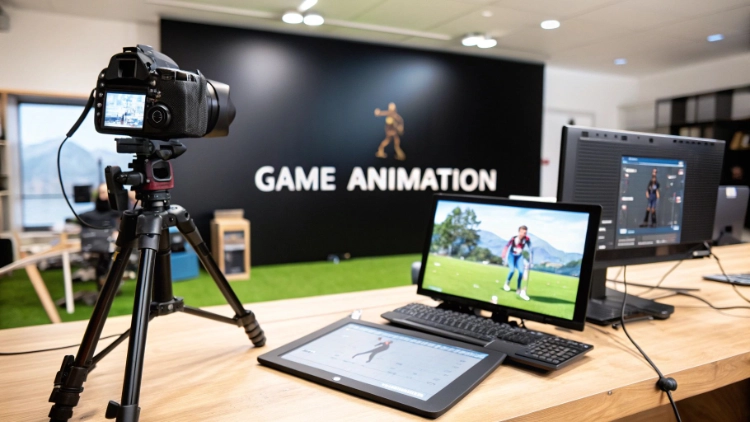
The Growing Importance of Animation in Gaming
The gaming sector has become an absolute giant within the animation and visual effects market. To put it in perspective, the Animation Gaming Market was valued at USD 235.94 billion in 2024 and is on track to hit a staggering USD 541.34 billion by 2035. This boom is fuelled by huge leaps in technology, a demand for interactive storytelling, and the massive rise of esports. Here in the UK, motion capture tech alone saw a remarkable 30% boost in 2023, driven almost entirely by video games and major film productions.
Game animation isn’t just the final coat of paint; it’s a core pillar of game design. It directly shapes player immersion, emotional connection, and pure enjoyment, setting the rhythm of gameplay and making the world feel real.
What to Expect from a Professional Studio
Working with an animation studio isn't just a transaction; it's a creative partnership. A professional team doesn’t just blindly execute your ideas, they challenge and refine them. The process is broken down into key stages, all designed to ensure the final product is a perfect match for your vision and technical needs. Here’s a quick look at what that collaboration typically involves:
- •Creative Development: We start by turning your brief into something you can see and feel, concept art, storyboards, and animatics that lock down the visual style and narrative flow.
- •Technical Pipeline Integration: It’s crucial that assets are built to work flawlessly with your chosen game engine, whether that’s Unity, Unreal, or a custom in-house platform.
- •Iterative Feedback Loops: You'll get regular updates and see work at key milestones. This ensures you can provide feedback and that the project stays on track and true to your expectations.
- •Asset Delivery: The final step is supplying finished, game-ready files, all correctly formatted and packaged for your development team to drop straight into the build.
This structured process is how we turn an abstract concept into a polished, playable reality. You can see these principles in action by exploring the variety of projects in our portfolio.
Exploring the Core Types of Game Animation
Figuring out the right animation style for your game is the very first step. It’s a decision that defines your project's entire look, feel, and how players will experience the world you’re building. Each style brings its own unique strengths to the table and is better suited to different genres, platforms, and, of course, budgets. This choice ripples through everything, from the art direction right down to the production timeline. Think of 2D as a beautiful storybook illustration that’s been brought to life , perfect for stylised indie games or charming retro platformers. On the other hand, 3D is like a fully explorable digital sculpture, giving you the kind of depth and realism we see in today’s blockbuster titles. Let's dive into these core types, and a few others, to help you pinpoint which game animation services will best match your creative vision and business goals.
The Two Foundational Styles: 2D and 3D
The biggest fork in the road for game animation is the choice between two-dimensional (2D) and three-dimensional (3D) production. They’re fundamentally different beasts, each demanding its own artistic skillset, technical pipeline, and software. 2D animation happens on a flat plane, using only height and width to create characters, objects, and worlds. This is the classic, hand-drawn style we all know and love, just modernised with powerful digital tools. It's famous for its artistic charm and is often a more direct, faster, and more budget-friendly route compared to 3D. 3D animation, however, introduces the crucial element of depth. Artists construct models in a virtual 360-degree space, giving them real volume and form that can be seen from any angle. This complexity is what allows for incredible realism and immersion, but it naturally involves a more layered production process, covering everything from modelling and texturing to rigging and lighting.
Comparing 2D vs 3D Animation for Game Projects
To make the choice clearer, it helps to see how 2D and 3D stack up against each other in a typical game development context. Neither is inherently "better", it's all about which one is the right fit for your specific project's needs. The table below breaks down the key differences, from the visual style you can achieve to the technical pipeline involved.
| Attribute | 2D Animation | 3D Animation |
|---|---|---|
| Visual Style | Stylised, illustrative, classic cartoon feel. | Realistic, immersive, cinematic depth. |
| Best Use-Cases | Platformers, mobile games, visual novels, indie titles. | Open-world RPGs, first-person shooters, simulations. |
| Complexity | Simpler pipeline, focused on drawing and frame-by-frame movement. | Complex pipeline involving modelling, rigging, and texturing. |
| Flexibility | Limited camera movement and perspectives. | Full camera freedom, allowing for dynamic angles. |
Ultimately, this comparison should guide you towards the approach that not only matches your desired aesthetic but also aligns with your production resources and gameplay mechanics.
Beyond Characters: Motion Graphics and Cinematics
Great game animation goes far beyond just making characters walk and run. Two other crucial services are needed to really bring a game's world, story, and interface to life.
- •Motion Graphics: This is all about animating text, logos, icons, and abstract shapes. In gaming, it’s absolutely essential for creating slick user interfaces (UI), engaging menu screens, helpful heads-up displays (HUDs), and memorable logo stings. Strong motion graphics provide vital player feedback and help cement your game's brand identity.
- •Cinematics and Cutscenes: These are the narrative glue holding your game together. They are scripted, non-interactive sequences that push the story forward, reveal character motivations, and build atmosphere. They can be created "in-engine" using the game's own assets or as pre-rendered, high-fidelity videos that look like a movie. Powerful cinematics are what create real emotional investment.
As you explore the different styles, you might find it helpful to get familiar with the various animation tools and categories that studios use to bring these ideas to life.
Choosing between these styles isn't just an aesthetic decision; it's a strategic one. The right type of animation directly impacts gameplay mechanics, emotional tone, and how players connect with your world.
At the end of the day, understanding these core disciplines helps you speak the same language as your potential studio partner. Whether you need a quirky 2D sprite, a photorealistic 3D creature, or a sharp UI, having this knowledge is the first step toward a successful collaboration, ensuring your vision is brought to life just as you imagined it.
Your Guide to the Game Animation Production Pipeline
Ever wondered how a simple sketch becomes a living, breathing character in a video game? That magical transformation happens within a very structured production pipeline. It’s a methodical, step-by-step process that ensures every piece, from heroes to entire worlds, is built efficiently, looks incredible, and works perfectly inside the game engine. Understanding this journey helps demystify how game assets are actually made. Think of it as a collaborative roadmap with clear stages, designed to turn a creative spark into a technical reality. This professional, structured approach is precisely what separates top-tier game animation services from amateur efforts, guaranteeing a polished final product every time. The UK's animation scene, where we're proudly based, has become a real powerhouse in this global industry. The market for Animation, VFX, and Post Production in the UK is set to explode from USD 3.94 billion in 2025 to a staggering USD 9.36 billion by 2030. That growth is fuelled by a massive, ongoing demand for top-quality digital content. You can get more details on the UK's thriving animation sector on Mordor Intelligence's website. This flowchart gives you a bird's-eye view of the core pathways for creating different types of game animation assets. As you can see, while 2D, motion graphics, and 3D animation all have different uses, they all follow a similar, logical path from an idea to a game-ready asset.
The Foundation: Pre-Production
Every great animation is born long before a single pixel is pushed. Pre-production is all about planning, and it's arguably the most important stage of all. This is where we define the creative vision and draw up the blueprint for the entire project. This foundational phase involves a few key steps:
- •Concept Art: Artists sketch and paint detailed illustrations of characters, environments, and key props. This visual development work nails down the mood, style, and overall aesthetic of the game.
- •Storyboarding: For cutscenes or any narrative moments, a storyboard maps out each shot like a comic book. It defines camera angles, character positions, and the general flow of the action.
- •Animatics: These are basically animated storyboards, often with placeholder audio and sound effects. They give everyone a crucial feel for the timing and pacing before we commit to the more expensive production work.
Getting pre-production right saves a mountain of headaches (and budget) later on. It ensures the entire team, from artists to programmers, is on the same page and working towards the same goal.
Core Production: Where the Magic Happens
With a solid plan locked in, we dive into production. This is where artists and animators roll up their sleeves and bring the concepts to life, building the actual assets that players will see and interact with. The exact steps change depending on whether we're working in 2D or 3D. For a 3D character, the workflow usually looks something like this:
- Modelling: A digital artist sculpts the character in 3D software. This creates the base mesh, the digital 'clay' that defines its form.
- Texturing: Next, the model gets 'painted' with textures to create its surface details. Skin, clothing, armour, scuffs, and shines are all added in this step, giving the character its colour and material properties.
- Rigging: This is where we build a digital skeleton inside the 3D model. This ‘rig’ is made of joints and controls that allow an animator to pose and move the character. Think of it as adding the strings to a high-tech marionette.
A great rig is the unsung hero of character animation. It needs to be flexible enough for an animator to create an expressive performance, but also robust enough to withstand the technical demands of a real-time game engine.
Bringing Characters to Life
Once a character is modelled, textured, and rigged, it’s time for the final step: animation. This is where the character’s personality truly shines through. Our animators use two main techniques to make this happen. Keyframe Animation is the classic, hands-on method. An animator manually sets distinct poses, the "key frames", at specific points in time. The computer then smoothly fills in the 'in-between' frames. This approach gives us complete artistic control and is perfect for creating stylised or over-the-top movements. Motion Capture (Mocap) is a different beast altogether. We record the movements of a real actor wearing a suit covered in sensors. That movement data is then applied to the character's digital rig, resulting in incredibly realistic and subtle performances. While it delivers amazing realism, mocap requires specialised gear and a specific post-production process to clean up and refine the data. Both are powerful tools in our arsenal. The choice between keyframing and mocap really comes down to the project's art style, budget, and the specific kind of performance the game needs.The Real-Time Engines Powering Modern Games
Once all your models are built and every animation is polished, they need a world to live and breathe in. This is where a real-time engine comes into play. Think of it as a powerful virtual film set, fully equipped with its own cameras, lighting rigs, physics department, and special effects crew. It’s the software framework that pulls all your game assets together into a living, interactive world. This technology is the magic that lets a game respond instantly to what a player does, drawing complex scenes in the blink of an eye. Every single frame you see on screen is calculated and rendered on the fly. Choosing the right engine is easily one of the most critical technical decisions you'll make, shaping everything from the final look to the project budget. For most projects, that choice boils down to two industry titans: Unreal Engine and Unity. Both are incredibly capable, but they have distinct personalities and strengths that make them a better fit for different kinds of projects.Unreal Engine: The Cinematic Powerhouse
Developed by the team at Epic Games, Unreal Engine has a well-earned reputation for jaw-dropping graphical fidelity right out of the box. It’s the go-to for teams chasing photorealistic visuals and high-end, cinematic experiences. If we're sticking with the film set analogy, Unreal is the Hollywood-grade blockbuster stage, pre-lit with advanced systems that produce stunning results with minimal fuss. Unreal's muscle is most obvious in its rendering tech. Features like Lumen for dynamic global illumination and Nanite for handling frankly absurd amounts of geometric detail allow artists to build breathtakingly realistic environments that just work.From a producer's standpoint, Unreal Engine often provides a shortcut to achieving that top-tier visual benchmark. Its powerful built-in tools mean less time spent building foundational lighting and rendering systems from scratch, which is a massive win when visual impact is priority number one.This makes it a favourite for AAA action games, architectural visualisation, and immersive VR experiences where believability is everything.
Unity: The Versatile Creator
Unity has long been celebrated for its incredible flexibility. If Unreal is the specialised blockbuster set, Unity is the ultimate modular soundstage that you can configure for absolutely anything. It’s a true chameleon, capable of handling everything from stylised 2D mobile games to complex 3D simulations and corporate training applications. Its core strength is adaptability. Unity’s massive Asset Store gives developers a huge library of pre-made tools, models, and scripts, which can dramatically slash development time for projects with unique mechanics or a more stylised look. This has made it a darling of indie developers and a powerhouse in the mobile, educational, and industrial app spaces. Picking between these two giants is a careful balancing act. If your project is a visual showcase that needs to scream "next-gen," Unreal might be the obvious choice. But if you need to deploy across a massive range of devices or require a highly customised toolset, Unity’s flexibility could be the deciding factor. For a much deeper dive, you might find our guide on Unreal vs Unity for real-time animation useful.Making the Right Choice for Your Project
The engine decision isn't just about graphics; it's a strategic call that ripples through your team structure, project timeline, and the bottom line. Here are the key factors we always weigh up:- •Visual Target: Are you going for hyper-realism or a distinct, stylised look? Unreal has the edge for realism, while Unity provides a fantastic canvas for everything else.
- •Target Platforms: Unity has a long history of excellent support for a broad range of mobile and lower-spec devices.
- •Team Skills: Finding developers with the right experience is crucial. Both engines have large talent pools, but it's important to find people who match your chosen tech.
- •Project Complexity: For highly experimental gameplay or niche applications, Unity’s modular, build-it-yourself nature can be a huge advantage.
At the end of the day, both are superb engines. The "right" choice is simply the one that best aligns with your project's unique creative goals and commercial realities.
How to Choose the Right UK Animation Studio
Picking the right creative partner for your game's animation is one of the biggest calls you'll make. It’s a decision that goes way beyond a slick showreel. You’re looking for a team that gets your creative vision, understands your tech stack, and has a battle-tested process for delivering brilliant work. Get this partnership right, and your project won’t just get finished, it’ll sing. Making the smart choice means looking under the bonnet. You need to properly vet a studio’s portfolio, get your head around their production pipeline, and feel confident they can communicate and collaborate effectively. This is all about building a relationship that will take your game from a promising idea to an experience players won't forget.
Look Beyond the Showreel
A studio's showreel is their highlight reel, it's meant to dazzle you. While it’s a good place to start, you have to dig deeper to find out what they’re really made of. A truly great portfolio doesn't just show off stunning visuals; it proves they're versatile and can nail different project goals. When you're looking through their work, ask yourself a few key questions:
- •Does their style fit your vision? Look for consistent quality across different aesthetics, from hyper-realistic 3D to more stylised 2D animation.
- •Do they show a range of work? A studio with experience in in-game cycles, cinematic cutscenes, and UI animation is likely to be far more adaptable to your needs.
- •Can they handle the scale of your project? Find examples in their portfolio that match the complexity and scope of what you're trying to build.
Analyse Their Process Through Case Studies
Case studies are a window into a studio's soul. They show you _how_ a team thinks, works together, and solves problems, not just the glossy final product. A solid case study should walk you through a project from the initial brief right up to the final delivery, giving you a real insight into their workflow. Look for the nitty-gritty details on their communication rhythm, how they handled feedback, and any specific challenges they had to overcome. This is where you can tell the difference between a simple supplier and a true creative partner. A transparent process is a sure sign of a team that's organised, confident, and knows what it's doing.
A studio's process is just as important as its portfolio. A clear, collaborative, and well-documented pipeline is the foundation of every successful project. It’s what turns creative chaos into a predictable and high-quality result.
The animation industry has leaned heavily into 3D, which now accounts for about 85% of the global market. This focus on technology has raised the stakes considerably, with the global 3D animation market expected to hit nearly £32 billion by 2028. When you consider that top-tier animated features can cost anywhere from £55 million to over £160 million, you see just how vital it is to pick a studio with a rock-solid process. You can explore more animation industry statistics and trends to see the full picture.
Identify the Red and Green Flags
Finally, pay close attention to how they communicate, right from that very first email. A great studio is enthusiastic, asks intelligent questions, and genuinely wants to understand what you’re trying to achieve. They should feel like strategic advisors, not just an extra pair of hands. For a more detailed breakdown, have a look at our buyer’s guide to choosing an animation studio. Green Flags to Look For:
- •They ask probing questions about your audience, your goals, and your "why".
- •They're open and transparent about their pipeline and current capacity.
- •They give you a clear, dedicated point of contact for your project.
Red Flags to Avoid:
- •Vague answers or a reluctance to get into the details of their process.
- •Poor or slow communication right at the start of your discussions.
- •A "one-size-fits-all" approach that completely ignores your project's unique needs.
By carefully weighing up these areas, you can move past a simple gut feeling and make a confident, evidence-based decision. It's the best way to find a partner who will not only deliver incredible animation but also make the entire production journey a smooth and rewarding one.
Common Questions About Game Animation Services
Diving into professional game animation for the first time? It’s natural to have a lot of practical questions. Getting a handle on the key variables around cost, time, and what you need to bring to the table is vital for planning your project and setting it up for success. Here, we'll tackle the most common queries we get, giving you clear, straightforward answers to help you move forward with confidence.
How Much Do Game Animation Services Typically Cost?
The honest answer? It depends entirely on the project. There's no one-size-fits-all price list for game animation services; the cost is a direct reflection of the work involved. A simple 2D character animation for a mobile game might start from a few thousand pounds. On the flip side, a high-fidelity 3D cinematic for a AAA title, packed with complex visual effects, could easily run into the hundreds of thousands. Think of it like building a house , the size, the materials, and the level of customisation all shape the final price tag. These are the main drivers behind the cost:
- •Style and Complexity: 3D animation is usually more resource-heavy than 2D. It involves multiple stages like modelling, texturing, and rigging. The more detail and realism you’re after, the more time and expertise it demands.
- •Animation Technique: Traditional, hand-crafted keyframe animation is perfect for stylised, expressive movement, but it takes a lot of artist hours. Motion capture, while great for realism, has its own costs for studio time, actors, and cleaning up the data.
- •Duration and Quantity: Naturally, the total amount of animation you need is a huge factor. Are we talking about a snappy 30-second trailer, or hundreds of individual in-game actions for your main character?
- •Number of Characters and Assets: Every unique character or complex prop adds to the workload, particularly if they need detailed rigging and texturing to bring them to life.
A professional studio won't just hand you a generic price sheet. We start by having a proper conversation, a detailed scoping call, to really get to grips with your needs. From there, we provide a transparent, itemised quote based on a clear plan of action.
What Is a Typical Timeline for an Animation Project?
Just like cost, the timeline is completely tied to the scope of the work. A small, focused task can be turned around pretty quickly, but a large-scale production is a marathon, not a sprint, often taking several months. A well-managed pipeline is absolutely essential to keep everything on track without cutting corners on quality. To give you a rough idea, here are some ballpark timelines for common projects:
- •UI Motion Graphics: A set of animated icons or menu transitions for your game's interface could take around 2-4 weeks.
- •Game Trailer: A standard 30-second promotional trailer often needs 6-10 weeks from the initial brief to the final polished video.
- •Complex Character Animation: Creating a full suite of in-game animations for a main character, walk cycles, attacks, interactions, can take 2-3 months or more, depending on how many moves they need.
- •Full Cinematic Cutscene: A high-quality, one-minute cinematic sequence could range from 3-6 months. This involves intensive work on storyboarding, asset creation, animation, and post-production.
The secret to hitting your deadline is a structured process with clear, agreed-upon milestones. Regular check-ins for feedback at each stage, from the brief and animatics right through to lighting and final composite, are how we prevent delays and make sure the final result is exactly what you envisioned.
Always be upfront about your deadline from the very first conversation. A good studio will partner with you to build a realistic schedule that works for both your creative ambitions and your launch date.
What Assets Do I Need to Provide to Start a Project?
To get the ball rolling smoothly, the more you can provide at the start, the better. A solid kickoff package helps the studio get up to speed fast and ensures everyone is on the same page creatively from day one. Here’s what an ideal project starter pack looks like:
- •A Creative Brief: This is your North Star. It should clearly lay out your project goals, who you're trying to reach, the art style you're going for, and the feeling you want to create.
- •Visual References: Got concept art, character designs, mood boards, or storyboards? They're invaluable for establishing the project's visual language.
- •Brand Guidelines: If the animation needs to fit with an existing brand, your logos, colour palettes, and font info are a must.
- •Script or Narrative Outline: For anything story-driven, like a cinematic or an explainer video, the script is the foundation we build everything else on.
- •Technical Specifications: For in-game assets, we need the technical details. What game engine are you using (Unity or Unreal, for example)? What are the limits on polygon counts or texture sizes? This info is crucial for our technical artists.
But don't panic if you don't have all of this ready. If you're right at the beginning of the journey, a good studio can work with you to develop these core assets as part of the initial pre-production phase.
Can a Studio Create Both Cinematic and In-Game Animations?
Yes, absolutely. This is a core strength of any full-service game animation studio. We routinely handle both pre-rendered cinematics and real-time, in-engine animations. While the technical delivery is different, the fundamental skills in character performance, timing, and storytelling are the same. For cinematics, the goal is a high-fidelity, movie-like experience. Because these are rendered offline, we can really push the visual quality with complex lighting, incredibly detailed textures, and advanced post-production effects. For in-game animations, the focus shifts to performance and responsiveness. These animations have to be lightweight and optimised to run smoothly in real-time inside the game engine. We're talking fluid walk cycles, snappy combat moves, and believable interactions that feel great when the player is in control. A professional pipeline is built to handle both, ensuring that every animation, whether it's in a stunning cutscene or part of the core gameplay, is delivered in the right format to plug seamlessly into your game.
At Studio Liddell, we've spent more than two years mastering every facet of game animation, from beloved children's IP to immersive XR experiences. Our team is ready to help you navigate these questions and bring your vision to life with studio-quality production. Ready to discuss the specifics of your project? Book a production scoping call with our team today.