Choosing a 2D Animation Studio (Budgets, Timelines, Red Flags)
Before you even _think_ about searching for 2D animation studios, the most important work happens with your own team. A solid, well-defined brief is your single best tool for getting accurate quotes, avoiding red flags, and finding a partner who gets your vision from the get-go. Taking time upfront saves you from a world of mismatched proposals and wasted cash down the line.
Defining Your Project: The Brief Checklist

Diving into studio portfolios without a clear plan is like going to the supermarket hungry without a list. You’ll be dazzled by impressive work, but you might walk away with something that doesn’t solve your problem. A detailed brief is your roadmap, ensuring every creative choice is tied to a real business goal. This process turns a vague idea ("we need an animated video") into an actionable plan ("we need a 90-second explainer for our new SaaS feature, aimed at project managers, to boost demo sign-ups").
Answer These Core Questions First
To start your brief, your team must be on the same page. Getting this clarity is essential for setting expectations and measuring success. Start by getting straight answers to these questions:
- •Who is your target audience? Be brutally specific. "Small business owners" is too vague. "UK-based café owners with 1-5 employees" is getting somewhere.
- •What is the single most important message? If your viewer only remembers one thing, what is it? This keeps the script sharp and cuts out the clutter.
- •What action should the viewer take? Do you want them to book a call, visit your website, or download a guide? Define the primary call-to-action.
- •How will you measure success? Is the goal to increase website conversions by 15%, reduce support tickets, or improve brand recall?
Clarifying Tone and Style
Beyond strategy, you need to define the creative direction. The emotional tone and visual style are just as crucial as the business goals. Are you going for inspiring and heartfelt, or trustworthy and sophisticated? A mood board with examples of animation, colours, and character styles is a great visual shortcut for any studio. The UK's 2D animation scene has a rich history, and modern digital tools have made it a cost-effective powerhouse. It’s often up to 40% cheaper and quicker to produce than 3D, making it a brilliant choice for many projects. If you're still weighing your options, this in-depth comparison of 2D vs 3D animation can help you decide.
Due Diligence: Reading a Portfolio Like a Producer

Any studio’s portfolio is their highlight reel. Your job is to look past the shine and see the substance. You need to dissect their work to determine if their style, storytelling, and technical skills align with _your_ project. Forget just looking for pretty pictures; analyse the fundamentals. Is the movement fluid and natural, or stiff and jerky? Can they convey a complex idea visually without relying on a voiceover?
Look for Specialisms, Not Generalisms
Most 2D animation studios have a sweet spot. A team brilliant at slick, data-driven motion graphics might not be the right choice for a whimsical, character-led story. Identifying their specialism is key. As you review their projects, categorise them:
- •Corporate Explainers: Is the message crystal clear and professional?
- •Character Animation: Do the characters have personality and emotional range?
- •Broadcast Commercials: Can they tell a compelling story in under 30 seconds?
- •Technical Visualisations: How well do they simplify complex topics? Our work on the GeoEnergy NI project is a great example of this.
If a studio’s portfolio is packed with one type of work, that’s where their expertise lies. Don't try to force a fit.
A great portfolio doesn't just show you _what_ a studio can do; it shows you _how they think_. Look for evidence of problem-solving, animations that had to explain a difficult concept or connect with a niche audience. That's where you find true creative partnership.
Ask About the Results Behind the Reels
A beautiful animation is only half the story. The real measure of success is the business impact. When talking to a studio, dig into the projects that caught your eye. This is your chance to move past creative chat and get to commercial realities. Here are the kinds of questions you should be asking:
- “What was the original brief and the main business goal for this project?” This tells you if they understand how to connect creative work to strategic objectives.
- “How did you measure the success of this animation?” Listen for answers with real metrics like conversion rates or audience engagement, not just “the client loved it.”
- “What was the single biggest challenge you faced during production, and how did you solve it?” This reveals their problem-solving skills and how they perform under pressure.
The Production Workflow: Peeking Behind the Curtain
A brilliant creative idea is only half the battle. Without a solid, efficient production pipeline, even the best concepts can fall apart. The top 2D animation studios run on transparent, well-oiled workflows that keep you in the loop. Before you sign anything, you need to understand exactly what that process looks like. A studio that can walk you through its pipeline without hesitation values organisation and respects your investment.Key Production Milestones
A professional workflow is a series of logical, sequential stages, each with a sign-off point. This "stage-gated" approach prevents nasty surprises and ensures the project only moves forward when everyone is happy. Your journey with the studio should follow a clear path:- •Script & Concept: Nailing down the story, dialogue, and creative vision.
- •Storyboard & Animatic: A visual sequence of the script, often with rough timings and audio, that sets the pace and flow.
- •Design: Creating and getting your approval on all visual elements, characters, backgrounds, graphics.
- •Animation: The main event, where approved designs are brought to life frame by frame.
- •Sound Design & Mix: The final polish, where voiceovers, music, and sound effects are added.
Any studio worth its salt will insist on your formal sign-off at each major milestone. This isn’t paperwork; it’s a crucial safety net that prevents costly rework and guarantees the final animation is what you agreed upon.
The Human Element: Communication and Collaboration
Beyond the technical steps, ask about the people. Who is your day-to-day contact? A dedicated producer or project manager is non-negotiable. They are your champion, translating your feedback and providing regular, proactive updates. Establish the communication rhythm early. Will it be weekly calls? A shared project management tool? Clarity from day one prevents crossed wires and builds a true partnership. To get a feel for the tech that powers these workflows, it’s worth looking into some of the best animation software for beginners, as many professional tools build on these fundamentals. A studio that is open about its process is one you can trust.
Budget Bands, Timelines, and Contracts
Let's talk money, deadlines, and paperwork. Sorting these out properly is the best way to avoid headaches later. The cost of 2D animation reflects the time, skill, and creative energy poured into your project. Understanding what drives these costs is crucial for setting a realistic budget. A straightforward motion graphics video is leagues away from a narrative piece with multiple, detailed characters. The biggest cost factors are always animation style, the number of unique assets, and the final runtime.
Breaking Down Costs and Timelines
As you map out your budget, it’s smart to explore various service pricing structures to get a feel for the market. The UK's animation industry employed over 12,000 professionals in 2022. This ecosystem of 2d animation studios has an advantage: streamlined digital pipelines often mean they can deliver projects 30-50% faster than their 3D counterparts. The workflow itself has a massive impact on both timeline and budget.
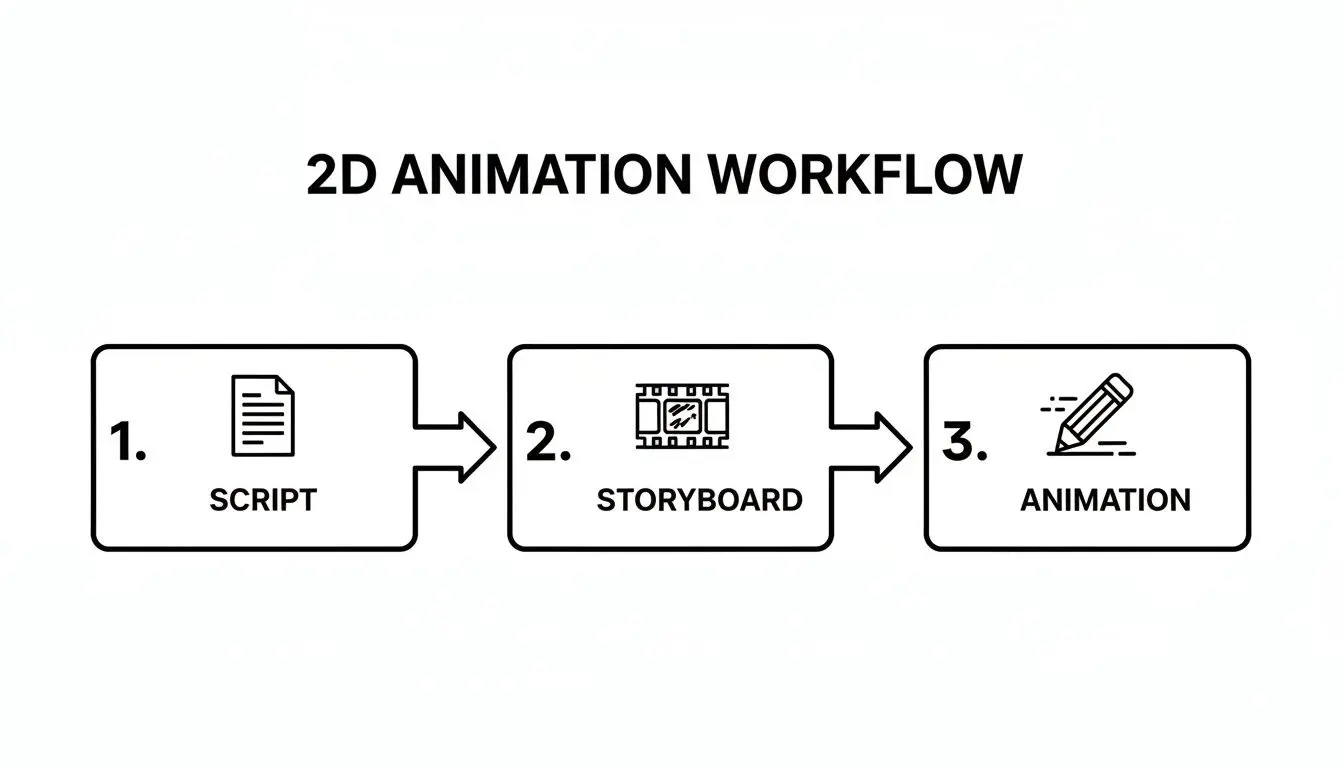
This process, from script to storyboard to animation, shows why locking in decisions early is so vital. Changes are easy at the script stage, harder at the storyboard stage, and expensive once animation has started.
How Animation Style Impacts Your Budget and Timeline
The style you choose is a financial and logistical decision. A simple look can be turned around quickly, whereas traditional frame-by-frame animation requires significant specialist time. This table gives a rough idea of how different styles stack up.
| Animation Style | Typical Cost Band (per minute) | Estimated Timeline (for 60s) | Best For |
|---|---|---|---|
| Motion Graphics | £1,500 - £4,000 | 2-4 weeks | Explainer videos, data visualisation, logos. |
| Cut-out Animation | £3,000 - £7,000 | 4-6 weeks | Character-driven stories on a budget, web series. |
| 2D Traditional | £6,000 - £15,000+ | 8-12+ weeks | High-end commercials, short films, emotive storytelling. |
| Whiteboard | £1,000 - £3,000 | 1-3 weeks | Educational content, tutorials, quick explainers. |
These are ballpark figures. The final quote will depend on your project's specifics, but this helps align your creative vision with your budget.
Decoding the Contract
The contract is the rulebook for your project. Read it carefully. It protects both you and the studio. A professional agreement will be clear, thorough, and leave no room for guesswork.
A good contract isn’t about mistrust; it’s about creating shared clarity. It ensures both parties understand their responsibilities, deliverables, and rights, forming the foundation for a successful partnership.
Keep an eye out for clauses covering these critical areas:
- •Intellectual Property (IP): Who owns the final animation once it's paid for? It should be you. Clarify if you also own the source files for future use.
- •Revision Rounds: How many rounds of feedback are included at each stage? Be clear on this, as extra revisions will add to the cost.
- •Deliverables: The contract should spell out _exactly_ what final files you’ll receive (formats, resolutions, social media cut-downs).
- •Payment Schedule: This is usually split into milestones, often 50% upfront and 50% upon final delivery.
Red Flags and Spec Work Ethics
You’ve whittled your list down to the final contenders. Now it’s time to spot the subtle cues that separate a great creative partner from a potential headache. This isn't about finding a flawless studio; it's about ensuring their working style gels with yours. A top-tier studio will be sizing you up, too, asking sharp questions about your goals and audience. If they seem too eager without digging into specifics, that’s your first warning sign.
Communication and Transparency
The first clues appear in your initial conversations. A studio that’s slow to reply, gives vague answers, or seems disorganised isn't going to improve once the contract is signed. Pay attention to how they talk about their process. Are they happy to tell you who’ll be leading your project?
A studio that gets cagey about providing client references or dodges questions about past challenges isn't being discreet, they're being evasive. Real creative partners are proud of their client relationships and are open about how they solve problems. It shows experience and confidence.
Keep an eye out for these classic warning signs:
- •Vague or Evasive Answers: If you ask about their feedback process and get, "Oh, we're very flexible," push for details. How many revision rounds are standard?
- •Poor Initial Communication: Consistently slow replies before they’ve won the business? That’s a sneak peek of what to expect later.
- •Pressure Tactics: Be wary of anyone pushing you to sign with "special limited-time offers." A solid partnership is built on mutual respect, not high-pressure sales tricks.
The Final Decision Checklist
Choosing a creative partner is about more than a flashy portfolio. It’s a mix of skill, chemistry, and trust. Before you make the final call, run your shortlisted 2d animation studios through this one last mental checklist.
- Creative Chemistry: Did you click with their team? Do they seem genuinely excited about your project?
- Technical & Process Fit: Is their workflow clear and professional? Do they have the specific skills your animation requires?
- Budget Alignment: Does their proposal offer genuine value? Are there any hidden fees?
- Communication Style: Were they clear, proactive, and respectful in every conversation?
Your Top Questions About Hiring a 2D Animation Studio, Answered
Stepping into the world of animation can feel like learning a new language. To help clear things up, we've pulled together some of the most common questions we get from businesses just like yours. Think of this as your cheat sheet for talking to potential studio partners.What’s the Realistic Cost of a 2D Animated Video?
This is always the first question, and the honest answer is: it depends. A straightforward 60-second motion graphics video might start in the low thousands of pounds, while a highly detailed, character-driven story could command a much larger budget. The cost comes down to the time and specialist skill required. Here are the main price drivers to keep in mind:- •Art Style Complexity: Is it a minimalist, icon-based style, or detailed, frame-by-frame animation? The latter takes more hours.
- •Number of Unique Assets: Every unique character, background, or prop needs to be designed from scratch.
- •Third-Party Services: Professional voiceover artists, licensed music, or custom sound design are typically separate line items.
How Long Does a Two-Minute Animation Take?
Patience is a virtue in animation. For a typical two-minute animated video, you should realistically plan for a production timeline of 6 to 12 weeks. This covers everything from the initial script and storyboard right through to the final sound mix. The biggest factor that can affect this timeline is the feedback loop. Prompt, clear feedback at each sign-off stage keeps a project on track.
It’s a common myth that a shorter video is dramatically faster to produce. A 30-second spot will be quicker than a 3-minute explainer, but much of the foundational work, scripting, design concepts, and storyboarding, takes a similar amount of effort regardless of the final length.
Do I Get Full Ownership of the Final Animation?
Understanding ownership is critical. For almost any professional project with a UK studio, the client receives full ownership and usage rights for the final video file once the final invoice is settled. This means you can use it wherever you like without restriction. However, there's a detail worth clarifying in your contract. While you own the finished video, the studio usually retains two things:
- Portfolio Rights: The right to show the work in their portfolio. This is standard practice.
- Ownership of Raw Files: The studio typically retains ownership of the source project files and individual assets unless you specifically negotiate a full buyout.
At Studio Liddell, we build transparent partnerships to create work we can all be proud of. If you’re ready to see what animation can do for your story, let's explore the possibilities. Book a production scoping call with our team to get started.