7 Great Games That Are Like Candy Crush
Found your next puzzle addiction? If you’ve finished a mountain of Candy Crush Saga levels and want something that scratches the same itch without feeling identical, the field is broader than most round-ups admit. A lot of lists lump every bright mobile puzzler into the same bucket, but the differences matter. Some games push pure board feel and rapid retry loops. Others lean on decoration, story, team play, or heavier monetisation pressure. That matters for players, and it also matters for studios studying games that are like Candy Crush. The global match-3 market is still led by giant earners such as Royal Match at $1,461 million in annual revenue and Candy Crush Saga at $1,084 million, according to Business of Apps' top grossing games data. But UK revenue rankings look different, with Roblox taking the top UK revenue spot in that dataset, which is a useful reminder that players often want more social and expressive layers than a pure puzzle loop provides. If you’re just here for recommendations, get straight to these seven. Each one earns its place for a different reason.
1. Royal Match
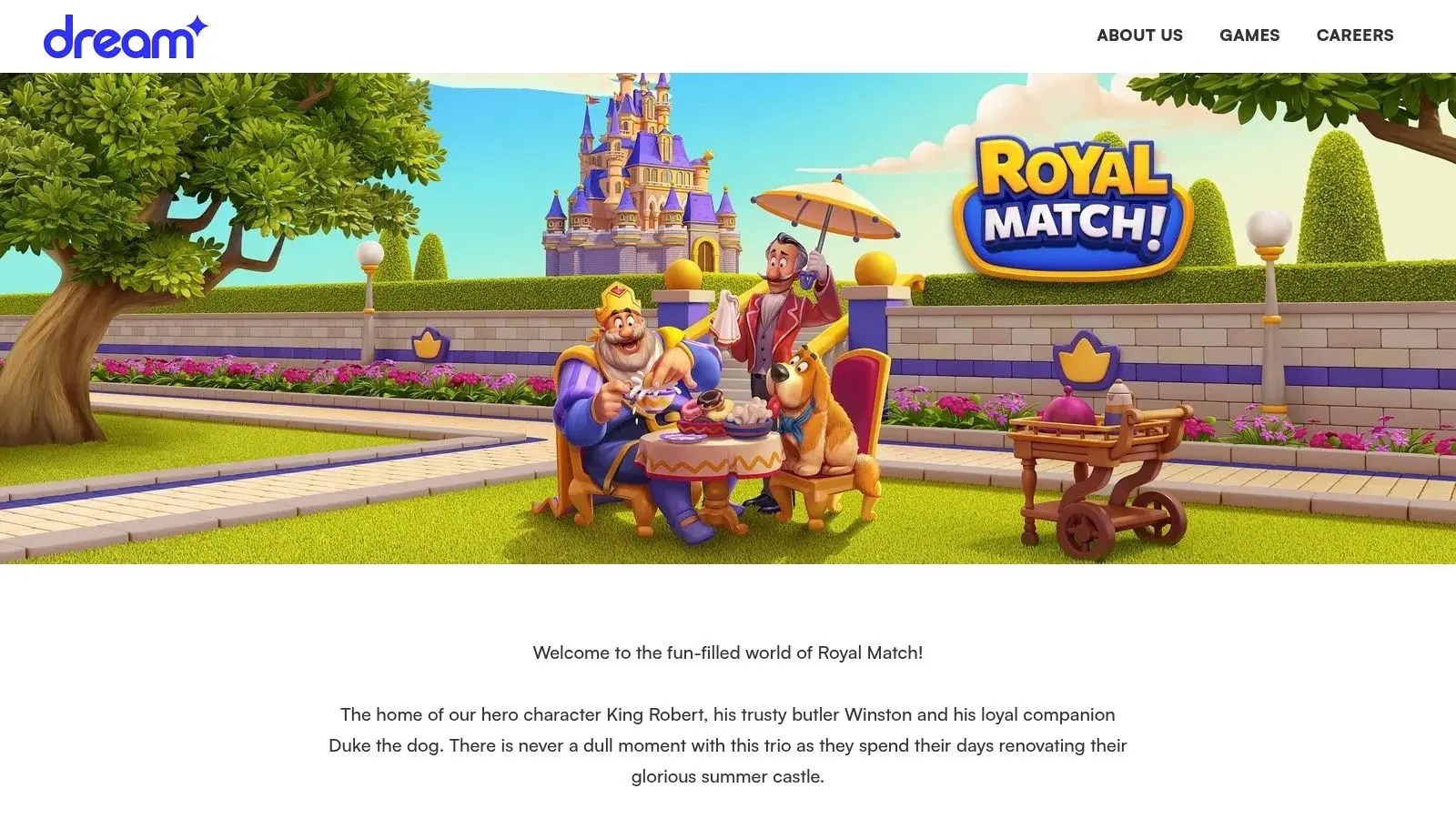
Want the closest modern alternative to Candy Crush without the soap-opera layer or constant stop-start friction? Start with Royal Match. The reason is simple. It keeps the familiar match-3 grammar of swaps, boosters, move limits, and escalating board goals, but strips away a lot of the clutter that slows other games down. The castle theme is present, yet it rarely interrupts the puzzle loop. For players, that means faster retries and cleaner decision-making. For studios, it is a good case study in how strong retention can come from restraint rather than feature overload.
Mechanics, monetisation, and who it suits
Royal Match feels sharp because its board response is tuned well. Cascades resolve quickly, special pieces are easy to read, and failed attempts usually feel like a board problem or move-order mistake rather than a UI problem. That matters more than many listicles admit. In match-3, animation pacing and level readability directly affect session length. Its other major advantage is unlimited lives. That changes the tone of failure. Players can test risky lines, restart quickly, and stay in flow instead of being pushed into a waiting loop. If Candy Crush sometimes feels too dependent on pacing breaks, Royal Match fixes that specific pain point. Monetisation is standard free-to-play. Expect offers for coins, extra moves, and boosters, especially once difficulty tightens. The trade-off is clear. Unlimited lives make the game feel generous early on, but later progression still uses pressure points that encourage spending. That balance is common in the category: low friction at the front, stronger conversion pressure once habits are established. For anyone building in this space, Royal Match is also a useful reference for product design outside the puzzle board itself. Its onboarding, event surfacing, and interface hierarchy show the kind of mobile app design choices that help users stick with a product, even before monetisation starts to matter.
Best read on Royal Match: choose it for polished puzzle flow first, not for narrative, decoration, or novelty mechanics.
- •Core mechanic: Classic swap-to-match-3 play with heavy emphasis on boosters and clean board readability.
- •Monetisation profile: Free-to-play with extra-move and booster pressure that rises in later levels.
- •Best for: Players who want a polished Candy Crush substitute with fewer interruptions.
- •Less suited to: Anyone looking for story, home design, or a stronger social layer as the main hook.
2. Toon Blast
Toon Blast is the best pick if you like the reward cadence of Candy Crush but want a board that feels more explosive. Instead of swapping pieces, you tap clusters of same-colour cubes. That single change gives the game a different rhythm. It’s less about lining up one move and more about building the board towards a chain reaction. That makes it easier to learn but harder to master than it first appears. New players can jump in immediately. Experienced players start thinking about spacing, combo timing, and whether they’re setting up a rocket-bomb style clear or just cashing out a small cluster too early.
Where the social layer changes the experience
Toon Blast isn’t only about the board. Its Team feature gives it a stronger communal feel than many direct alternatives. That matters because puzzle games often struggle once the novelty of level progression fades. Team-based reward loops, leaderboards, and recurring events give people a reason to come back that has nothing to do with one specific level. That wider social appetite is worth noticing. Mainstream coverage of Candy Crush alternatives tends to focus on endless levels and regular updates, but there’s still not much useful discussion of monetisation fatigue, burnout, or regional player tolerance for paywalls in the UK market, as noted in this analysis of gaps in games like Candy Crush coverage. For developers, the lesson is simple. Social retention can soften monetisation friction, but it doesn’t erase it.
Teams keep people around longer than content alone, but teams also amplify frustration when a game starts leaning too hard on paid recovery.
The downside is board volatility. Some hard levels feel more luck-shaped than strategy-shaped, especially when the ideal cluster spawns don't appear. That can make losses feel less fair than in a more deterministic swap game. If you’re building or analysing similar titles, Studio Liddell’s guide to designing a mobile app that wins users maps neatly onto what Toon Blast gets right at the onboarding and session-design level.
- •Best for competitive casual players: Teams, events, and leaderboard energy drive replay value.
- •Best mechanic shift from Candy Crush: Tap-to-blast feels familiar without feeling copied.
- •Main trade-off: Hard levels can become booster checks rather than clean skill tests.
3. Homescapes
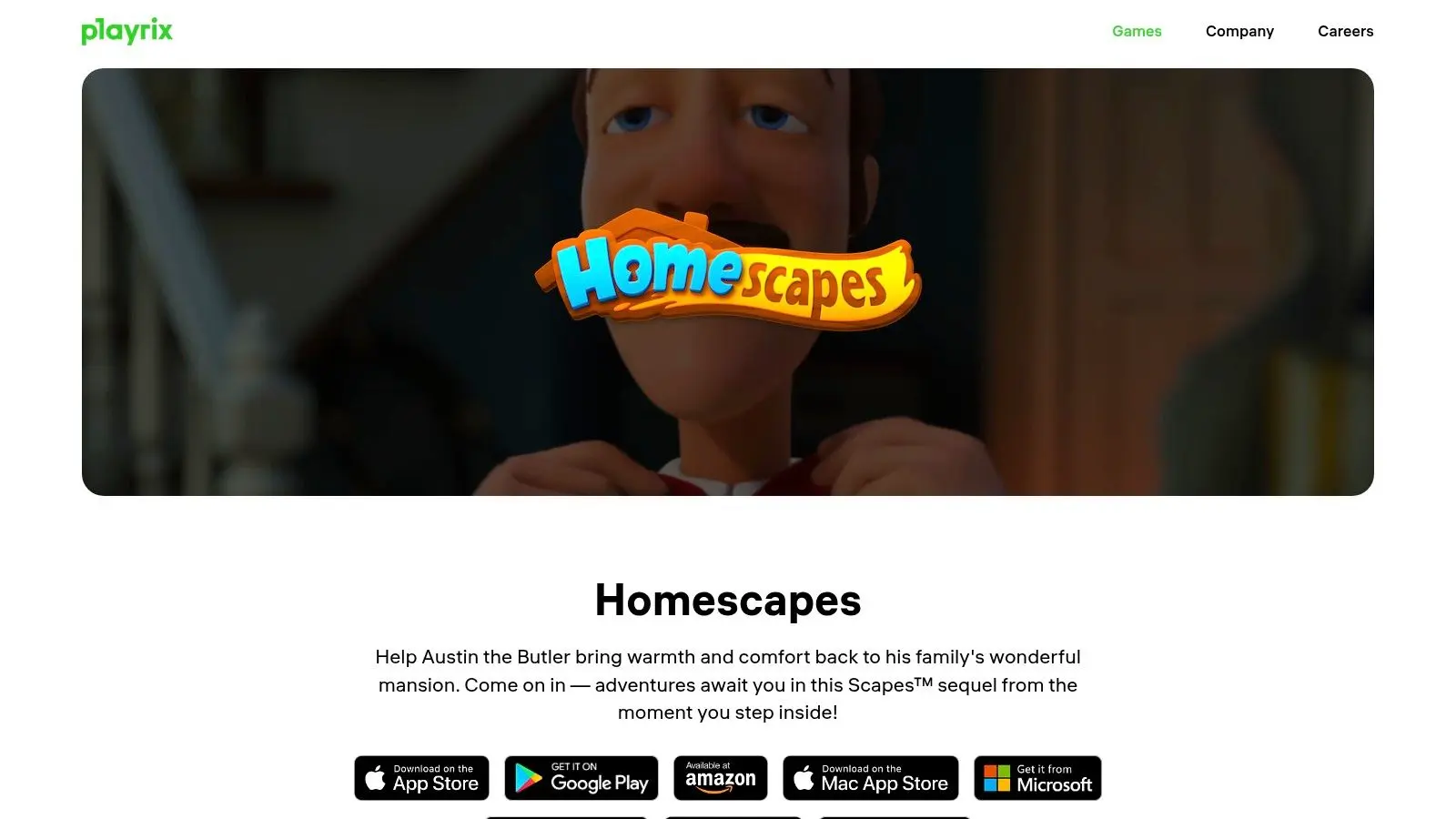
Homescapes sells a different promise. The puzzle board is still classic swap-to-match-3, but the main hook sits outside the board. Every run of successful levels feeds a renovation loop, and every renovation task pushes the story of Austin the butler forward. That’s why some players stay with Homescapes far longer than they stay with more mechanically pure rivals. You aren’t only clearing pieces. You’re working towards a visible outcome. A repaired room, a decorative choice, a new character moment. For players who need context around the puzzle grind, that extra layer matters.
The meta-game is the product
From an analyst’s perspective, Homescapes is one of the clearest examples of match-3 as a delivery system for a broader live game. The board itself is competent and familiar. The retention engine sits in the renovation and narrative cycle. That approach works, but it also exposes one of the genre’s blind spots. A lot of “games that are like Candy Crush” content talks about simplicity and beginner-friendly mechanics, yet gives almost no attention to accessibility, cognitive load, or how different players process visual noise and level pressure. That gap is called out in this overview of accessibility and cognitive-load blind spots in match-three coverage. Homescapes could be a stronger recommendation still if more of the genre treated readability, colour distinction, and difficulty customisation as first-class features. If you like games where puzzle wins provide a sense of place, Homescapes still delivers. If you only want uninterrupted board play, it can feel busy.
Good meta-progression gives failure context. Bad meta-progression makes you feel you’re grinding for permission to see the next scene.
The economy is standard for the category. Coins buy practical help, especially when a hard level blocks story progress. That’s one reason many studios building puzzle products still use engines and workflows that support frequent content iteration. Studio Liddell's piece on mobile gaming with Unity is useful background if you’re looking at how puzzle content and live updates get delivered in production.
- •Best for story-led players: The mansion and character loop give each level purpose.
- •Strongest habit-forming element: Renovation choices keep sessions feeling productive.
- •Main drawback: Difficulty spikes can feel more manipulative when they block story, not just score.
4. Gardenscapes
Gardenscapes works best for players who want their match-3 sessions to build toward something visible. Every completed level pushes the garden restoration forward, and that outdoor setting gives Playrix more room to vary the reward loop than a house-based renovation game usually can. That matters more than it sounds. Outdoor progression creates stronger visual change from chapter to chapter. Fountains, hedges, event decorations, paths, and themed zones make each stretch of progress feel distinct, even when the core board play stays familiar. The match-3 mechanics themselves sit close to the mainstream formula, so its primary differentiator is the meta layer and how often it gives you a clear sense of improvement.
Mechanics, monetisation, and who it suits
Mechanically, Gardenscapes stays accessible. Levels are easy to read, goals are familiar, and the game relies on proven obstacle design rather than trying to surprise players with constant rule changes. That makes it a safer pick for Candy Crush fans who want a reliable cadence of clears, failures, retries, and occasional booster-powered recoveries. The trade-off is also familiar. Because the garden is the main retention hook, friction on hard levels can feel more noticeable. A failed stage does not just delay your next win. It delays your next visible change to the space you are building. That is effective free-to-play design, but players who dislike progress being gated by difficulty spikes will notice the pressure quickly. For the right audience, though, the formula still works very well. Gardenscapes suits players who like long-term collection, decorative payoff, and a lighter story wrapper without needing every level to reinvent the genre.
- •Best for decorators: The garden gives progression more variety than many home-renovation puzzle games.
- •Monetisation profile: Standard match-3 pressure. Extra moves and boosters become more tempting when a hard level blocks visible restoration progress.
- •Ideal player: Someone who wants familiar puzzle mechanics with a stronger sense of place and longer-term cosmetic goals.
- •Main drawback: Difficulty walls can clash with the calmer tone the setting promises.
5. Cookie Jam
Cookie Jam is the safe recommendation. If what you want is a direct alternative that doesn’t overcomplicate the formula, this is one of the most dependable choices. It has the bakery theme, the familiar swap mechanics, recognisable objectives, and the kind of level design language that Candy Crush players understand immediately. That familiarity is its main strength and its main limitation. Cookie Jam doesn’t aggressively reinvent the genre, but it also doesn’t ask you to learn a whole new structure just to enjoy a few rounds. Sometimes that’s exactly the right call.
The no-drama alternative
Some puzzle fans bounce off games that pile on story scenes, renovation tasks, guild obligations, or event clutter. Cookie Jam mostly stays in its lane. Match sweets, create boosters, clear objectives, move on. The result is a steadier, more traditional experience. That said, traditional free-to-play design still brings familiar pressure points. Tougher stages can start nudging you towards power-ups, and because there isn’t a huge meta-game to distract from that, the economic design is easier to notice.
If Royal Match is the polished modern benchmark, Cookie Jam is the reliable genre workhorse.
A lot of studios overlook the value of that middle ground. Not every successful product needs a giant narrative wrapper. Some audiences still want a straightforward game loop with dependable live-ops support and minimal conceptual friction.
- •Best for traditionalists: It feels close to the classic Candy Crush rhythm from the first few levels.
- •Easy to recommend to lapsed players: There’s little onboarding friction.
- •Less suitable if you want novelty: The game succeeds through familiarity, not surprise.
6. Bejeweled Stars
Bejeweled Stars suits players who want match-3 sessions with more board reading and more control over their toolkit. The basic loop is still familiar. Swap gems, clear objectives, manage a limited move count. What changes is how much the game asks you to plan before and during a level. The clearest difference is SkyGems crafting. Many Candy Crush-style games treat boosters mainly as consumables you earn, buy, or save for a difficult stage. Bejeweled Stars gives players another layer of choice by letting them prepare boosters through collected resources. Mechanics like Currents and Clouds add to that feeling. Boards have more texture, so success comes less from reacting to obvious matches and more from understanding how the board will evolve. That extra control changes the monetisation feel too. Spending pressure is still part of the free-to-play structure, but the game places more value on preparation and inventory decisions than pure move recovery. For some players, that makes purchases feel more tactical. For others, it creates a little more system overhead than they want from a quick puzzle app. From a product design angle, this is a useful case study. Bejeweled Stars shows how a legacy match-3 brand can stay relevant by adding mechanical variation instead of wrapping the same core in heavier story content. Studios entering the casual puzzle market should pay attention to that trade-off. More systemic depth can strengthen identity and retention for strategy-minded players, but it also narrows the audience compared with a cleaner, lower-friction loop.
- •Best for strategic players: Booster crafting and board modifiers reward planning.
- •Stronger than average at mechanical identity: It feels designed, not copied.
- •Less suitable for short-burst players: The added systems introduce more decisions before the board starts flowing.
7. Fishdom
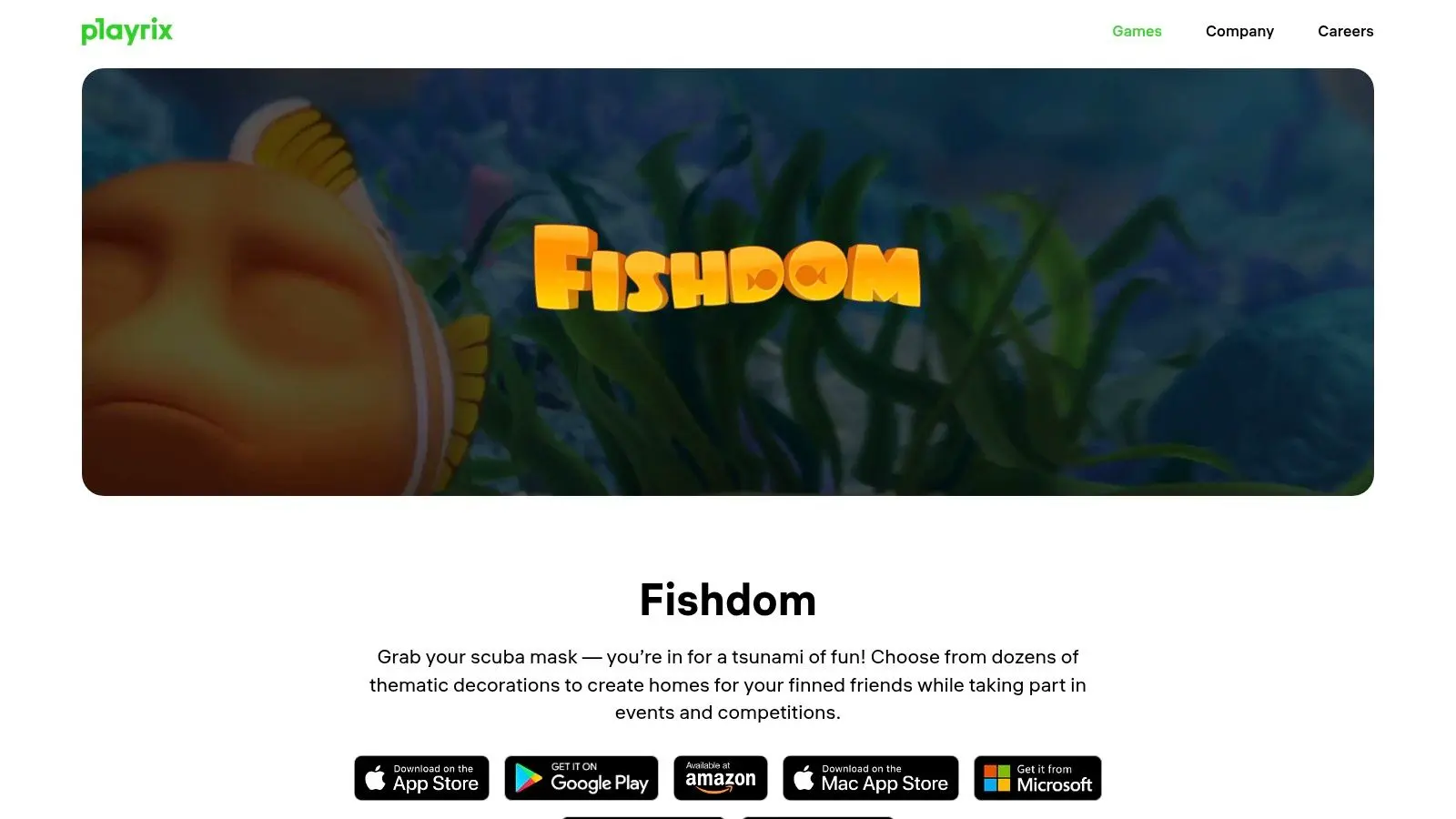
Fishdom sits close to Homescapes and Gardenscapes structurally, but its reward loop is more tactile. Instead of decorating rooms or gardens, you build aquariums populated with animated fish, plants, and ornaments. The result feels more alive. You don’t just complete a design task. You maintain a little ecosystem. That’s a small but meaningful distinction. Static decoration gives you ownership. Animated decoration gives you ownership plus ongoing visual payoff.
Why collectors tend to stay longer
Fishdom works best for players who enjoy accumulation, curation, and watching progress remain visible between sessions. The match-3 boards are familiar enough that onboarding is easy, but the fish tanks provide a stronger sense of “I built this” than many decorator-style puzzle games manage. Its monetisation model follows genre norms. Extra moves, boosters, and premium currency all show up once the level curve tightens. The main difference is psychological. Spending can feel easier to justify when it protects an attachment loop, not just a score loop. There’s also a useful market context for UK-facing studios. Business of Apps notes that Candy Crush Saga generated $48 million in US revenue in the referenced data, while UK-specific puzzle revenue breakdowns were absent in the same summary, which reinforces the case for localised engagement strategy rather than assuming global casual puzzle behaviour maps neatly onto every region in the same way. Fishdom’s stronger collection layer is the kind of retention wrapper that can help when pure board progression isn’t enough on its own.
- •Best for collectors and nurturers: The aquarium gives puzzle wins a persistent home.
- •Stronger emotional reward than many decorators: Animated tanks feel less disposable than static rooms.
- •Main trade-off: If you don’t care about customisation, the meta loop won’t carry the game for you.
7 Candy Crush‑Style Games Comparison
| Game | 🔄 Implementation complexity | ⚡ Resource requirements | 📊 Expected outcomes | Ideal use cases | ⭐ Key advantages / 💡 Tips |
|---|---|---|---|---|---|
| Royal Match | Moderate, polished swap-to-match core with extensive level design | High, premium art, QA and live-ops cadence | High engagement and fast sessions; strong monetisation via boosters ⭐⭐⭐⭐ | Players wanting a fast, premium match-3 without life-gating | No lives and slick UX; tip: late-game often leans on boosters |
| Toon Blast | Moderate, tap-to-blast mechanic plus team/social systems | Moderate, High, social backend and event support | Very fast, explosive play; strong social retention ⭐⭐⭐⭐ | Competitive/social players who enjoy team play and combos | Big chain reactions and teams; tip: teams boost rewards and retention |
| Homescapes | Moderate, standard match-3 plus renovation/story meta | High, cross-platform content and narrative assets | Good retention from meta-progression; occasional paid spikes ⭐⭐⭐ | Players who enjoy story, characters and decorating | Strong narrative + meta-loop; tip: expect difficulty spikes that nudge IAPs |
| Gardenscapes | Moderate, similar to Homescapes with larger content scope | High, sustained live-ops and seasonal content | Long-term engagement and community activity ⭐⭐⭐ | Players preferring garden/theme-driven long campaigns | Extensive content and storyline; tip: late-game can feel grindy without boosters |
| Cookie Jam | Low, Moderate, classic swap-3 with familiar boosters | Moderate, steady level production and live-ops | Stable retention among traditional players; predictable monetisation ⭐⭐ | Traditionalists seeking a direct Candy Crush-like alternative | Familiar, no-frills formula; tip: few novel mechanics compared to newer titles |
| Bejeweled Stars | Moderate, gem-swap core with new mechanics (crafting, Currents) | Moderate, ongoing live content and online connectivity | Strategic depth and considered pacing; good mid-core appeal ⭐⭐⭐ | Strategic players who want more control and emergent combos | Craft-your-boost system adds depth; tip: requires persistent internet |
| Fishdom | Moderate, match-3 plus animated aquarium decoration meta | High, detailed art, animations and large level library | Strong completionist retention; long play sessions ⭐⭐⭐ | Collectors and nurturers who enjoy decorating and pet animations | Animated, living aquariums; tip: high-tier levels often encourage extra moves/boosters |
Your Next Favourite Puzzle Awaits
The best games that are like Candy Crush don't all chase the same player. That's the mistake a lot of recommendation lists make. They treat match-3 as one giant interchangeable category, when key differences sit in pacing, pressure, and what happens around the board. If you want the cleanest, most polished puzzle-first option, Royal Match is the strongest starting point. If you enjoy social competition and huge combo payoffs, Toon Blast has more personality than many direct rivals. If you need story and visual progression to stay engaged, Homescapes and Gardenscapes are still the obvious pair. Fishdom suits players who enjoy collection and environment building. Cookie Jam is the dependable classicist’s pick. Bejeweled Stars is the one to try when you want more control and a bit more thinking. For studios, there's a useful lesson behind all seven. Success in casual puzzle rarely comes from copying the board alone. The board is the entry point. Retention comes from the wrapper around it, whether that's social play, expressive progression, stronger collection systems, or better pacing around frustration. It’s also why some businesses exploring mobile puzzle concepts now look beyond conventional production pipelines and experiment with faster prototyping approaches, including guides on how to create game apps using AI. One final note. The genre still has room for improvement around accessibility, cognitive load, and more sustainable monetisation. A lot of games are good at keeping players busy. Fewer are good at respecting different play styles over the long term. The next wave of standout puzzle games will likely come from teams that treat readability, fairness, and social design as product fundamentals, not nice extras. Your next favourite puzzle probably isn't the one that copies Candy Crush most closely. It's the one that keeps the part you love and removes the part you’re tired of.
If your team is developing a casual game, interactive app, or branded digital experience, Studio Liddell can help shape it from concept through production. Their work spans animation, apps, games, and XR, making them a strong partner for businesses that need polished visual storytelling and playable experiences, not just a prototype.