Your Guide to Choosing a Manchester Film Studio
Manchester is a global heavyweight in film, TV, and digital media, and for good reason. Choosing a Manchester film studio gives you direct access to a buzzing creative culture, a deep pool of talent, and cutting-edge facilities, often at a surprisingly better value than you'll find in London.
Why Manchester Is a UK Production Powerhouse
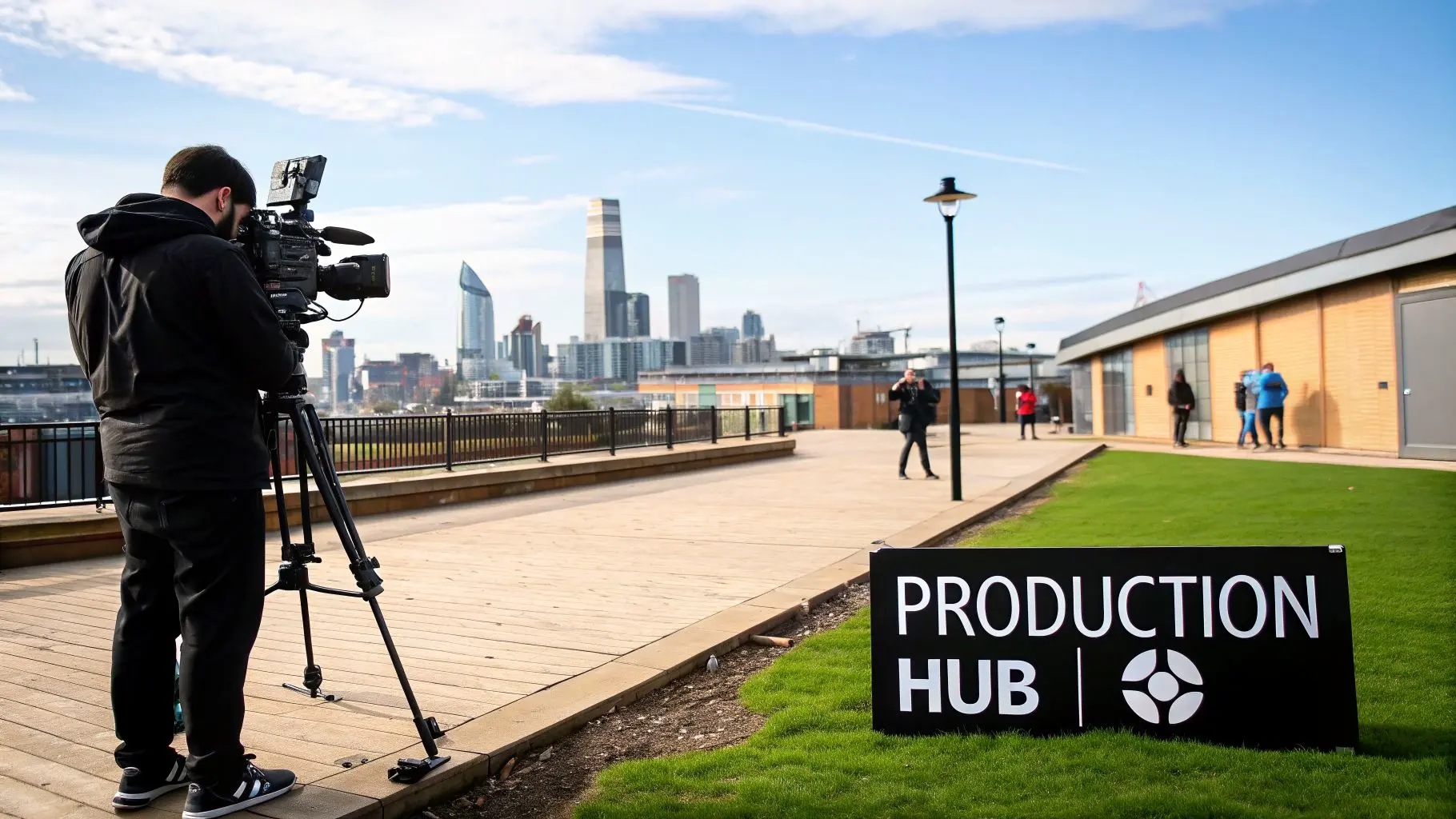
This image perfectly captures the spirit of Manchester: a city where top-tier production gear meets an iconic urban backdrop. It’s this blend of grit and gloss that makes the city a dynamic, practical 'production hub' for projects of every size and scope. But Manchester's standing as a media destination isn't some new trend. It’s built on a foundation of creative innovation that goes back decades, long challenging the UK’s traditional media centres by mixing its industrial past with a forward-looking, artistic drive. The city’s production roots go way back. Believe it or not, Manchester’s first dedicated film studio opened its doors in 1947 on Dickenson Road in Rusholme. The founders turned an old Wesleyan Methodist chapel into a two-stage production hub, quickly earning the nickname 'Jollywood' for the stream of northern comedy films it produced. It was a massive milestone, the first British film studio outside of the southeast, and it set the stage for Manchester's future in television and beyond.
A Thriving Creative Ecosystem
That pioneering spirit is still alive and well. Today, Manchester isn't just a place to shoot; it's a complete production ecosystem. It’s a strategic choice for any business wanting to create standout digital content, thanks to a few key ingredients.
Manchester has successfully cultivated an environment where creative talent and technical infrastructure converge. This unique combination allows studios to deliver ambitious projects with the agility and cost-effectiveness that modern productions demand.
Here’s what makes the city’s production scene tick:
- •World-Class Talent Pool: With top-tier institutions like Manchester Metropolitan University and the University of Salford right on our doorstep, the industry is constantly fed with fresh, skilled graduates in animation, film, and digital media.
- •State-of-the-Art Facilities: It's not just about the people. Manchester is packed with purpose-built studios and digital production spaces ready to handle anything from big-budget TV dramas to complex 3D animation and immersive XR work.
- •Cost-Efficiency: Let's be frank, this is a big one. A Manchester film studio benefits from lower overheads compared to London. This means you get more competitive rates without ever having to cut corners on quality or creative vision.
- •Collaborative Culture: The creative scene here is incredibly tight-knit. Studios, freelancers, and suppliers all know each other and work together, which makes for smoother, more innovative productions. Want to see this community in action? Check out our guide to the best animation studios in Manchester.
Getting a handle on this dynamic is the first step to seeing how a partner in this city can bring your creative ideas to life. Manchester's unique mix of history, talent, and technology makes it a genuine asset for any production.
Navigating the Modern Manchester Studio Ecosystem
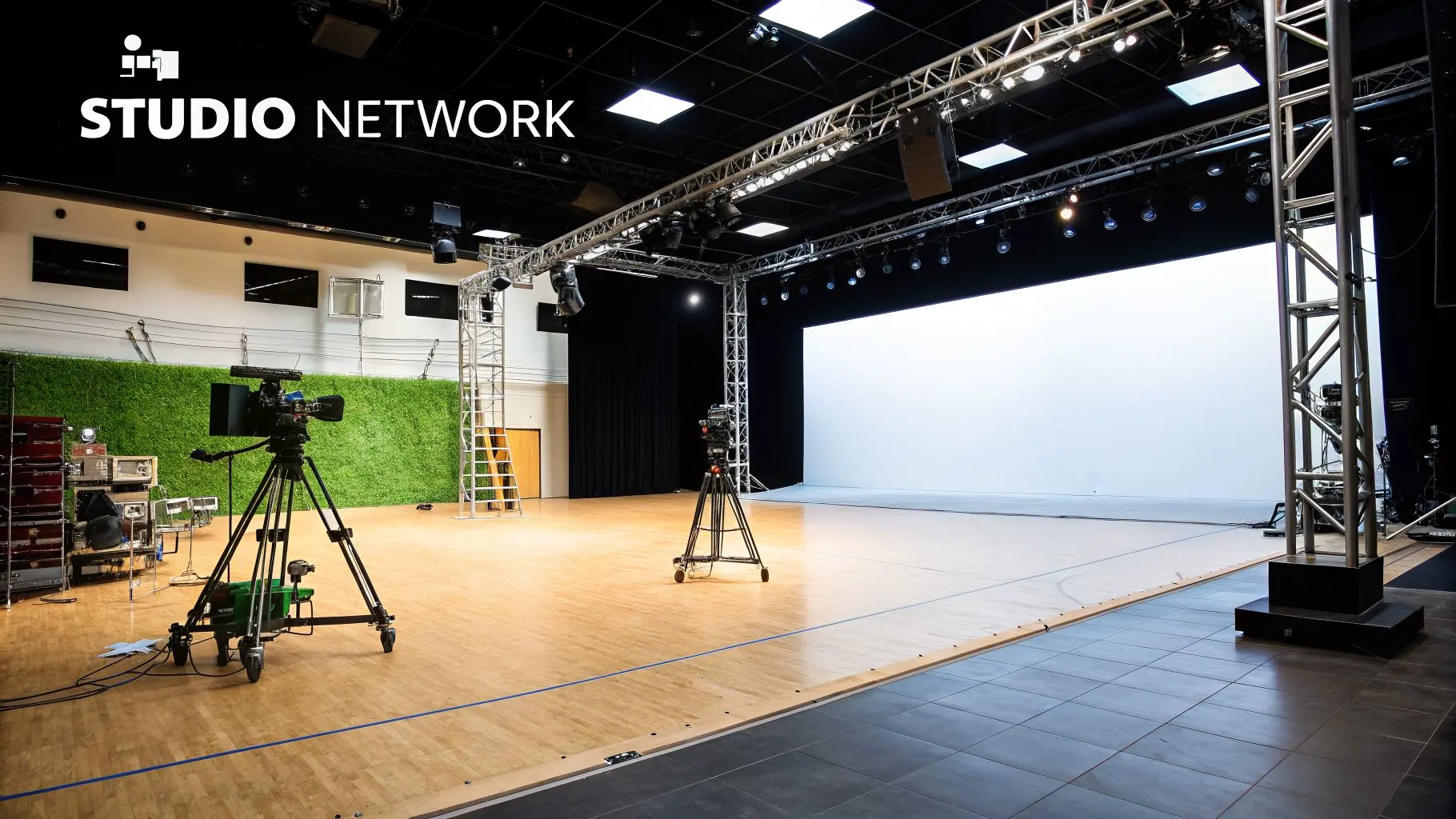
We all know Manchester has the creative spark. But it’s the city's rock-solid physical infrastructure that really gets projects made. We’re talking about a web of resources, from huge soundstages built for blockbuster shoots to highly specialised digital workshops for animation and VR. This isn’t just a collection of random facilities; it’s an interconnected network. Getting to grips with how it all fits together is the first step to realising why a Manchester film studio can be such a powerful base of operations. It’s a setup that gives producers genuine choice, so you can find the perfect space without having to compromise.
The Pillars of Production Infrastructure
Manchester’s ability to adapt and grow is written all over its studio landscape. Back in 2007, The Pie Factory studios opened with three sound stages in Salford Quays, and they thrived even when MediaCityUK launched its own major facilities right next door. It was clear proof that the demand was there. You can get a great overview of the history behind these independent regional studios and their growth in Manchester. That momentum never really stopped. We saw it again with The Sharp Project in Newton Heath, which brilliantly repurposed an old electronics factory into a hub for digital production. Now, you have purpose-built giants like Space Studios Manchester, which boasts seven soundstages clocking in at anywhere from 9,000 to 30,000 sq ft.
These large-scale studios are built to compete with anything in the UK. With dedicated workshops, sprawling production offices, and on-site post-production suites, they offer a genuine end-to-end solution for any ambitious film or TV project.
Specialised and Boutique Studios
It’s not all about massive soundstages, though. Just as important is the network of smaller, specialised studios where so much of the digital magic happens. These are the creative powerhouses handling animation, VFX, and all things immersive. When you’re looking for a Manchester film studio, you’ll find many that focus on these high-tech services.
- •3D/2D Animation Services: These are the places armed with the serious computing power and software pipelines needed for complex 2D and 3D animation, slick motion graphics, and jaw-dropping visual effects. They’re behind everything from children’s TV shows to technical explainers for global corporations.
- •VR/AR Production: Kitted out for VR and AR development, these studios are where training simulations, interactive marketing, and location-based entertainment are born. They handle the entire process, from concepting in Unity or Unreal Engine to optimising for headsets like the Meta Quest.
- •Audio and Post-Production Suites: A project is never truly finished until the sound is spot on. Manchester is home to world-class sound design, foley, and mixing studios that add that final layer of professional polish to any production.
This rich ecosystem also includes a whole host of other creative services. For example, if you're planning a launch event, you can easily find local experts to handle things like photo booths for hire in Manchester. It just goes to show the sheer breadth of talent available. This blend of big-league infrastructure and specialised creative workshops makes the city a complete production hub.
Decoding a Modern Creative Studio's Capabilities
So, what exactly happens inside a modern creative studio? The term "Manchester film studio" doesn't just mean cameras and film sets anymore. It's grown to describe a creative powerhouse packed with artists, designers, and tech experts who can build anything from an animated TV series to a mind-blowing virtual reality world. Think of it this way: you have a business goal, maybe you need to explain a complex service, make staff training more engaging, or launch a new brand for kids. You bring that challenge to a studio, and they use their creative and technical toolkit to build the perfect visual solution. A modern studio's capabilities are typically grouped into four pillars: 3D/2D animation, VR/AR production, building case studies as social proof, and strategic thought leadership. Understanding these helps you see what's possible for your project.
Pillar 1: 3D/2D Animation Services
Animation is far more than just cartoons. Today, it’s one of the most effective ways for businesses to communicate, market, and tell stories. A full-service studio offers end-to-end production with a broadcast pedigree.
- •Services: Studios deliver everything from kids' TV series and animated ads to game trailers and title sequences. This includes technical disciplines like character and creature animation, motion graphics for brands, and explainer video production for complex products.
- •Process: The journey runs from brief and script to storyboarding, previsualisation (previz), rigging, animation, lighting, and final compositing, with robust QA for broadcast.
- •Results: This pillar drives commercial results for clients, whether it's through compelling TV ads or clear technical animations that win over stakeholders.
Pillar 2: VR / AR Production
Extended Reality (XR) is where digital content leaps off the screen, either by immersing you in a virtual world (VR) or layering digital elements over reality (AR). A specialist Manchester film studio can use this tech to create powerful business tools and immersive experiences.
- •Services: This includes concepting and designing immersive experiences in Unity/Unreal, optimising for headsets like the Meta Quest, and deploying solutions for location-based entertainment (LBVR), exhibitions, retail, and enterprise.
- •Use Cases: Specific applications range from AR for increasing dwell time at exhibition stands to high-accuracy VR training simulations for medical and technical fields, where SME collaboration and compliance are key.
- •Impact: The goal is to create experiences with real impact, whether that’s improving training outcomes, increasing customer engagement, or delivering a positive ROI for location-based events.
Pillar 3: Case Studies & Proof (E-E-A-T)
Beyond services, a top-tier studio provides tangible proof of its expertise. Case studies demonstrate a studio's ability to solve real-world problems and deliver measurable outcomes, building trust and credibility (Experience, Expertise, Authoritativeness, and Trustworthiness).
- •Purpose: These aren't just portfolio pieces; they are detailed breakdowns of the brief, the pipeline, the team, and the results. They show how a studio scales a beloved kids' IP like _BooSnoo_, builds a high-throughput mixed-reality game for events, or crafts an award-calibre VR short film.
- •Value: For clients, this provides social proof and a window into the studio's process, showing how they tackle complex challenges and achieve stakeholder goals, such as explaining technical concepts through clear visuals.
Pillar 4: Strategic Thought Leadership
A true creative partner does more than just execute; they provide strategic guidance. Thought leadership content helps clients make smarter decisions, navigate industry trends, and extend the value of their intellectual property (IP).
- •Audience: This content is aimed at decision-makers, producers, and brand executives, offering high-level strategy and technical insights.
- •Topics: It covers crucial subjects like how to choose an animation studio (including red flags and budget bands), how to extend children's brands across platforms (transmedia IP development), and technical comparisons like Unreal vs. Unity for real-time animation.
- •Function: This demonstrates deep industry knowledge and positions the studio as a strategic advisor, not just a supplier.
How to Choose Your Manchester Production Partner
Finding the right creative partner is about much more than a postcode and a price list. When you move past a general search for a "Manchester film studio" and start looking for a team to trust with your vision, you need a more thoughtful approach. It’s about making sure their skills, style, and working methods are a perfect match for your project's creative and commercial goals. Think of it like hiring a specialist builder. You wouldn't bring them on board without seeing their past work, understanding their methods, and feeling confident they can deliver on time and within budget. The same diligence applies here. A great partnership is built on a shared vision and clear communication right from the start. This quick visual guide breaks down the essential steps for vetting potential partners.
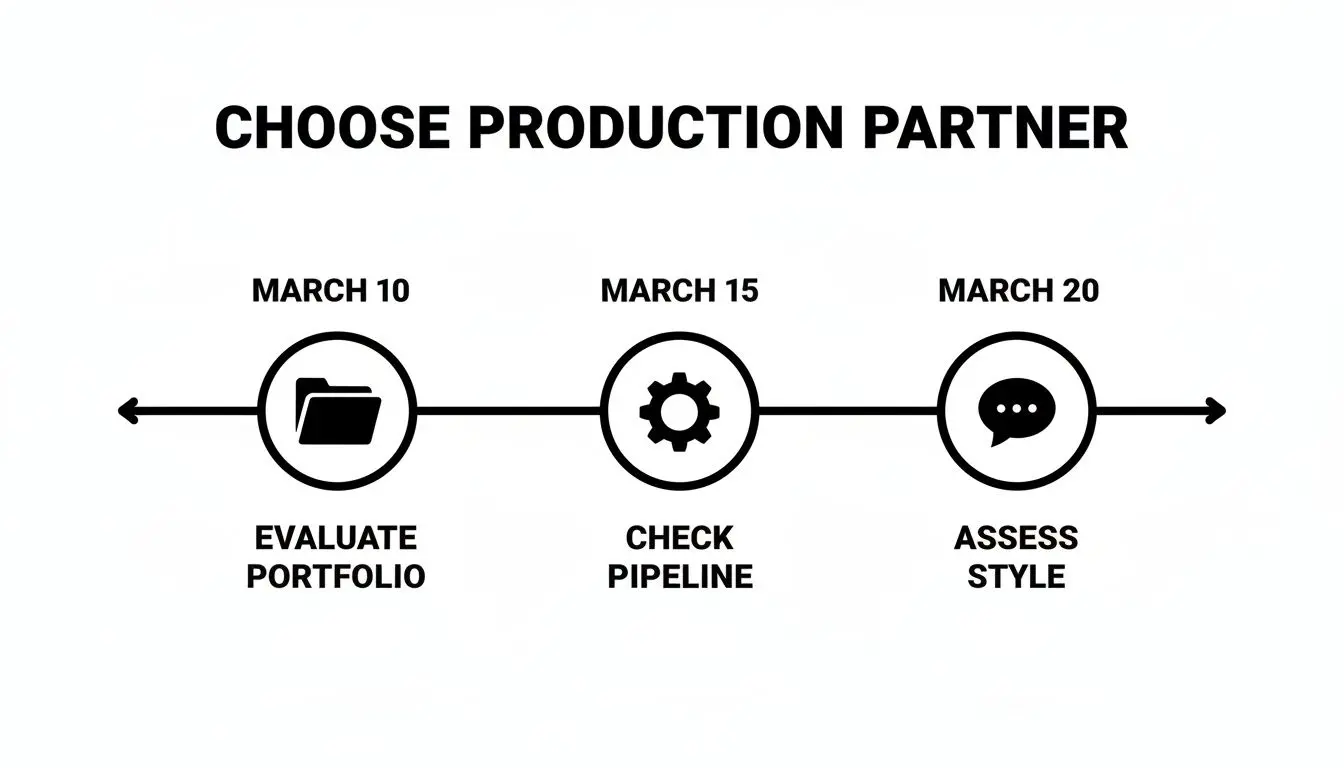
Following this process helps you look past the sales pitch and focus on the three pillars of any successful collaboration: proven experience, technical capability, and cultural fit.
Evaluate Their Portfolio for Relevant Experience
A studio’s showreel is their CV. It's easy to be wowed by flashy visuals, but you need to dig deeper and look for work that’s directly relevant to what you need. If you're commissioning a technical explainer video, a portfolio packed with brilliant kids' cartoons might not be the right fit, no matter how good they are. As you look through their past projects, ask yourself a few critical questions:
- •Does their work meet your quality standards? Look closely at the polish, the attention to detail, and the overall execution.
- •Have they worked in your industry before? A studio that already gets the nuances of the medical, financial, or engineering sectors will grasp complex briefs much more quickly.
- •Is their storytelling effective? Does the work actually achieve its goal? An advert must be persuasive, an explainer needs to be clear, and a narrative film has to be engaging.
A strong portfolio isn’t just about showing what a studio _can_ do. It’s about proving they’ve already solved problems similar to yours. It’s tangible proof they can deliver results.
Understand Their Technical Pipeline and Tools
The "how" is every bit as important as the "what." A studio's technical pipeline, the specific combination of software, hardware, and workflows they use, has a direct impact on efficiency, quality, and the final look of your project. It's the engine room of their creative output. Key areas to ask about include:
- •Real-Time Engines: Do they work in Unreal Engine or Unity? Unreal is often the top choice for photorealistic rendering and virtual production, while Unity is a powerhouse for mobile and XR development. Their preferred engine will shape the entire aesthetic of your project.
- •Animation Software: Knowing whether they specialise in 2D (like Toon Boom Harmony) or 3D (like Maya or Blender) helps align their expertise with your stylistic vision.
- •Project Management Tools: How do they manage communication and feedback? A studio that uses organised platforms like Frame.io for video review or Asana for task tracking shows a real commitment to a smooth, transparent process.
Asking about their pipeline shows you understand the craft and are serious about a professional collaboration.
Assess Their Project Management and Communication Style
Finally, you need to know that you can actually work well together. A project can be creatively brilliant and technically flawless, but if the process is a nightmare of missed deadlines and poor communication, the whole experience will be soured. The best Manchester film studio for you will be a team you genuinely enjoy collaborating with. During your first few conversations, try to get a feel for their working style.
- Who will be your main point of contact? Will you have a dedicated producer or project manager to guide you through everything?
- How do they handle feedback? Ask them about their review cycles. A good studio will have clear, structured stages for feedback and sign-offs (e.g., script, storyboard, animatic, final render).
- What’s their response time like? Pay close attention to how promptly and clearly they answer your initial questions. This is often a great indicator of their communication habits once the project gets going.
Ultimately, choosing a production partner is about building a relationship. You need to find a team whose work you admire, whose process you trust, and whose people you can build a real rapport with. Right, let's talk about the two questions every client asks straight away: “How much will this cost?” and “How long will it take?” Getting a handle on the budget and timings for any digital production is the first, most important step you can take before even picking up the phone to a Manchester film studio. Think of it like commissioning a piece of custom furniture. A simple, sturdy pine bookshelf is one thing. A hand-carved, walnut media unit with integrated lighting and bespoke fittings is another beast entirely. Both hold your stuff, but the skill, time, and materials involved are worlds apart. Digital production is exactly the same.
What Actually Drives the Cost and Clock?
While no two projects are identical, a handful of key factors will always pull the levers on your final quote and the production schedule. Understanding these is crucial for figuring out why one 30-second advert might cost five times more than another.
- •Complexity and Detail: A clean, 2D animation with simple characters is always going to be quicker and less resource-heavy than a photorealistic 3D world filled with intricate textures, atmospheric lighting, and complex special effects. More detail simply means more artist hours.
- •Style and Technique: Are we talking about slick motion graphics, a classic hand-drawn 2D animation, or a fully interactive VR simulation built in a platform like Unreal Engine? Each discipline demands different specialists, software, and raw computing power, all of which shape the budget.
- •Interactivity: A linear video is a one-way street. An interactive experience, like a VR training module where a user's choices change the outcome, is more like building a complex road network. It requires logic, programming, user testing, and a completely different development mindset.
- •Duration: This one can be deceptive. A longer video isn't always more expensive. A super-detailed, effects-heavy 30-second TV spot can easily cost more than a simple 3-minute animated explainer. It’s the complexity _per second_ that really counts, not just the total running time.
At the end of the day, the scope is king. A crystal-clear brief outlining your creative vision, what you need technically, and the level of polish you’re aiming for is the single most powerful tool you have for getting a reliable quote.
If you want to really dig into this, our 2025 Buyer’s Guide to Choosing an Animation Studio has a full checklist to walk you through it.
Sample Project Timelines & Budget Ranges
To give you a clearer picture, we've put together some ballpark figures for common projects. Think of these as a rough guide for your own internal planning , your final quote will depend entirely on the factors we've just discussed, but this is a solid place to start.
| Project Type | Typical Timeline | Estimated Budget Band (GBP) | Key Cost Drivers |
|---|---|---|---|
| 60-90 Second 2D Explainer | 6, 8 Weeks | £8,000 , £20,000+ | Style complexity, character design, script length |
| 30 Second 3D TV Advert | 10, 14 Weeks | £25,000 , £80,000+ | Photorealism, VFX, character performance, audio |
| VR Training Module | 16, 24 Weeks | £40,000 , £150,000+ | Interactivity, environment detail, platform optimisation |
| AR Retail Experience | 8, 12 Weeks | £15,000 , £50,000+ | Tracking tech, 3D asset quality, platform (web/app) |
As you can see, a project’s ambition has a direct impact on the resources it needs. A straightforward 2D explainer follows a fairly linear path, whereas a VR module is a full-blown software development project with all the associated complexity. Getting your head around this from the start helps you match your creative goals with your budget. It makes for a much smoother, more predictable journey with your chosen Manchester studio, with no nasty surprises along the way.
Common Questions About Partnering with a Manchester Studio
Taking that first big step on a major creative project can feel like a leap into the unknown. To pull back the curtain, we’ve put together answers to the most common questions we hear from businesses looking to team up with a Manchester film studio. Our goal here is simple: to give you clear, straight answers that help you feel confident and prepared for a brilliant collaboration. From understanding the real-world perks of producing up North to knowing what to expect from your very first chat, this is what you need to know.
Why Choose a Manchester Studio Instead of a London-Based One?
This is usually the first question on a client's mind, and the answer is a powerful mix of world-class quality and smart value. When you partner with a Manchester film studio, you're tapping into an incredibly deep pool of creative talent and top-tier facilities, just without the eye-watering overheads that come with a London postcode. What does that mean for you? Better project rates. Your budget simply stretches further here, which means we can be more ambitious with the creative without cutting corners on the final polish. On top of that, Manchester's production scene is famously tight-knit and collaborative. Studios, freelancers, and specialist suppliers are all just a stone's throw from each other, which makes for a nimble and fast-moving workflow. That agility means smoother productions and quicker turnarounds, a win-win that gets passed directly to you.
What Is the First Step to Start a Project with Your Studio?
It all starts with a simple, no-strings-attached "discovery call." A lot of people worry they need a polished script or a detailed technical spec before they can even pick up the phone, but that’s not how we work at all. This first chat is really about us getting to know you and your idea to see if we're a good creative match. During this call, our main job is to listen. We want to hear about your business goals, who you’re trying to talk to, and what success looks like for this project. Once we have that, we can start spitballing ideas with you, suggesting creative avenues, and sketching out a rough roadmap with potential timelines and budget options. It's a proper working session designed to turn that first spark of an idea into something real.
The discovery call isn't a sales pitch; it's the start of a partnership. It's about getting on the same page with your goals and figuring out how our creative and technical skills can bring your vision to life.
What Information Should I Prepare Before Our First Call?
You definitely don't need a massive brief, but coming to the discovery call with a bit of homework done can make a huge difference. It helps us get up to speed quickly and put together a much more strategic proposal. The more context you can give us, the better we can shape our initial thinking. Here’s a quick checklist of things to think about:
- •The Core Goal: What’s the number one thing this project needs to achieve? Is it to boost sales, explain a tricky concept, or make training more effective?
- •Your Target Audience: Who are you really trying to reach? What makes them tick?
- •Key Messages: If your audience only remembers one to three things, what should they be?
- •Known Constraints: Is there a hard deadline you can't miss, a specific budget you need to stick to, or any other non-negotiables?
- •Inspirational References: Seen any videos, animations, or experiences you love? Share them! A couple of links can say more about a desired style or feeling than a thousand words.
If you have a brand pack or a presentation deck, that’s brilliant, but honestly, a simple document with a few bullet points covering the above is a fantastic place to start.
How Much Involvement Will Be Required from My Team?
Your level of involvement is completely up to you, but the best projects always come from a strong, collaborative partnership. We don’t expect you to suddenly become an animation guru or a VR developer. Our job is to do the heavy lifting on the creative and technical side. Your role is to bring that crucial business insight that ensures the final piece is perfectly on-point. A professional studio will map out a clear production process with planned checkpoints for your feedback and approval. This isn’t about creating more work for you; it's about making sure you have control at the most important stages. Typically, this includes key milestones like:
- Script and Storyboard Review: We'll check that the story and visual plan hit all your key messages.
- Design and Asset Sign-Off: You'll approve character designs, environments, and key visuals before we dive into animation.
- Animatic and Milestone Previews: You get to see rough cuts and key sequences to give feedback on timing and flow.
- Final Cut Review: You'll provide final notes before the project gets its final render and delivery.
This structured process gives you regular opportunities to steer the ship, guaranteeing the end result isn't just creatively stunning but a perfect fit for your brand and your goals.
Ready to turn your idea into a stunning visual reality? Studio Liddell is here to help. Book a production scoping call with our team today and let's start the conversation.