How to Choose the Right Animated Video Company for Your Project
Think of an animated video company as more than just a crew of animators. They are a unique blend of visual storytellers, technical wizards, and strategic partners. Their job is to take your complex ideas, your brand’s core message, or dense data, and spin it into animated content that resonates with your audience. Much like an architect oversees a building from the first sketch to the final brick, a full-service animation studio guides your project from that initial spark of an idea right through to the polished final cut.
What an Animated Video Company Actually Does

At its heart, an animated video company is your complete production partner. They manage every stage of the creative journey, blending artistic flair with technical precision to ensure the final video not only looks incredible but also achieves your specific business goals. Let's be clear: this role goes way beyond just drawing cartoons. This kind of partnership is invaluable for businesses that need to educate customers, launch a new product, or build a brand identity that sticks. The best studios today have a massive toolkit, covering everything from classic animation techniques to fully interactive digital experiences.
A Spectrum of Creative and Technical Services
The best studios aren't one-trick ponies. They offer a whole suite of services to handle whatever you can throw at them. Their expertise usually covers:
- •2D and 3D Animation: This is the bread and butter, from sharp explainer videos and TV commercials to entire animated series.
- •Motion Graphics: Think dynamic logos, eye-catching title sequences, and data visualisations that make complex information easy to digest.
- •Immersive Experiences (VR/AR): Building virtual and augmented reality applications for everything from product demos and staff training to marketing and entertainment.
- •Visual Effects (VFX): Seamlessly integrating digital effects to enhance live-action footage or create scenes straight out of your imagination.
A true production partner doesn't just take your order and execute it. They get in the trenches with you to refine it. They bring years of industry experience to the table, suggesting creative angles or technical solutions you might not have even considered, which always makes the final piece stronger.
This collaborative spirit is what makes a project strategically sound and creatively brilliant. The demand for these specialised skills has sent the UK’s creative sector booming. The UK's post-production industry, which includes animation, is set to hit £1.5 billion in revenue by 2025. This surge is backed by a 25% increase in demand from streaming giants and strong government investment, making UK studios some of the most reliable partners for world-class content. By taking a look at a studio’s full range of animation services, you get a much clearer picture of how their expertise can line up with your project goals. They are built to handle anything from a quick social media ad to a sprawling, multi-platform brand campaign.
Matching Animation Services to Your Business Goals
Picking the right style of animation is like choosing the right tool for a job. A seasoned animated video company won’t just make something that looks good; they’ll help you match the creative approach to your specific business goals, ensuring every penny you spend delivers real impact. Each animation style has its own unique strengths. The trick is to pair the service with your objective, whether you’re trying to make a complex idea crystal clear, show off a new product in glorious detail, or create a brand experience that people won’t forget. It's also worth getting to grips with the differences between AI-powered and traditional video production to make sure you're choosing the best path forward.
2D Animation for Clarity and Connection
Think of 2D animation as the ultimate communicator. Its power is in breaking down complicated subjects into simple, engaging visuals. If your main goal is to educate an audience, launch a new software platform, or explain an internal process, 2D is almost always a perfect fit.
- •Explainer Videos: Brilliant for making abstract concepts feel tangible. For a tech company, a 2D explainer can walk users through software features without a single word of dense text.
- •Educational Content: From internal training videos to public service announcements, 2D animation makes learning sticky and accessible for everyone.
- •Brand Storytelling: Its charming and approachable style is fantastic for building an emotional connection, making it great for sharing your company’s origin story.
If you’ve got a product that’s tough to explain, a well-thought-out explainer video is a must. We’ve written a guide on how we achieve this through storyboarding clarity for hard-to-explain products.
3D Animation for Realism and Aspiration
When you need to showcase a physical product with cinematic polish or build a world that feels completely real, 3D animation is the powerhouse you’re looking for. It brings a level of depth, texture, and realism that can make your product feel premium and highly desirable. 3D is the go-to for product commercials where every detail counts. Picture a luxury watch where you can see the light glinting off the polished steel, or a new car navigating a dramatic, photorealistic landscape. This is where 3D shines, creating a sense of quality and desire that 2D just can't quite replicate.
Motion Graphics for Brand Consistency
Motion graphics are the unsung heroes of modern branding. They aren't about creating characters or entire worlds; they're about breathing life into your existing brand assets.
Motion graphics bridge the gap between static design and full-blown animation. They ensure your brand looks dynamic and professional across every digital touchpoint, from your website to your social media channels.
Think of slick logo animations, animated lower-thirds for interviews, or dynamic data visualisations in a corporate presentation. These small touches create a cohesive visual identity that strengthens brand recognition.
XR Experiences for Deep Immersion
For goals focused on training, hands-on engagement, or truly interactive experiences, XR (which covers Virtual and Augmented Reality) offers a level of immersion that nothing else can touch. An animated video company with XR expertise can build things like:
- •VR Training Simulations: Allowing employees to practice complex or dangerous tasks in a completely safe, controlled virtual environment.
- •AR Product Visualisers: Letting customers use their phone to see exactly how a new sofa would look in their living room before they buy it.
- •Location-Based Entertainment: Creating interactive games and experiences for events or exhibitions that leave a lasting impression.
Picking the right animation service is crucial for hitting your targets. To make it simpler, this table breaks down which service aligns best with different business goals.
Choosing the Right Animation Service for Your Goal
| Service | Best For | Common Use Case | Key Benefit |
|---|---|---|---|
| 2D Animation | Explaining complex ideas simply | Explainer videos, educational content, brand stories | Clarity and emotional connection |
| 3D Animation | Showcasing products with realism | Product commercials, architectural visualisations | Aspiration and premium quality |
| Motion Graphics | Maintaining brand consistency | Logo animations, social media content, data visuals | Professionalism and brand recall |
| XR (VR/AR) | Creating immersive, interactive experiences | Training simulations, product visualisers, events | Engagement and deep immersion |
Ultimately, the best choice depends entirely on what you want to achieve. A clear goal will always point you toward the right creative tool.
Your Project's Journey Through the Production Pipeline
So, you’ve settled on a killer creative direction and signed off on the project. What happens next? Your video is about to embark on a structured journey called the production pipeline. This isn't some mysterious black box; it's a tried-and-tested, methodical process every professional animated video company uses to transform a great concept into a polished final product. Think of it as a well-oiled assembly line. Each stage adds a crucial component, ensuring quality and consistency. More importantly, this pipeline is built for collaboration. We’ve built specific milestones into the process where your feedback isn't just welcome, it's essential to keep everything on track and aligned with your vision. Understanding these steps takes the guesswork out of it and shows you exactly how your project comes to life. If you're keen to get a broader sense of how the whole video creation machine works, from live-action to animation, you can master the video production workflow with a deeper dive. The animation pipeline itself generally moves from big-picture creative thinking to the nitty-gritty technical details.
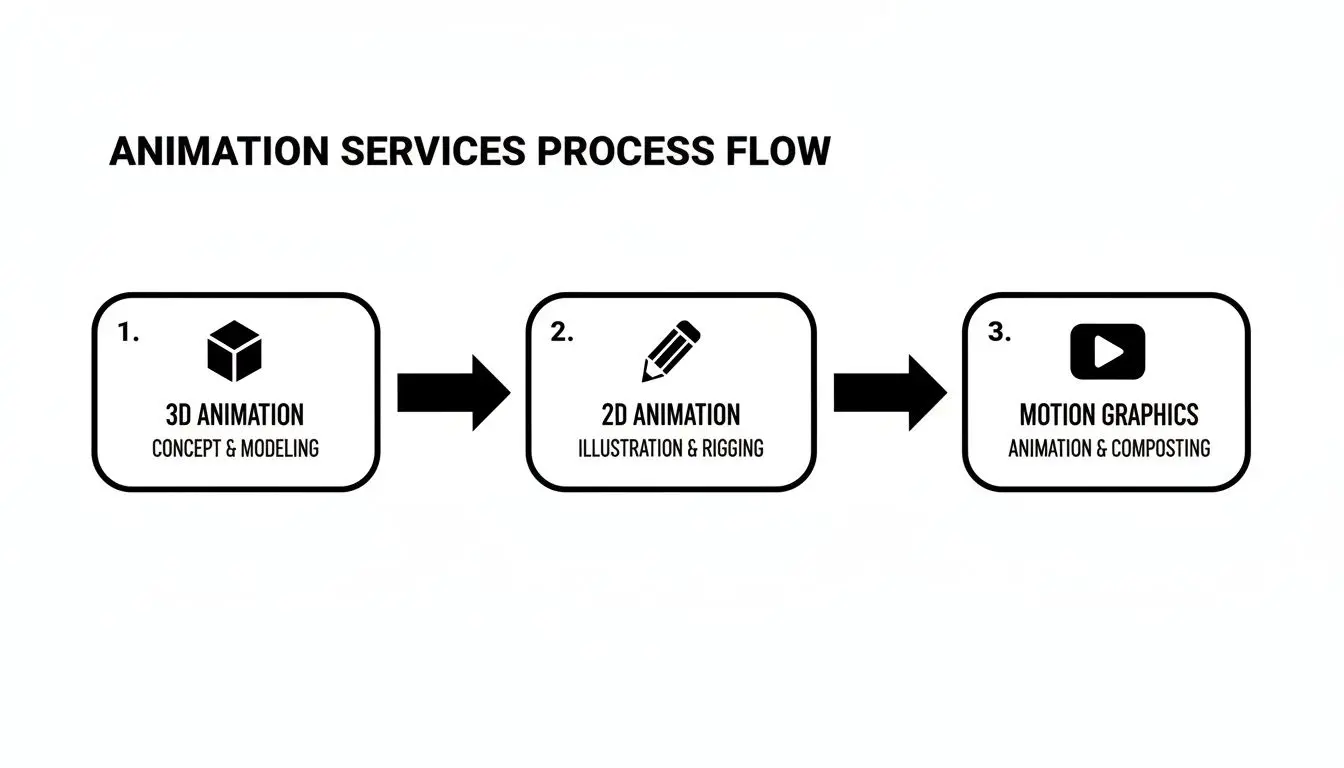
While the specific tools might change between styles, the fundamental stages of pre-production, production, and post-production are universal.
The Three Core Phases of Production
The whole journey can be broken down into three main phases. Each one has its own specialised tasks and demands a different kind of expertise, building on the work that came before it.
- Pre-production: The Blueprint. This is where we lay the foundations. We’ll finalise the script, develop detailed storyboards (think a comic-book version of your video), create a rough animatic to get the timing right, and lock in the art direction, character designs, and overall visual style. Getting this right saves a world of headaches later.
- Production: The Build. Now, the real creation begins. For a 3D project, this means our artists are modelling characters and environments, painting textures onto surfaces, and rigging characters with digital skeletons so they can move naturally. In the 2D world, this is where we create the final, polished artwork and prepare all the assets for our animators.
- Post-production: The Polish. This is the final and often most transformative stage. We assemble all the individual animated shots, adding editing, visual effects (VFX), meticulous sound design, music, and colour grading for mood, before rendering the finished video file.
Post-production is often where the real magic happens. It’s the phase that transforms a collection of animated scenes into a compelling narrative, adding the emotional weight and professional finish that elevates the final piece from good to truly exceptional.Successfully navigating these phases requires a tight-knit, collaborative team of specialists, from directors and artists to sound designers and colourists. Every expert plays a vital role in bringing that initial spark of an idea to life.
Getting to Grips with Budgets, Timelines, and Red Flags
Investing in animation is a practical decision as much as a creative one. Before you can find the right animated video company, you need a solid grasp of what to expect in terms of costs, timelines, and the warning signs of a partnership that might go sour. So, what are we talking about, cost-wise? A simple, short 2D explainer video might take 4-6 weeks and land somewhere between £3,000 and £8,000. On the other hand, a more complex, minute-long 3D character animation could easily require 10-16 weeks and a budget north of £20,000, depending on the intricacy of the details and character performance. These figures reflect the immense skill, time, and technology needed to produce work that stands out. The great news is that the UK animation sector is a powerhouse of talent. It’s a stable industry generating £1.6 billion annually and employing around 20,000 professionals, meaning you're tapping into a market filled with world-class creators ready to deliver exceptional value. You can dive deeper into the government support bolstering the UK's creative industries on animationmagazine.net.Your Due Diligence Checklist
Finding the perfect partner means looking beyond a flashy showreel. A great portfolio is just the start; real professionalism shows up in the process. Use this checklist to properly vet any potential studios:- •Do they have a clear, documented process? A professional studio will happily walk you through their production pipeline, explaining each stage and exactly when they’ll need your feedback.
- •Is their communication prompt and professional? If you're getting slow responses or vague answers during these early conversations, it could be a sign of disorganisation down the line.
- •Does their portfolio show relevant experience? Look for work that clicks with your industry, tone, and the style you're aiming for. An outdated portfolio is a major red flag.
- •Are they transparent about their team? You should know who is leading your project and feel confident in their credentials.
How to Spot the Critical Red Flags
While you're sizing up potential partners, keep your eyes peeled for warning signs. A trustworthy animated video company will be upfront and collaborative from the very first email.
The biggest red flag of all? Any pressure to do 'spec work', that is, free, unpaid creative work done on the hope of winning the job. Professional studios invest heavily in their creative process and will never work for free. It’s an unethical practice that completely devalues creative expertise.
Here are a few other warning signs to watch out for:
- •Vague or non-existent contracts: A detailed Statement of Work (SOW) isn't optional; it's essential.
- •An unwillingness to share client references: Studios that do great work are proud of their past collaborations and happy to let you speak with them.
- •Unrealistic promises on timelines or budget: If it sounds way too good to be true, it almost certainly is.
Armed with this knowledge, you can approach the hiring process with confidence, better equipped to find a creative partner who is not just talented, but also professional, ethical, and genuinely committed to making your project a success.
Seeing the Impact Through Real-World Success Stories
Talk is cheap. The best way to understand what a professional animated video company can do is to see their work in action. Theories and services are one thing, but seeing how animation solved real-world problems for actual clients? That’s where the magic becomes tangible. Let's move past the hypotheticals and look at the stories behind some of our projects. Each one is concrete proof of how a skilled creative partner can tackle specific business challenges, giving you the confidence you need before kicking off a project of your own. The Studio Liddell portfolio is packed with a huge range of work, from broadcast series to interactive experiences.
This collection isn't just a highlight reel; it’s a testament to our versatility and ability to pivot between different styles, audiences, and technical demands.
BooSnoo: From Broadcast IP to Digital Shorts
One of our proudest moments has been the journey of _BooSnoo_, an animated series we developed from the ground up for Sky Kids. The initial challenge was huge: create a brand new intellectual property (IP) that could charm a young audience on a major broadcast platform. But we didn't stop there. We successfully scaled the IP into a whole series of engaging digital shorts, stretching its reach and building a lasting brand presence across different platforms. This project is a perfect example of how an animated video company can be a long-term partner, helping to grow an IP far beyond its initial launch. Check out the full story of the BooSnoo series on our work page.
GeoEnergy NI: Visualising Complex Data for Stakeholders
Animation isn't just for cartoons; it's an incredibly powerful communication tool, especially when you’re dealing with dense, technical subjects. For the GeoEnergy NI project, the mission was to explain complex geological and geothermal concepts to a non-expert audience of key stakeholders and the general public. Our team got to work, developing a visual strategy that turned abstract data and dense scientific principles into clear, compelling 3D animations. The result? A set of visuals that didn’t just educate the audience but were instrumental in winning crucial stakeholder buy-in for the project. It’s a classic case of technical animation bridging the knowledge gap to drive real decisions.
Dance! Dance! Dance!: Engineering High-Energy Event Engagement
Live events demand experiences that can grab attention in a crowded space and handle a ton of users without breaking a sweat. For _Dance! Dance! Dance!_, we were brought in to build a high-throughput mixed reality game designed to get large crowds moving and engaged. This project was a deep dive into game mechanics, art direction, and building the right tech stack to ensure everything ran smoothly. We were laser-focused on player throughput, making sure the game was not just fun but also practical for a busy event. The feedback from players was overwhelmingly positive, proving how immersive tech can create brand activations that people genuinely remember. You can see more on our VR & AR projects here. These examples show that whether you're building a beloved children's brand, explaining complex technical data, or creating an unforgettable event, having the right creative partner makes all the difference.
Critical Questions to Ask Before You Hire Anyone
Signing on with an animated video company is a big deal. It’s a major commitment of both your time and budget, so you need to get it right. To ensure you find the right creative partner, it’s vital to go beyond their showreel and ask probing questions that reveal how they _really_ operate. A great portfolio proves they have the talent. But the right answers to these questions will prove they have the professionalism and process to match. Leading the conversation with a prepared checklist helps you assess their communication style, project management chops, and overall reliability. These aren't trick questions; they’re designed to uncover the substance behind the style, helping you find a partner who will feel like a genuine extension of your team.
Creative and Production Workflow
How a studio approaches the creative process says a lot about the final video you’ll get. You need to understand their methodology for turning your brief into a polished, effective piece of animation.
- •Can you walk me through your entire production pipeline, from brief to final delivery? A professional studio should be able to clearly and confidently articulate each stage. Look for key milestones where your feedback and approval are built into the process.
- •Who will be my main point of contact, and how often can I expect updates? Clear, consistent communication is non-negotiable. Knowing who is managing your project and the rhythm of their check-ins is essential for a smooth collaboration.
- •How do you handle client feedback and revisions? This one is huge. Ask about their process for incorporating your notes. Is there a set number of revision rounds included at each stage? Understanding this upfront prevents scope creep and unexpected costs down the line.
Team Expertise and Technical Fit
Finally, you need to dig into the team's capabilities and their technical setup. It's crucial you feel confident they have the right skills and tools to bring your specific vision to life. Asking the right questions here is a key step in successfully finding animation companies near you in the UK.
A studio’s answers should give you total confidence in their ability to not only deliver a stunning creative piece but also to manage the project transparently and collaboratively from start to finish.
By asking these targeted questions, you can move past the sales pitch and gain a true understanding of whether an animated video company is the right long-term partner for your project.
Your Questions, Answered
Got questions about starting an animation project? You're not alone. Here are the answers to a few things clients often ask when they first start chatting with us.
How Long Does an Animation Project Take?
This really comes down to the complexity of what we're creating. For a straightforward 60-second 2D explainer video, you're typically looking at a timeline of 4 to 6 weeks, from our first chat to the final file landing in your inbox. But if we’re diving into a detailed 3D animation with custom-built characters and immersive worlds, that schedule will stretch. These more ambitious projects can easily take 10 to 16 weeks or even longer. The pre-production phase is key here; locking down the script and storyboards early on gives everyone a clear and realistic timeline to work towards.
What Factors Influence the Cost of Animation?
A few key ingredients determine the budget for any animated video. The biggest cost drivers we see are:
- •Style and Complexity: 3D animation is just more labour-intensive than 2D. It involves building models, creating textures, lighting scenes, and rendering, all of which take time and specialist skills.
- •Video Length: It's a simple equation , the longer the video, the more time and resources it needs from every single person on the team.
- •Character Design: There's a big difference between simple, stylised graphics and creating a completely original, bespoke character from the ground up. The latter is a much more involved creative process.
How Much Input Will I Have During the Process?
Your input is absolutely vital , this is _your_ project, after all. Any professional animated video company worth its salt will build specific approval points right into the production schedule. You'll have dedicated moments to review and sign off on the script, the storyboard, the animatic (a rough animated version), and of course, the final animation. This collaborative rhythm ensures the project always stays true to your vision and means there are no nasty surprises waiting for you at the finish line.
Ready to bring your ideas to life? At Studio Liddell, we blend years of broadcast experience with the latest tech to create animations that get results. Book a production scoping call