Buyer's Guide to Choosing Mobile App Creator
Working with mobile app creators is about turning a great concept into a tangible, high-performance product. But their success depends entirely on your preparation. Long before a single line of code is written, your project’s fate is sealed by the clarity of your vision, a detailed blueprint covering your audience, core features, and technical needs.
Translating Your Big Idea Into A Tangible App Vision
Every great app starts with clarity, not code. Before approaching mobile app creators, you must translate your inspiration into a concrete, structured vision. This means moving beyond the "big idea" to get specific about what problem your app solves, and for who. This simple flow chart nails the process of turning a rough concept into a solid plan.
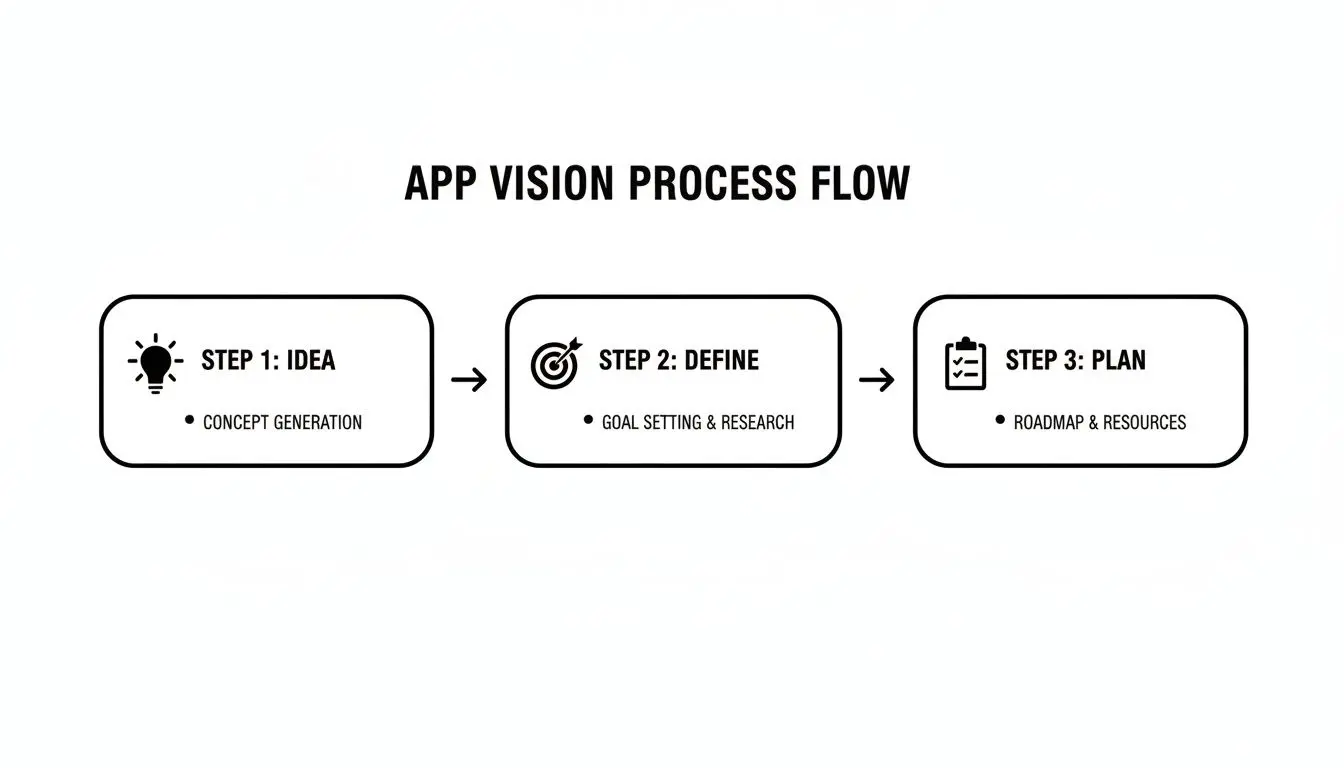
As you can see, you must define your audience and goals _before_ getting bogged down in features and tech specs. It’s a foundational step many skip, often to their detriment.
Defining Your Audience and Core Problem
Who is this app actually for? Don’t guess. Building detailed user personas is one of the most important things you can do early on. Get into their heads, think about their daily lives, frustrations, and what they’re trying to achieve. An app for a time-poor city professional will look and feel completely different from a learning game for a seven-year-old. Once you know your audience, you can nail down the one specific problem your app solves for them. A strong, focused problem statement is your North Star; it will guide every decision you make. For example, instead of a vague idea like "an app for local events," you need something sharp like "an app that helps young adults discover and book last-minute tickets for alternative live music gigs."
A well-defined problem is your best defence against "feature creep", that common temptation to add extra functions that bloat your budget and dilute your app's core purpose. Focus on solving one problem brilliantly.
From Features to Technical Foundations
With your audience and problem defined, you can start listing features. The key here is ruthless prioritisation. What are the absolute bare essentials for a Minimum Viable Product (MVP)? We're talking about the smallest, simplest version of your app that still solves the core problem for your first users. If you want to dive deeper, we have a whole guide on how a simple MVP app can make you millions. This is also where you need to make big technical decisions. Your choices will have a massive impact on your budget, timeline, and user experience.
- •Native vs. Hybrid vs. Web App: Do you build separate native apps for iOS and Android for peak performance, or a hybrid app from a single codebase to save time and money? The trade-offs are significant.
- •Essential Integrations: Does your app need to talk to other services? Think about payment gateways like Stripe, social media logins, mapping APIs, or other third-party tools.
- •Development Approach: As you firm up your vision, it's worth exploring different build methods. For some projects, looking into no-code app development can be a great way to prototype quickly and keep initial costs down.
Pulling all this into a clear project brief is your final step. This document is gold. It gives potential mobile app creators everything they need to provide an accurate quote and a realistic timeline, setting you both up for success from day one.
Finding And Vetting The Right Mobile App Creators
Choosing a development partner is the biggest decision you'll make. Get it right, and you have a strategic partner who will elevate your vision. Get it wrong, and you're facing missed deadlines, a bloated budget, and a product that just doesn't hit the mark. It’s about looking past slick portfolios to find a team that truly clicks. This takes a structured approach, where you evaluate their tech skills, design philosophy, and how they actually work. It's how you tell the difference between a simple coder and a creative studio that can deliver something special.

Assessing Technical And Creative Chops
First, dig into their technical skills. Do they have provable experience with your required platforms? If you’re building a complex app using a game engine like Unity or Unreal for real-time visuals, you’ll want to see their work. Ask them to walk you through a technically similar project, explaining the hurdles they hit and how they overcame them. But technical skill alone isn't enough. A flawlessly coded app that’s a nightmare to use is a failure. A great partner marries sharp coding with an intuitive and engaging user experience (UX) and user interface (UI).
Look for a team that challenges your assumptions and asks "why" about your feature requests. This shows they're thinking deeply about the end-user's journey, not just ticking boxes on a spec sheet.
You also must check their security mindset. A secure app is non-negotiable. Ask potential partners about their familiarity with common threats, like those in the OWASP Mobile Top 10 risks. It shows they’re serious about protecting your app and your users.
Digging Deeper Than Case Studies
Every studio has polished case studies, but you need the story behind the success. Don’t be shy about asking for client references you can actually speak to. A confident team with happy clients will have no problem connecting you. You're tapping into a massive industry. The explosive growth of the UK app market means there's a deep talent pool, but it also means you have to be diligent. To help you compare your options, use a checklist to stay organised. It ensures you're asking every potential partner the same tough questions.
Key Evaluation Criteria For App Creators
| Criteria | What to Look For | Red Flags |
|---|---|---|
| Technical Expertise | Proven experience in your required tech stack (e.g., Unity, Swift, Kotlin). Can show complex, relevant projects. | Vague answers about their experience. Portfolio doesn't match your technical needs. |
| UX/UI Design | A portfolio that shows a user-first approach. Evidence of wireframing, prototyping, and user testing. | Designs that look good but lack intuitive navigation. They talk more about aesthetics than user flow. |
| Security Practises | Knowledge of secure coding standards and threats like the OWASP Top 10. Clear security testing processes. | Dismissive attitude towards security. No clear process for identifying or fixing vulnerabilities. |
| Project Management | Clear communication cadence and use of standard tools (Jira, Trello). A defined process for feedback and changes. | No clear project manager. They can't explain how they handle scope creep or client revisions. |
| Team Structure | You know who is on the core team (designers, developers, QA) and their level of experience. | They can't or won't tell you who will be working on your project. Heavy reliance on unknown freelancers. |
This structured comparison helps you move beyond a gut feeling to make a decision based on solid evidence. When you get down to the details, focus on these key areas:
- •Production Pipeline: How do they manage projects from start to finish? Ask about their communication rhythm, the tools they use, and how they handle feedback and revisions. You need a transparent process.
- •AI Integration: Are they using AI to work smarter? Ask how they use it to improve efficiency in their workflow, whether that’s for code generation, testing, or creating assets.
- •Team Composition: Who would _actually_ be working on your project? Getting a clear picture of the strategists, designers, developers, and QA testers on your team is crucial.
Finding the right agency can feel like a full-time job. If you're struggling to build a shortlist, our guide on the top platforms for finding the best app development agencies in the UK might be helpful. This process takes time, but it's the surest way to find mobile app creators who will become an invaluable extension of your team.
Budgeting For Your App And Understanding Timelines
Let’s talk about the two biggest questions: how much will it cost, and how long will it take? Getting these wrong is a recipe for disaster. A transparent, honest conversation about budget and timelines is the bedrock of a successful partnership. Asking "How much does an app cost?" is like asking "How much does a house cost?". The answer depends on the size, features, and finish.
For a solid Minimum Viable Product (MVP) with core features on a single platform, you’re often looking at a starting range of £25,000 - £50,000. As you add more complex features, that figure will climb.
Key Factors Driving Your App Budget
Several key elements will have a major impact on the final quote. Understanding these will help you make smart calls on where to invest.
- •Feature Complexity: This is the big one. A simple user login is straightforward. A custom-built social feed with real-time updates and algorithmic sorting is a different ball game.
- •Platform Choices: Building natively for both iOS and Android is essentially developing two separate apps. This can nearly double the cost. Hybrid approaches can save money, but you might accept trade-offs on performance.
- •Advanced Technology: Want to really wow your users? Incorporating specialist tech is the way to do it, but it comes at a price. Custom 2D/3D animation, slick Augmented Reality (AR) filters, or fully immersive Virtual Reality (VR) worlds require niche expertise and more development hours.
- •Backend Infrastructure: An app is like an iceberg, most of the work is under the surface. The backend servers, databases, and APIs are the engine. A lightweight backend is one thing, but one built to handle thousands of concurrent users is a serious investment. Your app's backend could make or break its success.
A feature-rich app with a bespoke UI, beautiful animations, and a powerful backend can easily move into the £100,000 - £250,000+ bracket. For large-scale enterprise solutions, the sky's the limit.
Mapping Out Realistic Timelines
Just like cost, time is a massive variable. A streamlined MVP can often go from workshop to launch in about 3-6 months. A more ambitious, complex application will almost certainly need 9-12 months or even longer to move through all the critical design, development, and testing phases. You can’t rush quality.
Remember the golden rule of project management: budget for the unexpected. A contingency of 15-20% of your total budget is a wise safety net for unforeseen challenges or opportunities that arise mid-project.
A typical production journey is broken down into clear stages:
- •Discovery & Strategy (2-4 weeks): Nailing down goals, user journeys, and the technical roadmap.
- •UX/UI Design (4-8 weeks): Moving from rough wireframes to polished visual designs.
- •Development & Integration (10-20+ weeks): Developers get deep into the code, building the frontend and backend.
- •Testing & QA (3-6 weeks): Rigorous bug hunting and performance checks.
- •Deployment & Launch: The final push to get the app live in the app stores.
The work isn't over at launch. You’ll need to factor in ongoing costs for maintenance, updates, and server hosting to ensure your app has a long, healthy life.
How to Write a Request for Proposal That Attracts Top Talent
A well-crafted Request for Proposal (RFP) does more than just gather quotes; it’s a magnet for the best mobile app creators. Think of it as your project’s first impression. A vague, one-page brief signals a lack of clarity, which can scare off top-tier talent. A detailed, thoughtful RFP shows you’re a serious partner. It attracts studios who want to build something incredible, not just cash a cheque. The goal is to give a potential partner enough detail for an accurate bid while showing them you understand your strategic goals. A strong RFP filters out agencies that aren't the right fit, saving everyone time.
The Essential Components of a Winning RFP
Your RFP needs structure and clarity. It should tell a story about what you want to achieve, who you're helping, and what success looks like. Kick things off with a concise project overview. What's the elevator pitch for your app? Briefly describe your company and the core problem this app will solve. This context is crucial. From there, dive into the specifics with these key sections:
- •Detailed Functional Requirements: Get specific about core features. Instead of "user login," describe "social login via Google/Apple, email/password registration, and a 'forgot password' flow." The more detail, the better.
- •Target Audience Profile: Who are you building this for? Share your user personas. An app for busy surgeons requires a different approach than a game for children.
- •Technical Specifications: Mention preferred platforms (iOS, Android, web), essential integrations (like Stripe for payments), and any existing systems the app must connect with.
- •Budget and Timeline: Be upfront. Share your approximate budget range and desired launch window. This transparency helps agencies propose realistic solutions that align with your constraints.
Your RFP isn't just a shopping list of features. It's a strategic document that should excite and inform. The more effort you put in, the better the calibre of mobile app creators you will attract.
Asking Questions That Reveal True Capability
The magic of a great RFP is in the questions you ask. Moving beyond "How much will this cost?" allows you to evaluate a studio's thinking, problem-solving skills, and cultural fit. You want to see _how_ they think, not just what they can build. These kinds of questions are designed to sift the box-tickers from true strategic partners.
Strategic & User-Focused Questions
- •_How would you approach user retention and engagement for our target demographic?_ This tests their understanding of the user journey long after the initial download.
- •_Based on our brief, what potential challenges or risks do you foresee, and how would you propose to mitigate them?_ This is a great way to reveal their experience and foresight.
- •_Which of our proposed features do you think is least critical for an MVP, and why?_ A brilliant partner will challenge you to focus on what truly matters first.
Process & Communication Questions
- •_Describe your typical process for Quality Assurance (QA) and bug fixing during development and post-launch._ This shows you exactly how committed they are to quality.
- •_How do you handle client feedback and feature changes once a development sprint has started?_ This is crucial for understanding how they manage scope creep and collaboration.
- •_Who would be our main point of contact, and what would the communication cadence look like (e.g., weekly calls, daily stand-ups)?_ This sets clear expectations for the working relationship from day one.
By including these strategic questions, you shift the conversation from cost to value. You’re not just hiring coders; you’re looking for a partner who will invest their expertise in your success.
Building a Seamless Workflow With Your App Creator
You’ve signed the contract and picked your app creator. Now the real work begins. A successful project is about forging a partnership built on a transparent and efficient workflow. How you start this relationship sets the tone for everything that follows.
That first kick-off meeting is more than a formality. Think of it as laying the foundation stone for the project. This is your moment to align everyone on the vision, introduce the key players, and lock in the ground rules for communication.
Setting Up For Success From Day One
A great partnership runs on clear communication and knowing who does what. Ambiguity is the enemy of progress, so your first job is to eliminate it.
- •Define Key Roles: Get crystal clear on who the project manager is on their end and who your main point of contact will be. Who gives the final green light on design choices? Who fields technical questions? Writing this down saves confusion later.
- •Establish Communication Hubs: Decide on your primary tools. A dedicated channel in Slack or Microsoft Teams is brilliant for day-to-day chats. For tracking tasks, something like Jira or Trello is essential.
- •Set A Meeting Cadence: Regular, scheduled check-ins are non-negotiable. A weekly sync-up to review progress and a quick daily stand-up can keep everyone on the same page.
This basic structure ensures information flows where it needs to, and everyone understands their part.
A top-tier development partner will come to the first meeting prepared with a suggested workflow, tools, and a communication plan. If you have to drag this information out of them, consider it a potential red flag.
Embracing Agile Sprints And Feedback Loops
Modern app development is about agile methodology. Forget waiting months for a "big reveal" that might be completely off the mark. The project gets broken down into small chunks of work called sprints, which typically last about two weeks. At the close of each sprint, the development team presents a working piece of the app. This is your chance to get your hands on it, provide real feedback, and make necessary tweaks. This constant cycle of building and reviewing keeps the project on track, gets rid of nasty surprises, and gives you the flexibility to adapt.
Mastering QA And User Acceptance Testing
The final, critical piece of this collaboration is a rock-solid testing process. It’s a two-part system.
- Quality Assurance (QA): This is the internal testing done by the creators. They’re hunting for bugs, checking performance, and making sure the app works flawlessly across a range of devices.
- User Acceptance Testing (UAT): This is where you and your team step in. You test the app from a user’s point of view, making sure it not only works but also meets business goals and feels intuitive.
Answering Your Questions About App Development
Even with a solid plan, stepping into the world of app development brings up many questions. From getting a realistic handle on costs to thinking about life after launch, you need straightforward answers. Here, we'll cut through the noise and tackle the most common queries we hear from businesses about to start their app journey. This is about giving you the clarity to move forward, make smart decisions, and choose the right creative partners.What Is The Average Cost To Develop A Mobile App In The UK?
This is always the first question, and the honest answer is: it depends entirely on what you want to build. The scope and complexity are the biggest drivers of cost. A simple Minimum Viable Product (MVP) to test an idea might start from around £25,000. However, for a sophisticated, feature-rich app with custom animation, XR/AR capabilities, or complex backend systems, the investment can easily climb into the £100,000-£250,000 range and beyond. A few key factors that will always influence the final price are:- •Platform Count: Are you building for just iOS, or for both iOS and Android?
- •Third-Party Integrations: Does the app need to connect with payment gateways, social media platforms, or other external APIs?
- •Custom Design: The level of bespoke UI/UX, 3D modelling, and animation required will have a major impact.
How Long Does It Typically Take To Build A Mobile App?
Like cost, the timeline is tied directly to the project's complexity. A well-defined, straightforward app can often move from initial concept to launch within 3-6 months. More ambitious projects, especially those involving game mechanics, real-time data streaming, or immersive technologies like VR and AR, require a longer runway. You should plan for a timeline of 9-12 months or more for these. That period covers everything, discovery, design, development, rigorous testing, and navigating the app store submission process.
What Kind Of Ongoing Support Will My App Need After Launch?
Hitting 'publish' on the app store is a major milestone, but it’s just the beginning. Post-launch support is critical for long-term success. This typically includes server maintenance, performance monitoring, releasing updates to stay compatible with new operating systems (like the annual iOS and Android updates), fixing any bugs that pop up, and adding new features based on user feedback. Most mobile app creators offer ongoing support retainers to make sure your app stays secure, functional, and relevant.
Think of post-launch support as essential upkeep. Just as a car needs regular servicing to run well, an app needs ongoing maintenance to perform optimally and stay secure against new threats.
Should I Choose A Freelancer, A Small Studio, Or A Large Agency?
The right partner depends on your project's scale and your internal needs. A freelancer can be a cost-effective option for a simple, single-platform app, but they might lack the breadth of skills for a more complex build. Large agencies bring a huge range of services under one roof, but that often comes with a significant price tag and multiple layers of management. For many, a specialised studio offers the perfect balance. You get a dedicated, multi-disciplinary team with deep expertise in specific areas like animation, XR, or AI. This model usually provides more direct communication and tailored production pipelines than a large agency, combining world-class capability with a more personal, collaborative partnership.
Ready to turn your app concept into a stunning, high-performance reality? The team at Studio Liddell combines decades of creative expertise with cutting-edge technical skill to build apps that engage, inspire, and deliver results. Schedule a production scoping call with us today.